After I refused to pay for my younger sister’s $45,000 wedding, my parents invited me to an “intimate dinner.” Three lawyers were waiting with legal documents. My sister said: “Sign here, or I’ll ruin you.” So I replied: “…Talk to my husband.”
I refused to pay $45,000 for my sister’s wedding.
Three months later, my parents invited me to a casual dinner.
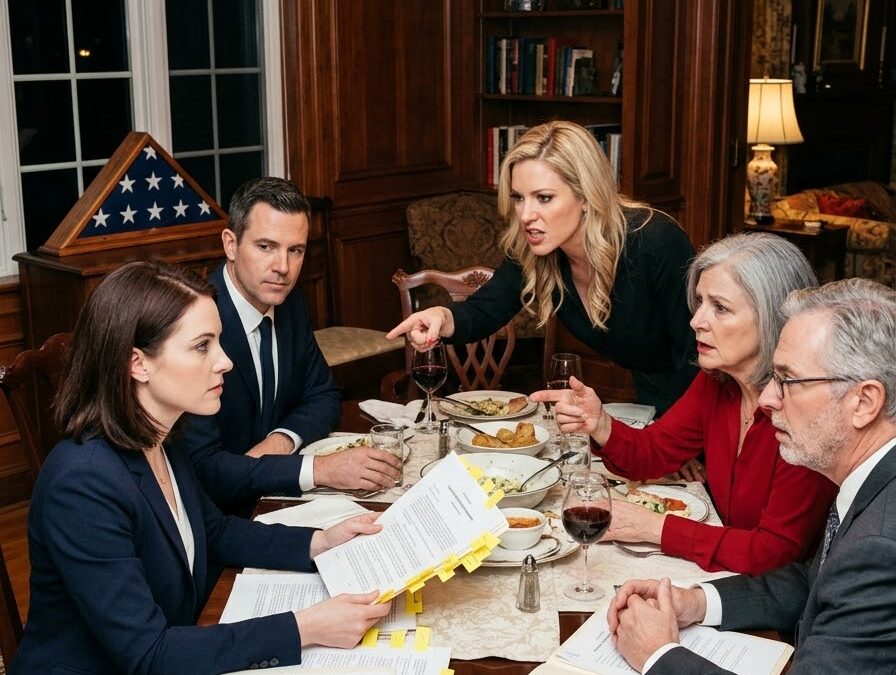
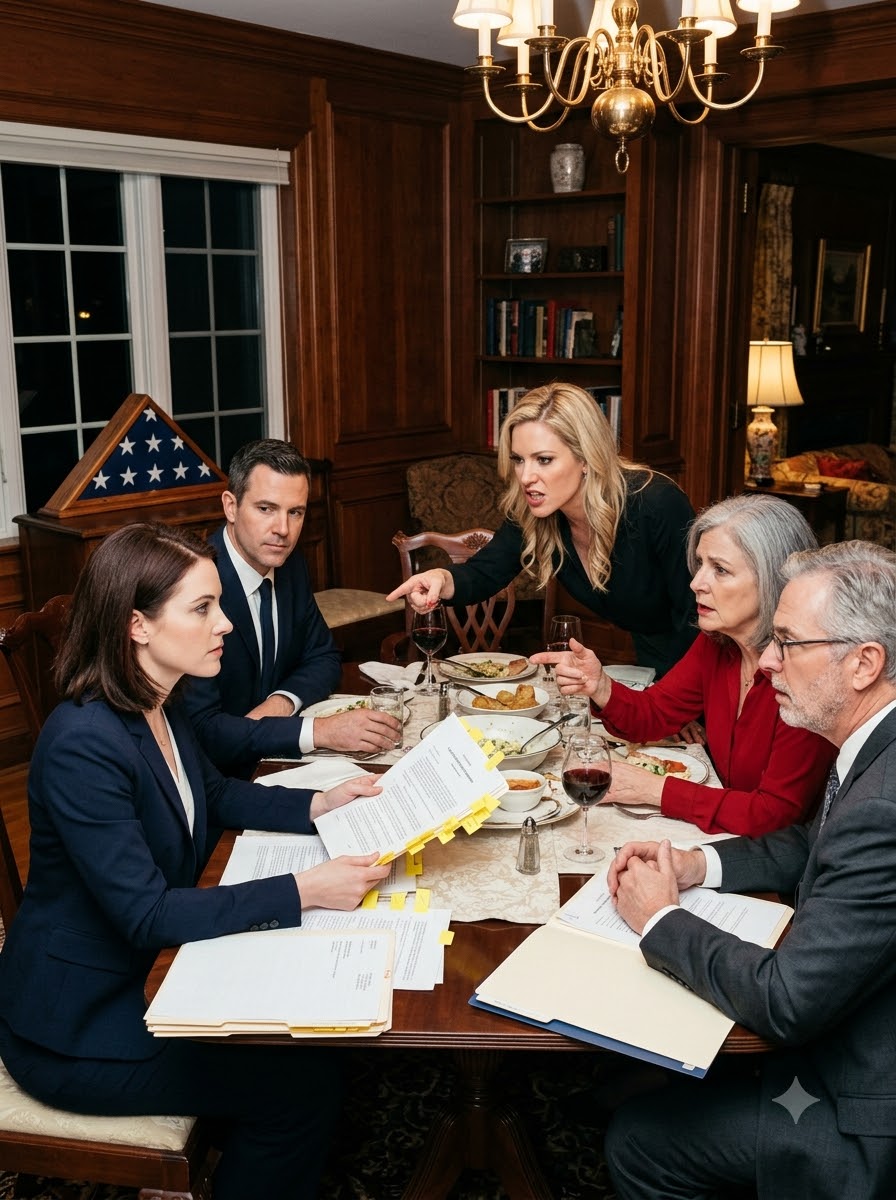
A lawyer was waiting beside a settlement agreement covered in yellow signature tabs.
Mom said, “Sign it, and we can move on.”
I said, “No.”
My sister Bianca leaned forward.
“Then Monday, I call your company’s ethics office and tell them you stole from Grandma’s estate. Sign this or I’ll ruin you.”
My husband Marcus set down his glass.
I looked at the table.
“Before anyone threatens me again, meet my husband.”
Dad laughed.
Then Marcus introduced himself.
The lawyer stopped smiling.
But panic started when Marcus asked one question.
“Why is the estate claim exactly $45,000?”
My family knew one rule about me.
If something was truly on fire, I helped put it out.
That was how it started.
A leaking roof six years ago.
Bianca coming up short during her last year of college.
A property-tax payment my parents had miscalculated after an expensive medical year.
I never kept score because none of those things felt like transactions.
They felt temporary.
Necessary.
Family.
The problem was that somewhere along the way, my parents stopped asking whether something qualified as an emergency.
They only asked whether Adrienne could afford it.
I was 36 and worked as a senior director of enterprise risk for a large insurance company in Manhattan.
My job was essentially to look at expensive decisions before they happened and ask what everyone else preferred to ask afterward.
What happens if this goes wrong?
I earned a strong salary and usually received an annual bonus.
I also had a mortgage, retirement contributions, an emergency fund, and financial plans that already had names attached to the money in them.
So, yes, I could technically write a $45,000 check.
That was very different from owing one.
My younger sister, Bianca, was 32.
She worked in event marketing.
Her fiancé, Luke, worked in commercial sales.
Together, they earned roughly $170,000 a year.
They weren’t struggling.
They were planning above their means.
The wedding they wanted had grown into a $72,000 production.
Waterfront venue.
Roughly 150 guests.
Open bar.
Florals.
Videography.
Live music.
The kind of wedding where every upgrade sounded harmless until you added them together.
I found out how they planned to pay for it at a Sunday brunch.
Mom slid a printed budget across the table.
Bianca and Luke: $12,000.
Mom and Dad: $15,000.
Me: $45,000.
I read the page twice.
“Did you already put my name into the budget?”
Mom gave me the look people use when they think the question is less important than the answer.
“You’re the one in the strongest position.”
“I wasn’t asking who makes the most.”
Bianca sighed.
“Adrienne, it’s one day.”
“Exactly.”
I pushed the paper back.
“I was planning to give you $6,000 as a wedding gift.”
Bianca blinked.
“Six?”
“That’s generous for you.”
There it was.
Not gratitude.
Pricing.
I looked at the budget again.
“You planned a wedding you can’t fund, then called the difference my contribution.”
Mom’s mouth tightened.
“You’ve always helped this family.”
“Yes. When something went wrong.”
I tapped the $72,000 total.
“This didn’t go wrong. You chose it.”
I said no.
And while I thought the argument was about a wedding budget, my parents had already made a financial decision based on the answer they expected me to give.
The first week after I said no, nobody argued about numbers.
They argued about character.
Mom told relatives I had refused to support Bianca.
Not that I had offered $6,000.
Not that the wedding budget was $72,000.
Just that I had refused.
By Wednesday, an aunt I barely spoke to called and said, “You know, your sister only gets one wedding.”
I said, “She also gets one budget.”
That ended the conversation quickly.
Dad waited longer.
He called me on a Thursday night while I was still at the office.
“Can’t you just help us keep the peace?”
I leaned back in my chair.
“When was the last time peace in this family didn’t cost me something?”
He was quiet.
That silence told me more than his answer would have.
Then he said, “Your mother already put deposits down.”
I sat forward.
“What deposits?”
“The venue. A few vendors.”
“With what money?”
“It’s handled, Adrienne.”
He lowered his voice.
“Just give everybody a little time.”
He changed the subject before I could push further.
That was the first moment I realized my refusal had not stopped the spending.
It had only made the spending harder to explain.
I called Mom the next morning.
“How much have you already committed?”
She sounded offended.
“Why are you interrogating me?”
“Because Dad said deposits were paid.”
“Your sister’s wedding is moving forward.”
“That wasn’t my question.”
Mom exhaled.
“We’re not canceling a beautiful venue because you’re having some kind of financial-boundary phase.”
I almost laughed.
“Then reduce the guest count.”
“No.”
“Change the flowers.”
“No.”
“Use a DJ instead of a band.”
“Adrienne, stop trying to make your sister’s wedding cheap.”
There it was again.
Every solution that didn’t involve my money was somehow an insult.
A few days later, the conversation changed.
My cousin called me at lunch.
“Why is your mom asking people whether they remember what happened with Grandma Evelyn’s estate?”
I stopped walking.
“What?”
“She said there were expenses nobody understood.”
That had nothing to do with Bianca’s wedding.
Three years earlier, Grandma Evelyn had named me executor of her estate.
I had handled the property sale, bank accounts, taxes, legal fees, and distributions with an estate attorney.
The final accounting had been filed and formally settled.
Nothing was missing.
Nothing was hidden.
So when another relative texted asking whether everyone ever saw the final numbers, I understood this was not random family gossip.
Someone was building leverage.
That evening, I opened the estate file I had not touched in nearly two years.
I found the accounting.
The receipts.
The court paperwork.
Then I noticed something else.
The amount Mom had started telling people was unclear was almost exactly $45,000.
That was when the wedding stopped looking like a family argument.
It started looking like a collection strategy.
The estate rumor bothered me for one reason my family understood very well.
I worked in enterprise risk.
My credibility was part of the job.
If someone called my company’s ethics line and claimed I had mishandled money while serving as executor of an estate, I would not be fired because a relative made an accusation.
But a serious allegation could still trigger questions, document requests, and the kind of internal review nobody wants attached to their name.
My family knew that.
Grandma Evelyn’s estate had not been mysterious.
It was worth a little over $600,000 before expenses, mostly from the sale of her house and several bank and brokerage accounts.
My mother and aunt were the primary beneficiaries.
I had been named executor because Grandma trusted me with paperwork, deadlines, and money.
For nearly a year, I worked with an estate attorney to handle the property sale, taxes, legal fees, reimbursements, and final distributions.
Then the accounting was filed and formally settled.
The money Mom was now calling unclear had never disappeared.
It had gone to documented estate expenses.
Still, “documented expenses” does not travel through a family as quickly as “missing money.”
So I stopped correcting rumors one relative at a time.
I ordered a certified copy of the final court decree and gathered the accounting, distribution receipts, and supporting records.
Marcus read the file at our kitchen table.
My family knew he was a lawyer.
What they had never bothered to learn was that he handled white-collar investigations and corporate internal matters after several years as a federal prosecutor.
He turned one page.
Then another.
“Your records are fine.”
“I know.”
“That doesn’t mean you should argue about them over text.”
“I’m not going to.”
“Good. Preserve everything. And if anyone puts a document in front of you, don’t sign it.”
I looked at him.
“I wasn’t planning to.”
“Family pressure has made smarter people sign worse things.”
Two days later, Bianca texted me.
You could end all of this by doing the right thing.
I replied:
What does Grandma’s estate have to do with your wedding?
She ignored the question.
You benefited from this family for years. Stop acting like you owe nothing.
That night, Dad called.
“Your mother wants to apologize.”
I said nothing.
“No wedding talk,” he added quickly. “Just dinner Friday. Please, Adrienne.”
After I hung up, Marcus asked, “Do you want to go?”
“If there’s even a chance they mean it? Yes.”
Friday evening, we drove to New Rochelle.
The certified estate record stayed in Marcus’s briefcase.
When we reached my parents’ house, I looked through the dining-room window.
An unfamiliar man in a suit sat beside my mother.
A thick stack of documents waited at my place.
My mother had promised there would be no wedding talk.
She hadn’t said anything about a lawyer.
Mom opened the door wearing the smile she used when she wanted a room to behave.
“See? Just dinner.”
I looked past her toward the dining room.
“Who’s the lawyer?”
Her smile tightened.
“He’s here to help us avoid misunderstandings.”
Marcus and I followed her in.
Bianca sat beside Luke.
Dad was at the far end of the table, staring at his plate.
The man in the suit stood.
“Peter Langford,” he said. “I represent Marilyn and Raymond.”
Not the family.
My parents.
That distinction mattered.
Peter gestured toward the chair across from him.
“And to be clear, I do not represent you. You should have independent counsel review anything before you sign.”
For the first time that evening, someone said something I trusted.
Mom frowned.
“Peter, we’re trying to keep this simple.”
“I understand.”
I sat down.
At my place was a document titled Family Settlement and Mutual Release Agreement.
I read the first page.
Then the second.
The language made the whole thing sound almost reasonable.
There was a dispute regarding Grandma Evelyn’s estate.
References to prior family financial transfers.
Confidentiality.
A mutual non-disparagement clause.
A release of claims.
And on page four, there it was.
I would pay my parents $45,000 within ten business days.
I looked up.
“Grandma’s estate is missing exactly $45,000?”
Mom shifted.
“That’s not what this says.”
“It says I pay $45,000 to resolve your estate concerns.”
Peter glanced at my parents.
“The figure was provided by my clients as a proposed settlement amount.”
“Did they tell you my sister also wants exactly $45,000 for her wedding?”
Silence.
Luke looked at Bianca.
Peter’s expression changed slightly.
“No.”
Mom jumped in.
“That’s separate.”
“Is it?”
I turned another page.
“What evidence supports the estate allegation?”
Mom folded her arms.
“There were reimbursements, fees, money moving in and out. Nobody really understood it.”
“You received the final distribution.”
“That doesn’t mean everything was explained.”
I looked at Peter.
“Were you given the final accounting?”
He paused.
“I was given summaries of the concerns.”
“That wasn’t my question.”
“No. I was not provided a judicially settled accounting.”
Marcus still hadn’t said a word.
I closed the agreement.
“Then I’m not signing this.”
Mom’s voice sharpened.
“We all came here to resolve this.”
Peter answered first.
“Mrs. Cross, resolution requires agreement. Your daughter is not required to sign tonight.”
Bianca’s chair scraped against the floor.
“Adrienne, stop doing this.”
“Doing what?”
“Acting like you’re smarter than everyone because you read contracts all day.”
“I’m acting like someone who isn’t signing one I don’t agree with.”
She pointed at the yellow tabs.
“Sign it.”
“No.”
Her face changed.
Not hurt.
Cornered.
“Fine,” she said. “Then Monday morning, I’ll call your company’s ethics office and tell them what you did with Grandma’s money.”
Even Peter went still.
I looked at my sister for the first time that night.
The document stopped being the threat.
She was.
Bianca’s words hung over the table.
Then Monday morning, I’ll call your company’s ethics office and tell them what you did with Grandma’s money.
I kept my voice level.
“What exactly are you going to tell them I did?”
“That you controlled the accounts. That money disappeared. That nobody ever really checked you.”
“You know that’s false.”
She folded her arms.
“They can decide.”
Peter raised one hand.
“Bianca, stop.”
She turned on him.
“You don’t represent me.”
“Correct,” he said. “Which is why you should stop talking.”
Dad finally spoke.
“Everybody needs to calm down.”
I looked at him.
“She just threatened my career to force me to sign a $45,000 agreement.”
Bianca laughed, but there was no humor in it.
“Then sign it and this goes away.”
There it was.
Sign this or I’ll ruin you.
Mom looked at me like I was still the difficult one.
“Adrienne, nobody wants to ruin anybody. We’re trying to settle this privately.”
I folded my napkin and placed it beside the unsigned agreement.
“Before anybody threatens me again, meet my husband.”
Mom blinked.
“We know Marcus.”
I turned toward him.
“You know his name.”
Marcus set down his glass.
“Marcus Reed,” he said. “I spent six years as a federal prosecutor. I now handle white-collar investigations and corporate internal matters.”
Bianca’s face changed first.
Peter’s changed second.
Marcus didn’t raise his voice.
“And because I just heard a demand for $45,000 tied directly to a threat to accuse my wife of financial misconduct, I think everyone should stop improvising.”
Then he looked at Peter.
“Counsel, who exactly do you represent?”
“Marilyn and Raymond Cross.”
“Not Bianca?”
“No.”
Marcus nodded.
“Then you may want to speak privately with your clients before this conversation creates more problems than the agreement was supposed to solve.”
Peter turned toward my parents.
“Was I told that this proposed payment matched a wedding contribution?”
Mom started to answer.
I opened Marcus’s briefcase and took out the certified estate records.
“No need to guess.”
I slid the decree and final accounting across the table.
“This is the judicial settlement of Grandma Evelyn’s estate. Every distribution, fee, reimbursement, and expense was accounted for.”
Peter read the first page.
Then the signature page.
His eyes lifted.
“Why wasn’t this provided to me?”
Mom’s expression hardened.
“Because it doesn’t answer everything.”
“It answers where the money went,” I said.
Peter closed the agreement.
“I’m ending this meeting for tonight.”
Then he looked directly at my parents.
“And I strongly suggest nobody contacts Ms. Cross’s employer.”
He gathered his papers.
When the front door closed behind him, I turned to Dad.
“Now tell me what this was really about.”
Dad looked at Mom before he answered.
That was enough to tell me there was another number coming.
“How much have you already put into the wedding?” I asked.
He rubbed a hand over his face.
“Fifteen thousand.”
I stared at him.
“From where?”
Mom answered this time.
“The home equity line.”
For a second, nobody spoke.
My parents had lived in that house for decades.
They had worked hard to build equity in it.
Talked constantly about retirement, interest rates, and finally having some financial breathing room.
And now they had borrowed against it for wedding deposits.
“You opened a HELOC for this?”
Dad shook his head.
“The credit line is $60,000. We only drew fifteen.”
“Only?”
“It’s manageable.”
“That wasn’t my question. You borrowed against your house after I told you I wasn’t paying.”
Mom’s voice rose.
“We thought you’d come around.”
I looked at her.
“You mean you spent my yes before I gave it.”
She flinched.
“The venue needed a deposit. So did the caterer. We couldn’t just lose the date.”
“You could have booked something you could afford.”
Bianca stepped in.
“You make over $200,000 a year.”
“My salary is not part of your wedding budget.”
“You paid for my college.”
“Because I chose to.”
“So this doesn’t matter?”
“A marriage matters. A $72,000 production is optional.”
Her face crumpled.
“That’s easy for you to say.”
Dad finally looked at me.
“I thought paying would be easier for you than it would be for everyone else.”
There it was.
The family formula.
Give the cost to the person least likely to explode.
I shook my head.
“That has been your solution my entire life. Ask me to absorb whatever nobody else wants to face. Then call it keeping the peace.”
Mom said, “Family helps family.”
“Helping is something I choose.”
I pointed toward the papers Peter had left behind.
“You took a $6,000 gift, turned it into a $45,000 obligation, then tried to put a settlement agreement around it.”
Nobody answered.
“I’m not paying for the wedding. I’m not reimbursing the HELOC. And I’m not signing anything.”
Bianca whispered, “So you’re just walking away.”
“No.”
I stood.
“I’m walking away from a bill I never agreed to.”
Marcus picked up his briefcase.
“Ready?”
“Yeah.”
And for the first time, I left my parents to solve a financial problem without putting my name on the payment line.
The wedding did not disappear.
It got smaller.
My parents called the vendors, recovered part of the deposits, and were left with a little over $9,000 on the HELOC.
Dad set up a repayment plan from their regular income.
No catastrophe.
Just a bill that finally stayed with the people who had agreed to it.
Bianca and Luke postponed the date by two months and cut the guest list to 52.
They dropped the waterfront venue.
Booked a private room at a restaurant.
Skipped the live band.
Simplified the flowers.
And paid for most of it themselves.
A week after the wedding, Bianca sent me one photo.
She and Luke were laughing under string lights.
Her message said:
We paid for this ourselves.
I replied:
You look happy.
Months later, Dad called.
“We spent money we didn’t have because we assumed you’d fix it.”
“That’s the first honest thing anyone has said about the wedding.”
Mom still thought I had humiliated the family.
Bianca and I did not become close again overnight.
But eventually, she admitted, “I thought because you could afford it, asking you to pay wasn’t wrong.”
I said, “You stopped asking.”
That was what I had finally learned to name.
Being responsible did not mean protecting every adult I loved from the consequences of their own choices.
I could still be generous.
I just had to be the one choosing it.
Generosity stops being a gift the moment someone else writes it into their budget.
If your family planned a $45,000 expense with your money before you ever agreed, would you pay to keep the peace or walk away?
Tell me in the comments and subscribe for more family betrayal stories.








