At my graduation, my family handed me a small envelope with a sneer: “Hope you like this gift, you penniless guy.” Inside was a one-way plane ticket. I thought it was just a joke—until I arrived at the destination and a private chauffeur spoke up…
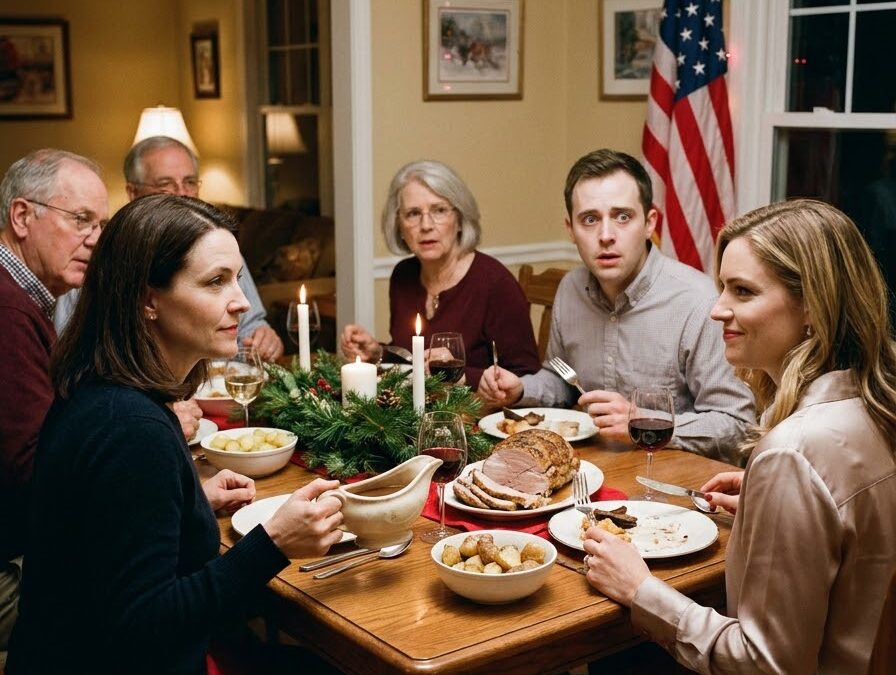
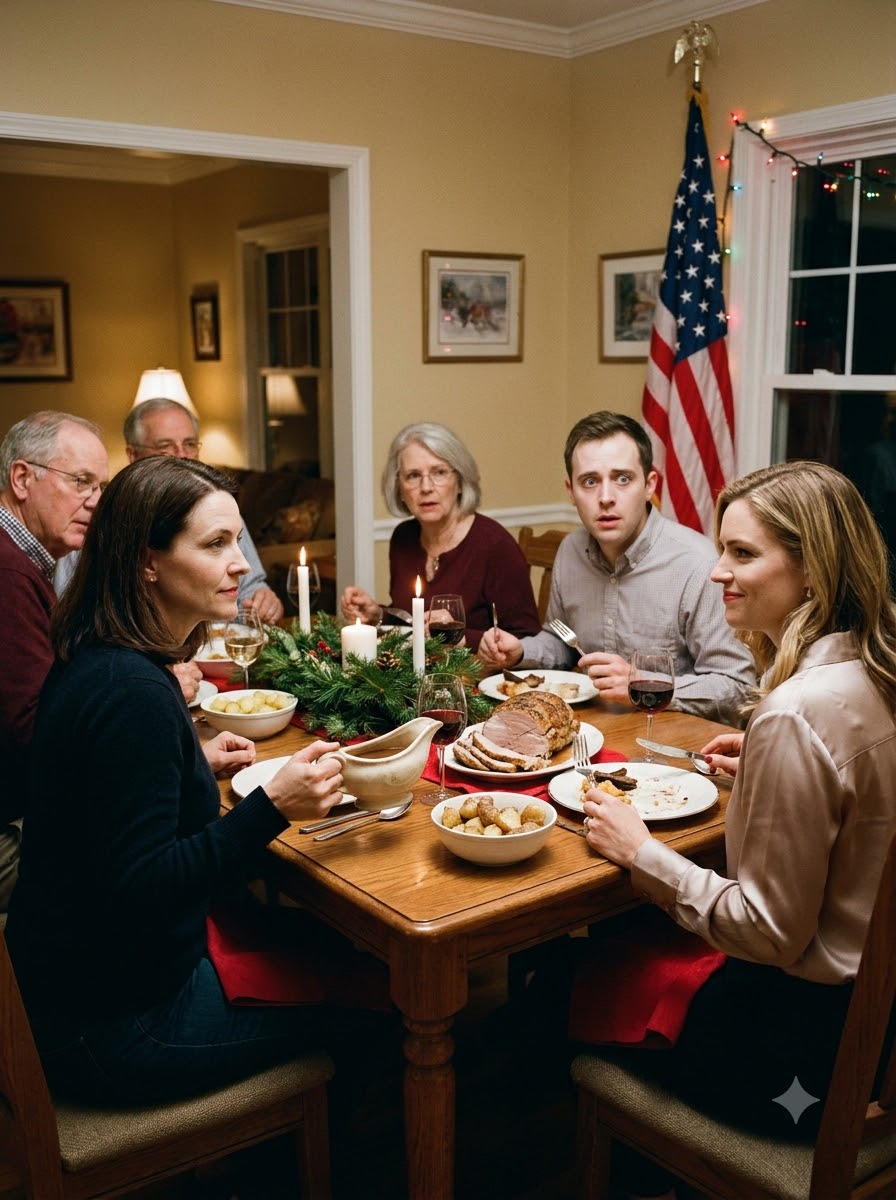
How does it feel to be the only one here without a career?
My sister asked across the Christmas table as casually as passing the roles.
Mom and dad laughed.
I reached for the gravy bowl and waited until they finished.
How does it feel knowing the one without a career signs your husband’s paychecks?
I asked.
Chairs scraped against my mother’s floor.
Daniel looked at me and his voice caught.
You’re I’m Greta, 34.
In my father’s house, I was still the daughter who quit nursing school.
He had spent years running HR at the plant, but he’d never asked what I did after I left.
My sister hadn’t asked either.
Nobody at that table had.
I let Daniel’s unfinished words sit there.
Before I tell you what he couldn’t finish, drop where you’re listening from in the comments.
Then, let me take you back.
The word sat there, and nobody picked it up.
Daniel’s mouth was still open around it.
My mother’s gravy bowl was still in my hand.
The 3:00 shift horn at Plat Valley Metal Works carries clear across the Loop River bottoms to the Lutheran Cemetery on the hill.
In Columbus, you can tell which families the plant is feeding by whose kitchen window that horn reaches.
My parents kitchen window has heard it for 40 years.
Everyone at that table had eaten off that horn.
My sister, Britta Roth, consulted for the plant.
That was her word, consulted.
Her husband, Daniel Roth, ran the production floor.
My father, Carl Halverson, had run the plant’s HR department for 28 years, and he’d gotten Daniel the job.
Everyone but one.
June Roth, Daniel’s mother, a retired school nurse, had driven down from Norfolk that morning with a pie wrapped in a dish towel.
She was the only guest at that table, and she was the reason my sister’s question had the word here in it, the only one here.
Everyone else could be counted.
June had folded her napkin into her lap when the laughing started, and hadn’t unfolded it since.
Here’s why I answered this time. after 10 years of not two reasons.
There was a stranger at the table and there was something already running that nobody at that table could see.
Something that had started in the fall and would finish in January whether I opened my mouth or not.
I decided when the leaves came down that this was the last Christmas I’d sit in that chair.
So I answered.
My father’s version of me is easy to find.
He tells it at the Husker Cafe on 13th Street to the supervisors who still call him Carl.
I ran HR for 28 years.
I know unemployable when I see it.
I raised one.
He said at the winter I was 25 and a man I’d gone to high school with told me because he thought I’d want to know.
I did.
It’s useful to know what you are in a place before you decide what to do about it.
Daniel wasn’t looking at my face.
He was looking at my hands.
And I knew which paper he saw.
The paper was his pay stub.
Every other Friday for two years at the bottom in type small enough to miss.
Authorized signature G.
Linfist.
He’d missed it for a while, then he hadn’t.
And the forms, 40 of them, give or take, since the sale closed. safety signoffs, floor budgets, the papers a production director signs and sends upstairs.
Each one had a line at the bottom for the owner.
Each one said G Linfist.
Daniel had signed under that name 40 times and sent it back up.
I am G.
Linavist.
That’s the name at the bottom of every check the plant has written for 2 years because I own the plant.
600 people work at Plat Valley Metal Works.
Two winters ago, an outfit out of Texas was set to buy it and move the line south, and Columbus would have kept the building and lost the horn.
I bought it instead through a lawyer, through a company called Loop Valley Holdings, with the bank’s help and everything I had.
The town read about it in the paper, sold to an Omaha group, terms undisclosed.
The new owner never came to the floor.
The new owner sent a signature.
Daniel finished the word in his head.
I watched him do it.
You’re the owner.
Nobody in that family had said the name out loud in 10 years.
Daniel had signed under it 40 times.
The name was my grandmother’s.
Astred Linkfist, my mother’s mother, kept the payroll for half the feed lots in Plat County from a kitchen table on a farm by the Lu in ledgers she ruled by hand.
When I was 22 and a year from finishing nursing school, she got sick and I moved into the farmhouse and learned the ledgers while I learned how to lift her.
Two years, she taught me the one thing she thought mattered about the work.
Sign slow.
People can tell when you rush one.
She died in the spring.
That fall at 24, I went to the county courthouse and took her name.
My father’s answer at the door.
You want to trade my name for a dead woman’s?
Fine.
Don’t bring it in this house.
My mother Ingred stood behind him and said nothing.
It was her mother’s name.
It was the name she’d given up to become a Halverson, and she let him call it a dead woman’s and didn’t say a word.
After that, I was Greta.
No last name.
At every table in that house in town, I was the Halverson girl who never did anything.
What I actually did was this.
I took Astrid’s feed lot clients and her ledgers to a rented room in Omaha.
Payroll isn’t exciting.
It’s the one bill nobody is allowed to be laid on.
By 30, I had 40 desks, 300 companies, and a plain sign that said Linfist Workforce.
Nobody in Columbus ever asked what the Halverson girl was doing in Omaha.
I let it stand.
I’ll tell you the truth about why.
Because I’ve promised myself I’d be honest with you about the parts I hid.
When they think you have nothing, they ask you for nothing.
And I kept waiting.
And this is the part that isn’t smart.
For one of them to ask what I did all day.
I stayed off the plant floor for two reasons.
After the sale, 600 people needed a quiet owner.
Not the Halverson girl story walking through the shop.
And I’ll say it.
Part of me wanted to own the thing my father measured people by and see how long they’d keep measuring.
What scared Daniel wasn’t the name.
It was a meeting six days earlier in a room I’ve never entered.
Brida got there first.
She always does.
She laughed one bright note.
The hostess laugh and set her wine down.
Greta, honey, what are you even talking about?
Then because a question with no answer in it makes her nervous, she supplied one.
Did you get a job at some payroll place?
Stamping checks?
Honey, that’s not that’s enough.
My father said it’s Christmas.
Who wants pie?
My mother said, already standing.
Daniel didn’t say anything.
His face had gone the color of the tablecloth.
June Roth wasn’t looking at me.
She was looking at her son the way a nurse looks at a chart.
I ladled gravy over my potatoes.
My hand did it the way it does everything.
It didn’t hurry.
I ate.
Nobody stopped me.
My mother came back with June’s pie and cut it.
And the knife went through the crust with the same small crunch it had made every year of my life.
And the room decided all at once and without a vote that nothing had happened.
Brida talked about the kid’s Christmas program.
My father talked about the roads.
Daniel picked up his fork.
His mother put her hand over his, the way you’d steady a glass.
I know what June saw in his face because Daniel told me in January in a parking lot, and I’m going to give it to you now instead of making you wait.
6 days before Christmas, he’d been called upstairs to the plant second floor conference room where two auditors from Omaha had a folder open.
The folder said Roth Strategic, my sister’s company, the one that consulted We just need to see what was delivered for these, the older auditor said and turned the folder around.
Three years of invoices as far back as an audit reaches.
Workshops, leadership retreats, culture training.
I’ll pull them.
Daniel said there was nothing to pull.
He’d known that for years.
Here’s how it worked.
And it’s short.
Old man Peterson, who owned the plant before me, signed anything my father asked him to sign.
And my father asked him to sign a small pilot for Brida’s new company back when she started it.
When my father retired, the plant replaced him with a part-time out of Omaha, and the approvals for people programs slid across the hall to Daniel’s desk.
The workshop stopped in 21.
The invoices didn’t.
Daniel initialed them because the alternative was a conversation in his own kitchen.
Then spring before last, a form came across his desk with a new line at the bottom.
G Linfist.
He knew that name.
He’d sat through my grandmother’s funeral.
He went home and asked Brida whether it could possibly be me.
She laughed for a full minute.
He timed it the way you do.
He couldn’t ask me. to ask me was to tell me what the invoices were.
So, he did the one thing he could do.
He told my sister the contract had to end.
“That’s my company,” she said.
“That’s my name on the chamber board.” He stopped looking after that.
He initialed and stopped looking until a Christmas table told him he’d been right.
He told the auditors he’d pull the deliverables.
There were none.
There was only my sister’s name.
My father caught up with me on the porch while I was doing up my coat.
He’d waited until the door was shut behind him.
He’s a man who prefers his meetings private.
Let me be clear, he said, which is how he starts when he isn’t.
You come into my house on Christmas and threaten your sister’s husband’s job.
After I got him that job, after everything this family, I didn’t threaten anything.
I said, “Who signs the checks?” You stamp checks at a payroll place.
Don’t dress it up.
I didn’t dress it up.
I let the porch light hum.
You’ve been unemployable since you quit nursing.
He said quieter, which is worse.
I told your mother that.
You told the cafe that, Dad, I heard.
That landed somewhere.
I watched it land, and I watched him decide it hadn’t.
He looked past me at the street, at the snow the plow had stacked, and he found his footing where he always finds it, in what he’s done for people.
I built this family’s name at that plant.
28 years.
You don’t get to walk in and the door opened behind him.
My mother in her apron holding a plate wrapped in foil.
Take some ham, she said.
That was all.
Not what are you two doing out here?
Not Carl.
Come inside.
Take some ham.
She held it out across my father’s shoulder, and I took it because I have taken that plate every Christmas of my adult life, and my hands knew what to do before I did.
Behind her in the window, June Roth was watching with her coat already on.
Mom handed me the ham like she had every year.
This year, her hand was shaking.
90 miles to Omaha.
The ham rode on the passenger seat in its foil, and every time I took a curve, it slid an inch, and I put a hand on it without looking.
I didn’t turn the radio on.
I didn’t call Paul Brandt, my lawyer, who would have answered on the first ring.
I didn’t call Walt Sorenson, who runs the plant for me, and would have answered on the second.
I’ll tell you what I thought about instead.
My grandmother’s headstone.
The summer I turned 26.
The day after a man from high school told me what my father said at the cafe.
I stood at her grave and made her a promise.
Not never again.
Never again in front of a stranger.
If they wanted to laugh at me, fine.
But not with somebody’s mother watching.
Not with a guest at the table.
Tonight there’d been a guest.
And there was the other thing, the one already running.
It would finish in January whether I spoke or not.
I hadn’t decided to say anything.
Brida decided that for me when she put the word here in her question.
What I could do about any of it had been decided on one page.
I’d written it 18 months ago and signed it.
The page has a date on it.
June, 18 months before that Christmas, 4 months after the sale closed in Paul Brandt’s office downtown with the window open on Farnum Street and the buses going by.
Walt had driven in from Columbus with a binder.
Every vendor the plant paid sorted by size because the bank that helped me buy the place wanted every contract looked at by outside auditors within 2 years.
Walt, who does not leave things for later, had already booked the first date the auditors had open.
It was 15 months out.
He set the binder down, opened it to the page he’d flagged, and didn’t say anything, which is how Walt says things.
Line 37.
Roth strategic, my sister’s company, paid by my plant, approved by my sister’s husband.
I want to be exact about what I had in front of me because it matters later.
I had three buttons.
I could end the contract with one sentence.
I could pick up the phone and call Brida and hear her voice change. or I could bury the page and let the fall come and see.
I didn’t press any of them.
I asked Paul for a sheet of paper and wrote one page.
That I was related to the owner of Roth Strategic.
That I was removing myself from every decision that touched that vendor.
That anything to do with it went to Walt and to the auditors and I didn’t get a vote.
That the review would happen when it was already scheduled to happen, not sooner, not later.
I signed it slow.
You know what the audit’s going to find, Walt said.
Then it’ll find it without me.
Walt wouldn’t cut a vendor before the outside review.
That was the bank’s rule.
And a vendor cut without one is a lawsuit.
So he did the next thing.
Every Roth invoice from that day on went onto a recovery list.
And Paul checked that the contract let the plant take it back.
Paul read my page twice.
He typed a copy for Walt’s file, and I signed that one slow, too.
Then he folded the original and put it in a drawer I’ve never opened since.
Astred would have done the same, he said.
Slower, but the same.
Then he gave me the one rule that came with it.
When you want to touch this, and you will go eat at somebody else’s table.
The audit had a date before I ever saw my sister’s name on the list.
I left the date alone.
I told you I kept waiting for one of them to ask.
Here’s the closest anybody came.
Thanksgiving that same year, 5 months after I’d signed the page.
My father was carving and complaining, which he can do at once.
Loop Valley Holdings, he said in the voice he uses for weather he doesn’t approve of.
Some ghost out of Omaha.
Nobody’s laid eyes on them.
Walt Sorenson won’t say a word.
Basically, I’m running it, Daniel said to his plate.
It was the kind of bragging that pretends it isn’t.
The owner doesn’t come around.
I do the walkthroughs.
I sign off on the floor.
The owners never even set foot in there.
Brida said, “Daniel is the plant.” My mother dropped the serving spoon.
It hit the hardwood and rang the way a spoon rings.
And everybody looked at it.
And I looked at my mother.
She didn’t look back.
She looked at the gravy.
Her face did something small around the mouth and then stopped doing it.
I sat with my hands in my lap and waited.
This is the part I’d change if I could change any of it.
I didn’t want to say it.
I wanted her to ask.
Greta, is that you?
Four words.
She had them.
I could see her holding them.
The way you hold a spoon you’ve decided not to use.
She bent down and picked it up.
She wiped it on her napkin.
She put it back in the bowl.
My father said something about the plow schedule.
And I said nothing because a woman who has been asked for nothing her whole adult life does not know how to go first.
My mother picked the spoon up off the floor and didn’t look at me for the rest of dinner.
Back to the winter I’m telling you about.
My mother called three times in the days after Christmas.
And I want you to notice what she didn’t ask because she never did.
The first call, your father is very upset.
The second, Brida’s beside herself.
The kids can tell something’s wrong.
The third, on a Sunday after church.
Can’t you just say it was a joke for the party?
Just say you were joking and we’ll all Mom, did you ask Daniel who signs his checks?
Nothing on the line.
The refrigerator running in her kitchen 90 m away.
Mom, did you ask?
I don’t need to ask things.
I don’t want to know.
She said it fast, like something she’d had ready for a long time.
And then she moved on and I let her because I was learning the shape of what she knew from the shape of what she wouldn’t say.
She told me about the party instead.
My parents’ 40th, Saturday, January 17th.
Brida was organizing.
Brida had gotten the hall.
Which hall?
Peterson Hall, my mother said. at the plant.
Your father’s always used it.
My plant.
My father’s hall.
I understood what my sister was building.
Brida called a few days after that, and she opened with my own question because she’d been thinking about it, too.
How does it feel to make mom cry at Christmas?
I didn’t answer that one.
She didn’t need me to.
She had the whole call written.
Daniel says the owner’s some investment group out of Omaha, she said. and you must work in their payroll office, which fine, Greta.
Good for you.
But you made it sound like you own the place.
Here is what had happened in my sister’s kitchen.
And I’m giving it to you straight.
Daniel had lied to his wife.
Not a large lie, the smallest one that would keep the auditors out of his house.
An investment group, a payroll office, a clerk. and Brida had wanted to believe him more than she’d wanted anything that week.
Between the two of them, I was a clerk.
She’d done her homework, though.
Give her that.
I looked you up, she said.
Greta Linkfist, no LinkedIn, no Facebook.
There’s a Linkfist workforce in Omaha, and it’s a payroll shop, honey.
There’s not even a name on the website.
People with careers have LinkedIn.
She let that sit.
She was proud of it.
Then the plan in the voice she uses on the chamber board.
Mom and dad’s 40th is at Peterson Hall on the 17th.
Dad’s hall.
I’ve got the supervisors coming.
Pastor the chamber people.
We’re going to put this to bed.
You’re going to come and you’re going to behave and we’re going to have a nice night.
Anyway, can you do that?
I’ll be there.
Good.
A pause.
It’s dad’s hall, Greta.
It was a room.
My father taught me something about rooms without meaning to.
Over 28 years of holding meetings in other people’s offices.
She was choosing the room.
Dad taught me that whoever chooses the room thinks they own it.
Daniel found my car before he found me. a dark blue Subaru with 200,000 miles on it in the lot behind the twotory brick building on Dodge Street where Linkfist Workforce keeps its 40 desks.
He was leaning on it when I came out at 6.
He’d driven 90 miles and hadn’t called first, which told me how the drive had gone.
“You’re her,” he said.
“You’re the name on the checks.” “Yes.” “How long?” “2 years this February.” He nodded like a man, taking a punch he’d ordered.
What did I tell her?
He rubbed his face.
I told her you were a clerk.
I know what you told her.
What do you want, Daniel?
Look, I’m not asking for a favor.
He was.
I’ll resign.
Quiet.
I’ll say I got something in Grand Island.
You let the audit close out and nobody has to.
I’m not in the audit.
He stopped.
I took myself out of it 18 months ago in writing.
Everything about your wife’s company goes to Walt and the auditors.
There’s nothing for me to let.
I watched him do the math.
18 months.
He counted back and landed where I’d landed on a June and then on a table with a turkey on it.
You knew?
He said you sat at Thanksgiving and knew what those invoices were.
Yes.
And you didn’t.
It wasn’t mine to say.
It was yours.
The lot lights came on.
He looked at the building behind me, the plain brick, the plain sign, and I saw him understand that the payroll shop was the thing.
That there was no other thing.
That his wife’s whole story about her sister had been assembled out of the wrong pieces of the right facts.
She won’t let me stop it, he said.
It’s her name on the chamber board.
He asked if there was a way out.
I told him there was exactly one and it wasn’t through me.
He drove home and tried.
I know because he told me and because Brida told my mother and the two versions only differ in who was reasonable.
She was at the kitchen island with the seating chart, a calligraphy pen, and a box of place cards on heavy cream stock she’d ordered from somewhere nice.
Daniel stood on the other side of the island and put his keys down.
The audits asking about your invoices.
Then show them the workshops.
There weren’t workshops, Brida.
Not since 21.
There were I have decks.
Decks aren’t workshops.
She capped the pen.
Don’t you dare let my sister into this marriage.
She said it evenly.
The way she says everything that matters, so it can never be quoted back as shouting.
If you lose that job, it’s because you let her scare you.
She stamps checks, Daniel.
You run the plant. act like it.
He didn’t answer.
He’d used up his three sentences.
His name was already on the chart.
Head table beside hers underlined.
She slid the seating chart between them on the counter.
And that was the end of the conversation.
Two nights later, my mother called crying.
And this is the part where I nearly broke my own word.
Brida says Daniel could lose everything.
She was in the bathroom.
I could hear the fan. the kids school, the house.
Greta, you work there.
You can stop this.
You can just talk to somebody.
I told her I’d call her back.
I sat on the edge of my bed in Omaha with the phone in my hand and typed a message to Walt.
Can you ask the auditors to go easy on the Roth file?
I read it.
I read it the way my grandmother taught me to read a signature.
Slow for what it was promising.
Go easy meant use it.
The thing I’d put in Paul’s drawer 18 months earlier, the thing I’d said out loud, I wouldn’t touch.
I’d be touching it.
And if I touched it, Brida would have exactly the story she wanted.
The sister with the grudge leaning on the auditors, and 600 people whose plant needed clean books would be working for a woman who’d bent the books for her family.
I held the delete key down letter by letter, not all at once, because I wanted to feel each one go.
Then I called Helen Brandt.
Paul’s wife, 30 years teaching third grade.
A woman who has never once in my hearing asked how anyone feels.
Come Sunday, she said.
I’m making Astard’s pepper cocker.
You cannot talk about it here.
I said I would.
I want to tell you something true since I’ve promised.
I wanted to be the kind of daughter whose mother stops crying.
I wanted it so badly my thumb had typed the message before the rest of me had voted.
That wanting doesn’t go away because you’ve owned a plant for 2 years.
It just gets outvoted.
I deleted it.
Paul’s rule allowed exactly one thing that night.
Dinner at somebody else’s table.
Sunday, the Brandt’s Kitchen in Dundee.
The good smell of cardamom and molasses coming off a cooling rack.
Helen put a plate of pepper cocker in front of me.
My grandmother’s recipe.
The thin ones that snap.
Paul sat down across from me and said the only three things he was going to say.
Report lands tomorrow.
Walt’s decision follows.
You’re on neither page.
Eat.
Helen said.
I picked up a cookie.
My hand shook.
It hadn’t.
Not once.
Not at the table.
Not on the porch, not on the highway.
It shook now over a plate of cookies in a kitchen where nobody needed anything from me.
And I put the cookie down because I didn’t trust it to reach my mouth.
Helen put her hand flat over mine and didn’t say a word and left it there while Paul looked at the window.
And after a while, the shaking stopped and she took her hand back and pushed the plate an inch closer.
Paul’s phone buzzed on the table.
He read it and turned it around so I could see.
Walt Britta Roth called to take the 17th from 30 chairs to 120.
Hall was booked in November.
I’m not the one who cancels things.
Good.
I said 30 chairs had become 120 and the audit report would land on Walt’s desk first Monday, 5 days before the party.
Walt called at 1, which is when Walt calls and he didn’t ask how I was, which is how I knew.
I’m not asking you anything, he said.
I’m telling the owner what the owner needs to know.
That’s all this call is.
Go ahead.
Roth strategic.
More than half a million in the 3 years the audit covers.
Nothing delivered since 21.
Every invoice approved by Daniel. auditors recommend we end it, get the money back, and deal with the approver.
I listened to the horn go in the background, faint through his office window.
Do what you’d do if my name weren’t Halverson.
Already did, Walt said.
I sent him home at noon.
I didn’t ask how Daniel took it.
It wasn’t mine to ask.
I pulled a sheet of paper toward me on my own desk in my own building and wrote one line for Paul’s drawer to sit on top of the page from 18 months ago.
No vote.
G Linfist.
I signed it slow.
Then I asked Walt if there was anything else, expecting nothing.
Walt said there was one more signature on the first contract from 2018.
He read me the name.
Carl Halverson, director of human resources. a small pilot under his signature the year Britta started her company employee culture initiative it was called.
My father had walked it across the hall to old man Peterson and Peterson had signed because my father asked and that was the seed.
Daniel had only watered it.
I sat with that for a minute after Walt hung up.
I want to be careful here because it would be easy to make this sound like a win.
It didn’t feel like one.
My fingertips went cold, the way they do when you’ve been holding something heavy, and set it down, and the blood comes back wrong.
My father had laughed at the only one here without a career.
My sister’s career had begun with plant money under his name, and he had known that, and he’d laughed anyway.
And none of it had been visible from where I sat with the gravy.
I called Paul.
Is dad in the report?
In the appendix?
No action?
He’s retired.
A pause I could hear him deciding on.
It’s page 19.
Appendices get read.
Greta, the other call came that evening from a number I didn’t know with a Norfolk exchange.
This is June Roth, Daniel’s mother, the guest with the pie.
I don’t know what’s true.
I’m not calling to ask you.
I saw my son’s face at that table, and I raised him better than that face.
I didn’t say anything.
She didn’t need me to.
If you need a witness who isn’t blood, she said I was there.
Then she said good night and hung up because she’d said her one thing and that was the whole of her.
Dad’s name was on page 19.
He didn’t know yet.
Brida was already printing the programs.
Those programs would be handed out on a Saturday night in a room I never booked.
If you want to be there when the lights come up, subscribe and stay with me.
We’re almost through the door.
The programs were on the kitchen island when Daniel walked in at 2 in the afternoon with a cardboard box.
40 years in gold script over a photo of my parents from their wedding.
200 copies.
Brida looked up from them.
Why are you home?
He set the box down.
The report was in it, and on top of the report, a single sheet Walt had handed him at the door with the words, so you know who wasn’t deciding.
My page, the typed copy from Walt’s file.
18 months old.
Walt sent me home.
Daniel said, “The contract’s done.
The plant wants the money back.” She didn’t cry.
I need you to understand that about my sister.
She didn’t cry and she didn’t sit down.
She went straight to work.
Who signed it?
Walt and the auditors?
Not the owner.
The owner took herself out of it.
There’s a letter.
She read my page standing up.
She stopped on one word.
Daniel watched her stop on it.
Related.
She said, “Greta stamps that name for a living.” Daniel Walt typed this up and she stamped it.
I’ve thought about that a lot.
My sister reading over my own signature that I had removed myself and reading it as the paperwork of a ghost.
An investor in Omaha, she said, does not care about a party in Columbus.
This is Walt.
Walt has always hated me.
I have decks.
We’ll dispute it.
Britta, the party’s in 5 days.
Fast now.
Building it.
We say you’re transitioning, consulting, new chapter.
Nobody contradicts a man at his father-in-law’s anniversary.
Half the supervisors know.
Then we say it first.
From the next room, the kid’s show went to commercial.
Brida lowered her voice and made it a weapon.
Do you want them to hear this?
Then help me.
She picked up the phone.
First the chamber to move her member spotlight into the party.
Seven years serving the plant.
A nice moment right after the toast.
Then my father.
Dad.
She said they put your program in the report too.
I wasn’t there for the rest of that call.
I only know what it did.
She put the letter under the programs.
5 days. she said.
Nobody scrapes a chair at Dad’s anniversary.
My father walked into Linfist Workforce on Wednesday morning without calling because Brida had told him to be afraid and my father’s fear has always traveled as anger.
He stood in the doorway of the main floor and counted the desks.
I watched him count 40.
He looked at the door of my office where a plate says G.
Lindfist, and he didn’t say anything about it.
And then he came in and shut it.
Whatever you told those auditors about 2018, I’ve never spoken to the auditors.
That pilot was a legitimate program.
Then the appendix will say so.
He put both hands on the back of my visitor’s chair.
Standard practice at the time.
He said every plant did culture work.
He’d hired 1,400 people over 28 years and never once.
After everything I did, he said, I got that boy his job.
I built this family’s name at that plant.
I know, I said.
It’s on page 19.
He left.
He didn’t slam the door.
He’s not a slammer.
He closed it the way you close a file.
I sat and looked at the chair he’d held.
He’d stood in a building with my name on the door, 40 desks deep, and he had not asked.
It’s a specific thing to watch a man not ask.
He never asked if I owned the plant.
He only asked what I’d say about him on Saturday.
The chamber post went up before my father had made it back to Columbus.
My sister moves fast when she’s frightened.
It looks exactly like confidence.
Roth Strategic, 7 years serving Plat Valley Metal Works.
Join us Saturday at Person Hall as we celebrate Carl and Ingred Halverson’s 40 years, plus a very special member spotlight.
There was a photo Britta in front of the plant sign in the good coat.
The comments were polite and slightly wrong.
So proud of this family from a supervisor’s wife who I’d learn had said something different at the Husker Cafe that morning.
Congrats, Britta, from a woman who’d already heard at church that Daniel’s truck had been in his own driveway on a Monday afternoon.
The town knew half.
It’s a town that knows half of everything before noon and pretends to know none of it after dark.
Walt called.
Plant phone rang nine times before 10.
Wives mostly.
Two from the church.
A pause.
Not one of them asked about the anniversary.
It’s her post, I said.
Not our business.
I’ll say it once more so it’s on the record.
That hall was booked in November.
Not my party to cancel.
I know.
Paul asked me that night over the phone.
The question he’d been holding.
Do you want to go?
Yes, as myself.
Which self?
I looked at the plate on my office door.
Both.
He didn’t argue.
He said Helen would drive if he couldn’t and that he’d wear the gray suit.
And then a text came from a Norfolk number while I still had the phone in my hand.
June Roth.
Four words.
I’ll be there Saturday.
My mother called at 20 to midnight from the bathroom again.
The fan going, her voice under it like something hidden in a drawer.
Just say it was a joke.
Whispering Saturday.
Say you were joking.
Your father can’t.
Mom, he can’t take it in front of those men.
Greta, you don’t know what it Mom, you’ve never once asked me if it’s true.
The fan.
Just the fan.
Ask me.
I could hear her breathing.
I could hear her decide.
And I could hear how long it took.
And I want you to know that I would have told her anything.
Every part of it.
The name, the plant, the page in Paul’s drawer.
All she had to do was make a question out of four words.
I can’t, she said.
Then I’ll see you Saturday.
I hung up first.
I have never in my life hung up on my mother first.
I set the phone face down on the nightstand and sat in the dark with my hand on it the way you keep a hand on something that might still ring.
And it didn’t.
She couldn’t ask.
I’d waited 10 years for that question.
I stopped waiting at 11:41 the night before the party.
I wasn’t in the Roth house.
Daniel told me about it later on the phone that summer and I’ve kept it exactly as he gave it because it’s his.
He sat in the little room off the garage that Brida calls his office and that he calls the garage.
On the desk, two pieces of paper.
The first was mine.
The page Walt had handed him at the door on Monday.
So, you know who wasn’t deciding?
He’d read it four times that week.
He told me the number.
Four.
The first time for what it said, the second for the date, the third for the signature, and the fourth.
He said this slowly for the fact that in 18 months, with his job and his wife’s company and his father-in-law’s name sitting under it, I had never picked it up.
The second paper was Britta’s an index card in the calligraphy hand.
Three lines transitioning to consulting.
The plant is owned by an Omaha investment group.
Greta works in their payroll office and on his phone unlisted to for a day and then listened to.
A voicemail from Norfolk.
His mother.
Nine words.
No greeting.
Whatever you say tomorrow, say it as a man.
He didn’t decide that night.
I believe him because he had no reason to lie to me by that summer and because I know what it’s like to carry two versions of yourself into a room and let the room choose.
He turned off the desk lamp.
He picked up the index card in my page and stood in the dark of the garage with one in each hand.
He folded her talking points into one jacket pocket.
He put my letter in the other.
Saturday morning, I dressed in Omaha the way I dress for anything. the navy coat, plain shoes, nothing that would need explaining.
Helen came up the stairs with her hand closed around something and opened it.
A small silver brooch.
Astrids, a wheat sheath the size of a thumbnail.
Hold still, Helen said, and pinned it to my lapel and stepped back and looked at it and nodded once, which from Helen is a speech.
Paul drove the gray suit 90 miles of white fields and nobody saying anything that needed saying.
Peterson Hall sits inside the plant fence, a long low brick room the Petersons built for company picnics in a wetter year and Walt was at the side door with his keys when we pulled up.
He held the door and looked at me over it.
Owners here, he said.
Not tonight, Walt.
Guest.
Guest then?
He stepped aside.
Behind us from the line building, the Saturday half shift horn went.
Once long, I felt it in the back of my teeth, the way I’d felt it in my mother’s kitchen my whole life.
June Roth was waiting at the door with her coat still on.
She said she wasn’t sitting with family.
120 people, give or take, on folding chairs at round tables under a banner that said 40 years in gold.
And in the corner, small the plant’s logo because it was the plant’s hall.
And Britta wanted everyone to remember whose.
Supervisors in press shirts, their wives, pastor and his wife, the chamber director in a blazer.
My parents’ friends from church who’d known me since I was baptized and had called me the Halverson girl ever since.
The head table faced the room.
My father, my mother, Brida, Daniel, the two kids in Christmas clothes.
Brida’s chart had put me at table nine by the kitchen door next to the coffee earn.
I found my card and sat down.
June Roth sat down beside me.
The room noticed.
You could watch it.
Notice the way you can watch wind cross a field.
Daniel’s mother at table nine with the sister and two people nobody knew.
Paul on my other side in the gray suit.
Helen with her purse in her lap.
At the head table, my mother saw and put her hand to her throat and took it down.
My father’s jaw did the thing it does.
Brida worked the room on the way to the microphone, touching shoulders.
She stopped at 9.
Greta made it to the table brightly.
She’s between things right now.
She squeezed my shoulder and moved on.
Then the toast.
She’s good at toasts.
40 years, folks.
This family believes in work.
Dad gave 28 years to this plant.
Daniel runs it.
And my little company’s been proud to serve it.
7 years now.
Applause.
Warm enough.
And Greta.
A fond little laugh turning to find me.
Christmas got a little dramatic.
My sister has a vivid imagination.
We love her.
The laugh came.
It was thinner than at Christmas.
A few tables didn’t laugh at all, and the ones that did looked around to see who hadn’t.
Then she said the words she’d written for Daniel and held the microphone out to him.
Daniel, honey, tell everyone who owns the plant and about your next chapter.
He stood up.
He stood the way you stand when your knees have been asked to do it and your mind hasn’t voted yet.
I looked at his jacket, right pocket, left pocket.
So did his mother beside me with her arms folded high across her chest, the way she’d have folded them over a child with a fever.
The room went quiet the way a room does when it doesn’t know why it’s gone quiet.
At the back, Walt stood by the coffee earn with a cup in his hand and didn’t drink from it.
At the head table, my father leaned back to enjoy it.
My mother looked at the tablecloth.
I had a cup of coffee in front of me and my hand was around it and my hand didn’t do anything.
It’s the one thing I can promise you about myself.
In a room like that, my hands hold still.
Daniel looked down the length of the hall, past 120 faces, and found mine.
Britta, “Go on,” she said, smiling, holding the microphone.
He took a paper from his pocket.
It wasn’t the one with her handwriting on it.
He didn’t take the microphone.
He didn’t need it.
The plant is owned by Loop Valley Holdings, Daniel said.
That’s G.
Linkfist.
That’s Greta.
Nobody moved.
She’s owned it for 2 years.
I’ve signed under her name 40 times.
She’s not in payroll.
She is payroll.
Brida’s smile stayed.
Her hand with the microphone came down an inch.
I told my wife she was a clerk.
I lied.
Somebody at table 4 set a fork down.
The contracts my wife build.
I approved them.
There weren’t workshops.
The audit found it.
I’ve been home since Monday and half this room knows it.
He held up the paper.
One page.
He read the date off the top of it and the signature off the bottom.
This is the owner taking herself out of it.
18 months ago.
She’s never once used it.
He put it down on the head table in front of my father.
My father didn’t touch it.
Chairs scraped louder this time.
There were 120 of them.
Brida got the microphone back up.
He’s lying bright fast to the room.
She got to him.
She’s been She is threatening our kids.
My father stood not to her at her.
He’d known since Monday.
This was for the room.
You build the plant under my program, under my name.
You signed the first one, Dad.
That was a pilot.
Seven years, Dad.
You were so proud.
You told everybody at the cafe.
The microphone squealled.
Pastor looked at the floor.
A supervisor’s wife at table 6 put her hand over her mouth and kept it there.
Brida swung toward our mother.
Mom, tell them.
Tell them she’s making it up.
And then my mother. nod into the microphone.
Across the room, over 120 heads to me in a voice I had never heard her use in public because she had never once in her life said something in public that hadn’t been rehearsed.
Greta, please.
I knew she was standing.
Since the church check, I saw mom’s name with your initial on the plants check and I put it in the deposit bag and I made myself not think about it.
Since the spoon, Greta.
Since the you knew, my father said.
He turned all the way around to look at his wife.
40 years.
The banner said.
So, my mother said she’d known since the spoon.
Nobody at the head table was looking at me anymore.
I stood up.
I didn’t go to the microphone.
I didn’t need it.
The room had gotten so quiet that a woman speaking at table 9 could be heard at the head table. and I’d learned my volume from a man who ran meetings for 28 years.
Mrs. Roth.
My sister’s head came around beside me.
June didn’t move.
She knew which Mrs. Roth I meant.
Nobody in my sister’s life had ever called her that in that voice.
It’s her married name.
It’s the name on her company.
You asked me a question at Christmas.
I answered it.
You don’t get to ask me that anymore.
Then my father.
Dad.
You told the cafe you raised one.
You raised the one who signs the checks.
You just never asked.
Then my mother.
I didn’t say anything to my mother.
I looked at her across the hall for as long as it took her to understand that this was the whole of what she’d get, and she understood and sat down.
Then the room, because the room was mine, in the only sense that mattered, and had been for 2 years.
The plant’s fine.
Your checks clear.
Friday.
Same signature.
I picked up my coat.
Paul stood.
And Helen and June Roth, who did up her buttons like a woman leaving a hospital shift.
We walked the length of the hall past 120 people who’d known me since I was baptized.
And not one of them said the Halverson girl, not even with their faces.
Walt had the side door.
“Ma’am,” he said, and held it.
Behind me, my sister found her voice and it was the old one.
Greta, Greta, after everything this family, I had my hand on the push bar.
It was cold and it was steady and I noticed both.
And I’ll name the feeling for you because I promised to be plain where I could.
It was clear.
Clear as the horn in the morning.
Clear as a signature.
You didn’t rush.
I didn’t answer.
The last thing they heard from me was the door, and it didn’t tremble.
The consequences came the way real ones do on paper over days without a soundtrack.
Sunday night, Daniel resigned before Walt could decide anything for him.
Walt accepted it the next morning.
The plant wanted its money back from Roth Strategic, and that would be the lawyer’s problem, and it would be a long problem, the kind that comes with letterhead for years.
The chamber board met and asked my sister to step down.
She stepped down.
The member spotlight never ran.
By March, there was a realtor’s sign in her front yard.
The telegram ran one paragraph on page three.
No drama.
It’s not a dramatic paper.
Plat Valley Metal Works, purchased two years ago by Loop Valley Holdings, is owned by Greta Linkfist of Omaha, the company confirmed.
Ms. Linkfist declined to comment.
I declined to comment.
I’d never had a reporter call me before.
It turns out I’m good at it.
At the Husker Cafe on 13th Street, I’m told the supervisors who’d sat with my father over 6 a.m. coffee for 28 years began to take the booth by the window instead.
Nobody said why.
Nobody needed to.
My father drank his coffee at the counter for a week and then stopped going.
I read all of it in Omaha at my own desk with a door open.
The telegram printed the name on a Tuesday.
My mother’s letter came two days later.
It came care of Paul’s office.
My mother didn’t have my address.
She’d never asked for it.
She still had her own mother’s lawyers.
Helen had it waiting on her kitchen table when I got there.
A church envelope.
My mother’s handwriting. the round careful script the Lutheran school drilled into her generation.
I read it standing up the way Brida had read my page.
She’d seen it on the church check that spring two years back when the plant’s donation came in and she was doing the deposit for the council and there at the bottom in blue ink was her mother’s name with my initial in front of it.
She’d put it in the bag.
She told herself it was a common name because and she wrote this plainly.
I’ll give her that.
Your father can’t have been wrong for 10 years and I have to live with your father.
She didn’t apologize for laughing.
She explained the laugh.
Those are different things.
And my mother has never known it.
Come home for Easter, she wrote.
Your father won’t mention it.
I read it twice.
The second time I had to stop at your father and start the line again.
And Helen, who was drying a pan, stopped drying it.
What does it say?
It says she’d like me to keep being small.
I folded it, but with better ham.
Helen laughed.
One short bark surprised out of her and then didn’t and put the pan down and came and stood next to me at the table, not touching, just there.
I didn’t write back.
I want to be clear about what that is and isn’t.
It isn’t rage.
I don’t have any left.
I spent it years ago on a highway.
It’s simpler than rage.
When the invitation is to a table where you’re still small, you don’t argue with the table.
You don’t come.
I put the letter in the drawer with the courthouse form.
Same drawer, different decade.
Early February, I walked onto the floor of my own plant for the first time through the front door in the navy coat with Walt beside me and nothing in my hands.
He’d told the shift the night before.
He hadn’t made a speech.
Walt doesn’t.
He’d said the owner was coming through in the morning and her name was Linkfist and that was all he had.
So, the floor knew.
The supervisors nodded as we passed and said, “Miss Linkfist.” And I heard in that title what Walt had told them to hear and what he decided, and I let it stand.
At the end of the line by the press, an old man in a plant cap took his glove off to shake my hand.
“Your grandma did my daddy’s payroll,” he said.
“On a kitchen table out by the river.
She never rushed a signature.” He put the glove back on and went back to the press.
And that was the whole conversation.
And I’d have driven 90 miles for it.
Then Walt’s office and the payroll authorization for the two weeks and Walt’s door which he left open.
It’s a heavy door on a spring.
You have to prop it.
He propped it with a brick and went to get coffee.
And I sat at his desk with the line noise coming in and signed the bottom of the page.
Not G, not initials.
Greta Linkfist.
All of it.
Slow.
Relief.
That’s the word.
And I’ll use it.
Relief.
Plain.
Like the first deep breath after a long climb, a brick in a door and my whole name on a page.
June Roth called while I was still in the chair.
She wanted to know if I’d come up to Norfolk for coffee some Saturday.
I said yes before she’d finished.
Walt walked me out through the front.
At the door, he stopped.
On the way out, Walt said Daniel had asked for one thing.
It wasn’t a job.
Daniel had called Walt from Grand Island where a warehouse was hiring for second shift.
He’d asked for a letter, dates of employment, title, nothing more.
The letter any plant writes for anyone who leaves it.
You want to weigh in?
Walt said.
Same as anyone.
I have no opinion.
That’s what I figured.
He’d already had it typed.
I want you to notice what I didn’t do because it’s the only power I’ve used in this whole story.
I didn’t help him.
I didn’t hurt him.
I let a letter be a letter.
Easter came.
I didn’t go.
I didn’t send anything.
And I didn’t explain because an explanation is a door left open and I’d shut this one from the inside.
On Easter Sunday, my father left a voicemail.
The first one of my life.
Your mother said a place for you.
Seven words.
I listened once and didn’t call back.
Dad said mom had set a place for me.
I’d set one, too.
It wasn’t in Columbus, June.
The plants picnic at Pony Park.
600 families on the grass by the river.
Walt at the big grill in an apron someone had bought him as a joke, and he wore without one.
Helen had brought the peppercore, two tins, Astrid’s recipe.
She’d set them out on the dessert table between a party tray of Oreos and somebody’s brownies on a paper plate with no label and people took them and nobody knew what they were and Helen watched them go with her purse in her lap.
June Roth found me at the edge of the shade.
She’d driven down from Norfolk.
She put her hand on my shoulder, not a pat, a hand left there, and said her one thing.
I’m sorry for my boy.
He’s sorryer.
He’s on second shift in Grand Island now.
He says it’s honest.
It is, I said.
She nodded and took her hand back and went to get a plate because she’s a woman who says a thing once and then goes and gets a plate.
A boy of about seven, somebody’s grandson came up to me with a hot dog and looked up.
Are you the boss?
I signed the checks.
I said, “Walt’s the boss.” He accepted that the way children accept a clear sentence and went back to the river.
Brida had taken the kids to Lincoln in the spring.
June told me that later at the table with her plate.
She said the kids were fine.
She didn’t say Brida was and I didn’t ask and we let the sentence stand where it was.
Daniel wasn’t there.
He hadn’t been asked to be and he wouldn’t have come.
I looked across the park anyway at the far grill out of an old habit of counting who was in a room.
His not being there was right.
Some absences are a kindness, and that one was his.
Helen’s pepper cocker sat between the Oreos and the brownies.
Nobody asked whose recipe.
They just ate.
If someone at your own table ever asked you how it feels, and everybody laughed.
Tell me in the comments what you reached for instead of answering.
I read everyone, usually late, over coffee.
And if this story earned it, a like and a subscribe help the next one find its table.
Dusk.
I walked to the edge of the park where the trees open, and you can see the plant’s roof line across the river, the long low shape of it, and the light on the water tower.
The 6:00 horn went once long.
My phone buzzed in my coat.
Britta, the first message since January.
Three words, a question mark, and nothing else.
How does it feel?
I looked at it a long time.
Not because I was deciding, because I wanted to be sure I’d seen it right.
That this was the question.
The whole question coming back to me after 10 years and a Christmas and a hall full of chairs from the only person who’d ever asked it and never once wanted the answer.
I’m not going to answer her.
I’m going to answer you.
It feels like this.
A name you chose on a check that clears in a town that finally says it out loud.
I put the phone in my pocket.
The horn finishes.
I go help Walt fold the tables.








