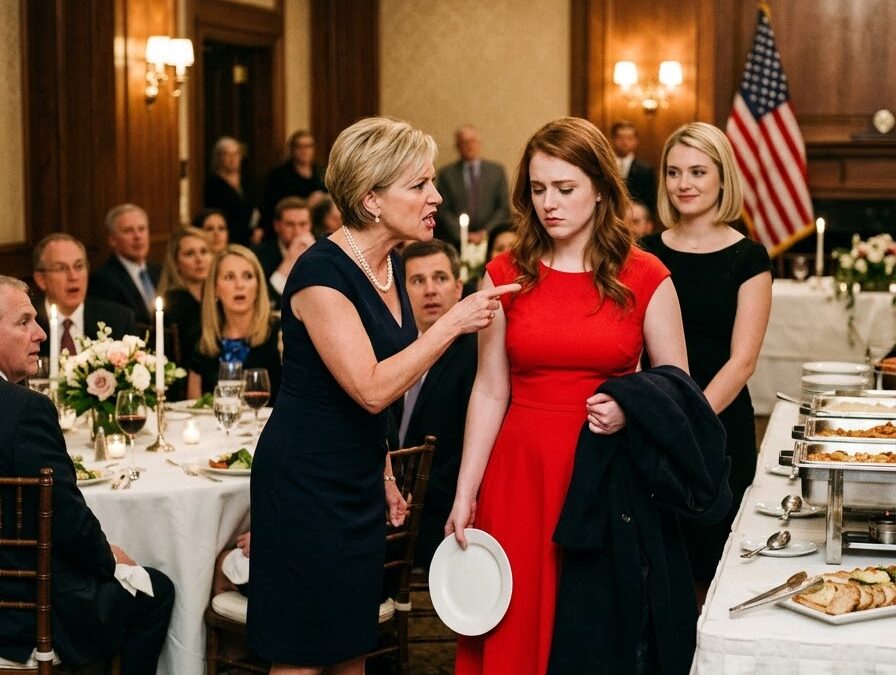
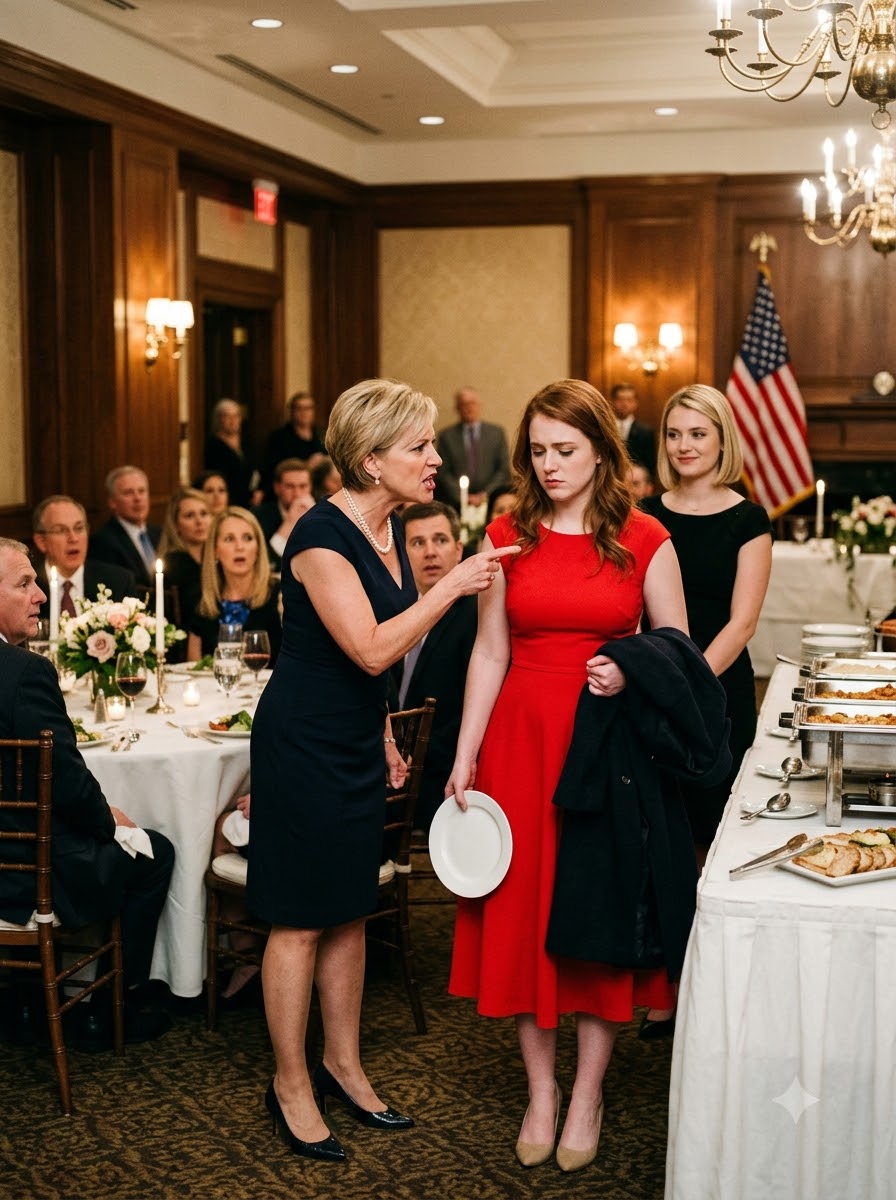
At my parents’ party, my mother pursed her lips and said, “Don’t pile your plate so high. You aren’t the one paying for this meal!” My sister smiled. I set my plate down, put on my coat, and walked out. A short while later, the manager approached the table: “The woman in the red dress has cancelled the payment.” Their faces turned deathly pale
My name is Nora Callahan, and I’m 35.
I was standing in the private dining room I had booked and paid for, holding a plate my own mother had just told me to put down.
The candles were mine.
The flowers were mine.
The little gold foil cards printed with “40 wonderful years” were, in every way that mattered, mine too.
My sister looked at me across the table with the small, satisfied smile she always wore.
The one that said she was doing me a favor by letting me stand in the room at all.
What happened in the next minute and a half cost my family far more than they had ever paid me for anything.
And I never once raised my voice while I did it.
Welcome to Quiet Table Stories, where the women who never got a seat finally pull one out for themselves.
Stay a while.
And if you’ve ever been the one who holds a family together while somebody else takes the bow, you already know exactly where this is going.
The phone call came on a Thursday, which is how my mother’s requests always arrived.
Folded inside a compliment sharp enough to leave a mark.
“Nora, you’re just so wonderful at organizing things,” she said.
“Your father and I want a real celebration this year.”
“40 years.”
“You’ll take care of it, won’t you?”
I said yes before I even noticed she hadn’t asked anyone else.
That was the shape of my entire life, if I’m being truthful with myself.
When the furnace died, they called me.
When Dad’s car needed new tires, they called me.
When a cousin got married two states over and everyone needed somewhere to stay, the hotel block somehow ended up on my card.
I was the dependable one.
That was always the phrase.
Delivered with a smile.
The way you’d praise a well-built machine.
My sister Vivienne was the beautiful one.
The one who made every photograph look like it belonged in a magazine.
I was the one who made things function.
For years, I told myself there was something noble in that.
Somebody has to be the person people can lean on.
And I was proud to be her.
But there’s a real difference between being relied upon and being written off.
And I had spent 35 years refusing to notice how thin that line actually was.
My mother, Diane, never once asked whether a date worked for me or whether I could afford what she was asking.
She assumed it the way you assume the tide will come in.
That Nora would simply handle it.
And I always did.
I hung up that Thursday and, out of habit, opened a fresh spreadsheet because that’s what I do for a living.
I run a small accounting practice out of a converted loft above a print shop downtown.
And I’m good at it.
People trust me with the truest version of their finances.
The messy parts.
And the hopeful parts.
And I make it all balance to the last cent.
Numbers don’t flatter anyone.
And they don’t lie.
A column either adds up or it doesn’t.
And when it doesn’t, you go find the missing entry and correct it.
I had built my whole professional identity around that instinct.
Find what’s missing.
Fix it.
Carry the difference until the total lands where it belongs.
What I never let myself notice was that I had been running my own family exactly the same way.
Except I had never once opened a ledger for myself.
I covered shortfalls and called it devotion.
I absorbed costs and called it closeness.
If you’d asked me how much money I had poured into keeping my parents comfortable and my sister’s image polished over the last decade, I couldn’t have told you.
Because I had made absolutely sure never to add it up.
An accountant who refuses to audit one specific account.
That account was me.
I told myself for years that family wasn’t a transaction, so there was nothing to track.
It’s a lovely thing to believe.
It’s also precisely what someone tells you right before they hand you an invoice.
That night, entering line items into the party budget, a small, unwelcome voice in the back of my mind finally asked the question I had spent a decade avoiding.
In all these years, who had ever kept a ledger for me?
Vivienne showed up to our first planning lunch 40 minutes late.
Which for her practically counted as early.
She swept in wearing sunglasses indoors, air-kissed somewhere near my cheek, and immediately pulled out her phone.
My sister is 39 and beautiful in the kind of way that requires two hours of preparation every single morning.
She sat down.
Ordered a cocktail I would end up paying for.
And asked:
“So, what’s the vision?”
“It has to look incredible.”
Look incredible.
Not be incredible.
That distinction had defined the two of us our whole lives.
Her daughter, Ellie, who is 11 and quiet in a way that unsettles most adults, sat beside her sketching on a napkin.
While I walked through venue quotes and catering estimates, Vivienne scrolled her phone.
Half listening.
Occasionally muttering:
“Cute.”
Or:
“Too basic.”
Then she flipped her screen around to show me a page she’d already built.
A shared photo album titled Mom and Dad’s 40th.
Decorated with tiny gold hearts.
It was tastefully done.
It was also, I noticed, tagged with her name as the creator.
“I set it up so everyone can follow along,” she said, glowing with pride.
“People love watching the process unfold.”
I studied the screen and felt something cold settle in my chest.
She hadn’t booked a single vendor.
She hadn’t spent a single dollar.
But she had already stamped her name across the front of the whole thing.
Exactly the way she always did.
And my parents would see that name every single time they opened their phones.
Ellie glanced up from her napkin and watched me say nothing.
“It’s lovely, Vivienne,” I said.
Because I was the dependable one.
And dependable people keep the peace.
I paid for lunch on my way out.
Vivienne had already left to catch better light for a photo of the parking lot flower beds.
That night, the cold feeling followed me home.
And it dragged a memory along with it.
I was nine at my own birthday party.
A sheet cake with pale pink roses.
And I’d waited all afternoon for the corner slice.
The one loaded with frosting.
When the plates went around, my mother took that piece and set it in front of Vivienne.
Who was 13 and sulking about something forgettable.
I reached for a smaller slice instead.
And my mother caught my wrist.
“Don’t be greedy, Nora,” she said loud enough for the other children to hear.
“You didn’t earn that.”
I was nine.
Of course I hadn’t earned it.
No 9-year-old earns her own birthday cake.
But I remember the heat in my face.
The lesson that landed so early, it never felt like a lesson at all.
It felt like a law.
Wanting something was greedy.
My place at any table was conditional.
And the condition was making myself small enough to be allowed to sit there.
I learned to hand Vivienne the best piece before anyone had to ask.
I learned to say I wasn’t hungry.
26 years later, I was booking a private dining room and building a menu.
And some part of me, the 9-year-old part, still believed that if I gave enough, I’d finally get to keep the corner piece for myself.
I know exactly how that sounds.
But you don’t argue with a rule you absorbed before you could spell your own name.
You just keep paying it down quietly.
And hope the debt eventually clears.
This year, though, I decided something would be different.
I don’t know precisely what shifted in me.
Maybe turning 35 and realizing I’d spent every birthday of my adult life comforting other people for almost forgetting mine.
Maybe it was catching Ellie watching me.
Whatever the reason, I made a decision that felt almost reckless.
This year, I would do everything properly.
With nothing scaled back.
And this year, I would let myself be seen doing it.
I booked the Birchwood Room at Larks Hall.
The finest private dining space in the city.
Real linen.
A working fireplace.
A manager who remembers guests by name.
The deposit alone made me wince.
And I left my card on file to cover the rest.
I chose every course myself.
The braised short rib my father has loved for decades.
The lemon tart my mother pretends she doesn’t crave.
I ordered the peonies she likes even though she’d never admit to liking anything.
And somewhere in the middle of all that planning, standing in my kitchen with a calculator and a glass of wine, I let myself imagine the moment I had wanted my entire life.
My father raising his glass.
My mother reaching for my hand.
Someone.
Anyone.
Saying out loud in front of everyone:
“Nora did all of this.”
“Thank you, Nora.”
That was the whole fantasy.
Not applause.
Not repayment.
Just being named.
I even bought a dress.
I hadn’t bought myself anything beautiful in years.
And I stood in the shop holding it.
Feeling foolish and hopeful in equal measure.
I’ll get to the dress.
For now, just know that I planned that entire evening like a woman finally setting a place at the table for herself.
The trouble with allowing yourself to hope is that other people can smell it on you.
Within a week, Vivienne had appointed herself co-host.
Which in practice meant she made decisions.
And I absorbed the bill for them.
I had built the guest list carefully.
Close family.
My parents’ oldest friends.
Vivienne added a dozen names I didn’t recognize.
Women from her social circle with camera-ready smiles who would photograph beautifully and mean nothing to my father.
“It’ll look fuller,” she explained.
As though a party celebrating a marriage were a stage set that needed extras.
Every new guest meant another line item with my name at the bottom.
I mentioned gently that the room had a fixed capacity.
Vivienne waved it off.
“Larks will squeeze us in.”
“They adore me there.”
They did not.
She had never once set foot in the building.
I didn’t say so.
What I noticed instead was my mother’s reaction when Vivienne announced the expanded guest list.
“Oh, that’s wonderful,” Diane said, beaming at my sister.
“You always think of everything.”
You always think of everything.
Said to the woman who had added names to an event she wasn’t planning.
In front of the woman who had booked the room.
Designed the menu.
And covered the deposit.
I stood there holding the real list.
The one with all the actual labor behind it.
And watched my mother hand full credit to the daughter who had done nothing but make the whole thing more expensive.
I said nothing.
I was becoming extremely skilled at saying nothing.
And every time I swallowed a sentence, the swallowing got a little easier.
And a little more like vanishing.
There was one detail I cared about more than any other.
My great-aunt Fay, my mother’s older sister, is 81 and uses a cane.
And loud rooms exhaust her quickly.
I wanted a small, quiet table near the fireplace where she and the other older relatives could sit comfortably.
Close enough to hear every toast.
I brought it up to Vivienne while we finalized the floor plan.
“We’re not wasting the fireplace on the older crowd,” she said, barely glancing up.
“That’s where the family table goes.”
I reminded her that Aunt Fay was family.
Vivienne gave me the look I’d been receiving my entire life.
Patient.
A little pitying.
“Real family comes first,” she said.
And returned to her centerpiece.
Real family comes first.
I turned that phrase over for days.
In Vivienne’s mouth, it never meant love.
It meant ranking.
An inner circle.
And an outer one.
And the people who did the quiet work of holding everything together belonged in the outer ring.
Right beside the elderly and the inconvenient.
I kept Aunt Fay’s table by the fireplace anyway.
Penciled into the final layout.
I should have guessed Vivienne would bring her own eraser.
You might wonder why I never simply said something.
I did try once.
Years earlier.
Over a holiday I had hosted and funded entirely.
Afterward, I gently suggested we take turns.
Or at least share the expense.
I brought numbers because numbers have always felt safe to me.
My mother’s face changed like weather rolling in.
She pressed a hand to her chest and said she couldn’t believe I would nickel-and-dime her after everything she’d sacrificed raising me.
Within the hour, Vivienne had called to say I’d upset our mother so badly she’d had to lie down.
Did I really need to make everything about money?
By the end of that day, I was the villain.
I learned exactly what asking cost.
So I stopped asking.
I want to be clear.
I saw the pattern.
I wasn’t naive to it.
I set one boundary.
And it was reframed as proof of my cruelty.
And the family closed ranks until I retracted it just to make the ache stop.
That isn’t foolishness.
It’s a system engineered so the person who names it is the one who loses.
So this year, I didn’t ask.
I simply paid.
And told myself that was maturity.
But peace you purchase every year isn’t peace.
It’s an invoice.
And invoices, I would soon be reminded, can be canceled.
Two weeks out, my budget began buckling under Vivienne’s additions.
A champagne tower.
Upgraded florals.
A second bar.
Every idea arrived as a decree.
Never a question.
And each one landed on my card.
I called Larks Hall to adjust the order and first spoke with the manager.
A composed man named Marcus.
“Just so you’re aware, for a private event of this size, we keep the reserving party’s card on file and charge the final balance at close, unless instructed otherwise.”
I told him that was fine.
I was always the reserving party.
When I looked at the running total afterward, it had climbed to a figure that would have frightened me if I’d let myself feel it.
I didn’t.
I simply shifted funds between accounts the way I always did.
Quietly absorbing the difference.
That same week, Vivienne posted a photo of a champagne glass with the caption:
“Putting together something magical for the people who made us who we are.”
Not one word about who was paying for the magic.
I stared at that post far longer than I should have.
And I felt an old, familiar tug-of-war begin in my chest.
The part of me that wanted to correct the record.
And the older, stronger part trained since age nine to smile and swallow it whole.
The swallowing was winning.
It was getting harder to breathe around.
The post that finally broke through arrived on a Sunday.
Vivienne had written out a whole caption over a black-and-white photo of our parents from decades ago.
“Planning Mom and Dad’s 40th has been the greatest labor of love.”
“Every flower.”
“Every candle.”
“Chosen with my whole heart.”
“This is what family means to me.”
The comments beneath it bloomed instantly.
What a wonderful daughter.
Your parents are so lucky.
The apple never falls far.
60-some people praising my sister as a saint for work she hadn’t done.
Money she hadn’t spent.
An event she had only made costlier.
And there, buried in the tagged photos, was me.
Listed like a guest.
Not the host.
A guest at my own event.
Funding a celebration.
I sat on my couch and read every single comment twice.
What I felt wasn’t quite anger.
Anger would have been simpler.
It was closer to grief.
The specific grief of watching someone accept thanks that belong to you.
And understanding the mistake would never be corrected because everyone preferred the version where Vivienne was the hero.
My mother had commented too.
“My girl.”
“So proud of you.”
I read that line more times than I’d like to admit.
My thumbs hovered over the keyboard.
I even began typing the truth.
Calm and factual.
The way I reconcile a set of books.
Then I pictured my mother’s hand on her chest.
Pictured becoming the villain again.
Pictured ruining my parents’ anniversary with the ugliness of accuracy.
I deleted the comment.
I set the phone face down on the cushion.
And sat in the silence.
Quietly funding a labor of love that belonged on paper and in every heart in that comment section to somebody else entirely.
I drafted a dozen messages to Vivienne that week.
Reasonable.
Warm.
Simply asking her to acknowledge that I’d helped even a little so the family would know.
Each time, I imagined her reply.
“You’re making this about you.”
“It’s Mom and Dad’s day.”
“Why do you always need credit?”
And I deleted the draft.
Because she wasn’t entirely wrong, was she?
It was their day.
Wanting to be acknowledged did feel, in the harsh light Vivienne always cast on me, like greed.
Don’t be greedy, Nora.
You didn’t earn that.
The old law.
Still doing its quiet work 26 years later.
Still translating my simplest wish to be seen into a character flaw.
So I kept the peace.
Here is the thing I understand now that I could not understand then.
Keeping the peace was never free.
I was paying for it the same way I paid for everything.
In a currency nobody else could see.
Every swallowed sentence was a withdrawal from an account I hadn’t known I had.
The account where a person keeps her sense of being real.
I had been overdrawn for years.
And simply never checked the balance.
Because I was an accountant who refused to audit her own worth.
Some accounts, once you finally open them, reveal a number that changes the entire shape of your life.
The only person who seemed to see me clearly that whole month was 11 years old.
Ellie came by my office with Vivienne to drop off decorations.
And while her mother took a call in the hallway, Ellie lingered by my desk.
Studying the binder where I kept all the planning documents.
She has her grandmother’s dark eyes.
And none of her sharpness.
“Aunt Nora,” she asked in the careful way children ask the questions the adults have silently agreed not to.
“How come you do all the work, but Mom posts all the pictures?”
I laughed the reflexive laugh you use to soften a question that’s too hard.
“That’s just how we split things up, sweetheart.”
“Your mom is good at the pretty parts.”
“I’m good at the boring parts.”
Ellie didn’t laugh.
She looked at the binder.
At the spreadsheets.
The receipts.
And the seating chart in my own handwriting.
And then she looked at me with an expression far too old for her face.
“The boring parts are the real ones,” she said.
Then Vivienne’s voice drifted in from the hallway.
And Ellie went quiet again.
Folding herself smaller.
The way she always did around her mother.
But she had said it.
11 years old.
And she had watched my family for 30 seconds and understood something the adults had spent decades avoiding.
I thought about that the entire drive home.
I thought about what it does to a child, watching one woman get thanked for another woman’s labor.
I thought about which lesson Ellie was absorbing.
And from whom.
And whether anyone would ever teach her a different one.
I didn’t know it yet.
But that single question would matter more in the end than my own wounded pride.
Let me tell you about the dress.
Because it matters more than it should.
3 days before the party, I walked into a boutique I’d passed for years and never entered.
I hadn’t bought myself anything beautiful in longer than I could remember.
There was always a reason not to.
But I walked in that afternoon with a strange, steady sense of purpose.
And asked for something red.
Not burgundy.
Not a tasteful wine shade.
Red.
The color you cannot look past.
The second one I tried fit as though it had been waiting for me.
I barely recognized the woman in the mirror.
She looked like someone who took up space on purpose.
Someone who might, for once, fill her own plate.
I bought it without checking the price tag.
And carried it home like something alive.
That night, I hung it on my closet door.
And practiced one simple line I wanted to say out loud and mean.
“Thank you all for coming.”
I wanted to be, for one evening, impossible to overlook.
I had no idea it would become the only detail anyone remembered about that night.
The woman in the red dress.
But I’m getting ahead of the story.
Two days before the party, we walked through the room to confirm the layout.
And that’s where Vivienne found my pencil marks and brought her eraser.
Marcus led us into the Birchwood Room.
And it was breathtaking.
The fireplace glowing.
The long table draped in ivory.
And the smaller table tucked beside the hearth for Aunt Fay and the older relatives.
Vivienne walked in.
And shook her head immediately.
“No.”
“No.”
“This is completely wrong.”
She rearranged the floor plan out loud.
Dragging the main table into the fireplace glow.
And pushing the smaller table back toward the service door where the noise pulled loudest.
“The family table goes here.”
“In the good light.”
“Mom and Dad.”
“Me and the kids.”
“Front and center.”
I asked where I would be sitting.
“You can float,” she said.
Magnanimous as royalty.
“You’re so good at making sure everyone’s taken care of.”
“You don’t really need an assigned seat.”
At the event I was funding entirely.
My mother nodded along like it was scripture.
“That’s perfect, Vivienne.”
“You have such an eye.”
Marcus, near the door, caught my expression for a beat.
The practiced discretion of a man who has watched families reveal themselves in his dining rooms.
He said nothing.
Neither did I.
I had booked a room in which I did not have a chair.
That night, I finally did the one thing an accountant is never supposed to avoid.
I sat at my kitchen table and added everything up.
Every holiday I’d hosted.
Every repair I’d covered.
Every trip I’d floated so my parents could present it as their own generosity.
Every gift I’d bought and let someone else take credit for.
The thousand quiet subsidies that had kept my family comfortable and my sister radiant.
I put it all in a single column.
And made myself look at the total.
I won’t share the exact number.
It’s enough to say it was the price of a house.
I sat with that.
I didn’t cry.
And I didn’t rage.
I understood something with the cold clarity only arithmetic offers.
I had been trying to purchase something that was never for sale.
Every dollar I’d spent trying to earn my place had only taught my family, more clearly than any argument could, that my place was optional.
Because the party goes on fine whether I sit down or not.
I had priced myself at zero.
And then been devastated when the family agreed with my own math.
The party was 2 days away.
I still intended to attend.
I still intended to smile.
To make the evening beautiful.
To give my parents their celebration.
But something in me had shifted.
Quiet and structural.
The way a foundation settles before anyone notices the cracks.
I had finally opened the account.
And you cannot unsee a number once you’ve read it.
The day before the party, Aunt Fay called just to talk.
Her voice thinned with age.
But her mind still a blade.
“Your mother has spent her whole life arranging the room so Vivienne catches the light,” she said.
“She did the same to me with our own mother 60 years ago.”
“There’s always a daughter who holds the tray.”
“And one who gets photographed holding it.”
“I held the tray for four decades, honey.”
“I know the ache in your back.”
I hadn’t known that about her.
“Here’s my warning,” she went on.
“They’ve grown so used to you carrying everything, they’ve stopped noticing you’re carrying it at all.”
“A family that stops seeing you will eventually do their arithmetic wrong.”
“They’ll forget to count you.”
“And one day be very surprised to learn exactly what you were worth.”
I asked what she meant.
She only laughed softly.
“You’ll know it when it happens.”
“And when it does, Nora, don’t you dare pick the tray back up.”
“Set it down.”
“And let them hear it hit the floor.”
I didn’t fully understand her that night.
I had no idea she was describing almost exactly what would unfold the following evening.
The moment my mother would do her sums so badly wrong that the entire family would finally be forced to count.
The night of the party, the Birchwood Room looked like something lifted straight from the fantasy I’d built in my kitchen.
Candlelight rippled across the walls.
The peonies my mother would never admit to loving stood tall on every table.
The fireplace glowed steadily.
And the long table gleamed beneath ivory linen and good china.
The whole room fragrant with the short rib my father had adored for 40 years.
It was, without exaggeration, perfect.
And every single piece of it existed because I had chosen it.
And paid for it myself.
I arrived early in my red dress.
Checked the place settings.
Confirmed timing with the kitchen.
Tipped the coat check attendant.
And made sure Aunt Fay’s path with her cane was clear.
Even though her table had been shoved back near the service door.
Then the guests began arriving.
And Vivienne arrived with them.
Radiant in silver.
Positioning herself at the entrance like the hostess she had decided she was.
“Welcome, welcome,” she sang to my parents’ oldest friends.
Soaking in compliments about the beautiful room.
“Isn’t it gorgeous?”
“We wanted everything perfect for Mom and Dad.”
She stood in a room she hadn’t paid for.
Greeting guests I had fed.
Claiming credit in real time.
Close enough that I could hear every word.
And she did it so smoothly that not a single person questioned it.
Why would they?
She looked exactly the part.
I stood off to the side in my impossible-to-overlook red dress.
And watched the party I had built receive its hostess.
And it wasn’t me.
For one more hour, I told myself it didn’t matter.
The room was beautiful.
My parents looked happy.
Wasn’t that the entire point?
I almost believed it.
Then my mother arrived.
And the evening began its turn toward the moment I would never take back.
The toasts came before dinner.
While the champagne Vivienne had insisted on was still chilled.
My father rose first.
Brief and sweet.
Then Vivienne stood.
Tapping her glass with a manicured nail.
And the room turned toward her like flowers chasing the sun.
She was good.
I’ll credit her that.
She told a story about our parents’ wedding photograph.
She earned a laugh.
She earned a tear.
Then she said it.
“When I decided to throw this party for Mom and Dad, I wanted every detail to show how much they mean to us.”
“So I planned all of it.”
“Every flower.”
“Every candle.”
“This entire beautiful room.”
“Because that’s what you do for the people who made you who you are.”
My stomach dropped straight through the floor.
Applause.
Warm.
Genuine applause.
60 people clapping for my sister’s devotion.
My mother pressed a hand to her chest.
Eyes shining.
And announced loudly enough to carry across the room:
“Vivienne always takes such good care of this family.”
“She always has.”
My father nodded along.
“Our Vivienne.”
“What would we ever do without her?”
I stood at the edge of the firelight in my red dress.
And watched my entire family and every friend they’d invited thank the wrong daughter out loud.
In the very room I had paid for.
Not one person looked at me.
Not one person said my name.
I had built this whole evening as an offering.
Hoping this year they would finally see me.
And instead, I got to stand in the shadows and watch them hand my sister a crown made for my own labor.
Ellie, seated at the family table in the good light, was not clapping.
She was watching me.
And her face was the only honest thing in that entire room.
Dinner was announced.
And the guests moved toward the long buffet I had designed.
The short rib.
The sides.
The lemon tart waiting at the far end.
I hadn’t eaten all day.
I’d been too busy making sure everyone else could.
So I picked up an ordinary white plate.
And stepped into the line like any other guest.
Reaching for food I had personally purchased.
That’s when my mother’s voice cut across the room.
“Nora.”
Sharp.
Carrying the exact voice she’d used on me since I was nine.
Heads turned.
She was staring at my plate with mild distaste.
As though I’d reached for something that didn’t belong to me.
“Don’t fill your plate,” she said.
Smiling the same thin smile that had governed my entire life.
“You didn’t pay for this.”
“Let the guests go first.”
The room fell into that terrible dinner-party silence where everyone hears everything and pretends they didn’t.
A couple of Vivienne’s friends laughed.
Small.
Uneasy.
My mother turned back to her conversation.
The matter settled.
Vivienne, beside her, glanced down at her own overflowing plate and murmured just loud enough for me to catch:
“Real family comes first.”
And there it was.
Both of them.
Inside the space of a single minute.
You didn’t pay for this.
Real family comes first.
Said to the woman whose card was at that exact moment on file at the front desk.
Quietly holding up the entire evening.
I stood in the buffet line with my empty white plate.
And 26 years collapsed into one point of perfect clarity.
If only they knew who had actually paid for every bite in that room.
But they didn’t know.
And in that silence, I understood they were never going to figure it out on their own.
I was going to have to show them.
What happened next took roughly 90 seconds.
And it was the quietest 90 seconds of my life.
I didn’t throw the plate.
I didn’t cry.
I didn’t shout my mother’s name across the room.
I simply stood there holding the empty plate.
And let myself feel the full weight of everything at last.
The corner slice at nine.
The missing chair at 35.
The house-sized column of everything I had paid to be treated like staff at my own event.
And here is what surprised me most.
I did not feel small.
For the first time in my life, humiliated in front of everyone I knew, I did not feel small.
I felt finished.
That’s an entirely different sensation.
Small is something that happens to you.
Finished is something you decide.
I looked slowly around the room.
Taking a final inventory.
My father not meeting my eyes.
My mother already laughing at something else.
Vivienne glowing at the head of the table in light she’d stolen.
And Aunt Fay over by the service door.
Watching me with an expression that was almost a dare.
Set it down.
And let them hear it hit the floor.
I understood her completely now.
I had spent my whole life trying to earn a place at a table by paying for the table itself.
And the arithmetic had finally resolved into something so simple I could have wept at how long it took me to see it.
You cannot purchase what was never for sale.
And you should stop trying.
Tonight.
Right now.
In this dress.
In front of everyone.
I set the empty plate down gently at the edge of the buffet.
No slamming required.
I already knew exactly what I was going to do.
For years, I had run the same equation.
Hoping for a different result.
If I give more, I will be loved.
If I pay more, I will belong.
Every year, it returned the same answer I’d refused to accept.
It doesn’t balance.
You cannot add your way into a seat at a table that has already decided you’re the staff.
Standing there in the candlelight, I finally allowed myself the one calculation I’d never permitted before.
What would happen if I simply stopped?
Not a scene.
Just stopped carrying the tray.
Stopped covering the difference.
Stopped financing the lie that my sister loved this family more than the woman quietly bankrupting herself to hold it together.
The answer arrived clean and absolute.
The structure would have to stand on its own.
And it couldn’t.
Because it never had.
I had a card on file at the front desk.
I had a manager named Marcus who had told me plainly the reserving party could instruct him otherwise.
And I had, for the first time in 35 years, absolutely nothing left to prove.
I glanced once more at Ellie.
She was still watching.
I decided right there exactly what I wanted her to see.
I turned toward the door.
Vivienne intercepted me before I reached the coat rack.
She’d caught something shift in my expression.
And my sister has always had a predator’s instinct for the precise moment her control begins to slip.
She crossed the room quickly.
Took my elbow.
And steered me toward the wall.
Her voice dropping into the sweet, urgent register she reserves for averting a scene.
“Don’t,” she said.
Smiling for the room while her eyes drilled into mine.
“Whatever you’re thinking, Nora, not tonight.”
“This is Mom and Dad’s night.”
“Don’t you dare make this about you.”
For one flickering second, I saw it.
Her hand on my elbow was trembling.
My poised, glittering sister, who had never once in her life carried a tray, was afraid.
Because some animal part of her understood that the entire beautiful structure she stood on top of was being held up by me.
And that I had just, somewhere behind my calm eyes, decided to stop holding it.
She was terrified of becoming the one who pays.
She had spent her whole life performing perfection because in our family, the alternative was becoming me.
And she would rather have done almost anything else.
I almost felt sorry for her.
Almost.
“I’m not going to make a scene, Vivienne,” I said.
And I meant it.
I watched relief land across her face just before I finished the sentence.
“I’m simply going home.”
Her grip loosened instantly.
She thought she’d won.
She assumed I was doing exactly what I always did.
Folding.
Disappearing.
Keeping the peace.
She released my elbow.
And turned back to her guests with her hostess smile firmly back in place.
Over her shoulder, at the family table, Ellie was watching to learn what a woman does when she’s told in front of everyone that she doesn’t count.
So I showed her.
I walked to the coat rack unhurried.
And lifted down my coat.
My hands were steady.
That surprised me more than anything.
How calm they were after a lifetime of trembling whenever I dared to want something.
I slipped the coat on.
And pulled my phone from my little red purse.
It wasn’t a moment of triumph.
It was a choice.
And it carried a price.
And I paid it with my eyes open.
I could have swallowed it one final time.
Driven home.
And returned next year with a bigger deposit and a smaller heart.
Still hoping.
Or I could stop.
And stopping meant losing the fantasy that if I gave enough, they would someday love me the way I loved them.
It meant admitting the corner piece was never, ever coming.
Standing at that coat rack, I chose to lose the fantasy and keep the woman.
I found the number for Larks Hall.
Stepped into the quiet hallway just outside the door.
And asked to speak with Marcus.
He came on the line a moment later.
Calm as always.
“Miss Callahan.”
I told him, in the level voice I reserved for numbers, that I wanted my card removed from the reservation.
And that I would not be covering the balance for the remainder of the evening.
He paused for a single breath.
The pause of a professional confirming he’d heard correctly.
“You’re the reserving party,” he said.
“That’s entirely within your right.”
“Shall I present the outstanding balance to the table or hold it at the desk?”
I looked back through the doorway.
At the candlelit room.
At my mother laughing.
At my sister glowing at the long table where I had never once had a chair.
“Present it to them,” I said.
“To my mother and my sister at the head of the table.”
“And Marcus?”
“Please make sure they know who canceled it.”
Then I buttoned my coat.
And walked out into the cold.
And for the first time in my life, I didn’t look back to check if anyone wanted me to stay.
I didn’t witness what happened next.
I pieced it together later from Aunt Fay.
And eventually from Ellie.
And every account agrees.
A few minutes after I left, while the champagne was still being poured and Vivienne was still holding court, Marcus entered the Birchwood Room carrying a black leather folder.
Unhurried.
Precise.
He walked directly to the head of the table where my mother and sister sat, bathed in firelight.
And set the folder down in front of them.
The way any good manager delivers a bill.
Quietly.
Without ceremony.
My mother looked up.
Still smiling.
Expecting perhaps a comment about dessert.
“What’s this?” she asked.
“The woman in the red dress canceled the payment on the reservation,” Marcus said in the level voice of a man simply relaying a fact.
“And asked me to hand this to you directly.”
He opened the folder.
Inside was the complete balance for the evening.
Every plate.
Every flower.
Every glass of the champagne Vivienne had insisted on.
Itemized in a clean column.
With a total at the bottom that matched precisely the price of the fantasy they’d all been living inside.
For a moment, nobody at that table moved.
Then my mother’s face, by every account, drained of every drop of color.
Vivienne reached for the folder.
Read the total.
And went pale to the lips.
60 guests.
Plates still in hand.
Watched the two women who had spent the entire evening being thanked realize in real time exactly who had paid for every single bite in that room.
And that she had already put on her coat.
And gone home.
The woman in the red dress.
That’s precisely how Marcus phrased it.
And that’s how the whole family would go on describing it forever after.
Not Nora.
Not the dependable one.
The woman in the red dress.
Who finally stopped paying.
I was sitting in the parking lot when it happened.
And my hands still weren’t shaking.
I noticed that with a kind of quiet wonder.
For 35 years, my hands had trembled the moment I dared to want anything.
Now, having wanted the largest thing of all, my own dignity, they were perfectly still.
My phone lit up almost immediately.
My mother calling.
I let it ring.
Then Vivienne.
A text in all capitals.
HOW COULD YOU HUMILIATE US LIKE THIS?
I read it.
And set the phone face down on the passenger seat.
Humiliated them.
As if I had stood up and delivered a speech.
As if I had thrown a glass of wine.
As if I had done a single one of the loud, dramatic things Vivienne herself would have done without hesitation.
I hadn’t raised my voice.
I hadn’t spoken one unkind word.
All I had done was decline to keep paying for a room that had no chair for me.
And to them, that felt like an act of violence.
Because they had never once imagined the money might stop.
I sat there in the cold and waited to feel guilty.
I genuinely did.
I waited for the familiar tightening in my chest.
The villain feeling.
The certainty that I’d gone too far and needed to fix it.
It never came.
What arrived instead was something I hadn’t felt since before I turned nine.
Room.
Space in my own chest.
Wide enough to actually breathe.
I hadn’t beaten them at their own game.
I hadn’t outschemed Vivienne.
Or exposed her with some clever trap.
I had simply stopped subsidizing a story that erased me.
And the story collapsed entirely the moment I stepped out from underneath it.
The phone buzzed again on the seat.
I nearly ignored it.
But this message wasn’t from my mother.
And it wasn’t from Vivienne.
And it turned out to matter more than every other message combined.
I picked it up.
The message was from Ellie.
The fallout was real.
My mother didn’t call to apologize.
She called to say I’d ruined her anniversary.
And humiliated her.
And that she hoped I was proud of myself.
My father sent a single text saying he wished I hadn’t done it.
Vivienne and my mother split the balance at the front desk that night.
Because somebody had to.
Aunt Fay told me later that Vivienne’s face, signing that slip, was something she’d remember for the rest of her days.
I don’t say any of this to gloat.
If anything, I felt an odd tenderness toward my sister because I finally understood her fear.
She had spent her whole life terrified of becoming the one who pays.
And now, for one night, she was.
The family that raised us both was never going to change.
My mother will go on arranging the light around Vivienne until the day she dies.
But I had stopped standing in the shadows to hold the lamp.
I had set the tray down.
And I had listened to it hit the floor.
The message in the parking lot, the one that wasn’t from my mother or my sister, was from Ellie.
She must have slipped away from the table and typed it from somewhere private.
11 years old.
With her grandmother’s dark eyes.
And none of her cruelty.
“Aunt Nora,” it read.
“You looked really brave tonight.”
“I’m sorry Grandma said that.”
“The boring parts really are the real ones.”
I sat in my car and read it three times.
And that was the moment.
Not the coat.
Not the folder.
Not the color draining from my mother’s face.
That told me I had done the right thing.
Because Ellie had spent her whole short life absorbing the family arithmetic.
Learning which daughter gets photographed.
And which daughter holds the tray.
And tonight, she had watched an entirely different lesson unfold.
She had watched the tray holder decide she was a person.
I wrote back carefully.
Choosing words I hoped she would keep.
“Thank you, sweetheart.”
“Remember something for me.”
“You never have to pay to be loved.”
“Not ever.”
“Anyone who makes you buy your seat was never really offering you one.”
She sent back a single small heart.
It was worth more than everything I had spent that entire year combined.
I closed the family books after that.
Not with a slammed door.
Just quietly.
The way you close an account that’s finally been reconciled.
When the calls came asking me to handle the next thing.
Cover the next expense.
I said no gently.
And let the silence become their problem instead of mine.
Some relatives are still angry.
Others, I suspect, are quietly relieved.
Aunt Fay calls every Sunday.
Ellie texts me photos of her drawings.
That’s my family now.
The ones who see the boring, real parts.
A week after the party, I did something small.
I cooked myself an actual dinner.
Set the table with my good plates.
And put the red dress back on just to sit in my own kitchen wearing it.
I filled my plate completely.
I sat down alone in that impossible red dress.
In a room I had paid for.
In a life I finally fully owned.
And for the first time, I did not feel one single flicker of guilt.
Here’s what I know now.
And what I wish someone had told the 9-year-old holding her empty plate all those years ago.
Real family doesn’t come first by claiming the biggest slice.
It comes first by making certain everyone gets to fill their own.
My mother told me I hadn’t paid for that party.
The truth is I had paid for all of it.
For years.
In money.
In silence.
And in pieces of myself.
And the day I finally stopped paying was the day I finally, for the first time in my life, had a seat.
That’s my story.
One red dress.
One plate I finally sat down with.
One bill I handed back to the people who swore I’d never paid it.
If you’ve been the dependable one for so long you forgot you were ever allowed to be a guest at your own table, take this as your sign.
Stop paying rent on a seat that should have been yours all along.








