At my younger sister’s $150,000 wedding, my mother pointed her finger at me and called me a useless failure right in front of 200 guests. I sat beside my six-year-old son, determined not to play the part she wanted me to—because the groom had witnessed more of our family’s dark history than she realized. Then, he stood up, took the microphone, and pulled a few sheets of paper from his jacket pocket—papers that silenced the laughter instantly.
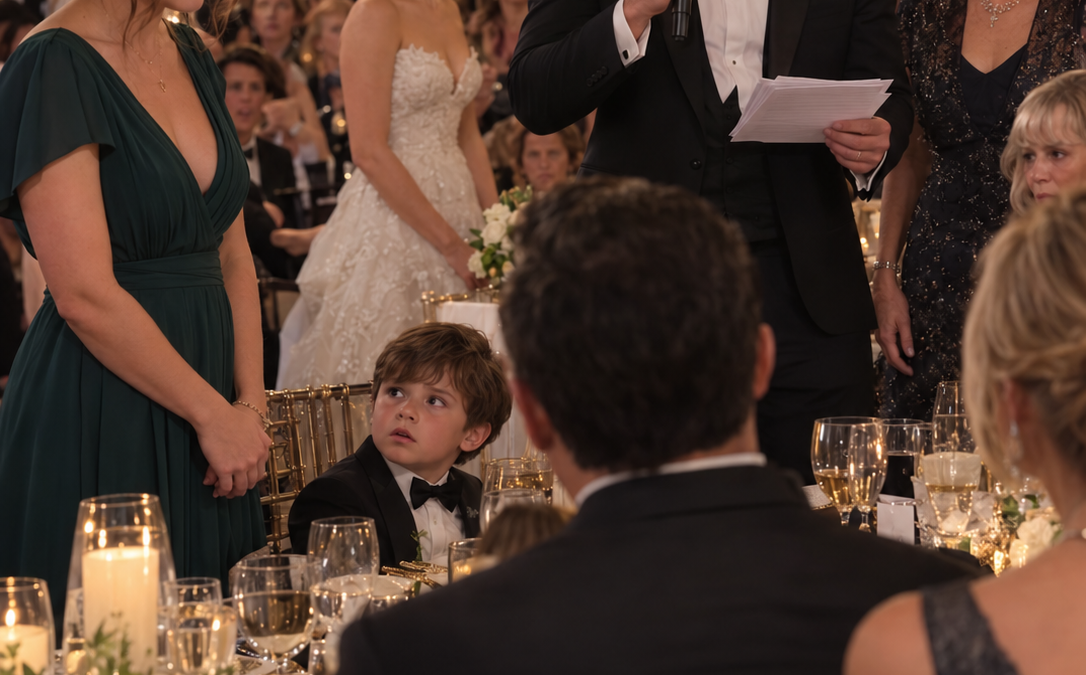
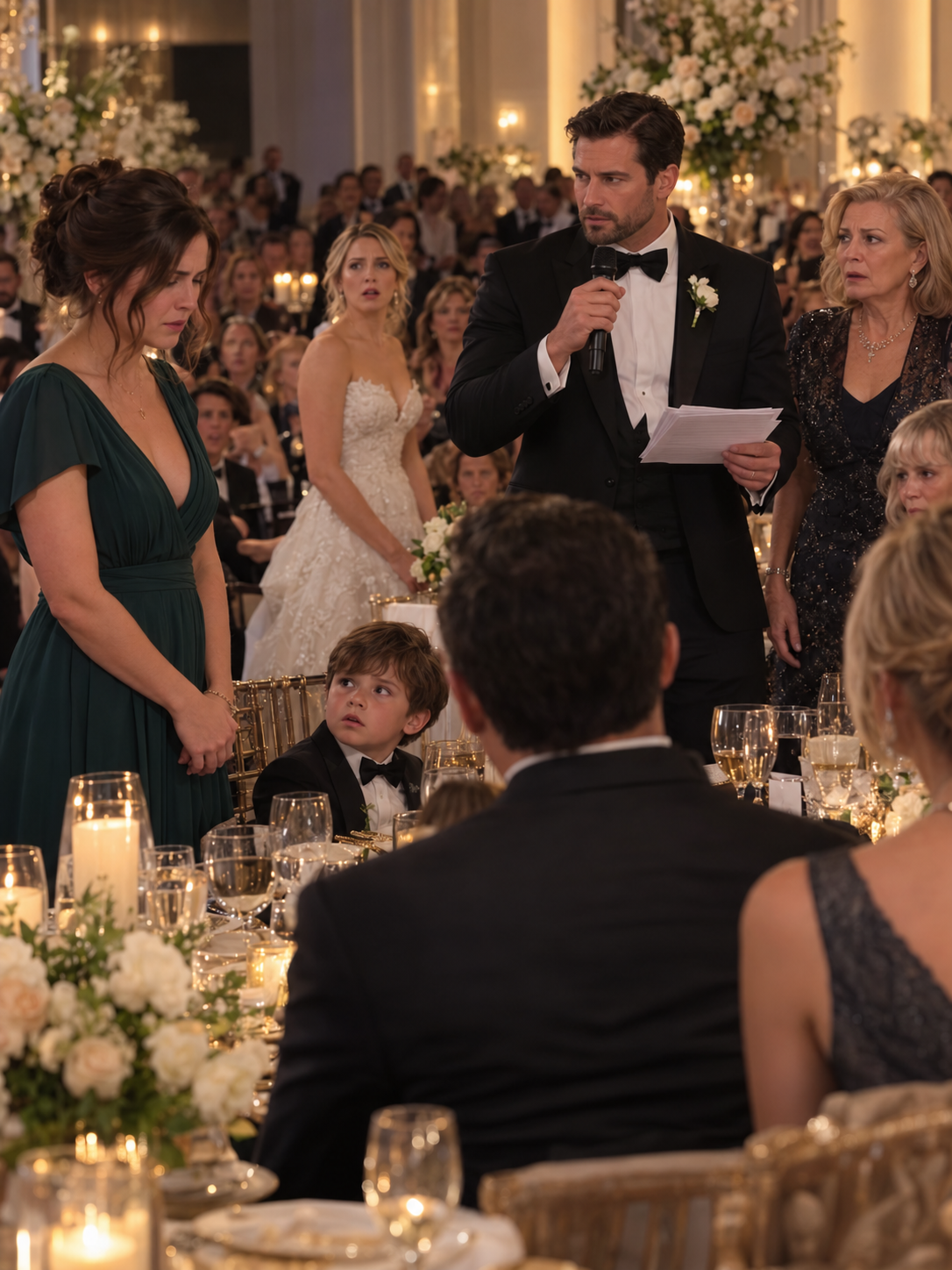
At my sister’s $150,000 wedding, my mother pointed at me and called me a worthless failure in front of 200 guests.
I sat beside my six-year-old son and refused to give her the scene she wanted because the groom had already seen more of our family than she realized.
Then he stood, took the microphone, and reached inside his jacket for the papers that made the laughter stop.
The microphone screeched once before my mother’s voice filled the ballroom.
My oldest daughter is a worthless failure who can’t even pay rent.
My six-year-old son squeezed my hand under the table.
Mommy, why is everyone laughing at you?
That question hurt more than my mother’s words ever could.
200 guests, a $150,000 wedding, and my mother, Lorraine, stood on stage with a microphone pointing right at me.
She’d waited her whole life for an audience like this.
I sat in the shadows near the kitchen doors.
Table 28, the worst table in the room.
Becket beside me in his little navy suit, wondering why grown-ups were so cruel.
Lorraine wasn’t finished.
She couldn’t keep a husband.
Now she begs for scraps and calls it independence.
Laughter rippled through the crowd.
My father, Victor, covered his mouth to hide a smile.
My sister Fallon sat glowing under an orchid arch, sipping champagne like this was just another toast in her honor.
Some guests looked uncomfortable.
They laughed anyway.
My mother had a gift for turning cruelty into etiquette, for making silence feel like the rude choice.
Nobody defended me.
Nobody except one person.
Gideon, the groom, hadn’t touched his champagne.
Hadn’t laughed once.
He sat perfectly still, watching my mother with a look I recognized from the niku where I worked.
Not anger, assessment.
I knew that look because I lived in it every shift.
In the niku, panic never saved a patient.
You watched.
You separated noise from facts.
Then you moved.
Gideon was watching my mother the same way.
Two weeks before this wedding, Lorraine had called me at home.
“Keep the boy quiet,” she said.
“I don’t want a fatherless child ruining the photos.
I almost didn’t come, but if I hid because my mother was ashamed of us, I’d be teaching my son that shame belongs to the person a bully points at.”
So, we came and now I was paying for it in front of 200 strangers with cameras rolling, a private liveream, professional videographers, every cruel word being recorded in high definition for relatives across the country.
Lorraine knew that.
She’d planned every second of it.
This wasn’t an outburst.
It was a performance.
And I was the punchline she’d been rehearsing for weeks.
“Fallon is everything a mother dreams of,” Lorraine continued, raising her glass.
“And Karen is what happens when a woman refuses to know her place.”
The laughter grew louder.
Beckett’s grip tightened around my fingers.
“Did I do something wrong?”
“No, baby,” I whispered.
“You didn’t do anything.”
I started to rise.
I was done.
I would take my son home and let my mother enjoy her audience without us.
Then Gideon’s chair scraped back across the marble floor.
The sound cut through the ballroom like a gunshot.
Every head turned.
Fallon shot up from her chair.
What are you doing?
He didn’t answer her.
He just kept walking.
And that silence stopped the room faster than any shout could have.
Gideon walked toward the stage, unhurried, unshaken, like a man who already knew exactly what he was about to do.
He stopped in front of my mother and held out his hand.
The microphone.
Lorraine blinked.
Excuse me.
The microphone, Lorraine.
This is my daughter’s wedding reception.
I know exactly where I am.
For the first time in my life, I watched my mother face someone she couldn’t dismiss.
Couldn’t out talk.
Couldn’t shame into silence.
She hesitated.
200 guests were watching.
The cameras were still rolling.
She handed it over.
Gideon turned to face the room.
Then he looked at me at Becket.
At the tears my son was trying to hide against my sleeve.
You just humiliated a six-year-old boy for entertainment, he said.
Nobody laughed now.
Lorraine’s smile cracked.
Your misunderstanding family humor.
Was he laughing?
Silence.
Was Karen?
Fallon rushed toward the stage, her wedding gown catching on a chair.
Gideon, please not here.
He didn’t look at her.
He reached inside his tuxedo jacket.
Fallon froze midstep.
My mother’s face drained of color.
Something folded and thick emerged from his jacket pocket.
Papers he’d clearly been carrying all night waiting.
I asked my legal team to preserve every communication tied to this wedding’s planning.
Gideon said the moment certain conversations stopped making sense.
Fallon’s hand flew to her mouth.
Gideon, Lorraine said, her voice suddenly unsteady.
What is that?
He unfolded the first page slowly, deliberately, the paper catching the chandelier light and looked directly into the camera, still recording every second.
You’re about to find out exactly what your mother has been planning behind your back.
To understand why Gideon was carrying legal paperwork into his own wedding reception, you need to understand what my family is actually like when the cameras aren’t rolling.
I’m Corin Ashworth.
I’m 34.
I work nights in the neonatal intensive care unit at Fair View Memorial, a level three unit where the smallest patients I care for weigh less than a bag of sugar.
I’ve been a NICU nurse for 11 years.
Before that, four years of nursing school, I paid for myself because my parents told me a nursing degree was a fallback for girls who couldn’t get a real husband.
I got divorced 3 years ago.
My ex-husband, Marcus, is a decent man who simply fell out of love with our marriage faster than he fell out of love with me.
We share custody of Becket 50/50.
I don’t beg for scraps.
I make $91,000 a year, own a two-bedroom condo in a good school district, and haven’t asked my parents for a dollar since I was 22.
None of that has ever mattered to Lraine.
My mother has spent her whole life directing a play where Fallon is the star and I’m the understudy nobody wanted.
Fallon is 29, works part-time at our father’s insurance brokerage doing something with a job title that changes depending on who’s asking and has been engaged to Gideon Cole for 14 months.
Gideon is 36.
He’s a managing partner at a midsized commercial real estate investment firm downtown.
And before that, he spent 6 years as a financial analyst.
I’d met him maybe a dozen times over the course of the engagement.
Quiet, watchful, unfailingly polite.
He asked me real questions at Thanksgiving about my work, about Beckett’s kindergarten, about whether niku shifts were as brutal as he’d heard.
He listened to the answers in my family.
That alone made him remarkable.
I liked him.
I worried privately that my family would eventually find a way to ruin that, too.
The first red flag came 2 weeks before the wedding.
On a Tuesday, during the 7 minutes between finishing a 12-hour shift and picking Becket up from my ex-husband’s place, my mother called.
I need you to keep the boy quiet during the ceremony, she said.
No greeting.
The way she always opened.
I don’t want a fatherless child ruining the photos.
He has a father.
Mom Marcus is very present.
Becket just doesn’t live with him full-time.
You know what I mean?
Karen, don’t be difficult.
I should have hung up then.
Instead, I ask the question that started everything.
Why does it matter so much to you how this wedding looks?
It’s Fallon and Gideon’s day.
There was a pause a half second too long.
Because some of us understand what’s at stake when family finally does something right, she said and hung up.
I didn’t understand what she meant.
Not yet.
I filed it away the way I file away every strange vital sign that doesn’t fit the chart yet.
Noted.
Not yet actionable.
Worth a second look if the pattern continued.
It continued three days later when my father called to ask almost in passing whether I still had access to the joint brokerage account my grandmother had set up for the grandchildren’s education before she passed.
I told him I didn’t even know that account still existed.
He said it probably didn’t matter, then changed the subject to golf.
I should have written it down that day.
I didn’t.
I had a six-year-old’s spelling homework to check and a night shift starting at 7:00.
I want to be honest about that because everything that came later, every document Gideon eventually laid on that stage could have started two weeks sooner if I’d taken my father’s question seriously the first time he asked it.
The wedding planning lived in a shared Google Drive folder called Fallon and Gideon 2026, which Lorraine had set up months earlier and insisted the whole family use so nobody’s left out of the joy.
I’d been added in March, mostly to approve a bridesmaid dress I never ended up wearing since I wasn’t in the wedding party.
A detail Lraine explained by saying photos look more cohesive without an odd number.
10 days before the wedding at 1:14 a.m. after a shift that ran long because a 26 week in Bay 4 needed two rounds of surfactant, I opened the folder on my phone, looking for the venue’s parking instructions.
I found a subfolder I didn’t recognize.
Family contributions.
Curiosity is a professional habit in my line of work.
You don’t ignore a folder you weren’t told about any more than you ignore a monitor that’s alarming quietly in the corner of the unit.
Inside were seven PDF letters, each one addressed to a different relative.
My aunt Deborah, my uncle Philip, two cousins, my grandmother’s surviving sister, and two family friends I only vaguely recognized as bridge partners of my mother’s.
Each letter written in Lraine’s voice, but clearly drafted with help from someone who understood fundraising language, asked for a wedding gift contribution of between three and $15,000, framed as helping Fallon start her marriage without the financial burden her sister’s divorce placed on this family.
My name was in five of the seven letters, not as a person being helped, as a cautionary example.
One line addressed to my aunt Deborah read, “After everything we went through with Karen’s situation, we simply want to give Fallon and Gideon the foundation to avoid the same mistakes.
My hands weren’t steady enough to type a search query on the first try.
I told myself it might be old drafts, rejected language, the kind of thing you write once, cringe at, and delete.
I’d worked with families before who said things under stress that they’d never actually act on.
Then I saw the last modified timestamps.
Six of the seven letters had been edited within the past 4 days.
The Deborah letter had a comment thread attached.
Three replies, all from an account labeled L.
Ashworth, refining the ask amount upward from $8,000 to 12.
After what the second comment called a promising conversation with Dree, the trust, I didn’t recognize what trust she meant.
I closed the folder and sat in my dark kitchen for 11 minutes.
Badge still clipped to my scrub top before I did anything else.
The word trust from that comment thread stayed lodged in my chest for 2 days like a swallowed pill that wouldn’t go down.
I called my grandmother’s estate attorney’s office.
My grandmother Vivien had passed four years earlier and I still had the number saved from handling a small distribution of her jewelry.
The parillegal who answered a woman named Priya remembered me and after I explained I was an heir asking about my own inheritance status pulled up the file.
There is a testimentary trust.
Priya said the Viven Ashworth Grandchildren’s Education Trust.
It names you, your sister, and any of your children as beneficiaries.
Current balance is a little over $190,000.
I didn’t know it existed.
I told her that.
That’s not unusual.
She said, “A lot of grandparent trusts stay dormant until a beneficiary hits a triggering event.
College enrollment, a milestone, birthday, sometimes marriage.
Do you want me to check who’s listed as trustee?
Sometimes a surviving parent gets named as custodian until the trust matures.”
She checked.
My father Victor was listed as sole trustee.
I asked carefully whether a trustee could withdraw funds for something like a wedding.
Not without a defined educational or milestone provision in the trust language.
No.
Priya said if he’s requesting a distribution outside those terms, he’d need beneficiary consent or he’d be in breach of fiduciary duty.
Has something happened?
I said I wasn’t sure yet and that I’d call back.
That night, I texted my father one line.
Is there a Grandma Viviian education trust with me and Fallon as beneficiaries?
He didn’t respond for 6 hours.
When he did, it was three words.
Ask your mother.
I asked my mother.
She called me instead of texting back, which she never does unless she’s controlling the conversation in real time.
It’s family money, Karen.
It’s not some outside inheritance you’re entitled to hoard.
Fallon needs help starting her life.
You’ve had 11 years of a nursing salary to build yours.
That money is for education for Becket eventually.
Not a wedding.
You’re being selfish over a technicality.
It’s not a technicality, Mom.
It’s a legal trust with terms.
Since when do you know anything about trusts?
I hung up before I said something I couldn’t take back over the phone 3 days before my sister’s wedding.
The third thing I found I wasn’t looking for.
4 days before the wedding, I logged into my banking app to move money for the caterer’s deposit on Becket’s 7th birthday party planned for the following month and noticed the transfer failed.
Insufficient funds, which made no sense because I’d checked the balance the day before.
I opened Beckett’s custodial UTMA account, the one I’d opened when he was born and fed $25 into every month since, meant to be untouched until he turned 18.
The balance was $14,000 lower than it should have been.
A single withdrawal dated 6 days earlier, $12,000, transferred to an account ending in 4471.
I don’t bank with an account ending in 4471.
I called the bank’s fraud line at 6:50 a.m. before my shift, hands cold in a way that had nothing to do with the hospital’s air conditioning.
The representative, after verifying my identity, told me the transfer had been authorized in person at a branch with a signature matching mine on file by someone presenting valid photo identification.
I haven’t been to a branch in over a year, I said.
Everything is a mistake.
This needs to be flagged as fraud immediately.
I understand, ma’am.
I’m opening a case now.
Can I ask, is there anyone else who might have access to this account?
Sometimes these cases involve family members with old power of attorney documents that were never formally revoked.
I sat with that question longer than I should have, given that Becket needed to be at school in 40 minutes.
6 years earlier, after my divorce, in a moment of exhausted practicality, I’d signed a limited power of attorney naming my mother as an emergency contact and secondary serer on accounts related to Beckett in case something happened to me during a shift and she needed to access funds for his care.
I’d never revoked it.
I’d forgotten it existed.
The way you forget a smoke detector battery until the day it starts chirping at 3:00 a.m.
I think my mother may have used an old POA.
I told the representative, I need that document pulled and I need this transaction disputed.
The case number they gave me was 11 digits long.
I wrote it on the back of a grocery receipt because I didn’t have anything else in reach and drove to work with my hands shaking on the wheel the entire way.
I didn’t go to Gideon.
I want to be clear about that because in the version of this story people want to hear, I’m supposed to be the one who exposes everything.
I wasn’t.
I was drowning in my own family’s chaos three days before a wedding I almost didn’t attend.
Trying to figure out whether to call the police, an attorney, or nobody at all.
Gideon came to me.
He texted me the Thursday before the wedding.
Can we talk before Saturday?
Somewhere without your parents.
We met at a coffee shop near my condo, the kind of place I never went to because Becket hated the smell of espresso.
Gideon looked like a man who hadn’t slept, which I understood better after what he told me.
I hired a forensic accountant 6 weeks ago, he said.
Ranatada Achabi, 19 years doing financial fraud investigation, mostly for family law and probate disputes.
I brought her in after Lorraine asked me twice whether my firm could quietly process a wire from an account she didn’t want appearing on a joint statement with my father-in-law.
I asked what the wire was for.
Wedding financing, she said the first time, then a family investment opportunity the second time, 3 weeks later for a larger amount.
Something didn’t sit right.
I don’t come from money I didn’t earn myself her in.
And I’ve seen enough shell transactions at work to recognize the shape of one.
Ranata’s findings, which he laid out for me carefully without drama, matched pieces I already had, and added several I didn’t.
The seven solicitation letters, a pattern of small structured withdrawals from the Viviian Ashworth trust.
5,000 here, 4,000 there.
Each just under a threshold that might trigger additional paperwork.
Going back four months, all authorized by my father as trustee, and the $12,000 pulled from Beckett’s UTMA account, which Ranata had traced to a wire that left the mystery account ending in 4471 2 days later, routed toward the wedding venue’s outstanding balance.
Your mother used your son’s inheritance to help pay for your sister’s wedding, Gideon said.
And she solicited money from relatives, partly by using your divorce as a cautionary tale to make Fallon look like the responsible daughter by comparison.
I didn’t cry.
I want that on the record because I think people expect me to have pride in that coffee shop.
And instead, I felt something colder and steadier settle into my chest.
The same feeling I get when a monitor alarms and I stop being a person having feelings and start being a nurse solving a problem.
Why are you telling me this 3 days before your own wedding?
I asked instead of calling it off.
Because Fallon doesn’t know any of it, Gideon said.
I’ve watched her be lied to her entire life by people who taught her that being the favorite meant never having to ask hard questions.
I’m not calling off a wedding to punish her for her mother’s fraud.
But I’m not walking into a marriage built partly on stolen money either.
Rinada is finishing the documentation.
My attorney has copies of everything preserved and dated in case anyone tries to claim later that evidence was fabricated after the fact.
What happens Saturday?
Saturday I marry your sister, he said.
And I make sure the truth is in the room before anyone can spend one more dollar pretending it isn’t.
I asked him not to do anything that would hurt Becket or make the day about revenge.
It was never going to be about revenge, Gideon said.
It’s about the fact that your mother stood up in front of 200 people last month at the engagement party and told a story about your divorce that wasn’t true in front of your son and called it a toast.
I watched a six-year-old get humiliated for entertainment once already.
I wasn’t going to let it happen twice without consequences attached.
I didn’t know sitting in that coffee shop that the consequences would arrive less than 48 hours later in a ballroom with a microphone in his hand.
Which brings us back to the stage, the microphone, and my mother’s face draining of color as Gideon unfolded that first page under the chandelier light.
You’re about to find out exactly what your mother has been planning behind your back, he said.
And I watched 200 years of my family’s practiced silence collapse in real time.
Fallon reached the stage first.
What is that, Gideon?
What are you holding?
A copy of a letter your mother sent to your aunt Deborah 11 days ago, Gideon said, asking for a $12,000 wedding contribution and explaining the ask by describing your sister’s divorce in language I won’t repeat in front of her son.
That’s not, Lorraine started.
There are six more letters like it, Gideon continued, unmoved.
All sent from an account under your name.
All using Karen as a comparison point to make you look generous.
By contrast, I have copies.
So does my attorney.
So as of this morning, does Deborah, who called me personally to say she felt manipulated into a donation she wouldn’t have made if she’d known the money wasn’t needed.
Victor stood up so fast his chair nearly tipped.
This is inappropriate for a wedding.
Gideon, we can discuss this Monday.
We could have.
Gideon said, “If either of you had returned my attorney’s calls this week, instead of ignoring three separate requests for a conversation, that silenced my father in a way I genuinely never witnessed.”
He sat back down.
Gideon turned another page.
This is a transaction record showing five withdrawals from the Vivian Ashworth Grandchildren’s Education Trust over the past 4 months, each authorized by Victor Ashworth as trustee, totaling $31,000, routed eventually toward wedding expenses.
Karine is a named beneficiary of that trust.
She was never informed these withdrawals occurred.
I felt 200 pairs of eyes shift toward me.
I kept my hand on Becket’s shoulder and my eyes on the stage.
And this, Gideon said, unfolding the last page, is a fraud case number opened four days ago with First Meridian Bank.
After $12,000 was withdrawn from a custodial account belonging to a six-year-old using a power of attorney his mother signed years ago for medical emergencies, not to help finance an aunt’s flower arrangements.
The word fraud landed on the room like a drop tray of glasswware.
Lorraine’s voice cracked for the first time in my entire life that I could remember.
It was always going to go to the children eventually.
We just we needed it now.
And Karen wasn’t going to say yes if we asked.
So So you didn’t ask.
Gideon said you took it from a six-year-old.
And then tonight you stood on this stage and called his mother a worthless failure in front of him.
To make sure nobody in this room ever thought to ask why the woman you were describing might have grounds to be angry with you.
Fallon sat down hard in the nearest chair, her gown pooling around her, staring at the papers in Gideon’s hand like they might rearrange themselves into something less true if she looked long enough.
“Mom,” she said very quietly.
“Is any of this real?”
Lorraine didn’t answer her daughter.
She looked instead at the videographer, still filming from a tripod near the dance floor.
And for the first time all night, she seemed to understand that the camera she’d wanted all evening was the one thing she couldn’t turn off.
I wish I could tell you the story ended cleanly the moment Gideon put those papers down.
It didn’t.
It rarely does.
What happened next unfolded over the following two days, mostly away from cameras in conference rooms and phone calls instead of ballrooms.
Ranata Achabi, the forensic accountant Gideon had hired, submitted her full report to both the trust attorney and at my request, to First Meridian’s fraud department, formally connecting the UTMA withdrawal to the wedding venue’s final payment.
19 years of doing this work meant she knew exactly which documents mattered and in what order to present them, so nothing could later be dismissed as coincidence.
The pattern is what convicts people in cases like this, she told me over the phone on Sunday morning.
Her voice calm in the specific way of someone who has explained financial fraud to devastated families many times before.
Not one withdrawal.
The pattern of five withdrawals just under reporting thresholds timed around a fixed deadline moving toward a single destination.
That’s not an emergency.
That’s a plan.
The bank’s fraud investigator, a man named Desmond Oafer, who’d spent 11 years specializing in family authorized account fraud, called me Monday to confirm the $12,000 would be restored to Beckett’s account within 10 business days and that the case had been referred internally given the amount and the minor status of the account holder because a family member is involved and a minor’s account was used without proper authorization.
Okafor explained, “This also gets flagged for the bank’s legal compliance team.
Whether it proceeds to actual charges depends on whether your mother cooperates with restitution.
And honestly, ma’am, whether you choose to press it that far, that part’s your call, not mine.
I spent longer than I’m proud of deciding what to do with that call.
The trust attorney, a family law specialist named Harriet Voss, with 22 years handling contested estates, was more direct.
Your father breached his fiduciary duty as trustee.
You have standing to petition for his removal and appointment of a neutral successor trustee.
Given the documented pattern, I’d be surprised if a judge didn’t grant it.
I filed that petition on Tuesday, not out of cruelty, because Becket and eventually any children Fallon might have deserved a trust that couldn’t quietly bleed out every time an adult in this family wanted something they hadn’t earned.
Aunt Deborah called me Sunday night crying, apologizing for a solicitation letter she hadn’t known was built on lies and told me she was requesting her contribution be redirected in full into Beckett’s account as restitution.
Two of the other six relatives did the same within the week.
Once Gideon’s attorney sent a clarifying letter explaining what the money had actually funded, Fallon didn’t speak to our mother for 11 days.
She called me on day three, sitting in her honeymoon hotel room in Portugal, and said the only thing I think she could have said that would have actually mattered to me.
I’ve spent my whole life being told I was the good one because you were the problem, she said.
I never once asked what that cost you.
I’m asking now.
I’m sorry, Corin.
I mean it.
I told her I believed her and that believing her was going to take longer than one phone call to feel true in my body and that I appreciated her trying anyway.
My mother was not arrested.
I want to be honest about that, too, because I know some versions of this story exist purely to deliver a villain in handcuffs, and that isn’t what happened, and I’m not interested in pretending otherwise for a better ending.
What happened was quieter and, in its own way, harder for her to survive.
The bank completed its investigation and restored the funds to Beckett’s account, formally listing the withdrawal as unauthorized use of an expired power of attorney.
A civil matter resolved through restitution rather than criminal referral, since I ultimately declined to press for prosecution once the money was returned.
And the successor trustee was appointed.
Harriet Voss later told me that was a common outcome in family fraud cases involving elderly adjacent family dynamics and immediate cooperation.
The system is built to prioritize restitution over punishment when the money comes back and no one’s being actively endangered.
It’s not always satisfying.
It’s usually right.
The trust court granted my petition 3 weeks later.
My father was removed as trustee.
A neutral fiduciary now oversees what remains of my grandmother’s education trust.
And any future distribution requires beneficiary sign off.
Not a single family member’s discretion.
My parents’ social standing took the hit that the court system didn’t.
The wedding live stream, which Lorraine had insisted on for maximum audience, had recorded the entire confrontation, and someone in the extended family group chat leaked a 12-minute clip that made its way well beyond our relatives within a week.
My parents stopped attending their country club Sunday brunches.
Three of Lraine’s longtime bridge partners, including one of the people she’d solicited money from, quietly stopped returning her calls.
I didn’t share that clip.
I didn’t need to.
I’ve learned that some consequences don’t require your participation once the truth is finally sitting in the open air where everyone can see it.
Beckett’s UTMA account is back to what it should be.
Plus interest the bank added as part of the settlement.
He doesn’t know any of the financial details and he’s six.
He doesn’t need to, but he does know his mom and his new uncle Gideon fix something bad that grandma did, which is the version of the truth appropriate for a first grader and probably the only version that matters to him long term.
Fallon and Gideon are still married.
Still, as far as I can tell, happy in the specific way of two people who survived learning something ugly about one of their families in the first week of a marriage and chose to build something honest instead of pretending it hadn’t happened.
Fallon calls me every Sunday now.
We talk about nothing mostly.
Becket’s spelling tests, her new job, which she took at a nonprofit after finally leaving our father’s brokerage.
It’s the most normal my relationship with my sister has ever felt.
My relationship with my parents is smaller than it used to be, and I think more honest for it.
I see them a handful of times a year.
Always somewhere public.
Always for a limited window.
Lorraine has never apologized directly.
She once said at Easter, “I hope we can put the wedding behind us.”
Which is the closest thing to an apology I expect to get from a woman who still believes the real offense was Gideon’s for embarrassing her rather than her own for stealing from a six-year-old.
I’ve made peace with that gap, not because it doesn’t hurt, because I stopped needing her to close it in order to feel like my life was whole.
Gideon and I don’t talk about that night much anymore.
But at Thanksgiving last month, as he was helping Becket build a tower out of mashed potatoes shaped suspiciously like a courtroom podium, he caught my eye across the table and said, “Quiet enough that only I could hear it.
For what it’s worth, I’d do it again.”
“I know,” I told him.
That’s exactly why it worked.








