At the Mother’s Day lunch, the place card at my seat read: “The Burden.” My son grinned broadly: “Finally, you’re being honest.” I smiled and replied: “Well then, let’s raise a glass to this final Mother’s Day.” I walked out, leaving a letter behind. He opened it and shouted: “Wait a minute!!!”
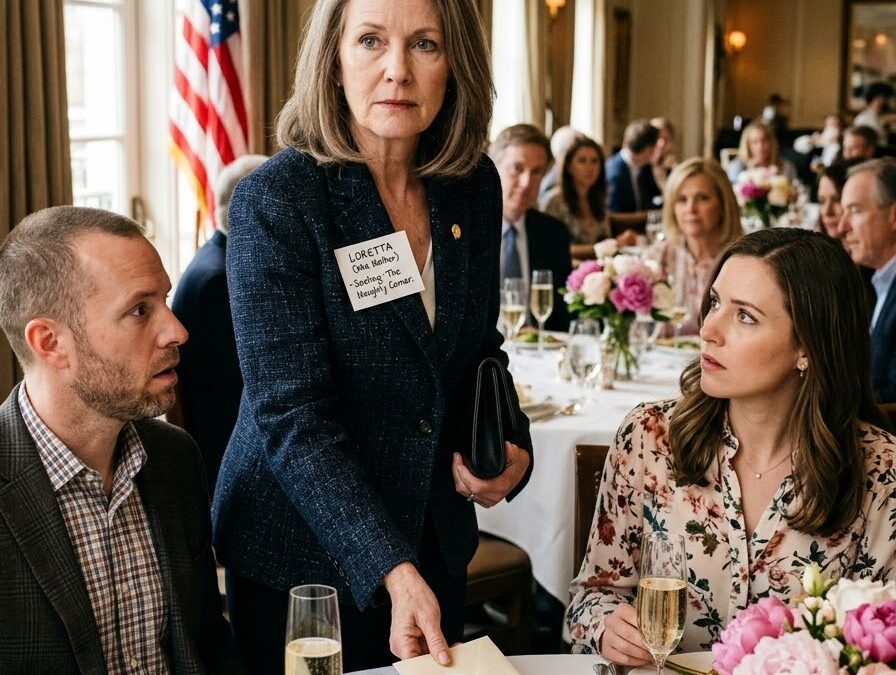
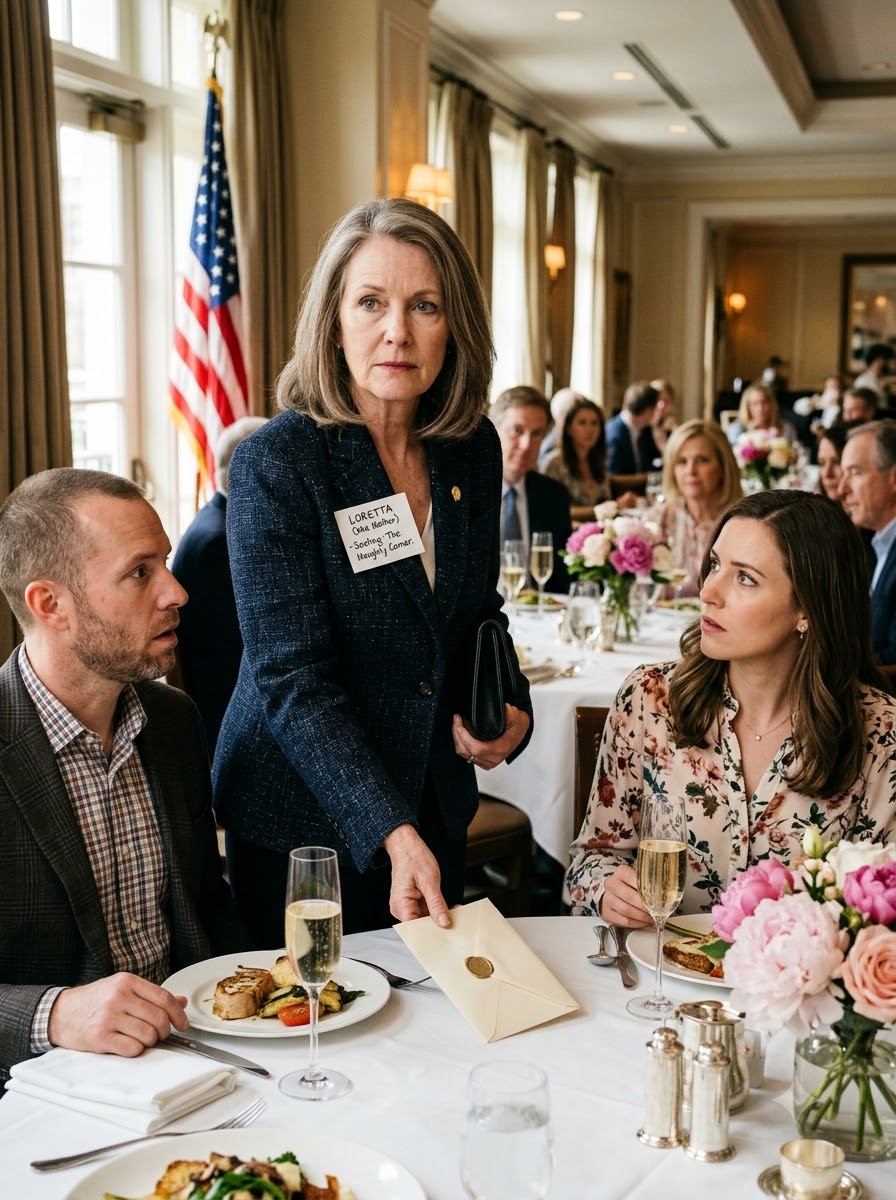
The place card at my seat read, “The burden in thick, careful handwriting, and I stared at it long enough that the waiter, pretending not to notice,” had already refilled my water glass twice.
It was Mother’s Day.
My son, Scott, had reserved a private room at a far-to- restaurant downtown, the kind of place that charges $40 for a chicken breast and calls it curated.
Every seat at the long wooden table had a name card.
I had walked past them on my way to my chair.
Scots read the provider.
His wife Tessa had been given the visionary.
Their friends Mora and Glenn, who had apparently been invited to what I assumed was a family lunch, had cheerful, generic labels I couldn’t quite read.
Sine said, “The burden.”
Scott saw me looking at it.
He leaned back in his chair and crossed his arms with an easy, comfortable grin.
The kind of grin a man wears when he’s very sure of himself.
Accurate, right, Mom?
He laughed.
Mara blinked at her plate.
Glenn cleared his throat.
Tessa smoothed the cloth napkin across her lap and looked past me toward the window as though she had suddenly found the parking lot fascinating.
I picked the card up.
I held it for a moment, running my thumb over the letters.
Then I took the small pin from my blazer lapel, the little gold one Raymond had given me on our 30th anniversary, and I pinned the burden directly to my chest.
I sat down.
Scott stopped laughing.
That wasn’t the reaction he’d expected.
He had spent 34 years learning exactly which buttons to push to make me either cry or lecture him.
And I could see him recalibrating now, trying to figure out which category this silence fell into.
It fell into neither.
When the waiter came around with champagne and Scott lifted his glass to propose a toast, I stood up first.
The table went quiet.
I just want to say, I began that I’m grateful for this moment.
I really am.
to the last Mother’s Day I will ever spend explaining myself to people who live in my house rentree.
Tessa set her glass down.
Loretta, she said sharply.
This is not the time.
I smiled at her.
Then here’s to last time.
I picked up my purse from the back of my chair, stopped at the host stand on my way out, and nodded once to the manager, a young woman named Priya, who I had spoken with the day before.
Then I walked to Scott’s seat, laid a cream colored envelope beside his champagne glass, and kept moving toward the door.
I was already in the parking lot when I heard him shout my name.
I did not turn around.
To explain what was inside that envelope, I need to back up a few years.
My name is Loretta Haynes.
I am 63 years old.
I have lived in the same four-bedroom craftsman house in the same Ohio neighborhood for 26 years.
Raymond and I bought it when Scott was in elementary school.
When the mortgage felt terrifying and we ate a lot of spaghetti on Sundays to make the numbers work.
We paid it off 6 years before Raymond died.
When he passed four years ago, the house became mine outright.
No debt, no lean, just a deed with my name on it and a lawn that needed mowing.
Scott and Tessa appeared on my doorstep on a Friday evening 2 and 1/2 years ago.
With the kind of faces people make when they’re about to ask something they already know, you’ll have trouble refusing.
The apartment complex they’d been renting from had sold the building and the new owners were converting it to condos.
They needed six months, Scott said.
Just six months to save for a down payment.
I said yes.
Of course, I said yes.
He’s my son.
6 months stretched into a year.
I didn’t push.
I figured they were saving, figuring things out, doing what young couples do.
Then I found the lease paperwork for Scott’s BMW in the kitchen drawer when I was looking for scissors.
$38,000 financed over 6 years.
Signed 3 months after they moved in.
I found Tessa’s credit card statement on the counter a week later.
Left there the way people leave things when they stop thinking of you as someone who notices.
$700 at a skincare boutique.
$400 at a specialty kitchen store.
A plane ticket to visit her college friend in Denver.
They were not saving.
They had settled in.
It happened gradually.
The way mold grows.
You don’t see it spreading.
You just look up one day and it’s everywhere.
Their belongings multiplied through every room.
Tessa’s essential oil diffusers appeared on my bathroom shelves.
Scott’s gym equipment took over the spare room I had intended to turn into a studio.
They moved into the master bedroom about 8 months in, citing something vague about Tessa’s back and the mattress in their room.
I moved my things downstairs without much argument because I didn’t fully understand yet what was happening.
I paid the property taxes.
I paid the electric, the gas, the water.
I paid for the streaming accounts Tessa picked and the Wi-Fi plan that could handle her video uploads.
She ran a wellness coaching page on Instagram, sunrise routines, smoothie recipes, gratitude prompts that had never in two and a half years generated a single dollar.
I paid for the organic grocery hauls she planned each week.
the specialty items she insisted on, the expensive coffee pods she preferred.
When I declined three weeks before Mother’s Day to co-sign a loan for a vacation condo in Tennessee that Scott had decided they needed, he told me I was being selfish.
He used that specific word.
Tessa agreed.
She said in front of the both of them at the kitchen table that I had always been a financial drag on their future, that Raymond had at least been useful.
That was a Monday.
The Mother’s Day lunch was a Sunday.
The name tag was not an accident.
It was a verdict.
What Scott found in that envelope when he tore it open was not a letter.
I don’t write letters when actions are available.
Inside were three things.
First, the two SIM cards I had been paying for on my wireless family plan.
Both snipped cleanly in half.
Second, a printed confirmation showing I had removed their vehicles from my auto insurance policy that morning.
Their BMW and Tessa Subaru were now uninsured.
Third, the restaurant’s invoice for the private dining reservation, four courses, champagne package, gratuitity included, $580 with a handwritten note from Priya at the bottom per guest request balanced due by the card holder at this table.
That was why he shouted.
The drive home was one of the quietest 30 minutes I can remember.
My phone went off four times before I turned onto the highway.
I watched Scott’s name flash on the screen and placed the phone face down on the passenger seat.
The afternoon light was doing something lovely through the trees on Route 40, the kind of long gold light that only happens in May.
And I let myself look at it for the first time in what felt like
years.
When I pulled into my driveway, I sat in the car for a moment before going inside.
The house looked the same from the outside, but something had already shifted.
I went directly to the home office and opened my laptop.
I logged into the router settings and generated a new Wi-Fi password.
22 random characters, the kind that cannot be guessed.
Tessa ran her wellness page on my internet.
She filmed her content on my internet.
She conducted whatever Zoom calls she scheduled on my internet.
That particular arrangement was over.
I opened Netflix, Hulu, HBO Max, and the premium cable account.
I signed out of all devices on each one and changed every password to something new.
Then I went to the kitchen.
I stood at the open refrigerator and took a cleareyed inventory of what was in it.
The almond yogurts Tessa ordered from a specialty grosser.
The pre-portioned smoothie kits.
The expensive sparkling water in glass bottles.
The grass-fed butter that cost $11.
None of it was mine.
I had stopped buying my own preferences months ago, quietly accommodating Tessa’s grocery lists because it was easier than the alternative.
I pulled out two canvas bags and packed everything that wasn’t mine.
I drove 4 minutes to the food pantry on Clement Street and left the bags at the donation door.
When I got home, I restocked with what I actually wanted.
Eggs, whole milk, a block of sharp cheddar, vegetables, a pound of ground beef, my coffee.
Then I walked up to my bedroom and installed the digital keypad lock I’d bought at the hardware store the previous Saturday.
I’d kept it in my car for a week, waiting to feel ready.
I didn’t need to wait anymore.
I programmed a four-digit code that no one else would know.
For 2 years, Tessa had walked into my room to borrow earrings, scarves, my good black handbag.
She never asked.
She just appeared and took things and returned them or didn’t.
That door was now mine again.
They came home at 4.
I heard the BMW in the driveway and then the front door, which Scott did not close gently.
Loretta.
Tessa’s voice filled the hallway.
We need to talk right now.
I was standing at the kitchen counter, pouring hot water into my French press.
I finished that before I turned around.
Scott came in behind her, still in his dress shirt from lunch, his jaw tight.
You canled the insurance.
Do you understand that we can’t drive?
If I get pulled over, they’ll impound the car.
Then I’d suggest you look into getting your own policy first thing tomorrow morning.
I said independent agents are listed online.
Most can issue same day coverage.
This is insane, Tessa said.
She looked at me the way people look at someone who has stepped outside the role they were supposed to play.
You are being completely irrational.
I’m being logical, I said.
You are welcome to disagree with my logic, but the accounts are changed and I don’t intend to restore them.
Scott tried a different register.
He lowered his voice, approached the island, tried to look reasonable.
Mom, come on.
The name tag was a joke.
It was supposed to be funny.
I looked at my son steadily.
You are 34 years old.
Tessa is 31.
You have been living in my home for 2 and 1/2 years without paying rent, utilities, groceries, or insurance.
I have covered all of those.
That arrangement is finished.
I reached behind me and picked up a piece of paper I had printed that morning.
I laid it flat on the marble island between us.
Starting June 1st, I said, “I am charging $1,800 per month for your share of this household.
That covers your portion of the property taxes, the utilities, and the maintenance costs.
If you cannot pay that amount consistently, then we need to discuss a different arrangement.”
Tessa stared at the paper.
“You cannot charge us rent.
We’re family.”
I smiled at her.
“I just did.”
I picked up my coffee and walked out of the kitchen.
Monday announced itself early.
I was on the back porch at 6:15 with my cup and a cardigan when I heard Tessa on the stairs moving fast.
She appeared at the back door still in her pajamas, her face taught with something between panic and fury.
Loretta, I have a brand deal call in 20 minutes and the Wi-Fi isn’t working.
I know, I said.
What do you mean you know?
Fix it.
I changed the password.
If you need internet for your business, you’ll want to set up your own account.
I’d recommend calling the provider today.
They can usually schedule an installation within a week.
A week?
She stared at me.
I need it now.
Your phone has a data plan, I noted.
You can use the hotspot.
She stood there for a long moment and then she went back inside without another word.
Scott left for work without speaking to me.
He drove the BMW uninsured because the alternative was the bus and that was his choice to make.
I didn’t say a word about it.
By the following Thursday, a new pattern had settled in.
I went about my life.
I cooked for myself.
I cleaned my own spaces.
The friction in the house was real and constant, but it no longer touched me.
Then Tessa tested me.
I came home from the grocery store on Thursday afternoon to find four of her friends in my living room and a catastrophe in my kitchen.
Dirty pots on all four burners.
Wine glasses on the counter, two of them tipped.
A cutting board caked with something that smelled like garlic and old cheese.
My good casserole dish.
The lraes that Raymond’s sister had given us as a wedding gift sitting in the sink soaking in murky water.
I stood in the kitchen doorway for about 10 seconds.
Then I went to the pantry and got a heavy black trash bag.
I did not wash a single dish.
I carefully lifted the wine glasses, the crusted pots, Tessa’s personal serving bowls she had brought down from the master bedroom, and I bagged them.
I bagged the cutting board.
I tied the bag shut, carried it upstairs, and placed it directly in front of their bedroom door.
I came back downstairs, sprayed my counters, wiped them clean, and made myself a cup of tea.
Her shriek when she found it about 40 minutes later was something I heard clearly from the living room.
She came downstairs holding the bag by the knot.
Did you bag my cookware?
I found a mess in my kitchen.
I told her pleasantly.
I returned it to the person who made it.
That is my lacruid in there, she said.
That’s Raymond’s family’s lra.
I corrected.
And it’s in the bag because you left it filthy in my sink.
Next time I find your things making a mess in my kitchen, the bag goes to the curb.
Her friends were very quiet in the living room.
She took the bag upstairs without another word.
Scott approached me on Friday evening alone while Tessa was in the shower.
He sat at the kitchen table like a man reporting for a conversation he hadn’t prepared for.
He looked tired.
He looked younger than he had in years and not in a good way.
Mom, he said it quietly.
1,800 is more than some people’s mortgages.
I know it reflects the actual cost of running this property.
We can do 800.
then you can’t afford to live here.
He looked at the table.
We have car payments.
We have credit card debt.
Those are your financial decisions.
I said, “Not mine.
Where are we supposed to go?”
He looked up.
He wasn’t performing helplessness anymore.
It was real this time.
That is a question for you and Tessa to answer together.
You’re both employed.
The math is solvable.
He didn’t respond.
After a while, he got up and went upstairs.
I spent the following Saturday reclaiming my house room by room.
The sun porch had become a storage space for Scott’s golf clubs, a case of motor oil, and four boxes of Tessa’s offseason inventory from the Etsy shop she’d briefly tried to run.
I moved all of it to the upstairs hallway.
The hall closet, which I hadn’t been able to open fully in 6 months because of Tessa’s coat collection and the shoe rack she’d installed on the floor, got emptied.
the bookshelf in the living room that she’d filled with her crystals and photo frames and ceramic diffuser.
I boxed and stacked in the hallway as well.
When they came out of their room that afternoon, the hallway was a narrow canyon.
Scott looked at the boxes.
Then he looked at me standing at the bottom of the stairs.
I’m reclaiming my home, I said simply.
Your room is your room.
The rest of the house is mine.
You’re treating us like strangers, Tessa said.
I’m treating you like tenants, I replied.
Strangers would have been out two weeks ago.
June first arrived on a Wednesday.
I sat at the kitchen table with my coffee and a small ledger I’d been using to track household costs.
At 8:45, Scott came down in his workclo, set an envelope on the table without making eye contact, and poured himself a cup of coffee from my pot.
Inside the envelope was a cashier’s check for $1,800.
I noted it in the ledger.
I didn’t thank him.
Rent is logged, I said.
I’ll need the same by the 1st of July.
We wiped
Then I’d suggest rebuilding it before next month, I said without any heat in my voice.
Tessa came downstairs and leaned against the door frame, arms folded.
She looked at me with a certain deliberateness.
I want you to know, she said, that when Scott and I have children, we will not be bringing them around someone who treats family this way.
Don’t expect to be in their lives.
I looked at her steadily.
“A child needs parents who can feed them and keep a roof over their heads,” I said.
“Right now, you two can barely cover the cost of a room in someone else’s home.
I won’t be blackmailed with a baby that doesn’t exist yet.”
Scott closed his eyes briefly.
Tessa pushed off the door frame and went back upstairs.
The next week and a half was quiet in the way that a held breath is quiet.
They stayed in their room more.
They ordered takeout rather than use my kitchen.
I suspected they were looking at apartments.
I was right.
One evening, I came downstairs for water and found them at the dining table with a laptop and a pad of paper covered in numbers.
Listings were pulled up on the screen.
Small places on the east side of the city with carpet in the bedrooms and coin laundry in the basement.
Everything requires first, last, and deposit, Scott was saying, rubbing the side of his face.
We’d need close to 5,000 liquid just to sign a lease.
I went to the kitchen for my water.
On my way back, I stopped at the table and placed a single sheet of paper between them.
That is a household agreement, I said.
It outlines shared responsibilities, costs, and a zero tolerance clause for the kind of behavior we experienced on Mother’s Day.
If you’d like to remain here, you both sign it and we live by it.
And if we don’t, Scott asked, then you have 30 days to find another arrangement.
I will change the exterior locks on the 31st day.
It’s my property and I don’t need anyone’s permission to secure it.
Tessa didn’t look at the paper.
Scott looked at it for a long time.
Then he looked at his wife.
She turned her head away and that was the answer.
We’ll start packing, he said quietly.
I nodded.
Leave the key on the counter when you go.
Moving day was 2 and 1/2 weeks later.
They had rented a cargo van.
The cheap weekend rate, not a full moving company because a moving company was outside the revised budget.
I sat on the front porch of my old rocking chair with a cup of chamomile and watched them carry boxes down the steps.
I didn’t hold a door.
I didn’t offer money for lunch.
It took them 4 hours.
Scott made a dozen trips.
Tessa directed from the van wrapped in sunglasses, talking less than I’d ever heard her talk.
When Scott slid the last box into the back of the van, he stopped at the bottom of the porch steps and looked up at me.
I guess that’s it, he said.
I suppose so.
He took a breath.
Are we going to be okay?
He asked it the way a child asks.
And I had a complicated flash of something for him then.
Not grief exactly, more like recognition.
There was still a boy in there somewhere who didn’t understand how he’d gotten here.
I don’t know yet, I said.
Honestly.
That’s going to depend on you.
He nodded slowly, reached into his pocket, and held out the house key.
I took it.
He walked to the van, got in, and they pulled away from the curb.
I sat in the rocker until the sound of the engine faded completely.
Then I stood up, went inside, and locked the door.
The kitchen was mine.
The sun porch was mine.
The hallway closet closed all the way for the first time in 2 years.
The refrigerator held only what I had chosen.
The Wi-Fi password was 22 characters long, and I was the only one who knew it.
That evening, clearing a pile of old mail from my desk in the office, I found it.
I’d tucked it into a manila folder the afternoon I got home from the restaurant.
The little place card cream colored with neat handwriting.
The burden.
I held it up and looked at it in the lamplight.
Scott had meant it as a verdict.
I’d walked in wearing it as a pin and walked out without raising my voice and everything that followed.
Every cut account and changed password and bagged casserole dish had grown from that single calm decision not to absorb it.
They were right that I was a burden.
I was a burden on their comfort.
I burdened their sense of entitlement.
I burdened their certainty that love is a resource with no bottom.
I set the card on my desk face up where I could see it.
Then I went to the kitchen, poured a glass of wine, and stood at the back window for a
while, watching the yard in the dark.
I had been meaning to put in a tomato garden for three summers running.
The raised beds Raymond had built were still there along the fence, filled now with nothing but old soil and last year’s weeds.
This summer, I was finally going to use








