“Bastards don’t get to sit with the real family.” At my younger sister’s wedding, she pointed at my 17-year-old daughter and said exactly that. My mother laughed. My father forced us to leave. I didn’t say a word. On Christmas Eve, I cancelled the $6,000 transfer they had come to rely on every month. By midnight, my sister had called thirty-eight times. “You’re tearing this family apart!” I replied, “What family?”
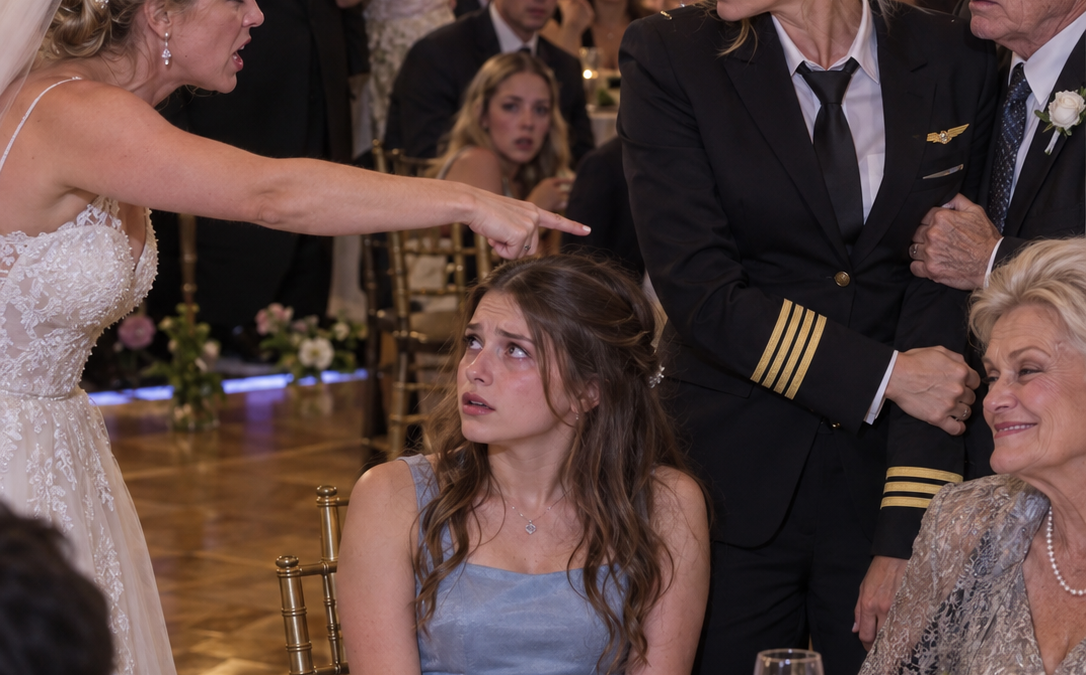
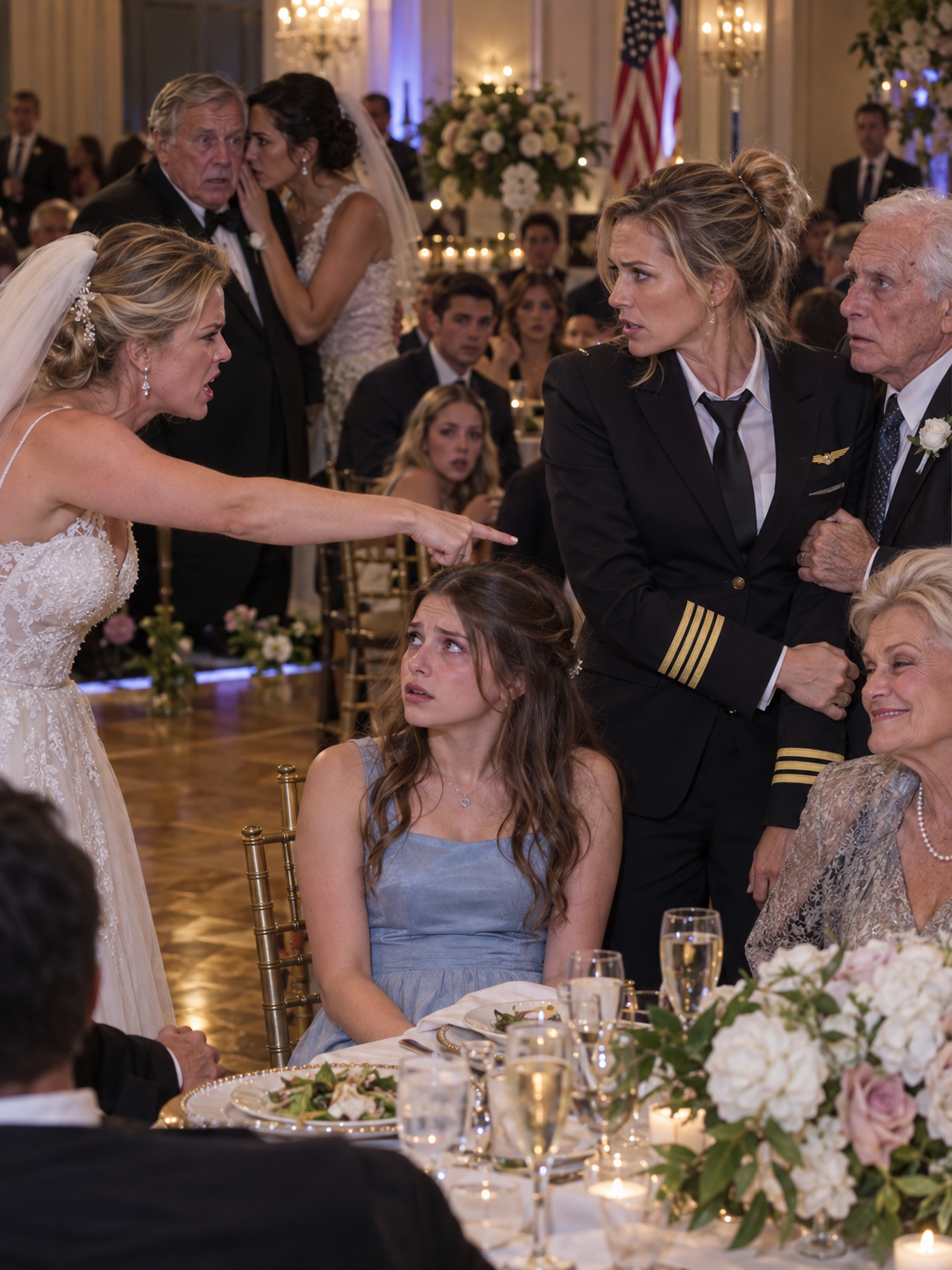
At my sister’s wedding, my 17-year-old daughter sat down in an empty chair at the family table.
My sister pointed at her in front of every guest.
Bastards don’t sit with real family.
The room went still.
My mother laughed as if it were the best toast of the night.
My father crossed the floor, took my elbow, and said, “Take her home, Mary.”
Now, not one word to my sister.
Not one look at my child.
Norah held it together until the parking lot.
Then she folded in half in the passenger seat.
I didn’t argue.
I didn’t make a scene.
I drove her home.
They mistook my silence for surrender.
They forgot that their house, their bills, their whole performance rested on one transfer from me.
On Christmas Eve, I canled the $6,000 they expected every month.
By midnight, my sister had called 38 times.
Then a text in all caps.
You’re ruining this family.
I typed two words and hit send.
Which family?
My name is Mary Caswell, 40 years old.
If a [snorts] room has ever decided your child did not belong at the table, stay until the last sentence.
It started with a table number and a name card they couldn’t even spell.
The wedding was on a Saturday in the middle of October at a vineyard out in the Yadkin Valley, about an hour and a half from my house in Huntersville, just outside Charlotte.
I drove.
My aunt Colleen rode up front and my daughter Nora sat in the back, rereading the directions on her phone as if we might miss a barn the size of an airplane hanger.
I had already decided I wasn’t drinking.
Somebody had to get us home safely.
I’ve spent enough years in cockpits to know that the best plan is the one you make before you need it.
Nora had picked her own dress.
It was navy blue and simple with sleeves because she said, “October evenings in the valley get cold.
Twice on the drive.”
She asked me whether it was too plain.
Twice I told her it was perfect.
She could have worn a sweatshirt and I would have thought so, but I understood the question under the question.
She wanted to look like she belonged.
At the entrance, a young woman with a clipboard found our names and led us past the dance floor, past the long head table under strings of lights, past the round tables where Brook’s college friends were already laughing.
She kept walking until we reached the back corner.
Table 14 sat right beside the swinging doors to the kitchen.
Every time a server pushed through, the doors let out a gust of heat and the clatter of trays.
There were three name cards in Neat Calligraphy.
Colleen Hartley, Mary Caswell, Nora Caswell.
Norah picked up her card and looked at the extra H for a long moment.
Colleen lowered herself into her chair like a woman sitting down at a funeral she hadn’t wanted to attend.
Table 14, she said, right next to the kitchen doors.
Your sister has never been subtle.
I had noticed other things, too.
I wasn’t a bridesmaid, which I had expected.
Brooke and I hadn’t been close in years, but earlier, while guests were finding their seats, the photographer had walked past me with a printed shot list, and I’d read it over his shoulder.
Bride with parents, bride with Whitaker family, bride with Caswell family.
Under that last line were three names: Dennis, Diane, Brooke.
Mine wasn’t there.
Neither was my daughters.
Norah slid the card into her little clutch and snapped it shut.
At least they spelled Caswell, right?
She said.
I left her with Colleen and went to find my father.
He was standing at the bar in a charcoal suit, a glass of bourbon in one hand and his phone in the other.
My father is 66, a retired construction manager and an elder at his church.
The kind of man people describe as steady.
For most of my life, when my mother went cold on me, he was the one who slipped me a 20 and said, “She’ll come around.
I believed he was the kind one.
I believed that for a very long time.”
He hugged me with one arm.
When he pulled back, I looked at his wrist.
It was bare.
There was a pale band of skin where a watch should have been.
Two and a half years earlier, I had given him a steel watch with a deep blue face.
He’d told me it was too nice for yard work, that he was saving it for the big days.
I had seen it on him the Easter after I gave it to him.
If there was ever a big day, it was his younger daughter’s wedding.
Where’s your watch, Dad?
He glanced down as if he’d forgotten he owned one.
Band broke.
It’s at the jeweler.
I looked around the room.
There was a champagne tower taller than Nora.
There was a 10piece band warming up on a stage wrapped in white flowers.
There were close to 180 guests.
For more than two years, my parents had told me money was tight.
He must have seen my face because he added, “Tyler’s mom covered most of this anyway.”
Before I could answer, Brook’s voice cut across the room.
Daddy.
He flinched.
It wasn’t a small startle.
He jerked like a man caught somewhere he wasn’t supposed to be.
Then he smiled, lifted his glass toward the dance floor, and said he’d come find us later.
He didn’t.
After dinner, the photographer started gathering people toward the head table for a group shot.
Near the end sat an empty chair, still tied with a white ribbon, left open by a guest who had cancelled.
Norah and I were walking back from this restroom when a woman in a silver dress waved to us.
It was Joanna Whitaker, the groom’s mother.
I had met her exactly once for about 3 minutes at the rehearsal the night before.
She had a kind, tired face and the easy manners of someone who had hosted a lot of holidays.
“Sweetheart,” she said to Nora, “there’s an empty seat right here.
Sit down for the picture.”
Nora looked at me.
I knew what she was asking.
“Is this allowed?
Will someone be angry?”
I nodded.
She sat.
She smoothed her dress over her knees and folded her hands.
And for about 10 seconds, my daughter looked like a girl who had been invited.
My father was still at the bar.
My mother was at the far end of the table adjusting her corsage.
Then Brooke came off the dance floor laughing, her veil pinned back, and stopped cold.
She didn’t whisper.
She didn’t pull me aside.
She lifted one hand, pointed straight at my daughter, and said it loud enough for four tables to hear.
Bastards don’t sit with real family.
The band was between songs.
The room had never been quieter.
I watched the words land on people one by one.
A man at the next table set down his fork.
Joanna Whitaker pressed a hand to her mouth.
Tyler, the groom, stood there holding his champagne as if someone had spoken in a language he didn’t understand.
And my mother laughed.
It wasn’t a nervous laugh.
It was bright and open.
“Oh, Brooke,” she said, still smiling.
I’ll tell you something I didn’t understand until much later when my mother laughed.
She wasn’t looking at Nora.
She was looking past her, across the room, toward the bar, toward my father.
At the time, I noticed it the way you notice a warning light that flickers once and goes dark.
I filed it away.
I didn’t know yet what it meant.
Norah stood so fast that the legs of her chair scraped across the floor.
The sound seemed to go on forever.
Her face went white, then red.
Her hands were shaking at her sides, but she didn’t cry.
Not there.
Somewhere in those two seconds, she had decided she would not give them that.
My father set down his drink and crossed the floor.
For one moment, I thought he was coming to fix it.
He was her grandfather.
Surely, he would put a hand on Brook’s arm and say, “That’s enough.”
He reached us just as Brooke leaned toward him.
I was close enough to hear the end of what she hissed into his ear.
Get them out, Dad, or I start talking.
His face went gray.
I’ve seen that color on passengers during severe turbulence.
It isn’t anger.
It’s fear.
He took my elbow hard.
Take her home, Mary.
Now, he didn’t say a word to Brooke.
He didn’t look at Nora.
Not once.
He looked at the floor, at my elbow.
at the exit.
And for all the sharpness in his voice, there was something underneath it I had never heard from him before.
He sounded like a man begging.
Every part of me wanted to turn around.
I wanted to ask my sister what gave her the right.
I wanted to ask my mother what was so funny.
I wanted to ask my father who he thought he was talking to.
Then Norah’s hand found mine.
It was trembling.
My daughter had just been made the center of that room in the worst way possible.
If I started a fight, she would be the center of it again with every phone in the building pointed at her.
So, I made a choice.
I squeezed her hand and walked her toward the doors.
Colleen grabbed our things and followed without a word.
Behind us, I heard my mother’s voice, light and pleased, talking to the photographer.
Now, we can get a real family photo.
We walked out into the October dark, and the question that followed me to the car wasn’t about my mother’s laugh or my sister’s cruelty.
It was about my father’s face.
What could Brooke possibly say that would scare him that much?
Norah held herself together across the gravel lot.
She held together while I unlocked the car.
She held together until her door closed.
Then she folded in half, her forehead against her knees, and made a sound I hadn’t heard from her since she was small.
Colleen climbed into the back seat and reached forward to rest a hand on Norah’s shoulder.
I put my hand on the door handle.
“Don’t,” Norah said without lifting her head.
“Please don’t go back in there.
Please, Mom.”
I sat there with my fingers on the handle for a long time.
Then I let go and started the engine.
For the first 20 minutes, nobody spoke.
The navy dress she had chosen so carefully was crumpled under her arms.
Somewhere past the county line, Colleen said quietly from the back seat, almost to herself.
That wasn’t about Nora.
I met her eyes in the mirror.
Then who was it about?
Colleen opened her mouth, closed it, and turned toward the window.
My aunt was a school librarian for 30 years.
She is not a woman who runs out of words.
That silence rode with us the whole way home.
We got back a little before 11.
Colleen took the guest room as she always does when she stays over.
Norah went upstairs to change.
I made two mugs of hot cocoa because it was the only thing I could think to do with my hands.
She came down in sweatpants and one of my old aviation t-shirts and sat across from me at the kitchen island without touching her mug.
A stranger asked me to sit.
She said, “Grandpa didn’t even look at me.
She turned the mug a quarter turn.
Is that what I am to them?
I had rehearsed some version of this conversation for 17 years.
It turns out rehearsal doesn’t help much.
I told her what I had always told her, only more of it.
Her biological father was a boy named Ryan Hol.
We were 21.
When I told him I was pregnant, he said he needed time to think.
And 2 weeks later, his number didn’t work anymore.
The last I heard, he was somewhere in Oregon.
None of that was hers to carry.
“You were never a mistake,” I said.
“You’re the best thing that ever happened to me.”
She nodded, but she was looking at the cocoa going cold.
“Mom,” she said.
“Did you?”
She stopped.
“Did I what?
Never mind.”
She kissed the top of my head, something she hadn’t done since she was about 12, and went upstairs.
I heard her door close.
I sat alone with two full mugs and the feeling that my daughter had just carried something heavy right past me and I hadn’t even seen what it was.
I couldn’t sleep that night.
My mind went where it always goes when my family hurts me.
It went back to a kitchen in Clemens near Winston Salem in July of 2007.
I was 21, home for the summer before my final year of aviation school.
My parents’ kitchen had yellow walls and a clock shaped like a rooster.
I remember that clock because I stared at it the whole time I talked.
I told them I was pregnant.
I told them the father was gone.
I told them I was going to finish school and keep the baby.
My mother didn’t yell.
That would have been easier.
She set down the dish towel in her hands, looked at me, and said something I have never forgotten.
Some men make a baby and walk away.
Don’t expect me to feel sorry for you.
I thought she was talking about Ryan.
I thought she was blaming me for choosing him.
My father stood by the refrigerator with his arms folded.
He didn’t look at me either.
You made your bed, Mary, he said.
Then he went out to the garage.
My sister Brooke was 14.
I could see the toes of her sneakers on the staircase where she’d sat down to listen.
When I looked up, the sneakers disappeared.
Nora was born the following February.
In her entire first year of life, my mother never held her.
She came to the hospital for 20 minutes, stood by the window, and said the baby looked like me.
That was all.
The 15 years after that are a blur of early alarms and borrowed couches.
I graduated in May of 2008 when Nora was 3 months old.
Colleen, my mother’s younger sister, offered me her living room in Charlotte, and I took it.
She watched Nora while I taught flying lessons for very little money, building the hours I needed.
I became a first officer at a regional airline in 2011 and a captain there in 2014.
In 2017, a major airline hired me.
In 2019, I bought a townhouse in Huntersville, and Nora finally had a room with a door that was hers.
That same year, my parents refinanced their house and took cash out.
My father said it was to pay off credit cards and help Brooke with her master’s degree.
Nobody asked whether I needed anything.
I didn’t.
That wasn’t the point.
Every Christmas, we drove to Clemens, and every Christmas, Brooke was the son the whole house turned around.
My mother never once called Norah her granddaughter.
She called her Mary’s girl.
The year Norah was nine, my mother said, “Mary’s girl can sit at the kids table.
Brooke’s friends need the room.”
Brooke was 23.
The kids table was a card table in the laundry room.
Here is the part that’s hardest to admit.
I didn’t fight it.
I worked harder.
Somewhere deep down, I believed that if I became successful enough, steady enough, impossible to look down on, my family would finally make room for my daughter.
I believed I could earn her a seat.
That belief is exactly how the $6,000 began.
The next morning, I was making coffee when my phone buzzed with a notification from the family group chat, the one my mother had named Caswell family, with a little house emoji.
Nora left the conversation.
She came down a few minutes later, dressed, hair pulled back, eyes still puffy but dry.
She poured herself orange juice and sat down.
I saw, I said.
I know.
You don’t have to decide anything right now, honey.
She looked at me with a calm that startled me.
I’m done waiting for them to decide what I am.
I thought she was closing a door.
I didn’t know yet that she was about to open one I never knew existed.
My father called that Sunday afternoon.
I was folding laundry and I almost let it ring.
When I answered, he skipped.
Hello.
Mary, I’m sorry about last night.
For one second, I let myself hope.
Your sister had too much champagne, he went on.
And your mother and I shouldn’t have to answer for Brook’s mouth.
He cleared his throat.
Anyway, we’re still okay for the 24th.
I put down the towel.
Dad, Nora is 17.
She was humiliated in front of almost 200 people and you walked her out like she was the problem.
I know.
I know.
It got out of hand.
Let it cool off.
What did Brooke mean?
What do you mean?
What did she mean?
I heard her.
Get them out or I start talking.
Talking about what?
The line was quiet, just a beat too long.
Wedding nerves, he said.
Your sister gets dramatic.
Let it cool off, sweetheart.
He asked about the weather.
He asked when I was flying next.
He never asked how Nora was doing and he never asked to speak to her.
When we hung up, I realized he hadn’t said her name once.
He never called her.
Not that week.
Not that month.
To understand why I still picked up the phone for him.
You have to go back to the spring of 2023.
That February, my father had surgery on his spine.
The recovery was long and his doctor told him plainly that his construction days were over.
He retired at 63, earlier than he’d planned with a mortgage still on the house because of that refinance.
A few weeks later, I made captain.
I drove to Clemens with Nora, who was 15, and found my father in his recliner, thin and gray and frightened in a way I had never seen.
I told him I wanted to help.
I told him I would send $6,000 a month until he was back on his feet.
He cried.
My father who never cried.
And then he asked for one thing.
Could it come on the 24th?
If it lands by the 24th, the mortgage is covered before the first.
Of course, I told him.
On the drive home, Nora and I stopped at a jewelry store.
She helped me choose a steel watch with a deep blue face because she said it looked like the sky right before dark.
We had the back engraved, cleared to land.
Love, M.
It was a pilot’s joke and a daughter’s promise.
When [snorts] I gave it to him the next weekend, he turned it over, read the words, and hugged me.
He hugged me first.
It was the first time in 15 years my father had done that.
“It’s too nice for yard work,” he said, buckling it on.
“I’m saving it for the big days.
We split the money in two.
$3,500 was for the house and the bills.
That covered the mortgage, which already included their property taxes and homeowners insurance, plus utilities, phones, car insurance, and part of the groceries.
The other 2500 was for his physical therapy, his medications, and private health insurance until he turned 65 and Medicare started.
I set up a scheduled transfer from my personal account to their joint checking account going out on the 24th of every month.
After that, I never had to think about it.
And on the 23rd of every month, my father sent me the same text.
Tomorrow’s the 24th, sweetheart.
We couldn’t do it without you.
By October of 2025, I had received that message 32 times.
Captains at major airlines earn a good living, but $6,000 a month is still $6,000.
I drove a 9-year-old car.
I kept paying into Norah’s college savings plan because that was the one thing I refused to cut.
I skipped vacations.
I told myself it was worth it.
In all that time, I never once asked my father for a receipt.
It never crossed my mind.
He was my father.
He was the good one.
The next text came on November 23rd, right on schedule.
Tomorrow’s the 24th, sweetheart.
We couldn’t do it without you.
I sat on the edge of my bed with my banking app open.
The transfer was there, set for the next morning.
My thumb hovered over it for a long time.
I thought about Norah’s face at the wedding.
Then I thought about my father in that recliner.
I thought about his spine, the mortgage due on the first, and two people in their late60s opening a letter from the bank.
I told myself that punishing my father’s health for my sister’s cruelty wasn’t fair.
I closed the app.
On November 24th, the 33rd transfer went through.
That evening, Nora came into the kitchen while I was cooking.
She leaned against the counter and watched me for a minute.
Do you give grandma and grandpa money?
I kept stirring.
Sometimes I help out.
She looked at me with an expression I couldn’t read.
It wasn’t surprise.
It was closer to confirmation, as if I’d just answered a question she already knew the answer to and had hoped she was wrong about.
She didn’t ask anything else.
She turned and went back upstairs.
That night, I finally did something I’d been avoiding.
I opened Brook’s Instagram.
The wedding photos had gone up on November 8th.
There were dozens.
Brooke in her gown.
Brooke with our parents.
Brooke laughing under the lights.
In the real family photo my mother had wanted so badly.
Everyone was smiling.
I scrolled through the comments.
Nobody seemed to be asking where I was.
I didn’t know yet that one comment had already been deleted.
There were honeymoon pictures from St. Lucia.
And further down from June, there was a photo of Brooke leaning against a brand new white SUV with a red bow on the hood.
The caption said, “Daddy always takes care of his girls.”
I stared at it.
In June, my father had told me money was tight.
In June, I had sent $6,000.
I took a screenshot.
I didn’t know why.
It was the same instinct that makes me jot down something odd I hear on the radio in flight.
You don’t always know what matters until later.
While I was still looking at it, a text arrived from my mother.
[snorts] It was the first thing she had said to me since the wedding.
Nora owes her aunt an apology for making a scene.
I read it three times.
Then I put the phone face down and didn’t answer.
We weren’t invited to Clemens for Thanksgiving.
Nobody said so.
The invitation simply never came.
So, we spent the day at Colleen’s in the same small house in Charlotte where Norah had learned to walk.
Colleen roasted a turkey breast far too big for three people and baked a pie from a recipe she’s used since 1990.
For a few hours, it felt almost peaceful.
After dinner, Colleen and I washed dishes side by side.
She was complaining about her knee, about getting older, and then she said something in passing.
At least your dad’s done with therapy.
Thank God.
I drove him to his last session in January of last year.
I remember because the roads were icy.
I stopped with a plate in my hands.
January of last year, I repeated.
Mhm.
January of 24.
He was so relieved to be finished.
He’s still I started and stopped.
Colleen shut off the water and looked at me.
Still what?
I didn’t answer.
I dried my hands, took out my phone, and opened my banking app right there by the sink.
On the transfer, I had typed a note back in 2023.
House and bills, PT, and meds.
If my father had finished physical therapy nearly 2 years ago, where had $2500 a month been going ever since?
If you’ve ever kept paying for people who kept hurting you, you’re not alone.
If this story is staying with you, subscribing helps more stories like this reach the people who need them.
Three days after Thanksgiving, a stranger sent my daughter a message.
I wouldn’t learn about that message for 2 weeks, but looking back, the signs were everywhere.
In early December, Nora started turning her phone face down whenever I walked into a room.
She stayed up late texting her best friend, Hannah Brennan.
Hannah had been in and out of our house since third grade, and the two of them had always shared everything, but this was different.
They were whispering.
One night, while I was packing for a trip, Nora wandered into my room and sat on the bed.
Did grandpa ever work in Greensboro?
I was rolling a uniform shirt.
Years ago, a hospital project, I think, back when I was in college.
Why?
No reason.
She picked at a loose thread on the comforter, then got up and left.
I stood there holding my shirt.
My daughter doesn’t ask questions for no reason.
She never has.
When she was six, she asked me why the moon followed our car.
And it turned out she had been tracking it for three nights.
I should have pushed.
I didn’t.
I told myself she needed space after everything that had happened.
That was true.
It was also convenient.
On December 4th, I left for a 4-day trip.
Colleen stayed with Nora as she has for years whenever I’m gone overnight.
On Saturday evening, I was in a hotel room in Boston eating a salad out of a plastic container when Colleen texted me.
She got home at 8.
She said she was at the library.
Her eyes were red.
Our branch library closes at 6:00 on Saturdays.
I called Nora immediately.
She answered on the fourth ring.
Are you okay?
I’m okay.
Colleen says you’ve been crying.
A long pause.
I could hear her breathing.
Mom, can we talk when you get home?
Just not over the phone.
Nora, if someone hurt you, nobody hurt me.
I promise.
I just need to tell you in person.
I got home the next day, and she still wasn’t ready.
She had a calculus exam and a robotics competition that week, and she asked to get through them first.
I watched her the way I watch weather building on the horizon.
She promised she would tell me on Saturday.
On Saturday night, she came into the living room with her laptop and sat beside me on the couch.
Promise you won’t freak out until I’m done.
I can’t promise that.
Then promise you’ll try.
I promised.
She opened a screenshot first.
It was from Brook’s wedding post.
A distant cousin on my father’s side had commented, “Beautiful.
Where are Nora?”
Underneath, Brooke had replied, “Real family only.”
She deleted it about an hour later, Norah said.
But someone saved it first.
Then she opened her messages.
There was a message request from November 30th from a young man whose profile picture showed him in a hard hat and safety glasses.
She turned the screen toward me.
Hi Nora.
My name is Owen Doyle.
I think we’re related.
Dennis Caswell is my father.
I saw what your aunt wrote about real family.
She sent me something like that once.
I’m sorry if this is weird.
I read it and then I read it again because the words wouldn’t stay in order.
Dennis Caswell is my father.
That’s not possible, I said.
Norah didn’t argue.
She closed the laptop and took a breath.
Mom, she said, I met him.
She told me everything and she told it in order the way she does when she’s nervous.
She hadn’t answered him right away.
She’d spent days checking him out.
His profile went back years.
He was a sophomore studying mechanical engineering at UNC Charlotte.
He posted photos of engines, baseball games, and his mom’s birthday cake.
He looked real.
On December 6th, she and Hannah drove to a coffee shop near the university.
They chose a table by the front window.
Hannah sat at the next table with a book she wasn’t reading, and her mother could see her location the entire time.
Owen was already there.
He was 19, tall, and awkward, and he stood up so fast when he saw Nora that he nearly knocked over his chair.
He showed her pictures on his phone.
One was from a little league game when he was about 10.
In the bleachers, wearing a ball cap and cheering was my father.
I kept staring at it, Norah said.
It was definitely grandpa.
Then, while Owen was scrolling, she noticed his wrist.
He was wearing a steel watch with a deep blue face.
She told me she felt sick before she even knew why.
She asked if she could look at it.
He took it off and handed it to her, a little puzzled.
She turned it over.
She had taken a picture.
She showed it to me now.
Cleared to land.
Love, M.
I remember the room tilting.
I remember gripping the arm of the couch.
I asked where he got it.
Norah said quietly.
He said, “Dad gave it to me when I graduated.
He said M was an old friend.
Owen had finished high school in June of 2024.
My father’s watch had never been at the jeweler.
For a minute, I couldn’t say anything.
And then, because I’m a mother before I’m anything else, the first words out of my mouth weren’t about my father.
You met a stranger from the internet without telling anyone.
Hannah was with me.
Nora.
We sat by the window.
It was a public place.
Her mom knew exactly where we were.
Her voice wobbled, then steadied.
I’m not stupid, Mom.
I know you’re not, but you could have told me.
I didn’t know how.
Her eyes filled.
What was I supposed to say?
Hey, Mom.
I think Grandpa has a secret son.
And by the way, he’s wearing your watch.
I pulled her against me and she let me.
There’s more, she said into my shoulder.
He asked if you’d hate him.
I didn’t know what you’d say.
None of this is his fault, I said, and I meant it.
She sat back and wiped her face.
He said, “Grandpa helps pay for his college.”
Something cold settled in my chest.
$2,500 a month.
Physical therapy that had ended almost 2 years ago.
After she went to bed, I sat in the dark with my banking app open.
It was 1:00 in the morning, and I scrolled through every transfer I had ever sent.
For almost 3 years, I had trusted my father with my money.
Now, I needed to know where every dollar of it had gone.
The next morning, I sat at the kitchen table and exported my transaction history.
It was a simple list.
33 lines, $6,000 each.
The first in March of 2023, the last on November 24th, $198,000 in total.
I stared at that number for a long time.
Then I started matching dates to what I remembered.
August of 2024 was my father’s 65th birthday.
We’d had lunch at a steakhouse in Winston Salem, and he was in a wonderful mood.
He held up his new card and grinned.
Uncle Sam finally pays my doctors.
I had laughed.
I had actually laughed.
My mother is older than my father, so she’d had Medicare since the previous fall.
By August of 2024, they were both covered.
His physical therapy had ended that January.
The private insurance I was paying for should have ended the day his Medicare began.
So why had my father never once said, “Sweetheart, you can lower the transfer now.”
Who was that $2,500 really paying for?
I called Colleen and asked as casually as I could whether she knew what Dad’s medications cost these days.
“Not much,” she said.
He showed me his pill organizer at Easter.
blood pressure, cholesterol, something for his back.
He said with his plan, it’s under $50 a month.
Then I told her everything.
Owen, the watch Greensboro.
She was quiet for so long that I thought the call had dropped.
Colleen, I’m here.
Her voice sounded different.
Mary, your mother changed that spring.
What spring?
Before you came home and told them about the baby.
March.
Maybe April.
Diane stopped calling me for weeks.
When I finally went over, she was polishing silver at 11:00 at night and telling me everything was fine.
She was not fine.
Colleen let out a slow breath.
I always thought it was about you.
Maybe it wasn’t.
I remembered what she’d said in the car after the wedding.
That wasn’t about Nora.
You knew something was wrong, I said.
I suspected.
I never knew what.
She paused.
Whatever you need, Mary.
I mean it.
Owen’s last final exam was on Monday afternoon.
Norah texted him and he agreed to meet us at the same coffee shop afterward.
I told Norah she didn’t have to come.
I’m coming.
She said he’s more scared of you than of any exam.
He was already at the table by the window when we arrived.
The moment he saw me, he stood up and before I even reached the table, he was fumbling with the clasp of his watch.
I didn’t know it was yours,” he said.
“I swear I’m sorry.
You can have it.”
He held it out to me.
His hand was shaking.
Up close, he had my father’s jaw and my father’s habit of rubbing the back of his neck.
[snorts] He was also very clearly a kid who had spent his whole life trying not to take up too much space.
“Keep it on,” I said, “for now.”
He hesitated, then slowly buckled it back onto his wrist.
We sat down.
He wrapped both hands around a paper cup and told me a little about himself.
He worked two part-time jobs, one at a building supply store and one at the campus library.
That money covered his car payment, his insurance, and his books.
He said it without complaint, like a list he’d recited many times.
Then he looked at me and asked very carefully, “Can I ask you something?
Are you M?”
I nodded.
He closed his eyes.
For a moment, he didn’t say anything.
When he opened them, they were wet.
“I’m really sorry,” he said about all of it.
I asked him how the college money worked.
He told me what he knew.
His mother was a nurse in Greensboro.
When he was growing up, my father had sent a few hundred a month.
Then, starting the August Owen began college, my father sent his mother $2,500 every month, always on the 25th.
the 25th, one day after my transfer arrived.
He told my mom the money came from his retirement.
Owen said he was supposed to come to our Thanksgiving this year.
He canled a couple of days before.
Said it was a family thing.
I didn’t need to ask which family.
Then he took out his phone.
Norah told me your sister wrote that comment.
I think you should see this.
It was a message from August of 2024 from Brooke.
Stay away from our family.
You don’t exist to us.
Norah read it over my shoulder and I heard her breath catch.
August of last year, she said slowly.
She already knew.
She turned to me.
She already knew when she pointed at me.
I thought of the bar, the gray face, the hiss in his ear.
Get them out, Dad.
Or I start talking.
My sister hadn’t just been cruel at that wedding.
She had been holding something over our father, and he had thrown my daughter out to keep her quiet.
Before we left, I asked Owen one more thing.
Would his mother be willing to talk to me?
The next morning, I left for a 3-day trip to Denver.
I thought about calling in, but I didn’t.
I needed the hours to think, and I think best with a checklist in front of me.
That night in my hotel room, I took the small notepad off the desk and wrote everything down the way I’d log events after an incident.
Dates on the left and facts on the right.
January of 2024, Dad finished physical therapy.
June of 2024, Dad gave Owen my watch.
August of 2024, Dad turned 65 and got Medicare.
That same month, Owen started college.
The payments to his mother began and Brooke sent him that message.
June of 2025, Brooke got a new SUV.
October, the wedding.
Everything kept pointing back to a single month.
August of 2024.
Owen had texted me his mother’s number with a short note.
She knows you might call.
Her name was Kristen Doyle.
I called her from the hotel and she answered on the first ring as if she’d been holding the phone.
We didn’t talk long.
She sounded tired and careful.
Friday, she said.
Noon.
I’ll tell you everything.
On Friday, I drove an hour and a half to a diner off the interstate in Greensboro.
Kristen came straight from a night shift.
She was 50, still in Navy scrubs, with a hospital badge clipped to her pocket.
She slid into the booth across from me and skipped the small talk.
Owen says the money was yours, she said.
Show me.
I set my phone on the table with my transfer history on the screen.
She took out her own phone, opened her payment app, and placed it right beside mine.
16 transfers from me, each on the 24th.
16 payments from Dennis C, each on the 25th.
August of 2024 through November of 2025, month after month, lined up like two columns of the same ledger, $40,000.
Kristen stared at the two screens and the color drained from her face.
He told me it was his retirement money, she said.
He told me he’d saved it for Owen.
She told me the rest while her coffee went cold.
She had met my father in 2005 when he was managing an expansion project at her hospital.
She was 30.
He was 46 and married, and he’d told her the marriage was over in every way but on paper.
Owen was born in March of 2006.
For years afterward, my father sent her $400 a month from a personal account he’d kept since his working days.
Those payments stopped when Owen finished high school.
That August, the bigger ones began.
It always came from his own account, she said.
Never a joint one.
Then she looked up at me.
Your mother knew I didn’t move.
She called me when Owen was about a year old.
the spring of 2007.
I never found out how she learned about us.
She told me that if Dennis ever came near my son again, she would take everything he had.
Kristen shook her head.
He promised her he’d stop.
He didn’t.
He just got better at hiding it.
The spring of 2007, 3 months before I stood in that yellow kitchen and told my parents I was pregnant, some men make a baby and walk away.
Don’t expect me to feel sorry for you.
For 18 years, I had believed my mother was talking about Ryan.
She had been talking about my father.
I drove home in the dark.
When I walked in, Nora was doing homework at the kitchen island.
She looked up, saw my face, and closed her notebook.
I told her everything.
Kristen, the two phones side by side, the $40,000.
The phone call my mother made in 2007.
She listened without interrupting.
When I finished, she sat for a while, turning her pencil over and over.
At the wedding, she said at last, when Grandma laughed, she wasn’t looking at me.
The hair rose on my arms.
She was looking at Grandpa, Nora said.
I noticed.
I thought I was imagining it.
You weren’t.
So, when Aunt Brooke said, “Bastards don’t sit with real family,” she was saying it to him.
I said, “And your grandmother knew it.”
Nora sat down the pencil.
For a moment, she looked much older than 17.
Then she asked the question I had been dreading.
What happens to Owen if you stop?
I didn’t have an answer yet.
On Saturday morning, I sat down with a legal pad and did what I’ve been trained to do when something goes wrong in the air.
I slowed down.
I separated what I knew from what I felt.
I drew three columns.
What was true, what I controlled, and what I would not do.
The first column was long.
The second was short.
Really, it held one thing.
The transfer was mine.
It came from my account.
It was a payment I had scheduled and I could cancel it.
The third column mattered most to me.
I would not post anything online.
I would not call their church.
I would not try to claw back money that was already gone.
I would not pay Owen behind anyone’s back.
At the bottom, I added two more lines.
I would stop every transfer.
I would tell Dad myself.
Norah read it over my shoulder while she ate her cereal.
Then she took my pen and in her small, neat handwriting added one more line.
Tell Owen first.
She was right.
If I stopped the money without warning, the first person to feel it wouldn’t be my father.
It would be a 19-year-old who hadn’t done anything wrong.
One piece of the plan was already in place, though I hadn’t known it would matter.
Back in October, I had traded two trips with another captain so I could be home for Christmas Eve and Christmas Day.
At the time, I only wanted to spend the holiday with my daughter.
Now, it meant I would be home on the one day that counted.
I looked at the calendar.
The next transfer was scheduled for December 24th.
That would be the day.
On Sunday, I called Kristen and Owen together on Speaker.
I told them the truth.
After what I had learned, I would not be sending my father any more money.
There would be no payment in January.
Owen’s voice came out rough.
Then I owe you.
You don’t.
$40,000.
I’ll pay it back.
It’ll take a while.
But Owen, you don’t owe me anything.
A long silence.
Why are you being nice to me?
He asked.
Because somebody should have been.
I told him I’d help him look for scholarships.
I also told him that an aircraft parts maintenance company near the Charlotte airport took engineering interns every summer and that I knew someone there.
I would pass along his resume.
The rest would be up to him.
Kristen spoke for the first time.
I set some of that money aside.
She said, “His spring semester is already covered.
We’ll be okay.”
Her voice broke.
Thank you for telling us first.
When we hung up, Nora was standing in the doorway.
She didn’t say anything.
She just nodded once as if checking a box.
There was one call left to make.
On Monday, I called my father.
I had decided to give him one honest opening.
If he took it and told me the truth on his own, I would still stop the money, but I would do it quietly and privately.
He answered in a cheerful voice.
He told me about the tree, the ham my mother had ordered, and the Whitakers coming for Christmas Eve dinner.
I let him finish.
Dad, I said, before the 24th, is there anything about the money you want to tell me?
Anything at all?
A pause.
Just that we couldn’t do it without you, he said.
The medications alone.
How are your medications?
Expensive.
You know how it is.
I closed my eyes.
Is your watch back from the jeweler?
Any day now, he said.
They’re backed up for the holidays.
I sat with the phone against my ear and listened to my father lie to me twice in 30 seconds.
“Okay, Dad,” I said.
He told me he loved me.
I didn’t say it back.
I don’t think he noticed.
When I hung up, something inside me went quiet.
It wasn’t anger anymore.
It was the feeling of a decision locking into place.
He had been given a chance to tell the truth, and he had chosen not to.
On the 23rd, the text arrived midm morning as always.
Tomorrow’s the 24th, sweetheart.
We couldn’t do it without you.
For almost three years, I had read those words as gratitude.
Now, I read them again, and they meant exactly what they said.
He really couldn’t have done it without me.
Without my money, he couldn’t have kept a second family hidden.
Without my money covering his house, he couldn’t have paid his other daughter to keep his secret.
I didn’t reply.
That night, I wrote a message to him in my notes app.
[snorts] The first draft ran four furious paragraphs, and I deleted it.
The second was shorter, but every sentence had an edge, so I deleted that one, too.
The third was calm.
It said only what was true and what would happen next.
Then I took out my key ring and worked one key free.
It opened the house in Clemens.
My father had given it to me the month I started covering the mortgage.
It’s your house, too, he’d said.
I set it by itself on the kitchen counter.
Norah came down for a glass of water.
She saw the key.
She saw my phone.
I handed it to her and she read the draft slowly.
She handed it back.
Sent it tomorrow.
She said, “On Christmas Eve morning, the house smelled like cinnamon.
Nora and I have made cinnamon rolls on Christmas Eve since she was old enough to stand on a kitchen chair.
We rolled out the dough and argued, as we always do, about how much icing is too much.
Outside, the sky was gray and cold.
Inside, for a little while, everything felt ordinary.
While the rolls were rising, I sat down across from her.
“I want to ask you one more time,” I said.
“Once I do this, it’s done.
He’s your grandfather, too.
She wiped flower from her hands and looked at me.
He was, she said, until he told you to take me home.
I didn’t say anything.
He didn’t look at me, Mom.
Not once.
He knew I was standing right there.
She took a breath.
Do it.
I nodded and picked up my phone.
It was midm morning.
I opened my banking app and went to scheduled transfers.
There it was, the same as always.
$6,000.
Two.
Mom and dad joint checking.
Status scheduled.
I looked at it for a long moment.
33 times I had let that line go through.
33 times I had told myself it was love.
My finger was shaking.
I tapped it anyway.
The app asked whether I wanted to cancel this transfer.
I said yes.
Then it asked whether I wanted to cancel all future transfers in the series.
I said yes again.
The screen refreshed.
You have no scheduled transfers.
I want to be clear about what that did and didn’t do.
It didn’t take back a single dollar I had already sent.
That money was gone, and I wasn’t going to chase it.
What it did was simpler.
The money meant to leave my account that day would stay where it was, and there would never be a 34th transfer.
Norah was watching me from across the island.
33, I said.
That’s where it ends.
She came around the counter, wrapped her arms around me from behind, rested her chin on my shoulder, and we stood there looking at that one sentence on the screen.
Then the oven timer went off and we took out the rolls.
Colleen arrived at 4 with sparkling cider and an overnight bag.
We ate early, ham, green beans, and warmed up cinnamon rolls with a drugstore candle Norah had bought flickering in the middle of the table.
Halfway through dinner, Norah’s phone buzzed.
She glanced down and smiled.
It was the first real smile I’d seen on her face in weeks.
“It’s Owen,” she said and read it aloud.
“Merry Christmas Eve.
Tell your mom thank you.”
Colleen raised her glass of cider toward the window as if Owen could see it.
“A little later, I made the mistake of opening Instagram.”
Brooke had posted a story 20 minutes earlier.
It showed my parents’ dining room in Clemens, the table set with my mother’s good china, candles, and a centerpiece with every chair filled.
My father sat at the head, my mother beside him, then Brooke and Tyler.
Near the end, in a green sweater sat Joanna Whitaker.
The caption read, “Christ Eve with my real family.
There were no empty chairs at that table.
I looked around my own table at my aunt refilling her glass and my daughter texting a young man she had met twice who had turned out to be family.
Then I opened the draft in my notes app.
It was a little before 7.
Norah saw what I was doing and set down her fork.
Colleen went quiet.
I copied the message into a text to my father and read it one last time.
Dad, I know about Owen.
I know where the medical money has gone since August of last year.
I canled today’s transfer and there won’t be another one.
Please don’t call tonight.
Nora and I are having Christmas.
No accusations, no insults, no mention of Brooke, my mother, or the wedding.
Just what I knew and what would happen next.
I pressed send and the word delivered appeared beneath it.
I turned the phone face down beside my plate and picked up my fork.
Well, Colleen said after a moment, pass the green beans.
We finished dinner.
Norah cleared the plates.
I washed.
Colleen dried.
And Norah put on the Christmas movie she has watched every year since she was five.
The one about the boy whose family accidentally leaves him home.
For 20 minutes, nothing happened.
I almost started to believe nothing would.
Then a little before 7:30, the phone on the counter began to buzz.
I turned it over.
Brooke.
I didn’t answer.
It stopped then started again.
Brooke, then again, Brooke.
I switched the phone to silent but didn’t turn it off.
After everything, I think I needed to watch what they would do.
In the first half hour, she called 10 times.
Her first voicemail was four words long.
Pickup now.
Mary.
Colleen looked at me from the other end of the couch.
Are you going to answer?
No.
Norah didn’t ask.
She just moved closer and pulled the blanket over both of us.
What struck me was the order.
I had sent the message to my father.
I expected him to be the first to call.
Instead, it was Brooke.
That meant he had shown her the message almost right away.
When my father learned his secret was out, the first thing he did was run to the daughter who had been using it against him, and she was even more frightened than he was.
At about 8, a text arrived from my mother.
Is it true he still sees that boy?
How long have you known?
I read it twice.
Still, my mother hadn’t asked who Owen was.
She hadn’t asked what I was talking about.
She had asked whether my father still saw him.
She had known the boy existed all along.
What she hadn’t known was that it had never stopped.
She had just admitted it in writing without even realizing it.
20 minutes later, a text came from my father.
Please don’t say anything to anyone.
Please, I’ll explain everything.
Not I’m sorry.
Not how is Nora.
Just please don’t say anything to anyone.
I didn’t reply to either of them.
Brooks calls kept coming.
12 15 18.
Around the 19th call, she left a longer voicemail.
I took the phone into the downstairs bathroom, closed the door, and listened.
Her voice shook with fury.
Listen to me.
You say one word to Tyler or his mother.
One word.
And I’ll tell everyone what kind of mother leaves her kid alone four nights a week to fly planes.
Everyone.
Her school.
Your airline.
I’ll tell them exactly what you are.
For a second, it worked.
I stood there with the phone in my hand while every old fear came rushing back.
Every recital I’d missed.
Every good night I’d said from a hotel room.
Every time I had wondered whether I was enough, then I opened the door, walked into the kitchen, and looked at the refrigerator.
It was covered with Norah’s honor roll certificates, one for every semester since middle school.
There was a robotics team photo.
There was a picture of Nora at 8, asleep on Colleen’s lap on one of those nights I was away because Colleen had been there every single time.
My daughter had never been alone.
And I noticed something else.
Brooke hadn’t threatened to tell our parents anything.
She was trying to stop me from telling Tyler and Joanna.
What exactly was she so afraid her husband would learn?
The 31st call went to voicemail sometime after 11.
This time, Brooke wasn’t threatening.
She was crying.
Mom took her keys and left.
She just walked out.
She’s screaming that I knew.
That I knew the whole time.
Tyler keeps asking who Owen is.
His mother heard everything.
Mary, everything.
Are you happy now?
That I knew.
So my mother had put it together.
Brooke hadn’t learned about Owen tonight.
She had known for a long time, and my mother had only just realized it.
I pictured my parents’ dining room with the good china, the candles, and not one empty chair.
I pictured Joanna Whitaker in her green sweater, watching a family come apart over the Christmas ham.
I didn’t feel happy.
I didn’t feel much of anything except tired.
The movie was nearly over and Nora had fallen asleep with her head on my shoulder.
Colleen had gone up to bed an hour before after squeezing my hand and saying only, “I’m proud of you.
I didn’t move.
I didn’t want to wake my daughter.”
A few minutes before midnight, the screen lit up once more.
I let it ring out.
The moment it stopped, a text appeared, all in capital letters.
You’re ruining this family.
I read it with my daughter’s breath warm against my shoulder.
I thought about the word family and how many things it had meant in my life.
There was the family my father showed the world, a church elder with two daughters and a tidy house.
[snorts] There was the family he had hidden 40 minutes down the highway, a son he had cheered for from the bleachers.
There was the family Brooke had turned into leverage, a secret she had sold back to our father in exchange for a wedding.
And there was the family asleep against my shoulder, and the one upstairs in my guest room, who had shown up every time and never once asked me to pay for the privilege.
My thumbs were steady.
I typed two words.
Which family?
I hit send.
Then I turned off the phone.
The house was quiet and the tree lights blinked.
For the first time in almost three years, the 24th ended with my money still in my own account and my daughter safe beside me.
Christmas day was quiet.
I kept my phone off.
We opened presents in our pajamas.
Colleen made scrambled eggs and Norah spent most of the afternoon texting Hannah and Owen.
Nobody from Clemens came to the door.
On the 26th, I turned the phone back on.
Among the missed calls was a number I didn’t recognize.
Before I could decide whether to call back, it rang again.
Mary, it’s Tyler Whitaker.
Your dad gave me your number.
His voice was steady but thin, like a man who hadn’t slept.
He told me what Christmas Eve had looked like from his side.
Early in the evening, his mother had asked where Mary and Nora were.
Brooke said, “They’re not real family, Joanna.”
And changed the subject.
A few minutes later, my father looked at his phone and went pale.
Brooke followed him into the kitchen.
Then my mother went in.
Then the shouting started.
Brooke told me you walked away from your family years ago.
Tyler said that you never visit.
That you don’t care about your parents.
Now your dad is sitting in the garage crying over some kid named Owen.
Your mom is gone.
And my wife won’t tell me anything.
He took a breath.
I need the truth.
I’ll tell you, I said, but I’m only going to say it once in front of all of them.
When?
Tomorrow 2:00 at my parents house.
On Saturday, Colleen and I drove to Clemens.
Norah chose to spend the day at Hannah’s.
She said she didn’t need to see their faces.
I thought it was the wisest thing anyone in our family had said in months.
My mother had come back from the church friend’s house where she had stayed since Christmas Eve.
She sat at the far end of the kitchen table with her coat still on.
My father sat at the other end looking 10 years older.
Brooke and Tyler stood by the counter, not touching.
The keys to Brook’s white SUV lay on the granite between them.
I didn’t give a speech.
I set my phone on the table and laid out the facts.
33 transfers, $198,000, 2500 a month for medical costs.
Physical therapy that ended in January of 2024.
Medicare that started that August, 16 payments to Kristen Doyle, each made the day after mine arrived, $40,000.
Tyler turned to my father.
Is that true?
My father’s shoulders began to shake, and then finally, he told the truth.
In August of 2024, Brooke had seen his messages to Kristen on the old iPad the family shared.
[snorts] She kept it to herself for a few months.
Then last January, right after her engagement, she came to him.
She wanted the wedding she’d always dreamed of, and she wanted help with a new car.
If he refused, she would tell our mother he had never stopped seeing Owen.
She said she’d tell your mother I never stopped seeing him.
my father said to the table.
So, he paid.
He took about $70,000 out of his retirement account for the wedding.
And since June, his own social security check had been covering Brook’s car payment.
Tyler turned slowly toward his wife.
You told me your parents had been saving for our wedding since you were born.
His voice was very quiet.
My mom paid for the rehearsal dinner, Brooke.
That’s all.
You told me everything else came from their savings.
I did what I had to do,” Brooke said.
I looked at her.
Dad’s social security paid for your car.
My money kept a roof over their head so he could afford it.
She had nothing to say to that.
At the end of the table, my mother stood up.
I knew about that boy, she said.
Before you came home pregnant, the kitchen went silent.
I found out in the spring of 2007.
I called that woman.
I told your father he would end it or I would leave him with nothing.
Her mouth tightened.
he promised.
Then she looked at me directly for the first time in years.
At the wedding, I wasn’t laughing at her, she said.
I was laughing at him.
Brooke finally said out loud what I’d been swallowing for 18 years.
You laughed, I said while she was the one bleeding.
My mother lifted her chin.
For 17 years, you punished my daughter for his sin, I said.
Every Christmas.
Every time you called her Mary’s girl.
Every time you sent her to the laundry room, you were angry at him and you took it out on a child.
That July, when I told you I was pregnant, you said some men make a baby and walk away.
You weren’t talking about Ryan.
You were talking about Dad.
And you made Nora pay for it.
Someone had to pay for it, my mother said.
Someone did, I said.
Me and Nora every Christmas.
Without lifting his head, my father asked, “What do I tell people at church?”
“What do I say?”
“The truth, Dad,” I said.
“You’ve tried everything else.”
I took the key from my coat pocket and set it on the granite next to Brook’s car keys.
“The transfers aren’t paused.”
I said, “They’re over.
Sell the house if you have to.”
“Brooke, keep the car.
Lose my number.”
Brook’s eyes flashed.
You’re ruining this family.
I asked you on Christmas Eve, I said.
Which family?
The son dad hid, the father you blackmailed, or the granddaughter you all threw out?
Norah and I are done being the price?
Nobody answered.
Colleen stood and buttoned her coat.
At the door, she turned back to her sister.
I’ll call you when I can stand too, Diane.
Then we left.
What happened over the next few weeks happened without me, and I heard about it only in pieces.
January 24th came and went and no money arrived in Clemens.
Tyler moved into his mother’s house for three weeks.
My father stepped down as an elder at his church.
He also called Kristen and Owen and told them himself that the money had been mine.
My mother stayed in her friend’s basement and didn’t go home.
By the end of the month, my parents had an appointment with a real estate agent.
Through all of it, Norah never once brought it up.
She went to school.
She went to robotics.
She ate dinner.
She was polite and quiet and fine.
That was what worried me most.
At the end of January, Nora got her early action decision from NC State.
She had been admitted to the College of Engineering, the program she’d dreamed about since she was 14.
I screamed when she showed me.
I hugged her so hard her glasses slid sideways.
She smiled, but it didn’t reach her eyes.
Cool, she said.
It’s a lot of money though.
Your college fund covers it.
I’ve been saving since you were a baby.
She looked down at the letter on the counter.
Everything’s always covered by you.
Then she went upstairs and closed her door.
I stood in the kitchen staring at the stairs.
My daughter had just gotten into her dream school and she was acting as if she’d been handed a bill.
That night, I knocked on her door and asked her to come down.
I made cocoa the way I had the night of the wedding.
This time she wrapped both hands around the mug.
You never finished your sentence.
I said back in October.
You said, “Mom, did you?”
And then you said, “Never mind.”
She stared into the cocoa for a long time.
The night before the wedding, she finally said, “I helped Aunt Brooke wrap the bridesmaid’s gifts.
It was just the two of us.”
I asked her why we were at table 14.
Her voice grew very small.
She laughed and said, “Your mom pays us, so we’ll put up with you.”
It hit me like a blow to the chest.
“I was going to ask you if it was true.”
Nora said, “If you paid them, so I could be there.”
Then you told me you help out sometimes, and I thought I thought that was the deal.
That I was the reason you had to pay.
Tears were running down her face now.
And when you stopped, she whispered, “I thought it was my fault they’d stop loving you.
that I cost you your whole family.
She wiped her nose with the back of her hand.
And then there’s Owen.
He’s just like me, Mom.
Somebody’s secret.
Somebody everyone pretends isn’t there.
I reached across the island and took both her hands.
Listen to me, I said.
I’m going to tell you something I haven’t told anyone.
Part of me did keep paying because I hoped they’d finally look at you the way they look at Brooke.
I thought if I gave enough they’d make room for you.
That was my mistake.
Not yours.
Never yours.
She was sobbing now.
So was I.
You were never the price.
I said you were the reason I stopped paying.
She came around the island and fell into my arms and we stood there in the kitchen for a long time holding on.
When she finally pulled back, she wiped her eyes and asked something I didn’t expect.
Can I plan my birthday?
All of it?
On February 7th, my daughter turned 18.
She planned everything herself.
The menu, the playlist, the guest list.
The guest list was short.
Colleen, Hannah, and Owen, who drove up from campus with a gift bag and a nervous smile.
She made the name cards on thick white card stock in her careful handwriting.
Every name was spelled correctly.
There was no table 14.
There was one table in our dining room and nobody sat in a corner.
On the refrigerator at eye level, Norah had taped up the old card from the wedding.
Nora Caswell.
Beside it hung a card that had arrived that week from Joanna Whitaker.
Joanna [snorts] wrote that she was sorry she hadn’t stood up that night, that Norah had deserved better, and that she hoped this birthday was full of people who knew her worth.
Another card had come that week from my father.
Norah read it once and put it in the kitchen drawer.
Are you going to answer him?
I asked.
Not yet, she said.
Maybe not ever, but that’s mine to decide.
When everyone had found their seats, Norah handed me the last name card.
On the front, it said, “Mom,” I turned it over.
Head of the table, I looked at the empty chair at the end of the table, the one she had saved for me.
“You don’t have to earn a seat here,” she said.
And for the first time since the night of the wedding, I cried.
Not quietly, not politely.
I cried in front of my aunt, my daughter’s best friend, and a 19-year-old who turned out to be my brother, and nobody at that table looked away.
My parents listed the house in Clemens in midFebruary.
It went under contract in March and closed in April.
My mother rented an apartment across town.
My father rented a small house on his own.
In early May, a letter came from him.
Inside were three pages of apology and a check for $40,000 from his share of the sale.
I deposited the check into Norah’s college fund.
I read the letter once, folded it, and never wrote back.
Money was the only thing he knew how to give back.
I told Colleen.
Brooke sold the white SUV.
She and Tyler started marriage counseling.
Tyler wrote Nora a letter of his own apologizing for standing there and doing nothing.
Norah read it, nodded, and put it away.
She didn’t answer that one either.
At the end of April, Owen came to dinner with news.
He had interviewed with the maintenance company near the airport, and they had offered him a summer internship starting in June.
He had earned it on his own.
Before dessert, he slid an envelope across the table to me.
Inside were $200.
“It’s the first payment,” he said.
[snorts] Then he reached for the clasp of his watch.
“I put my hand over his.
You don’t owe me for being born,” I said.
“And keep the watch.”
On May 1st, Norah officially committed to NC State.
That evening, she and Owen sat side by side at our table, arguing about jet engines, and she caught my eye and grinned.
“Two secrets at one table,” she said.
and nobody’s hiding.
On Sunday, May 10th, Mother’s Day, I came home from an early flight.
The house smelled of coffee and cinnamon.
Norah had set the table.
The chair at the head of it was empty, waiting for me.
And on my plate lay a card.
Happy Mother’s Day, it said, cleared to land.
Love, N.
People still ask me whether I ruined my family.
I tell them I finally figured out which one was mine.
So tell me which family would you have chosen?








