In the courtroom, my envious brother glared at me and said, “Get ready to lose everything today.” My parents wore triumphant grins as they added, “We want to see you crumble right here in front of everyone.” I remained completely silent until the judge asked a question that left my brother stunned, wiped the smiles from my parents’ faces, and rendered their lawyer speechless. That was the moment a secret about my company was revealed…??

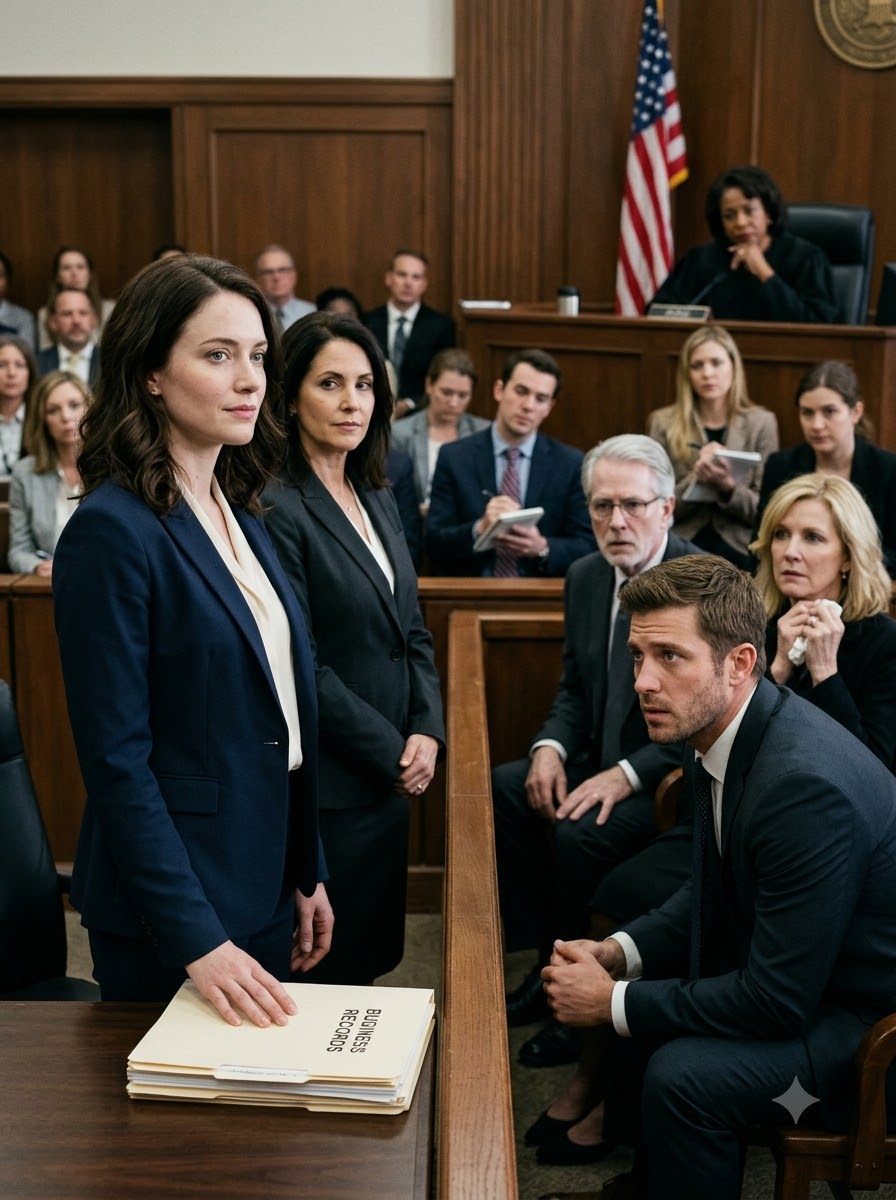
My younger brother leaned across the aisle in that packed Nashville courtroom, looked me dead in the eye, and said, “This is the day you finally get what you deserve.”
My mother nodded beside him, her lips pressed into a thin smile.
And my father, hands clasped on the table like he was presiding over a board meeting, added quietly but loud enough for the row behind them to hear.
“We want to watch you fall.
I didn’t look away.
I didn’t flinch.
I just sat there with my hands flat on the wood surface and waited because I already knew something they didn’t.
My name is Sienna Vale.
I’m 32 years old and on that Tuesday morning in February, I was sitting at the defendant’s table in federal bankruptcy court in downtown Nash Nashville, Tennessee.
Local reporters from the tension and a couple of business journals filled the back two rows.
People I recognized from the hospitality industry sat scattered through the gallery.
Veritors, contractors, a few investors whose money was tangled up in my projects.
The room carried that particular silence that only happens when a crowd senses blood in the water.
My attorney, Imagigen Craft, sat to my left.
She was 51.
Silver streaked hair pulled back cleanly, a stack of accordion folders organized in front of her with the kind of precision that came from decades of courtroom work.
She had said very little to me that morning beyond.
Let them perform.
Our turn comes after.
I believed her.
The judge, the honorable Martin Caldis, entered from the side door, and the baiff brought the room to its feet.
Judge Caldis was compact, mid60s, with wire rimmed glasses and the unhurried manner of someone who had seen every version of this particular theater before.
He settled in, opened the file, and nodded at opposing council to proceed.
The family had hired a man named Graden Fitch to represent them.
He was the kind of lawyer whose suits looked like they cost more than most people’s monthly rent.
pressed, precise, completely comfortable in front of a room, he rose, adjusted his jacket, and addressed the judge in that measured serious tone designed to convey gravity.
“Your honor,” he began.
“This matter is at its core a family tragedy.
My client, Bryce Callaway, extended $2.5 million to his sister, the debtor Shienna Vale, in an effort to rescue her company, Meridian
Hospitality Group, from imminent financial collapse.
The agreement was explicit.
The funds were to stabilize operations and cover critical development costs while Ms. Vale’s company navigated a difficult market period.
He paused there, let the number breathe in the room.
$2 and a half million dollars passed between siblings.
The murmur that rose from the gallery was small but unmistakable.
The evidence will show, he continued, walking slowly, that rather than applying these resources responsibly, Miss Vale redirected them into speculative renovation projects on historic properties that the market could not support.
Projects that went dramatically over budget failed to secure necessary operating permits on time and left Meridian Hospitality Group unable to meet its obligations to vendors, contractors, and investors alike.
The company is insolvent.
The debt is real.
We are asking this court to recognize the validity of the claim and grant relief to a creditor who acted out of familial generosity only to be left with nothing.
My father sat back slightly in his chair, satisfied.
My mother touched the handkerchief in her lap.
Bryce kept his eyes on me, that expression of calculated confidence he had worn since childhood.
The look he used when he already knew he’d won something before the game was finished.
Imagigen rose without drama, gathered nothing from the table, and addressed the judge in a voice that carried clearly without straining for it.
Briefly, your honor, the narrative you just heard is compelling, and the dollar figure is large, but compelling and accurate are two separate things.
We will demonstrate that no such loan ever existed, not in any bank record, wire transfer or signed agreement that meets basic legal standards.
We will further show that Meridian Hospitality Group is not insolvent.
It is in fact actively growing with substantial revenue streams and secured commitments that Mr. Fitch chose not to mention this morning.
and we will show this court what this proceeding actually is.
Not a debt recovery action, but a calculated attempt to seize control of a company that a family member resents not being part of.
She sat down.
The gallery went very still.
To understand why Bryce resented me enough to walk into a federal courtroom and do this, you have to go back to the house in Franklin, Tennessee.
the big one with the wraparound porch and the circular driveway where our family hosted Sunday dinners every week without exception.
My father, Oscar Callaway, ran the family’s commercial property management business, strip malls, small office parks, a
couple of industrial warehouses, steady, conservative, unglamorous work that had been in the family since my grandfather’s time.
It was the kind of business where nothing exciting ever happened on purpose.
Bryce was six years younger than me and had been raised to inherit it.
He had the handshake, the small talk, the instinct for making older men feel respected.
My parents saw themselves in him, cautious, methodical, allergic to risk.
They saw something else in me.
I had always been drawn to the built environment in a way that was hard to explain at the dinner table.
I spent hours reading about adaptive reuse projects, developers who took forgotten buildings, warehouses, old hotels, mill spaces, and turned them into something alive again.
Nashville was doing exactly that in those years, pulling in transplants from all over the country, and I could see the gap clearly.
genuine boutique hospitality experiences using historic bones positioned between the cookie cutter chain hotels and the unaffordable luxury resorts.
Nashville had the demand and I knew where the supply could come from.
I tried explaining it once over my mother Lorine’s roasted chicken with a printed deck of numbers I’d put together myself.
pre-travel survey data, occupancy rates at comparable properties in Asheville and Chattanooga, renovation cost estimates from contractors I’d already talked to, projected cash on cash returns over 5 years.
I had done the homework.
My father listened to the whole thing without interrupting.
When I finished, he picked up his fork and said, “Without heat, without cruelty, but with absolute finality, Sienna, nobody in this family has ever made money turning old, broken buildings into bed and breakfasts.
That’s not a business.
That’s a hobby.”
Lorine nodded.
“And who’s going to manage all that?
It sounds like a nightmare.”
Bryce leaned back in his chair and smiled that small smile.
Yeah, sis.
Leave the real estate to people who’ve actually done it.
You should come work with dad.
We could use someone good with such sheets.
He said it lightly, but it landed the way it always did.
Dismissal wrapped in a compliment so thin you almost couldn’t object without sounding oversensitive.
The only person at that table who said nothing for a long moment was Grand Helen, my father’s mother, who was 78
and had watched the family business go through three generations of stubbornness.
She reached over and touched my hand when no one was looking, just a brief press of her fingers and said quietly, “Don’t stop thinking the way you think.”
That was enough.
I didn’t need more than that.
I left the family firm 18 months later.
I used savings, a small SBA loan, and a line of credit from a community lender in East Nashville who believed in the concept.
I found my first property, a 1920s former textile warehouse in the Germantown neighborhood that had been sitting half renovated for 7 years after a previous developer ran out of money.
I raised the rest through a private equity group that specialized in historic hospitality projects.
I did not ask my family for a single dollar.
The first hotel opened 3 years later, 14 rooms, exposed original brick, a rooftop bar with a view of downtown that had a waiting list for weekends by the second month.
The reviews were better than I had allowed myself to hope.
We won two regional hospitality awards.
A second property followed 16 months after that.
A former printing press building in East Nashville.
22 rooms, full restaurant and event space.
Meridian Hospitality Group was not a hobby.
It was a real company with real revenue and real employees.
And the more it succeeded, the colder the Sunday dinners got until they stopped altogether.
The email from the court arrived on a Wednesday evening in October while I was reviewing architectural drawings for our third property.
Involuntary bankruptcy petition filed.
Meridian Hospitality Group petitioning creditor Bryce Callaway claimed debt $2.5 million.
I read it twice.
Then I called Imagin.
She was at my office by 8 the next morning.
We spread every financial document I had across the conference table and went through the petition line by line.
The alleged loan had a fabricated origination date that fells inside the period when our first property had been generating its strongest occupancy numbers.
There was no wire transfer in any of my accounts that matched the amount.
The attached promisory note was missing interest terms, collateral provisions, and a repayment schedule.
Standard elements that no legitimate lender would omit on a $2.5 million instrument between siblings.
It was thin, dangerously thin for them.
But certain details in the petition troubled me more than the missing documentation, specific contractor disputes, specific permit timeline delays on the third property, figures pulled from internal financial projections I had shared only in closed leadership meetings.
Numbers that weren’t public, numbers that couldn’t have come from outside research.
Imagigen said it plainly.
Someone inside your company is feeding information to the petitioner.
I already had a name forming in my mind.
EMTT Dunn had been my director of development operations for 2 years.
Organized, detail oriented, always first to volunteer for the reports that touched sensitive financial data.
In recent weeks, I’d noticed small things.
Extra trips to the printer when he thought no one was paying attention.
questions about contingency reserve accounts that fell outside his actual scope.
Hesitation when I asked him to summarize the status of the third properties permit applications in a group setting.
I designed a test in a leadership call the following week.
I mentioned casually that I was in early conversations with a private financing group based in Memphis that had ex expressed interest in acquiring a minority stake in our fourth property contingent on a confidential due diligence review scheduled for the following month.
The detail was specific, plausible, and entirely fabricated.
I had spoken to no one in Memphis.
There was no fourth property in active development.
48 hours later, Fitch filed an emergency motion to freeze Meridian’s asset acquisition activities pending the court’s review of the bankruptcy petition, citing specifically the risk that a pending minority stake transaction with an outside investor might prejudice the creditor’s position.
The motion named Memphis.
No public record existed of those conversations, no email, no filing, no press release.
The only way that language appeared in Fitch’s motion was through a direct pipeline from inside high conference room.
Imagigen and I built the evidentiary record quickly and carefully.
Call attendance logs.
File access timestamps showing EMTT’s
activity on restricted financial folders at unusual hours.
a side-by-side comparison of specific phrasing from an internal projection memo and matching language in Fitch’s exhibits.
The Memphis reference against zero public documentation.
It was airtight.
I called EMTT into my office the Friday before the hearing with our HR director and Imagigen present.
He went pale before I finished the first sentence.
By the end of the meeting, he had said nothing coherent in his owned defense, and he was no longer employed by Meridian Hospitality Group.
Imagin had already prepared referrals to the FBI’s economic crimes unit.
That process was underway.
The morning of the hearing, I dressed carefully.
Navy blazer, simple jewelry, nothing that said distressed entrepreneur.
I wanted the room to see exactly what I was, a person who had built something real and was not afraid to stand in front of a court and prove it.
My family was already seated when I walked in.
My father held himself with that particular upright stillness he always used when he needed people to believe he was above whatever the happening around him.
My mother had the handkerchief.
Bryce had the confident tilt, arms crossed, jaw set, exuding the certainty that this was already settled.
Fitch sat beside them, opening his file with the ease of a man who had never lost.
Then the opening statements finished, and Judge Caldus looked up from his file, removed his reading glasses, and folded them slowly on the desk in front of him.
“Counsel,” he said, his voice carrying without effort.
Before we proceed to the defense’s presentation, I have a question arising from the exhibits already submitted into the record.
Fitch halfro’s expression open and receptive.
Judge Culus looked not at him but at me.
Veil is Meridian Hospitality Group currently under a signed development agreement with the Tennessee Historical Commission and the National Park Services National Register program for the adaptive reuse of the Cumberland Arms Building.
The 1887 former hotel property on 3rd Avenue North, a project with a committed fed historic tax credit allocation of approximately $40 million over the project life cycle and a public ribbon cutting commitment to the governor’s office for next spring.
The question landed in that courtroom like a stone dropped into still water.
The ripples moved outward instantly.
reporters pens accelerating, heads turning, the gallery producing a low collective exhale.
My father’s posture changed.
Not dramatically, just a fraction.
The subtle collapse of someone whose carefully constructed confidence has been punctured at the base.
Bryce’s arms uncrossed.
I watched the color shift in his face.
I stood.
Yes, your honor.
The agreement was executed eight months ago following a competitive selection process.
Federal tax credit allocations are confirmed.
Phase one construction financing is fully committed.
The groundbreaking is scheduled for April.
Judge Caldis turned to Fitch with an expression that was not hostile but was entirely without patience.
Mr. Fitch.
Your petition characterizes Meridian Hospitality Group as insolvent and without viable operating capacity.
The exhibits your client submitted include the public nosis of this federal development agreement.
How does the petitioner reconcile those two positions?
Fitch stood.
For the first time since I had watched him enter this room, he looked like a man working hard to find ground under his feet.
Your honor, it is our position that despite the existence of this agreement, the underlying financial instability of the debtor’s company creates risk to both the development and to my client’s claimed debt.
Mr. Fitch, the judge’s voice didn’t rise.
It didn’t need to.
Your client’s claimed debt lacks documentary support sufficient for this court to act on it.
No matching transfer record appears in the submitted exhibits.
The promisory note attached to the petition omits standard provisions that any licensed attorney reviewing a $2.5 million instrument would require as a baseline.
And you are now asking this court to intervene in an active federal public private development agreement.
One that involves National Park Service commitments, historic preservation tax credits, and a sitting governor’s office based on that same unsupported claim.
Imagin Rose.
Your honor, if I may.
She walked the exhibits forward, the access logs, the timestamp comparisons, the Memphis reference side by side with the emergency motion language.
EMTT’s attendance record at the internal call.
She laid it out without theater, just the sequence of facts in order.
She then introduced the forensic summary of the Callaway Family Property Group’s own financial records, subpoenaed and public, showing a significant operating deficit in the commercial property division, losses on an overleveraged strip mall acquisition in Murreey’sboro that had been quietly absorbing capital for 18 months.
The family hadn’t filed this petition to recover a debt.
They had filed it because they needed Meridian’s cash position in federal contract to offset a hole they had dug themselves.
Gran Helene was in the back row.
I had not known she was coming.
I saw her when I turned slightly during a recess, small and upright in a gray cardigan, her hands in her lap, watching everything with those careful eyes that had always seen more than people gave her credit for.
She wasn’t crying.
She looked steady.
The way people look when something they have believed privately for a long time is finally being confirmed in public.
When Judge Calis delivered the ruling, it was direct and complete.
The involuntary bankruptcy petition was dismissed with prejudice.
The court found no credible documentary basis for the claimed debt and noted clear evidence of an improper information gathering operation targeting proprietary company data.
The full record exhibits motion filings, call logs.
The EMTT Dunn evidence package was forwarded to the United States Attorney’s Office for the Middle District of Tennessee for review of potential wire fraud and corporate espionage violations.
My father did not move for several seconds after the gavl came down.
He simply sat there while the room broke into noise around him.
And for the first time in my life, I saw him look genuinely old, not distinguished, not authoritative, just tired and caught.
My mother had stopped performing entirely, the handkerchief pressed to her face for real this time.
Bryce stared at the table with his hands flat on the surface, exactly the way I had placed my hands at the beginning of this, though his were shaking.
Fitch gathered his SAS files without speaking.
There was nothing to say.
The consequences came quickly over the following months.
Federal investigators subpoenaed both Bryce’s personal accounts and the Callaway family property groups records.
The fraud referral moved forward.
Bryce and my father faced charges that carried potential fines running into seven figures, and both faced professional license proceedings before the Tennessee Real Estate Commission.
Industry relationships that had taken decades to build dissolved fast.
Partners who had smiled at every Christmas party stopped returning calls before spring.
EMTT Dunn was the subject of a separate federal investigation for corporate espionage and unauthorized disclosure of proprietary business information.
He did not work in hospitality again.
I walked out of the courthouse into cold February air and found Grand Helen waiting at the bottom of the steps.
She was standing very still with her coat buttoned to the collar and her purse held in both hands, watching for me.
When she saw my face, she exhaled a long, slow release like she had been holding her breath since October.
I went to her and put my arms around her, and she held on with a strength that surprised me.
“I knew,” she said quietly.
“I always knew what you were capable of, sweetheart.
I just had to wait for everyone else to find out.
We stood there for a while.
The street noise moved around us.
Cars, a distant siren, the general hum of a city that had kept going while this was happening.
I didn’t feel triumphant exactly.
I felt light.
The weight I had been carrying since that email in October.
Really, the weight I had been carrying since that dinner table in Franklin years ago was simply gone.
I made the decision about contact that same week.
No calls, no messages, no holidays, no explanations offered, and none sought.
The door was not left slightly open.
It was closed.
What my family had done was not an error in judgment or a moment of panic.
It was a calculated, coordinated attempt to destroy something I had built from nothing using a court filing designed to publicly humiliate me and force a collapse.
That required planning.
It required sustained deliberate effort over months.
There was nothing accidental in it to forgive.
The Cumberland Arms Project broke ground in April, right on schedule.
The governor cut the ribbon at a Thursday morning ceremony that the Tennessian covered on the front page of the business section.
41 units, a restaurant on the ground floor, a private event space on the top two floors with original 1887 plaster work that our preservation architect had spent 8 months restoring.
It was the most beautiful thing I had ever built.
From the first year’s revenue, I established the Meridian Opportunity Fund, a small grant and mentorship program for first generation entrepreneurs in Tennessee who were building businesses without access to family capital or established networks.
People who had been told their ideas were hobbies.
People who had needed one person at the table to say, “Don’t stop thinking the way you think.”
And hadn’t always had that.
The fund didn’t need my family’s name on it to matter.
It just needed to exist.
What I learned, not from the courtroom, but from everything that led to it, is that the people most threatened by your success are often the ones who convinced themselves early that you weren’t capable of it.
The jealousy isn’t really about you.
It’s about the story they told themselves and what it means when you prove that story wrong.
You can spend your whole life trying to change that story for them.
Or you can stop, step back, and let the work speak in a room they no longer have access to.
I chose the








