My family invited me to a “special dinner.” When I arrived, I found forty-three relatives waiting for me. I assumed it had something to do with my grandmother’s recent passing. Then, my mother stood up and said, “Sign it—give up your inheritance—or else we will ruin you.” All eyes were fixed on me. I picked up the folder and said…
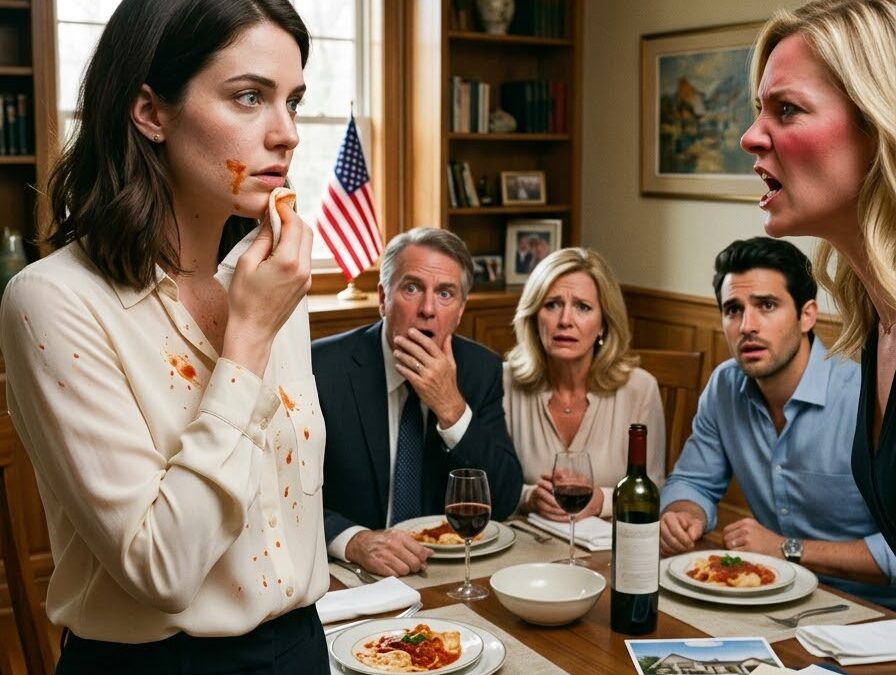
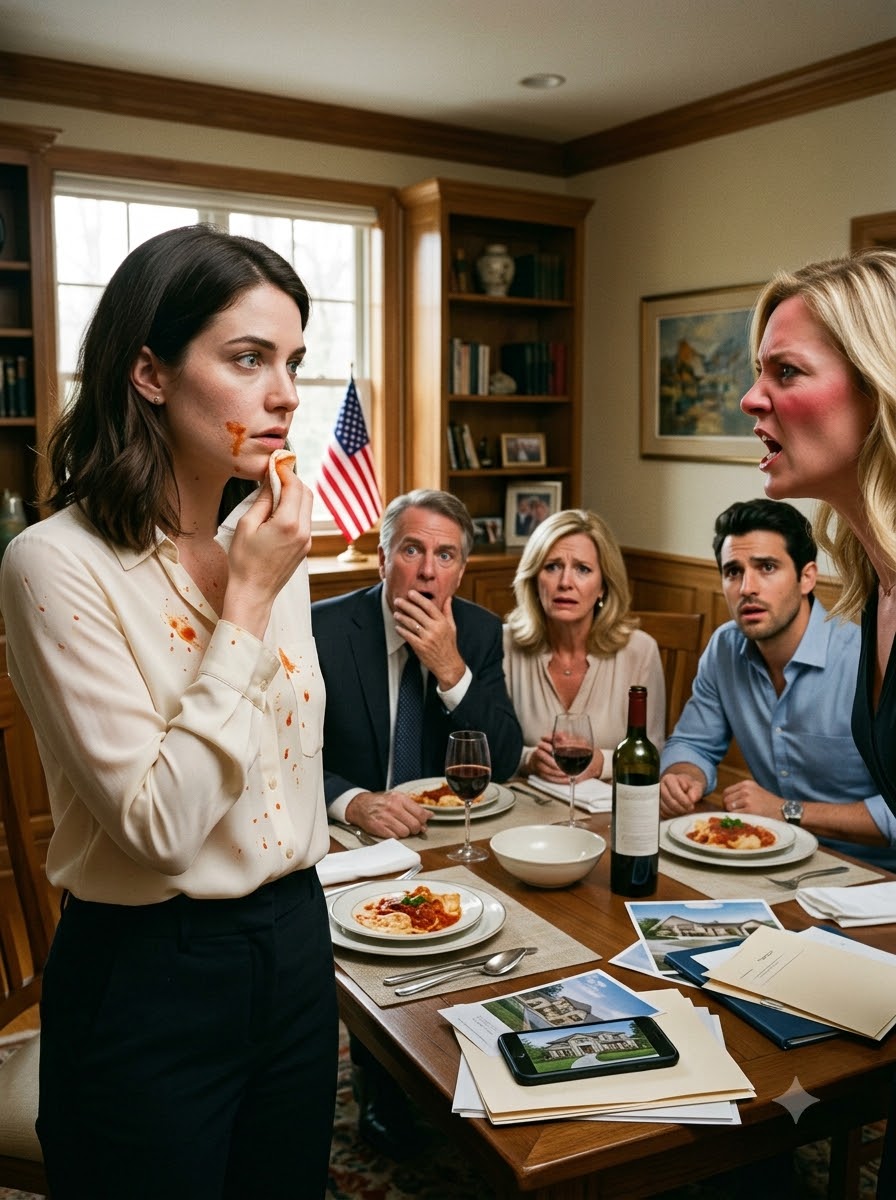
I walked into that restaurant thinking my grandmother had me some small, a piece of jewelry, maybe a handwritten letter, something quiet and personal the way she herself had been quiet and personal.
I did not walk in expecting 43 members of my family to be staring at me like I was already on trial.
The hostess smiled when I gave my name.
Your party’s already here, she said.
Like that was a normal thing.
Like party was the right word for what was waiting for me in that private dining room at the back.
I remember the smell first, the warm bread, the candles, someone’s heavy perfume.
Then I pushed open the door and stopped.
Tables arranged in a horseshoe.
Every chair filled.
My aunt from Phoenix who I hadn’t spoken to in 3 years.
My mother’s brother who never came to anything.
cousins I recognized only from holiday photos.
And at the center of it all, seated side by side at the head table, like they were presiding over something official, my parents.
My mother had her hands folded on the tablecloth.
My father had a glass of water in front of him that he wasn’t drinking.
Neither of them smiled when I walked in.
I should have left then.
I know that now.
But you don’t leave your own family.
You don’t walk out of a room full of people who share your blood because something feels slightly off.
You tell yourself you’re being paranoid.
You tell yourself you’re always too sensitive.
You’ve been told that your whole life, so it must be true.
I found an empty seat near the middle and I sat down and I smiled at the cousin next to me and I said, “I didn’t know there’d be so many people.”
She didn’t smile back.
That’s when I noticed the folder, a thin Manila folder sitting at the place sitting directly across from me.
I could see my name on the tab.
My full name, the one nobody uses, the one on legal documents.
“We’re glad you came,” my father said, and his voice carried the whole room.
My grandmother had died six weeks earlier.
Quietly in her sleep, in the house she’d owned for 40 years, the house I had grown up visiting every summer.
The house that smelled like cedar and old paperbacks and the particular lavender of her handmade soap.
She’d lived alones in that house since my grandfather died when I was 11, and she’d kept it the way she kept everything, carefully, deliberately, on her own terms.
Her name was in the deed.
Her name was in the will and her name was not my mother’s or my father’s or anyone else’s at that table.
Her name was in mine.
I found out two weeks after she passed when her attorney called me directly.
A woman named Miss Brandt who had a soft voice and very precise language.
But she said my grandmother had updated her will 8 months before she died.
She said the house, the property, and the majority of her savings went to me.
She said my parents had already been in contact with her office.
She said I should get my own representation.
I didn’t understand what that meant at the time.
I thought maybe there was paperwork to sort out.
I thought maybe it was complicated the way estates are complicated and that everyone would s sit down together and figure it out the way families are subsoed.
I did not understand that the dinner invitation, the one my mother sent with the subject line family gathering, please come, it’s important, was not about family.
It was not about grief.
It was not about my grandmother at all.
It was about the house.
My mother stood up first.
She has a particular way of standing up in public.
Very straight, very deliberate.
The way someone stands when they want to look like they are being reasonable.
She smoothed her blouse.
She picked up her water glass.
And then she said in a voice that reached every corner of that room, “We’ve called you all here because we need witnesses.
What we’re about to do is difficult, but it’s necessary.”
I looked at my father.
He was looking at the table.
“Your grandmother,” my mother said, turning to me, was not well in her final years.
“You know that.
We all know that.
And the decisions she made reflect that.
We’ve spoken to an attorney.
We believe the will as written does not reflect her true wishes.
The room was very still.
43 people, not a sound.
We are contesting the will, she said.
And we need you to cooperate.
I felt something cold move through my chest.
Not anger, not yet.
Something more like recognition, like a puzzle piece clicking into place that you didn’t know was missing.
Cooperate, I repeated.
Sign a statement.
confirming that your grandmother showed signs of cognitive decline, that she was confused, that she made decisions that weren’t consistent, that the house was always intended to go to the family, not just to you.
I looked around the room.
All those faces, some of them looked uncomfortable, some of them looked curious.
A few of them, my mother’s brother, my aunt from Phoenix, were nodding slowly like this was reasonable, like this was justice.
And if I don’t, I said, my father finally looked up.
Then we take this to court, he said.
And we let a judge decide whether your grandmother was competent when she made this decision.
That process will be very public, very expensive, very long.
He picked up his water glass.
He took a sip.
He set it down carefully.
We thought it would be better to handle it here among family.
There was a moment, maybe two or 3 seconds, where I genuinely didn’t know what I was going to do.
My hands were in my lap, and I was pressing them together hard enough to feel my own pulse.
I was 31 years old.
I had driven 40 minutes to get here.
I was wearing a dress I had ironed that morning because my mother said it was a special occasion.
I thought about my grandmother.
I thought about the summer I was 9 years old and I burned a batch of cookies so badly the smoke alarm went off and she just laughed.
She sat down on the kitchen floor with me right there on the lenolum and she said, “The best bakers are the ones who keep going after the disasters.”
I remembered the way she said it.
I remembered the smoke still in the air.
I remembered that she ate one of the burned cookies anyway and told me it had character.
She was not a confused woman.
She was not a woman who made mistakes.
She was a woman who knew exactly what she was doing and exactly who she was leaving things to.
I stood up.
I didn’t plan it.
I just stood up.
And then I picked up the Manila folder, the one with my name on the tab, and I held it in my hands and I said in a voice that surprised me with how steady it was.
I want to say something.
My mother looked startled.
That was new.
My mother is not easily startled.
I’ve been sitting here for the last 5 minutes listening to you explain to me in front of our entire extended family that my grandmother was incompetent.
That the woman who raised you.
I looked at my mother directly, who put you through school, who kept this family together for 60 years, who knew every single one of your names and your children’s names and your allergies and your birthdays, was too confused to decide who got her house.
Someone shifted in their chair.
She called me 8 months ago, I said, not to talk about the house.
She called me to tell me she’d made some changes to her will and she wanted me to hear it from her, not from a piece of paper.
She was on her porch.
She was drinking her chamomile tea.
She asked me about my job and my apartment and whether I I was eating enough.
And then she said very clearly in her very clear voice, she said, “I want you to have the house because you’re the only one who ever came back to it.”
My father opened his mouth.
I’m not done, I said.
He closed it.
I came back to it every summer for 20 years.
I was there when the roof needed fixing and she couldn’t afford the contractor and I spent a weekend in July helping her patch it.
I was there when she fell on the ice in February and couldn’t drive for 6 weeks.
I was the one who answered the phone at 2:00 in the morning when she was scared and didn’t want to bother anyone.
I paused.
Were any of you there for those things?
The room was so quiet I could hear the ventilation system.
I’m not going to sign anything, I said.
I set the folder back on the table and if you want to take this to court, that’s your decision.
But a judge is going to look at her medical records, which are excellent.
They’re going to talk to Miss Brandt, who met with her four times over the course of a year and recorded every conversation per her own request.
and they’re going to hear from her neighbor, the one who saw her every single day, who I already spoke to this week, and who has agreed to provide a statement.
My mother’s expression shifted.
Something behind her eyes moved.
She knew what she was doing, I said.
She always knew what she was doing.
You just didn’t like the answer.
I picked up my coat from the back of my chair.
I was almost at the door when a voice said, “Wait.”
I turned.
It was a woman I didn’t recognize.
She was sitting near the far end of the horseshoe in a cit that had been partially blocked from my view by a pillar.
She was older, maybe mid60s, with gray hair cut short and a composed, careful expression.
You don’t know me, she said, “But I think you should.”
My mother made a small sharp sound.
Not a word, just a sound.
My name is, the woman started, and my mother said loudly.
You were not invited.
No, the woman agreed.
I wasn’t, but I was invited by someone else.
She looked at me.
Your grandmother wrote me a letter.
She told me this meeting was going to happen.
She told me to come.
The room erupted.
Not loud, more like a sudden collective exhale, chairs shifting, people turning to look at each other.
“Who are you?” I asked.
“I’m your grandmother’s younger sister,” she said.
“I’ve been living in Vermont for the last 22 years.
Your mother and father cut contact with your grandmother’s side of the family after a disagreement about well about money.
Actually, your grandmother stopped talking about it because she didn’t want to cause you pain.
She paused.
She talked about you constantly though.
Every time we spoke,
I hadn’t known my grandmother had a sister.
I had never once heard her mentioned.
There were no photographs, no holiday cards, no name in any family story I’d ever been told.
22 years erased.
She sent me a copy of the will, the woman said.
She reached into the bag at her feet and pulled out an envelope and a letter signed, dated, notorized, written in her own hand 6 months ago, explaining her reasons for every decision she made.
She looked at my parents, including the decision to leave you both out of it entirely.
My father pushed back from his chair.
This is not
She also, the woman continued calmly, included a letter specifically addressed to anyone who attempted to contest the will.
Her attorney has the original.
I have a copy.
Would you like me to read it?
No one answered.
She read it anyway.
I can’t give you the exact words, but I can tell you that my grandmother, quiet, careful, deliberate, the woman who sat on the kitchen floor with me when I burned the cookies, had anticipated every single thing that happened in that room.
She had written about the house and why she chose me.
She had written about the pattern she had watched repeat itself for decades.
The way her children treated generosity as entitlement, the way they had always assumed that what was hers was eventually theirs.
She wrote that she was not confused.
She wrote that she had never been clearer.
And she wrote at the end, “I hope she keeps the lavender soap.
She knows where I keep it.”
That broke me a little.
I’m not going to pretend it didn’t.
By the time the woman finished reading, more than half the people in that room were looking at the table.
My aunt from Phoenix had her hand over her mouth.
The cousin who hadn’t smiled at me was staring at the wall.
My mother didn’t speak.
My father didn’t speak.
I walked back to the table and I picked up the Manila folder one more time.
I looked at my name on the tab.
Then I set it down in front of my mother.
I’m not signing this, I said.
I was never going to sign it, but now everyone in this room knows exactly why.
I looked at the woman at the end of the table.
Do you want to get coffee?
I asked.
She smiled.
It looked exactly like my grandmother’s smile.
The same shape, the same eyes.
I don’t know how I hadn’t seen it the moment she stood up.
I’d love that, she said.
We left together.
I called Miss Brandt the next morning.
I told her about the dinner and the folder and the 43 people.
She was quiet for a moment and then she said she was not surprised and that my grandmother’s instructions had accounted for this possibility.
She told me the will was airtight.
She told me to stop worrying.
I went to the house that weekend.
I unlocked the front door with the key my grandmother had mailed me.
Just mailed me out of nowhere 3 years ago with a note that said, “You might need this someday and nothing else.”
And I stood in the entryway for a long time.
Cedar and old paperbacks, lavender soap, everything exactly as she’d left it.
I found the soap on the shelf in her bathroom, right where she always kept it.
Three bars wrapped in paper lined up neatly.
I sat down on the edge of the tub and held one of them, and I let myself cry for a while.
Not about the will or the house or the folder with my name on it.
Just about her, just about the fact that she was gone.
and the kitchen would never smell like burned cookies again, and the voice I wanted most was the one I couldn’t call.
My parents filed a formal contest 3 weeks later.
Their attorney sent a letter to Ms. Brandt’s office with a list of allegations about my grandmother’s mental state.
The list was long and specific and entirely unsupported by any medical evidence because there was none.
Her doctor of 15 years provided a statement.
Her pharmacist provided a statement.
Her neighbor provided a statement.
Just as I’d said, the woman from Vermont provided the letter.
The contest was dismissed 4 months later.
I received a formal notice in the mail.
No phone call from parents, no message, nothing.
I haven’t spoken to them since that dinner.
I don’t know if I ever will.
Some days I think about it.
Some days I pick up my phone and I scroll to my mother’s name and I sit there for a minute and then I put it back down.
Not because I’m angry.
The anger burned off a long time ago.
But because I don’t know what there is to say.
They stood in a room with 43 people and they asked me to call my grandmother confused.
They asked me to undo the last thing she ever did for me.
And they did it in front of witnesses on purpose so that I would feel too small to say no.
I was not too small.
I have the house.
I have the lavender soap.
I have a great great aunt in Vermont who calls me every Sunday evening who sounds just enough like my grandmother that the first few times I had to sit down when I heard her voice.
She told me last month that my grandmother used to read her my letters out loud, every single one.
She said she’d been hearing about me for 30 years.
I didn’t know what to do with that at first.
It felt like grief and gift at the same time, which is the hardest combination to hold, but I’m learning.
And the house, I’m keeping it.
I go there on weekends sometimes.
I’ve started a small garden in the back in a bed she kept, but stopped planting a few years ago when her knees got bad.
I put in lavender.
It seemed right.
There are people in your life who see you clearly.
Not because it’s easy, not because you’ve earned it in any particular way, but because they choose to.
They decide that you are worth seeing.
My grandmother decided that about me before I was old enough to understand what it meant.
And she kept deciding it quietly every summer, every phone call, every burned cookie, right up until the very end.
She left me more than a house.
She left me proof that she’d been paying attention all along.








