My parents came to my apartment with a lawyer and said, “Transfer the title to your younger sister. You just need to sign these transfer papers and let her move in!” I replied immediately, “Let the lawyers for both sides meet in court.”
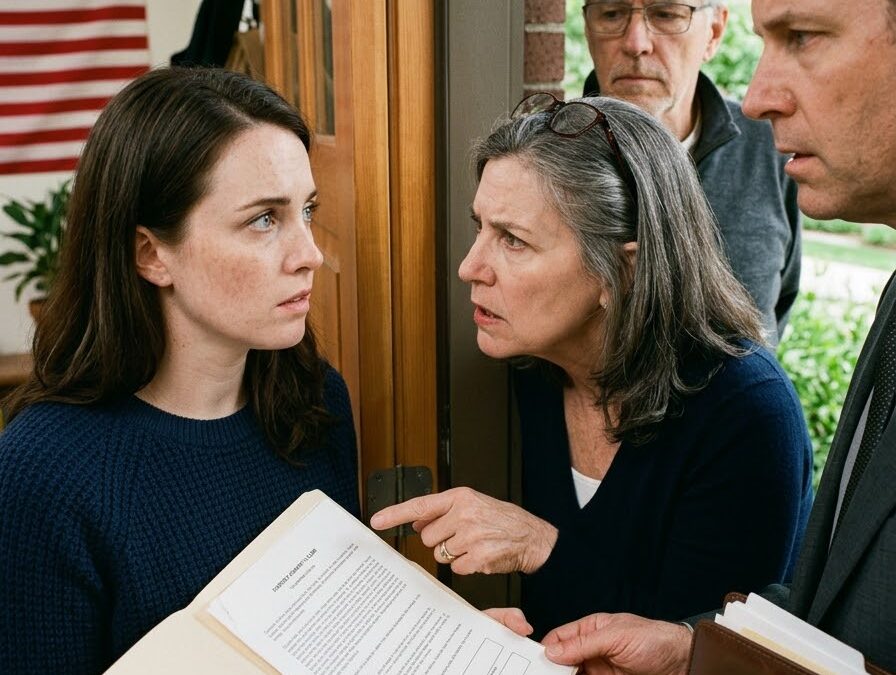
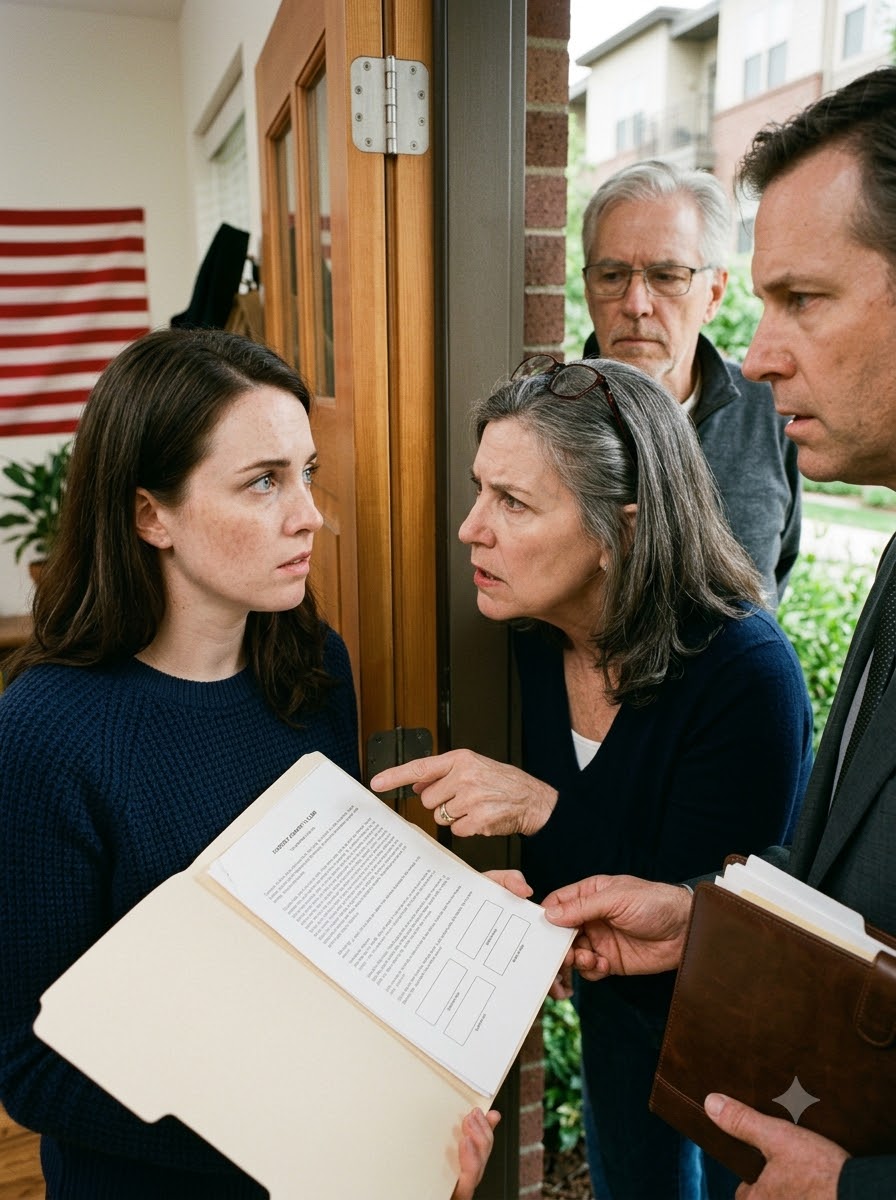
“All you need to do is sign these transfer papers and let your sister move in.”
My mom said it in my own doorway on a Sunday afternoon.
With my dad behind her.
And a man in a golf shirt holding a folder against his forearm like a casserole dish.
I’m Miriam Wilks.
I’m 29.
And I write the code that keeps hospital records from losing people.
The folder had my sister’s name typed on the first page.
Right under mine.
I read it standing in the doorframe because I wasn’t letting any of them past it.
“Then let our lawyers meet in court,” I said.
My mother laughed the way she laughs at church when somebody’s baby cries.
What she had said the night before in front of my whole family was worse than anything in that folder.
And what she did 8 weeks later in a courtroom she filled with relatives herself is the reason I’m telling you this.
Welcome back to Calm Drama Stories.
This is where families who keep score finally get the bill, told quietly by the people who paid it.
If you’ve ever been the one who doesn’t need anything, stay with me.
Drop a comment with where you’re listening from and be sure to subscribe.
The night before, I was sitting at my parents’ dining table in Clayton with my sister’s red graduation cap on the sideboard beside their wedding photo.
Nine of us.
Aunt Gloria and Uncle Leon.
My cousin Courtney.
Two ladies from my mom’s church.
And a strawberry pound cake Gloria had carried in like it was the guest of honor.
Haley had walked across the stage at the arena that morning.
Communications degree.
22 years old.
Tassel still swinging.
I’d been the one filming because my mom wanted her hands free to wave.
Then my mother stood up with her sweet tea.
The ice clicked against the glass.
And everybody hushed the way they do for her.
“Chuck and I set both our girls up,” she said.
“Miriam’s got her condo in Raleigh.”
“Now it’s Haley’s turn.”
People clapped.
Gloria said:
“Y’all did good, Janet.”
My dad looked at his plate like the plate had asked him something.
I looked at my dad.
He didn’t look back.
The condo my mother was toasting had $38,000 of my savings in it.
And a mortgage with one name on it.
And the name wasn’t Chuck.
Courtney leaned across the pound cake.
“How much did y’all put down on that place, Aunt Janet?”
My mother smiled.
“Enough.”
Haley nudged my knee under the table.
Happy and a little drunk on being the reason for a room.
“Say something, Miriam,” she whispered.
I lifted my glass.
“Congratulations, Haley,” I said.
And that was all I said.
And I want you to remember that I chose to say nothing else.
I’d been choosing it for years.
My mother sat down satisfied.
And the church ladies asked for the cake recipe.
20 hours later, she’d be standing in my doorway.
But first, she needed me alone in her kitchen.
My mother talks about money with her yellow rubber gloves on.
So the conversation looks like dishes.
I was drying.
My dad came through twice with the trash bag.
And left both times without a word.
“Haley’s moving into your second bedroom Monday,” my mom said to the window over the sink, where the steam had fogged out the backyard.
“What?”
“Monday.”
“She’s got interviews in Raleigh.”
“She can’t do that from a dorm they’re closing.”
“And you have a whole room full of a treadmill you don’t use.”
“Mom, she can stay a couple weeks.”
“We’ll handle the paperwork Sunday.”
I set the plate down.
“What paperwork?”
She rinsed a glass that was already clean.
“Don’t make it ugly, Miriam.”
“You have more than you need.”
“She has nothing.”
“She has a degree and two parents.”
“And you have a two-bedroom condominium at 29 years old.”
She said condominium like it was a diagnosis.
“Which I bought.”
“Which you were able to buy.”
That’s her whole theology in one sentence.
And I’d heard it my whole life.
Anything I earned was something I’d been allowed to earn.
“Sunday,” she said again.
“Dwayne’s coming by after service to explain it.”
“He’s very good with families.”
“Who’s Dwayne?”
“From church.”
“He does the papers.”
I hung the towel on the oven door.
“I’m not signing anything, Mom.”
She peeled the gloves off one finger at a time.
And laid them over the faucet like two yellow hands praying.
“You’ll say yes,” she said.
“You always do.”
Then she went back to the dining room to cut Haley a second slice of cake.
And I stood in her kitchen.
Realizing she’d already told my sister the answer.
I just hadn’t been asked the question yet.
I found Haley on the back steps with her cap still pinned in her hair.
And a cigarette she hid behind her back the second the kitchen light hit her.
“Don’t tell Mom.”
“I’m not the one who tells Mom things.”
She scooted over.
The tassel swung every time she moved.
Mosquitoes.
The porch light hummed.
“So,” she said.
“Mom said you offered.”
“I didn’t.”
“She said you’d say that.”
I laughed because there was nothing else to do with it.
“Haley, I didn’t offer.”
“I found out about it 20 minutes ago holding a plate.”
She pulled on the cigarette.
And blew it away from me like that was manners.
“I don’t even want your room,” she said.
“I want to not be a problem.”
“Okay.”
“I want one summer where nobody is sighing about me.”
“You’re not the problem.”
“Then sign whatever it is and we’re fine.”
“You don’t know what it is either, do you?”
She shrugged.
“Some paper.”
“The man from church who does the papers is bringing it.”
“Mom says it just makes it official so nobody fights later.”
“Nobody’s fighting.”
“You’re fighting right now, Miriam.”
“You’ve got your face on.”
I didn’t have a face on.
I had the face I have when a system tells me everything’s fine and the error log says otherwise.
“Do you know his name?” I asked.
“The paper guy.”
“Mr. Sykes.”
“He did Grandma’s stuff.”
She stubbed the cigarette on the step.
And tucked the butt in her sleeve.
“Just be home Sunday, please.”
“Mom’s already told Aunt Gloria it’s handled.”
That was the second time in an hour I’d learned my own decision from somebody else’s mouth.
I told her good night.
I told her I was proud of her.
And I meant it.
And I drove the 30 minutes back to Raleigh with the windows down so I wouldn’t have to hear myself think.
Sunday came anyway.
It came with a folder.
4:00 Sunday.
My mother’s perfume came down the hallway a full step ahead of her.
And then the rest of them arrived.
Dad in his church slacks.
And a man about 60 in a navy golf shirt with a round notary seal printing through the chest pocket.
He put his hand out.
“Dwayne Sykes.”
“I help families with their documents.”
I didn’t take the hand.
I took the folder.
It was clear plastic.
The cheap kind.
And the paper inside was still warm from a printer.
North Carolina General Warranty Deed.
Grantor: Miriam D. Wilks.
Grantee: Haley R. Wilks.
Consideration: love and affection.
I read that line twice.
Out loud.
So my dad would have to hear it.
Behind the deed was a second document titled Family Occupancy Agreement.
Which gave my parents reasonable access to a home I’d paid for.
“I’m a notary,” Dwayne said.
“We can do it right here.”
“10 minutes and everybody goes home happy.”
“Nobody’s coming in,” I said.
Across the hall, Mr. Fox’s door opened an inch.
My mother lowered her voice.
Which for her means it can only be heard in this county.
“Miriam, don’t be dramatic.”
“This is family.”
“Family doesn’t need a notary in the hallway.”
“All you need to do is sign these transfer papers and let your sister move in.”
“And the second one gives you a key to my house.”
“It’s not your house,” my mother said.
“What’s yours is the family’s.”
There it was.
The sentence she’d raised me on.
Said out loud in front of a stranger like it was on a plaque.
I closed the folder.
And held it against my chest the way Dwayne had.
“Then the family can read my mortgage,” I said.
“My name’s the only one on it.”
Dwayne glanced at my mother.
My mother did not glance at Dwayne.
“Then let our lawyers meet in court,” I said.
And I watched the word lawyers land on the man in the golf shirt.
And I watched him not like where it landed.
“We’ll do this the hard way then,” my mother said.
And held her hand out for the folder.
I took my phone out first.
I photographed the business card Dwayne had tucked in the plastic sleeve.
The front page.
And the notary seal through his pocket.
While he was still deciding whether to object.
He decided not to.
“Miriam,” my dad said.
The first thing he’d said since the elevator.
“Just think about it.”
“Please.”
“I’ve been thinking about it since the pound cake, Dad.”
I handed the folder back.
My mother took it and turned.
And the perfume turned with her.
And the three of them walked to the elevator in the order they’d come.
Nobody said goodbye.
The elevator doors closed.
Mr. Fox’s door closed a second later.
I shut mine.
And put the chain on.
Which I’d never done in daylight.
And then I looked at the little wooden key rack by the door.
Two hooks.
Mine hung on the first one.
The second hook was empty.
It had been empty for 3 years.
Since the week I closed.
When my mother had stood in this same spot and said:
“Give me one for emergencies, honey.”
“You live alone.”
And I’d handed her the spare on a yellow church lanyard because it was easier than the conversation.
I called Priya from work.
She picked up chewing.
“Do you know a lawyer who does houses?” I asked.
“I know one who does people who won’t leave,” she said.
“Why?”
“Who won’t leave?”
“Nobody yet.”
I looked at the empty hook.
“My mother has a key.”
Priya stopped chewing.
“Then you don’t have a lawyer problem yet.”
“You have a locksmith problem.”
I said I’d handle it Monday.
I did not handle it Monday.
By Thursday of the next week, I’d find out exactly what my mother thought an emergency was.
Teresa Elcott’s office is on Glenwood Avenue over a coffee shop.
And the espresso machine screams through the floor every four minutes.
She read the deed off my phone with her reading glasses pushed up into gray hair.
And she tapped a fingernail on the words love and affection.
“Cute,” she said.
“You have a mortgage?”
“312,000.”
“My name only.”
“Sign this and your bank can call the whole loan.”
“There’s a due-on-sale clause in every mortgage in America.”
“That’s not a family matter.”
“That’s a default.”
I hadn’t thought of that.
I write software for hospitals.
I don’t read mortgage boilerplate for fun.
“Can they take it?” I asked.
“No.”
She handed the phone back.
“They can make it expensive.”
“They can make it loud.”
“They can put your sister on your couch and dare you to do something about it.”
“That’s the plan, I think.”
“Who’s the lawyer?”
“He didn’t say he was one.”
“Card says Sykes Document Services.”
Teresa’s face did something small.
“Sykes,” she said.
“I’ve heard that name.”
“Not in a good sentence.”
“Meaning?”
“Meaning I’ll look.”
“Meanwhile…”
She leaned forward.
“You said your mother has a key for emergencies.”
“Get it back.”
“Or change the lock before somebody decides what an emergency is.”
The machine screamed downstairs.
“It feels like a lot,” I said.
“Changing a lock on my own mother.”
Teresa took her glasses off.
“Ms. Wilks, a man with a notary stamp stood in your hallway yesterday.”
“You’re not the one escalating.”
I paid her for the hour.
I walked to my car doing what I do at work when a system is quietly failing.
Which is list every door somebody could come through.
There was only one.
And my mother had a key to it.
And I still hadn’t called a locksmith.
And that’s a red flag I’m not going to pretend I didn’t see.
Tuesday at 10 in the morning, the error dashboard on my second monitor went red.
A record sync had stalled.
And my phone lit up with Aunt Gloria at the same time.
I answered because Gloria doesn’t call.
Priya slid one side of her headphones off at the next desk.
“Honey,” Gloria said.
“I’m going to say this once because I love you.”
“Your daddy put 40,000 down on that place.”
“Janet says.”
“And now you’re locking your sister out.”
I turned my chair to the wall.
“Nobody’s locked out, Aunt Gloria.”
“Nobody put 40,000 down but me.”
“Well, that’s not what your mother says.”
“I know it’s not.”
“Honey, don’t be ugly about it.”
“She’s been crying at church.”
I opened my mouth to tell her the rest.
The other thing.
The thing I’d been paying every month for 3 and a half years.
That my mother stood up and took credit for with a glass of sweet tea.
And I closed it.
Because saying it would make my sister a debt and my mother a liar in the same sentence.
And I wasn’t ready to buy those two things at once.
“I love you, Aunt Gloria,” I said.
“I have to go.”
“A hospital’s losing records.”
She sighed the family sigh.
And hung up.
Priya rolled over on her chair.
“You just let her say that.”
“$40,000.”
“It’s not worth it.”
“It’s $40,000 of not worth it.”
I pulled up the stalled sync.
And started reading logs.
Because logs don’t have opinions.
“Nothing that runs quietly gets counted,” I said.
Mostly to the screen.
“That’s how it works.”
“The stuff that doesn’t break, nobody knows it’s there.”
“Then stop running quietly,” Priya said.
My phone buzzed against the desk.
The family group chat.
Wilks Pittman Fam.
19 members.
A new message from Courtney.
Family meeting re Miriam’s condo.
Sunday the 17th.
Aunt Gloria’s house.
Please come y’all.
A praying-hands emoji.
Then from my mother.
Just this:
Handled.
Courtney called while I was walking to my car that afternoon.
And I took it leaning against the driver’s door because the hood was too hot to touch through my shirt.
“Just come on the 17th,” she said.
No hello.
“Bring the papers signed and this is over.”
“And we can all go back to normal.”
“There’s nothing to bring, Courtney.”
“There’s a deed that gives my sister my condo.”
“That’s not paperwork.”
“That’s a house.”
“Aunt Janet says it’s a formality.”
“Haley lives there.”
“You keep the title.”
“Everybody’s covered.”
“That’s not what the deed says.”
“I read it.”
“Did anybody in the group chat read it?”
Silence.
Then:
“Well, don’t be surprised what people say.”
“What are they saying?”
She let that sit long enough that I knew she’d been waiting to be asked.
“That you were always the cold one.”
“That you got out and forgot who got you there.”
I watched the group chat icon on my phone change while she talked.
Somebody had made Haley’s graduation cap the picture.
“Who got me there?” I asked.
“You know what I mean.”
“I really don’t.”
“I’d love a list.”
“Mom says Aunt Janet’s been crying at church,” Courtney said.
Softer.
Like that was the trump card in the fellowship hall.
In front of the Tolsons.
Of course she had.
My mother has never cried anywhere without a witness.
“I’ll think about the 17th,” I said.
Which was true in the way that thinking about a hurricane is true.
Courtney said:
“Love you.”
And hung up.
I stood there another minute in the heat.
With my mother’s words still pinned to the top of the chat.
Handled.
What I didn’t know yet was how much of it she meant to handle in person in my kitchen with my spare key.
I invited Haley to dinner Wednesday because she’s my sister.
And not a lawsuit.
And I burned the garlic while she wandered down the hall to look at the second bedroom.
“It’s mostly a desk,” she called.
“And a treadmill folded up like it’s ashamed.”
“It’s an office.”
“It could be a room.”
She came back.
And sat on a stool at the island.
And I scraped the pan.
And started over.
“Do you even want me here?” she asked.
Straight out.
The way she does when Mom’s not in the room.
“I want you to have a place,” I said.
“Not mine.”
“That’s a no.”
“It’s a different yes than the one you were promised.”
She picked a piece of burnt garlic off the cutting board.
And ate it.
“Did Dad really put money down on this?”
My laptop was open on the counter where I’d left it.
The university payment portal still up.
The tab I open on the first of every month.
I reached over.
And closed the lid.
“Ask Dad,” I said.
“I’m asking you.”
“And I’m telling you to ask the person Mom says did it.”
She looked at me a long time.
Haley has my mother’s eyes and none of the strategy behind them.
Which is either lucky or dangerous depending on who’s standing next to her.
“Mom says you’re like this because you don’t have anybody,” she said.
“Like what?”
“Careful about stuff.”
“About things.”
“Careful is how you end up with things, Haley.”
I put a plate in front of her.
She ate.
We talked about her interviews.
A marketing agency in Cary.
A nonprofit downtown.
I didn’t say what was in the tab.
I’d been not saying it for 44 months.
The next time she stood in that hallway, she’d have her own boxes in the room.
And my mother’s key in the door.
And she’d say a sentence she’d been given to say.
Thursday, I took a long lunch and drove the 30 minutes out to Clayton to the shop.
Because my father doesn’t lie well in person.
And my mother never lets him try.
Wilks Heating and Air used to have three vans in the lot.
There was one.
The parts shelves along the back wall were half empty.
And the place smelled like machine oil and refrigerant.
And nothing else.
No coffee.
No radio.
Dad was on a stool taking a condenser fan apart that didn’t look broken.
“Hey, kiddo.”
“Hey.”
“Where’s Ray and Tommy?”
“Let them go in March.”
He didn’t look up.
“Slow season.”
“It’s May, Dad.”
In North Carolina, there is no slow season for air conditioning.
He turned a screw that didn’t need turning.
On the filing cabinet beside him, under a magnet shaped like a rooster, two green certified-mail slips were pinned in a stack.
Unsigned.
The kind the post office leaves when you don’t answer the door.
I looked at them.
He saw me look at them.
“Did you put $40,000 down on my condo?” I asked.
“Your mother handles the house.”
“I’m asking about mine.”
He set the screwdriver down finally.
And wiped his hands on his pants.
And his hands were clean.
“Please just sign it, Miriam,” he said.
“It’d fix more than you know.”
“Fix what?”
“Just more than you know.”
“Dad, if you need something, you can say it to me.”
“In actual words.”
He picked the screwdriver back up.
That’s my father.
Every hard sentence in his life has been said by somebody else while he held a tool.
I kissed the top of his head.
Which smelled like the shop.
And I drove back to Raleigh.
Past the exit for the county courthouse.
Without knowing yet why I’d want to remember where it was.
Friday, the mail came.
This time it was addressed to me.
And it had a law office on it.
The envelope had the green certified stripe.
And the letterhead said:
Law Office of D. Sykes.
Smithfield, North Carolina.
In a font somebody had picked to look old.
Notice of Family Interest.
It said my parents had contributed $40,000 toward the acquisition of my condominium.
That the property was understood by all parties to be held for the benefit of the Wilks family.
And that I had 14 days to execute the transfer instrument or litigation will follow.
I read it to Priya at a food hall table with my lunch going cold.
“Card says Document Services,” she said.
“Letter says Law Office.”
“I noticed.”
“Those are two different businesses.”
“Miriam, one of them is allowed to write that letter.”
“Check the source.”
Which is what she says to me every time I blame a bug on the wrong service.
I pulled up the state bar’s member search on my phone.
And typed Sykes.
Then Dwayne Sykes.
Then just Dwayne.
Johnston County.
No active member came back.
Nothing.
Priya leaned over the phone.
“Maybe he’s licensed in another state.”
“In Smithfield.”
“Doing Grandma’s papers at church.”
“Then maybe he isn’t licensed anywhere.”
I looked at the letterhead again.
At the little old-fashioned font.
And I thought about how you’d choose that font if you wanted to look like something you weren’t.
“Or maybe,” I said.
“He used to be one.”
I forwarded the letter to Teresa.
With the search screenshot.
And a single line.
Priya took my cold sandwich because I wasn’t going to.
Quick pause.
If you’ve ever paid for something quietly so somebody else could look generous, I want to hear it.
Put it in the comments because I know I’m not the only one.
And if you’re new here, subscribe.
The part where my mom used her spare key is coming up.
And you’ll want to be here for it.
The following Thursday, I came home at 6:00.
And the deadbolt turned too easily.
Because it was already unlocked.
The condo smelled like my mother’s candle.
Fresh linen.
She buys them by the case.
It was burning on my kitchen counter next to my kettle.
Which was on.
And my mother was standing at my cabinets.
Taking down my mugs like she’d been doing it for years.
“You’re home early,” she said.
“This is my home.”
Down the hall, the second bedroom door was open.
Three boxes.
A black trash bag full of clothes with a hanger poking through it.
My treadmill had been dragged out and leaned against the hallway wall like something waiting for a bus.
And my sister was sitting on an air mattress that was still inflating.
A little electric pump wheezing beside her.
With her phone in her hands.
And her shoes on my carpet.
“Haley.”
“Hey.”
She didn’t look up.
I turned back to the kitchen.
My mother poured hot water over a tea bag.
In my mug.
“We used the emergency key,” she said.
“This is an emergency.”
“Whose?”
She didn’t answer that.
She set the mug down in front of the stool where Haley had eaten dinner a week ago.
“The dorms closed Tuesday.”
“She was going to sleep in her car.”
“Miriam, she was going to sleep in Clayton.”
“In her bedroom.”
“30 minutes from here.”
“Her interviews are in Raleigh.”
“So is a hotel.”
“We are not paying for a hotel when her sister has a room.”
She took a sip of my tea.
From the hallway came a voice I recognized because it wasn’t hers.
My sister said:
“I live here now.”
She said it the way you read a line off a card.
And I understood, standing in my own kitchen with my mother’s candle burning, that this had been rehearsed.
And I was the only one in the building who hadn’t seen the script.
I held my hand out.
Palm up.
In the kitchen.
“Key.”
My mother looked at my hand like I’d offered her something dirty.
“Mom.”
“The spare.”
“Give it to me.”
She reached into her purse on the counter.
And for one second, I thought she was going to do it.
She took out the yellow church lanyard with the key on the end.
The lettering on the ribbon worn down to ghosts.
And she closed her fist around it.
“This key stays with family,” she said.
“It’s my door.”
“And you’re my daughter.”
“And that’s my other daughter in that room.”
“And I’m not handing over a key to a house I helped put you in so you can lock your own sister out.”
“You didn’t help put me in it.”
“Miriam.”
“Then the family can explain to a judge why it has a key I didn’t give it.”
Her fist didn’t open.
I took my phone.
And my own keys.
And I walked out of my own condo.
Down three flights.
And out to the parking lot.
Where the light over row C was flickering the way it had all spring.
I called Teresa on speaker with the phone on the hood.
“Can I put her out tonight?” I asked.
“My sister.”
“She’s on an air mattress.”
“My mother let her in with the spare.”
“Is she sleeping there?”
“She’s inflating there.”
“Then no.”
Teresa didn’t even pause.
“In North Carolina, once a person is residing in a place, putting her out yourself is a lockout.”
“And a lockout is your liability.”
“Not hers.”
“I don’t care whose name is on the deed.”
“You’d be handing your mother a lawsuit with a bow on it.”
I looked up.
Third floor.
My window.
The light was on in the second bedroom.
And a shape crossed it.
And the shape was my mother.
“So what do I do?”
“You change the lock.”
“Tonight.”
“Tomorrow.”
“Soon.”
“And you hand your sister a key.”
“Not your mother.”
“Your sister.”
“Two keys.”
“Two keys.”
“Then,” I said.
“Two keys,” Teresa said.
“And start writing things down.”
“Dates.”
“Who said what.”
“You’re going to want a record.”
By Friday, there were two new keys in the world for that door.
My mother wasn’t holding either one.
Neither, it turned out, would she need to be.
The locksmith came at 8 Friday morning.
A big, quiet man with a drill.
And by 8:20, there was a bright new deadbolt in my door.
And gold brass shavings on the welcome mat.
Haley watched from the hallway in her sleep shirt.
With her arms crossed.
“You’re really doing this?”
“I’m really doing this.”
He cut two keys on the machine in his van.
And brought them up.
I set them on the counter.
One in front of my stool.
One in front of hers.
Both with edges so new they’d cut a finger.
“One for me,” I said.
“One for you.”
“None for them.”
“Mom’s going to lose it.”
“Mom’s not on the deed.”
“You keep saying that like it’s an answer.”
“It’s the only answer that’s true, Haley.”
“Everything else is a feeling.”
She picked up her key.
And turned it over.
“Why are you being like this?”
“Because last night you said, ‘I live here now.’”
“In her voice.”
“Not yours.”
“Hers.”
“And I need there to be a door in this building that only opens for people who use their own voice.”
She didn’t have anything for that.
The locksmith was packing up.
“You want me to keep the old cylinder?” he asked me.
Holding up the dead one in a paper bag.
“Some folks like to know who still has a key that doesn’t work.”
I looked at the bag.
Then I looked at my sister.
Who was looking at the floor.
“Keep it,” I said.
“I already know.”
He left.
Haley went down the hall.
And shut the second bedroom door gently.
Which somehow was worse than slamming it.
I went to work with a key on my ring so new it snagged my pocket lining all day.
Saturday morning, my mother came to the door.
And the new lock did exactly what it was built to do.
And then my sister did what she’d been built to do.
Saturday.
9:00 in the morning.
The knob rattled.
Then the knocking started.
Then my mother’s voice went up into the register she uses to be heard from the choir loft.
“You locked your mother out of a home she helped pay for!”
I was in the kitchen in socks.
Down the hall, Haley’s door opened.
Across the hall, I heard Mr. Fox’s slippers on his tile.
And his chain slide.
My mother knocked again.
“Miriam!”
“I know you’re in there!”
“She locked me out, Chuck!”
“She changed the locks on her own mother!”
I opened the door.
She was in her Saturday errand outfit.
With her purse over her arm.
My dad two steps behind her holding a grocery bag of Haley’s things.
And Mr. Fox’s face in the crack of his door like a moon.
“Say it slower,” I said.
“So the neighbors get it right.”
“Whose name is on the mortgage?”
“Don’t you dare.”
“Whose name?”
“Mom.”
“Don’t you dare talk to me like that in a hallway.”
“You picked the hallway.”
And then behind me, my sister’s hand came past my shoulder.
And took the edge of the door.
And pulled it wide.
And she said:
“Come in, Mom.”
In a voice that was all hers this time.
And that was what made it hurt.
My mother walked past me.
She set her purse on the counter.
Right on the spot where her candle had burned two nights before.
Like she was putting it back where it belonged.
“We’ll talk about this properly,” she said.
“Tomorrow.”
“Gloria’s house.”
“2:00.”
“Dwayne will be there with a new agreement.”
“One you can live with.”
“Come or don’t.”
“We’re settling it either way.”
“You can’t settle what isn’t yours.”
“Then come and tell everybody that,” my mother said.
And she went down the hall to help my sister hang up the clothes from the bag.
And I stood in my kitchen.
Understanding that I was going to Gloria’s.
If only to watch her say it in front of the room.
Gloria’s living room in Garner has a ceiling fan that turns just slow enough to make you watch it.
Eight of us.
Gloria and Leon on the sofa.
Courtney on the arm with her phone up.
My parents in the two good chairs.
Haley on the floor by the coffee table.
A plate of cookies nobody touched.
And Dwayne Sykes in a golf shirt.
Green this time.
With a fresh clear folder.
I took the single chair across from all of them.
“We’re not here to fight,” Gloria began.
“We’re here to fix it.”
“Here’s what we’ve come up with,” Dwayne said.
And slid the folder across the coffee table like a waiter.
Family Occupancy Agreement.
“Miriam keeps her title.”
“Nobody’s taking that from her.”
He smiled at me.
Generous.
“Haley has the second bedroom for 24 months.”
“No rent.”
“Mr. and Mrs. Wilks retain reasonable access for family purposes.”
“Very standard.”
“Standard for who, Mr. Sykes?” I asked.
“Which bar are you a member of?”
The fan turned.
“I’m here as a friend of the family.”
“That’s not a bar.”
“Miriam,” Gloria said in the voice for children.
“It’s just a piece of paper, honey.”
“Sign it and we’re a family again.”
“We’re a family now.”
“That’s the problem.”
“Family doesn’t need reasonable access.”
“What’s yours is the family’s,” my mother said from the good chair.
Calm.
Like a woman stating the weather.
“You know that.”
“You were raised on that.”
“I was raised on it,” I said.
“I’m just not paying for it anymore.”
Courtney’s phone was still up.
I looked straight into the lens.
“For the family record, Courtney.”
“Get this part.”
She lowered it.
Then Uncle Leon, who had not said a word since I sat down, who does not say words, set his coffee on his knee.
And said:
“Janet, why does Dwayne need to be here for a family talk?”
Nobody answered him.
My mother looked at Dwayne.
Dwayne looked at the folder.
Haley looked at the carpet.
And I stood up.
And said:
“Then the family can hear a judge say whose it is.”
And I walked out to my car.
And my father followed me.
And that’s when I finally heard why.
Gloria’s motion light clicked on.
And threw both our shadows down the driveway to the street.
My dad stood by my car door.
Wiping his hands on his pants again.
Clean hands.
“We got a letter, Miriam,” he said.
“About the house.”
“There’s a hearing.”
I didn’t say anything.
Because if I said anything, he’d stop.
“When?”
“The 21st of July.”
“The house is in foreclosure.”
He nodded at the concrete.
“Four payments behind.”
“Then six.”
“Your mother’s been moving it around.”
“The shop.”
“The card.”
“The church loan.”
“It ran out in February.”
“And the condo?”
He finally looked at me.
“Haley’s name on the deed means it’s a Wilks asset.”
“Your mother figured.”
“She figured a lot of things.”
“She figured she could borrow against my house.”
“She’d rather lose you than have Gloria know,” my father said.
And his voice cracked on Gloria.
Not on me.
“Listen to me.”
“Your grandmother took her paycheck for 12 years.”
“Every Friday.”
“For the family.”
“She thinks that’s what love costs.”
“She doesn’t know another price.”
I put my hand on the roof of the car.
It was still warm from the afternoon.
“Here’s my offer, Dad.”
“And it’s the only one there is.”
“I’ll pay Haley’s deposit on her own place.”
“First month too.”
“Straight to the landlord.”
“Not through you.”
“Not through Mom.”
“It doesn’t include a room for either of you.”
“And it doesn’t include the house.”
“She’ll never take that.”
“Then she’ll take the court date.”
He opened my car door for me.
The way he did when I was 16.
“Dad,” I said before I got in.
“Did you put $1 into my condo?”
He held the door.
He held it a long time.
Then he shut it for me gently.
And walked back up the driveway into the motion light.
And that was his answer.
And by Monday morning, I’d have it in writing from the county.
Monday morning, Priya rolled her chair over before I’d even logged in.
And set her coffee on my desk where it left a ring.
“You said the 21st.”
“Show me.”
“It’s their business.”
“It’s your condo they were going to borrow against.”
“Show me.”
So I pulled up the Johnston County records.
The public ones.
The ones anybody with a browser can read.
And I typed my parents’ names.
And there it was on the second line.
Notice of Hearing.
Foreclosure.
Wilks, Charles E. and Janet M.
Clayton.
Scheduled July 21st before the Clerk of Superior Court.
Priya tilted the monitor toward herself.
And read it twice.
The way we read a stack trace.
“They weren’t giving Haley a home,” she said.
“They were giving themselves one.”
“A deed in Haley’s name is a deed my mother can borrow against or sell.”
“Haley would have signed whatever Mom put in front of her.”
“And you’d have been the one who signed it first.”
I scrolled down.
The filing listed the amount in arrears.
I read the number.
And I didn’t say it out loud.
And Priya, to her credit, didn’t ask.
That number was theirs.
It was the one thing in this whole story that was actually theirs.
“So what now?” she said.
“Now I do the thing I should have done in March when he let Ray and Tommy go.”
“Which is stop treating my family like a production system I’m not allowed to take offline.”
I picked up my phone.
I called Teresa’s office.
And asked for the earliest slot she had.
And the receptionist said 2:00.
And I said I’d be there.
And Priya took her coffee ring with her.
And left me looking at my parents’ names in a font that didn’t care about any of us.
Teresa had a single page waiting on her desk.
And she turned it around so I could read it.
Notice to vacate.
10 days.
Addressed to your sister.
“Delivered by you in writing tonight.”
“And when she doesn’t leave, then she’s no longer a guest.”
“She’s a person in your home without your permission.”
“And we file summary ejectment.”
“Small claims downtown.”
“A magistrate.”
“Sheriff serves her.”
“She’s my sister.”
“She’s not paying rent.”
“If the magistrate decides that makes it a district court matter instead, we go there.”
“It takes longer.”
“Either way, there’s a bench.”
“A robe.”
“And a person your mother can’t talk over.”
She signed the bottom in blue ink.
And blew on it.
Then she turned over a second page that had been lying face down the whole time.
It was a printout from the state bar.
Disciplinary orders.
“Your Mr. Sykes,” she said.
“Dwayne Robert Sykes.”
“Disbarred 2021.”
“Trust account.”
“Client money in the wrong place more than once.”
“And he lied about it in the hearing.”
“Which is the part they don’t forgive.”
I read it.
There was a case number.
“He’s still a notary, apparently.”
“Different commission.”
“Different agency.”
“So he can stamp a deed.”
“He cannot stand up for anybody anywhere in this state.”
“Do we tell them?”
Teresa put her glasses on.
“I don’t warn people,” she said.
“I report them.”
“I sent this to the state bar this morning with a copy of his letterhead.”
“What your mother does with him after that is her choice.”
“She’ll bring him anyway.”
“People like that always think the room won’t ask.”
She slid the notice across.
“Tonight, Ms. Wilks.”
“In writing.”
“Put it under something so it doesn’t blow away.”
I folded it once.
I already knew what I’d put it under.
I just didn’t know yet what my sister would say when she read it.
And that turned out to be the sentence that almost broke me.
The washing machine was going with Haley’s clothes when I got home.
Thumping in the closet.
And the kitchen window was open.
So I set the notice on the island in front of her stool.
And put my water glass on top of it to hold it down.
She came in from the hall drying her hair.
She read the top line.
Then she read the rest of it standing up.
“You’re evicting me?”
“I’m asking you in writing to leave in 10 days.”
“Because everything I say out loud in this family gets rewritten by the time it reaches Aunt Gloria.”
“You’re evicting your sister.”
“I’m giving my sister a date.”
“That’s more than anybody gave me.”
She put the paper down under the glass again carefully.
Like it might bite.
“They paid for everything I have,” she said.
“Everything.”
“My school.”
“My car.”
“All of it.”
“And you can’t give me one room.”
I opened my mouth.
It was right there.
The whole thing.
44 months of it.
The payment portal.
The first of every month.
My mother’s voice saying:
“Send it through us, honey.”
“It’s easier if it all comes from one place.”
“So Haley never feels like she owes you.”
I opened my mouth.
And I closed it.
Because this was still the version of me that thought the truth was a thing you could give somebody gently later in the right room.
“Nothing that runs quietly gets counted,” I said instead.
“What does that even mean?”
“It means 10 days, Haley.”
She picked up her phone.
She took a photo of the notice right there in front of me.
And I watched her thumb move.
And the group chat lit up on her screen before she’d even put it down.
“You did that in front of me,” I said.
“You did this in front of me,” she said.
And went to her room.
On day 11, her boxes were still in my second bedroom.
So at 9 in the morning, I was standing in line at the Wake County Courthouse with Teresa.
And the metal detector beeped at the new key in my pocket.
The small claims clerk was a woman with reading glasses on a beaded chain.
Who had seen every kind of family there is.
Teresa handed the complaint through the slot.
The clerk typed.
She didn’t look up.
“Relationship to defendant?”
“Sister,” I said.
Her face didn’t change.
Her fingers didn’t stop.
“Hearing date’s June 26th.”
“9 in the morning.”
“Courtroom 1B.”
“Sheriff serves the defendant at the address listed.”
“Filing fees, $96.”
I paid it.
The receipt came out on thin thermal paper.
The kind that fades if you leave it in a car.
Wilks versus Wilks.
Teresa walked me to the elevator.
“You can still withdraw it,” she said.
“Anytime before the 26th.”
“People do.”
“There’s no shame in it.”
“No, Miriam.”
“I’ve withdrawn enough.”
“I’ve been withdrawing for 3 and a half years.”
The elevator opened.
In the lobby, my phone started buzzing.
And didn’t stop.
And when I looked, it was the group chat.
Courtney had found the case on the county’s website.
And posted a screenshot.
Wilks v. Wilks.
19 people.
Then Gloria.
Then a church lady I’d never met.
Typing.
Deleting.
Typing.
I put the phone face down against my leg.
And walked out into the sun on Fayetteville Street.
And Teresa said:
“Go to work.”
“Let them read.”
So I did.
And I came home at 6:00 to a sheriff’s deputy standing at my door.
With an envelope.
And my sister standing behind him with her arms crossed.
My mother, it turned out, was saving herself for a bigger lobby.
The deputy was polite.
Haley signed for the envelope with her jaw set.
And shut the door before I reached it.
And I let her.
Because the paper was the point.
And the paper was inside.
My mother didn’t come to the condo that night after all.
She did something worse.
Wednesday at noon, the receptionist at Long Leaf called my desk and said carefully:
“Your mother’s in the lobby with a friend.”
And Priya stood up from her chair before I did.
The lobby is glass on three sides.
My mother was on the visitor bench in her church clothes.
Next to Mrs. Tolson.
Who was holding a tin of cookies the way you’d hold them walking into a hospital room.
My badge beeped at the glass gate.
“You had your sister served by a deputy,” my mother said.
Standing.
Not loud.
“She had a notary at my door.”
“In front of her whole building.”
“In front of my whole building, Mom.”
“Mine.”
Mrs. Tolson looked at the cookies.
“Everyone will be there on the 26th,” my mother said.
“Gloria.”
“Leon.”
“Courtney.”
“The Tolsons.”
“Pastor’s wife.”
“They’re going to sit in that room and see exactly what you are.”
“Good,” I said.
“Bring Dwayne.”
Something moved across her face.
And was gone.
The security guard had drifted over from his desk.
“They’re leaving,” I told him.
And then my mother did the thing she’s best at.
The thing that works.
She dropped the church voice.
She put her hand on my arm.
And she said very quietly:
“Just for me.”
“You could still fix this, Miriam.”
“You always fix it.”
She meant it.
That’s what nobody understands about my mother.
She meant every word.
And she meant it as a compliment.
And it was the truest thing she’d ever said about me.
And I took my arm back.
“Not this one,” I said.
Mrs. Tolson left the cookies on the bench.
I didn’t eat them.
Priya did.
The night before the hearing, Haley had one box half taped in the second bedroom.
And then she’d stopped.
And the tape gun was lying on the carpet like she’d dropped it mid-thought.
Her graduation cap was on top of the box.
I stood in the doorway.
“Are you going to say anything about me tomorrow?” she asked.
She was sitting on the air mattress with her knees up.
“Only about the door.”
“That’s it?”
“That’s what the case is.”
“Who has the right to the door.”
She picked at the tape.
“Mom says Mr. Sykes will handle it.”
“She says you’ll cry.”
“I don’t cry in rooms with carpet that color.”
That got half a laugh out of her.
And then it went away.
“Can I ask you something and you actually answer?”
“Try me.”
“Why do you pay for stuff and never say?”
I leaned on the doorframe.
“Who told you I pay for stuff?”
“Nobody.”
She looked at me.
“That’s the point, Miriam.”
“Nobody ever says.”
“Dad’s truck.”
“The church thing.”
“Grandma’s funeral flowers.”
“Stuff just gets paid.”
“And Mom gets thanked.”
“And you go back to Raleigh.”
“You notice that?”
“I’m not stupid.”
“I’m just younger.”
The tape gun stayed where it was.
Neither of us picked it up.
“If you win tomorrow,” she said, “I’ll be out by Sunday.”
“I already looked at a place in Garner.”
“And if she wins…”
“Then I don’t know what I’ll be.”
She lay back on the mattress.
And it squeaked under her.
“Go to bed, Haley.”
“Night.”
I went to my room.
And wrote down the date and what she’d said.
Because Teresa had told me to write things down.
And I set my alarm for 6.
And I lay there thinking about carpet.
And about a room full of people who’d been told what they were about to see.
Courtroom 1B is on the ground floor.
Past the metal detectors.
Down a hallway with blue plastic chairs bolted together in rows.
And an air conditioner that somebody had set for December.
Teresa met me by the water fountain at 10 till 9.
With a file under her arm.
And no coffee.
Which is how I knew she was serious.
“Three things,” she said.
“The deed.”
“The mortgage.”
“The notice.”
“That’s the case.”
“Nothing else.”
“And if she says it again?”
“Says what?”
“That they set both their girls up.”
“That they put 40,000 down.”
Teresa looked at me over her glasses.
“Then you let a magistrate not care.”
“That’s the whole point of a magistrate.”
“She isn’t your aunt.”
“She isn’t the church.”
“She has 11 of these before lunch.”
“So I say nothing.”
“You say three things.”
“Don’t give them a show.”
“Rooms like this reward the person who wants the least from them.”
The door to 1B opened for the 9:00 docket.
And I saw the benches.
Gloria and Leon on the aisle.
Courtney beside them with her phone already out.
And already, I noticed, put away when she saw me.
The Tolsons.
Another church lady I half knew.
My father with his hands folded.
My mother in navy with her purse on her lap like a verdict.
Haley beside her.
Small.
And Dwayne Sykes in the same golf shirt from my hallway.
With the same clear folder.
Sitting where a lawyer sits.
Gloria caught my eye through the door.
And looked away first.
My mother had filled the room.
She just hadn’t asked what the room would do.
One more thing before we walk into that courtroom.
If you’ve ever had family show up to watch you lose, tell me in the comments how it went.
Hit subscribe because what my mother said in front of the magistrate is the moment this whole story turns.
Magistrate Boyette was a small woman with a gray bob.
And a face that had been left in neutral so long it had set there.
“Wilks versus Wilks,” she read.
And Teresa and I went to the plaintiff’s table.
And my sister came to the other one.
And Dwayne Sykes came with her.
And my mother came halfway before she remembered where she was.
And sat back down in the first row.
Close enough to breathe on Haley’s neck.
Dwayne set his clear folder on the table.
And stood.
“Dwayne Sykes for the defendant, Your Honor.”
Boyette didn’t look up from the file.
“Sir, are you an attorney licensed in North Carolina?”
“I’m assisting the family.”
“That’s not what I asked.”
Now she looked up.
The room got quiet the way a room gets when it has just learned something it’s going to be talking about for a year.
“Are you a licensed attorney in this state?”
“Yes or no?”
Dwayne opened his mouth.
And nothing useful came out of it.
“Not currently, ma’am.”
“Then you may sit in the gallery.”
“Or you may step out.”
“You may not stand at that table.”
“Ms. Haley Wilks, you’ll speak for yourself.”
Dwayne sat.
Then, after a minute, while Boyette read, he stood again.
And walked up the aisle.
Past Gloria.
Past the Tolsons.
And the heavy door sighed shut behind him.
He’d left the folder on the table.
My mother was already on her feet.
“Your Honor, I’m her mother.”
“I can explain the whole—”
“Are you the defendant, ma’am?”
“I’m her mother.”
“Then you’re a spectator.”
“Please sit.”
My mother sat.
And I watched her not know what to do with her hands.
And I understood that in 58 years, no one had ever told her she was a spectator.
Teresa handed up two certified copies.
The deed.
The mortgage.
Boyette turned pages.
“Sole owner,” she said.
“Sole borrower.”
She set them down.
“Miss Haley Wilks, why are you still in your sister’s home?”
My sister stood up in a dress I’d bought her for her senior portraits.
And she said the line.
“Our parents paid for it, Your Honor.”
“It was always for both of us.”
“It was understood.”
“Do you have anything showing that?” Boyette asked.
“A document?”
“A bank record?”
“Anything with a name on it?”
Haley looked down at Dwayne’s folder.
The one he’d abandoned.
Then she looked over her shoulder at our mother.
And my mother, who had been told to sit, who had been called a spectator in front of her sister and her church, said from the first row loud enough for the hallway:
“We set both our girls up!”
“We put $40,000 down on that place and she knows it!”
“Ma’am.”
“40,000!”
“And she’s throwing her sister out like—”
“Ma’am.”
“One more time and you’ll be waiting in the hall.”
My mother stopped.
She stopped the way a car stops on ice.
And the magistrate turned to me.
“Ms. Miriam Wilks, do you want to respond to that?”
Teresa’s hand landed on my sleeve.
Light.
The way you touch someone at a funeral.
“The deed,” she said under her breath.
“The mortgage.”
“The notice.”
I could do that.
I could say three things.
And win.
And walk out with my house.
And let the room keep believing whatever it had walked in believing.
And my mother would still be my mother at Thanksgiving.
Furious.
But intact.
Because the story would be intact.
The story was the thing.
The story had always been the thing.
I looked at Gloria.
Who had her hand over her mouth.
I looked at Haley.
Who was still standing.
Waiting to find out what she was.
I looked at my mother.
Who was looking at me the way she’d looked at me over the sink.
Certain.
You’ll say yes.
You always do.
“Yes, ma’am,” I said.
“I do.”
I had run quietly for 3 and a half years.
I stood up.
“My parents didn’t put a dollar into my condo.”
I said it to the magistrate because that’s who you talk to.
But I said it at the speed of a room.
“The down payment was $38,000.”
“It came from my savings account.”
“Which I opened at 22 with my first paycheck.”
“The mortgage is mine.”
“The bank has never heard of Chuck or Janet Wilks.”
Behind me, somebody’s chair creaked.
“And for the last 44 months, I have paid my sister’s tuition.”
“$1,150 a month.”
“To the university.”
“On the first of the month.”
“Through an authorized payer account my mother set up in my name.”
“So that she could be the one who said she did it.”
The room did not gasp.
Rooms don’t.
It went still in a way I could feel on the back of my neck.
“That’s a lie,” my mother said.
But quietly now.
The wrong volume for a lie.
“She—”
“Your Honor.”
“She’s confused about—”
“Janet.”
My father said it.
It was the first time in my life I’d heard him say her name like that.
“Sit down.”
She sat down.
I kept my voice where Teresa had told me to keep it.
“My mother says, ‘What’s yours is the family’s.’”
“She said it my whole life.”
“She said it in my hallway with a notary standing next to her.”
“So I’m going to take her at her word.”
“What’s mine is the family’s.”
“So the family can hear what I paid for.”
I sat.
Magistrate Boyette waited to make sure I was done.
Then she picked up her pen.
“None of that,” she said, “changes a summary ejectment.”
“This court doesn’t decide who’s generous.”
“It decides who has the right to possession.”
“Ownership is established by the recorded deed.”
“Right to possession is established.”
“The written notice was delivered.”
“And the 10 days have run.”
The pen moved.
“Judgment for the plaintiff.”
“Defendant is to vacate the premises within 10 days of today.”
She reached for the date stamp.
And brought it down on the judgment.
One dry crack.
The loudest sound in the building.
Gloria took her glasses off.
Courtney had forgotten her phone entirely.
My mother was staring at a spot on the wall above the magistrate’s head.
And my sister, still standing at the defendant’s table in the dress I bought her, turned all the way around.
Not to our mother.
To me.
And said:
“Is that true?”
“Open your student account,” I said.
“Payment history.”
“Read the payer.”
In the hallway, on the blue plastic chairs under the air conditioner, my sister opened her phone with hands that wouldn’t hold still.
Nobody had gone to the elevator.
Not Gloria.
Not Leon.
Not the Tolsons.
Not my parents.
Everybody my mother had brought to watch me lose stood in a loose half circle around a 22-year-old scrolling.
“Payer,” Haley read.
Her voice had gone thin.
“Miriam D. Wilks.”
“1,150.”
“Miriam D. Wilks.”
“1,150.”
“Miriam D. Wilks.”
She kept scrolling.
The same name kept coming.
Courtney leaned over her shoulder.
And her mouth opened.
And stayed open.
“It goes back to freshman year,” Haley said.
“It goes all the way back.”
Then Aunt Gloria.
Who had been my mother’s older sister for 58 years.
And had never once in my hearing asked her a direct question.
Turned to her.
And said:
“Janet, why do you need her condo so bad?”
My mother didn’t answer.
She was holding her purse in both hands.
“Janet.”
And my father, standing behind his wife with his clean hands hanging, said it for her.
The way he’d said every hard sentence of his life.
Except this time, the tool was gone.
“Because we’re losing ours, Gloria.”
“There’s a hearing on the 21st.”
Gloria sat down on a plastic chair like somebody had cut a string.
Leon put a hand on her back.
Mrs. Tolson looked at the floor.
And kept looking.
Then my mother turned to me.
Not loud.
She had nothing loud left.
“You weren’t supposed to tell her,” she said.
And I heard it for what it was.
The closest thing to a confession my mother will ever make.
Because you can’t be forbidden from telling something that isn’t true.
Then she found the last thing she had.
“You could have kept quiet.”
“You were always good at that.”
“I was,” I said.
“For 3 and a half years.”
“Nothing that runs quietly gets counted, Mom.”
“I’m done running quietly.”
She looked at me for one more second.
Then she walked to the elevator alone.
And pushed the button.
And it came.
And she got in.
And she did not look back.
And that was the cost.
And I’d known the price when I stood up.
My father followed her.
He touched my shoulder on the way past.
Haley was still holding her phone.
With the same name on it over and over.
“I’ll be out by Sunday,” she said.
“I’ll pay your deposit,” I said.
“First month too.”
“To the landlord.”
“Those are the terms.”
She nodded.
She didn’t look at the elevator either.
Sunday afternoon, I stood in a studio apartment in Garner with a landlord named Mr. Eldana.
And handed him the check.
“Deposit and first month,” I said.
“Made out to you.”
“Not to anyone named Wilks.”
He looked at the check.
Then at me.
“Family?”
“Sister.”
“Hm,” he said.
In a way that meant he’d had sisters too.
And put it in his shirt pocket.
Haley carried her last box up from her car herself.
Back at the condo that evening, she came into the kitchen with her hand closed.
And set two keys on the counter.
One was the bright new one I’d handed her the morning the locksmith came.
The other was on a yellow church lanyard.
With the lettering worn to ghosts.
“She gave it to me to hold,” Haley said.
“The day after court.”
“I’m not holding it.”
The two keys lay there under the pendant light.
One that opened my door.
And one that opened nothing anymore.
“Did you ever want me to know?” she asked.
I thought about it.
Because she’d earned an actual answer.
“I wanted you to not owe anybody,” I said.
“That was the whole idea.”
“Turns out that’s not something you can give somebody quietly.”
“Somebody else just ends up holding the receipt.”
She looked at the keys a while.
“I’m going to pay you back.”
“You’re going to pay your own rent starting in August.”
“That’s the payback.”
“Miriam—”
“That’s the payback, Haley.”
She hugged me quick.
The way she did when she was nine and didn’t want to be seen doing it.
And she took her new key with her.
Because it was hers.
And she left the yellow one on my counter.
Where it stayed until I decided what a key that opens nothing is for.
The house in Clayton sold on the courthouse steps in August.
My parents rented a duplex in Smithfield.
And my mother told the hospitality committee they’d downsized.
And the hospitality committee, I’m told by Courtney, said how nice.
My father closed the shop.
And took a job with a big outfit in Garner.
Riding in somebody else’s van.
Teresa called me the same week.
“Your Mr. Sykes has a cease-and-desist from the state bar.”
“And a referral to the district attorney.”
“His notary commission’s under review.”
“He should have stayed in the gallery.”
In September, on a Tuesday night, my mother called for the first time since the elevator.
I answered from my office.
The second bedroom.
Treadmill back where it belonged.
Door open.
“Your father and I could use that second bedroom until spring,” she said.
No hello.
No church voice.
Just the ask.
The way she’d always done it.
Like the answer was already filed.
“No,” I said.
It came out easier than I expected.
“But I’ll drive you both to look at places Saturday.”
“I’ll sit in the car while you talk to landlords.”
“That’s what I have.”
The line was quiet a long time.
“You weren’t supposed to tell her, Miriam.”
“I know,” I said.
“That’s why I did.”
She hung up.
She hasn’t called since.
My sister has.
Every Sunday.
I hung the yellow lanyard on the second hook of the little wooden key rack by my door.
Where it doesn’t open anything.
And where I see it every time I use my own.
If you’ve been the one who pays quietly so the people you love can look generous, understand this.
Silence isn’t neutral.
It’s a deposit into somebody else’s story.
And one day they will spend it on you.
That’s my story.
Two keys.
One toast.
And a payment history my sister had never opened.
If you’re the one who’s been running quietly for your family, maybe it’s time to say what you paid for out loud.
On the record.
If you know somebody who needs to hear that, share this with them.
Drop a comment.
Hit subscribe.








