My parents demanded $90,000 from me. I refused. Three days later, they told my husband I was having an affair. He believed them without asking me a single word. “Take the kid and get out.” My mother shoved a battered suitcase into my hands. “This is the price you pay for turning your back on your family.” That night, I opened the suitcase. I found $812,000 and a letter that changed everything…
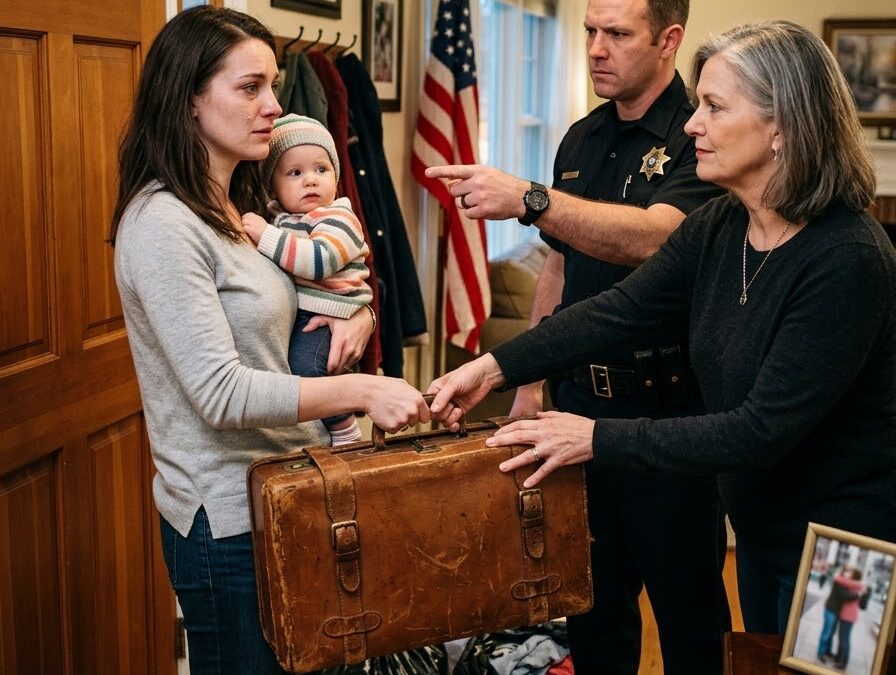
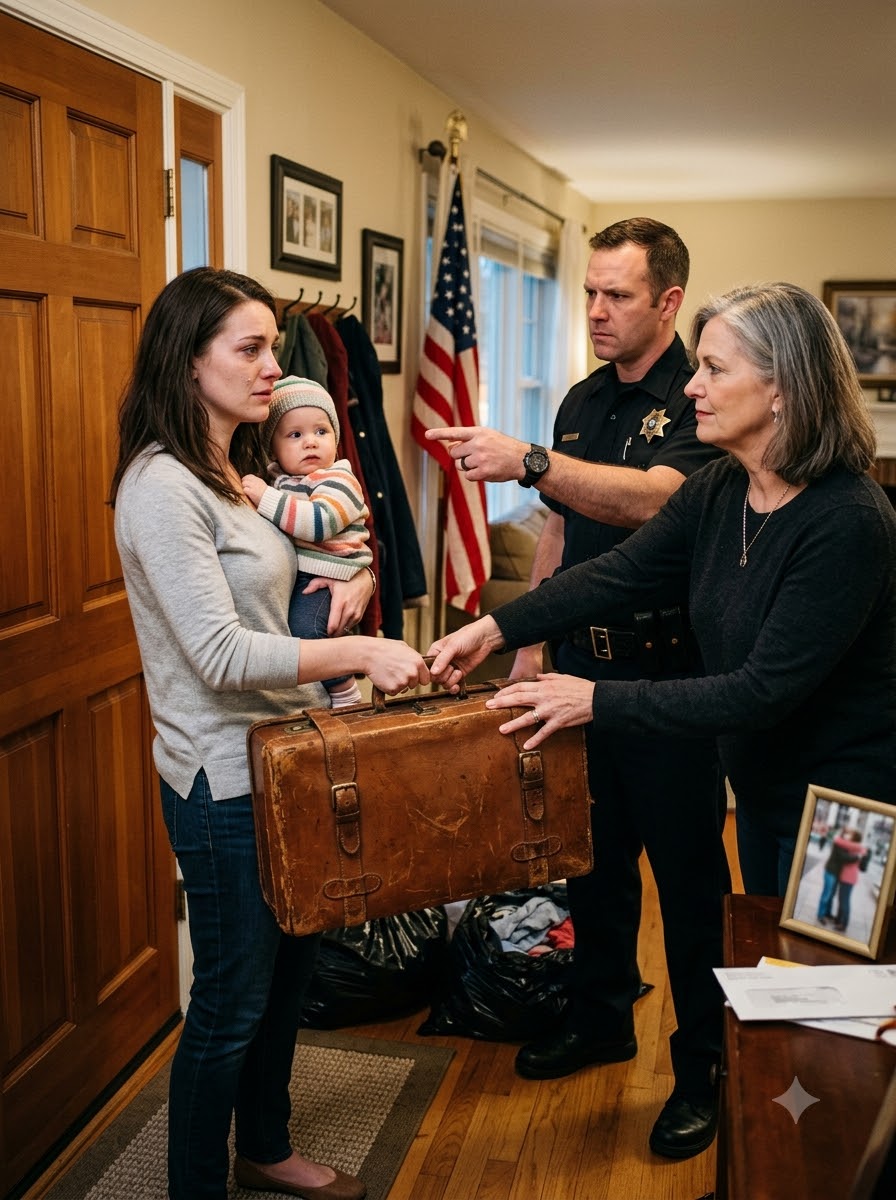
My name is Mary Sanford and I was 35 the night my mother shoved my grandfather’s suitcase into my chest in my own hallway and said, “This is what happens when you turn your back on family.”
3 days earlier, I had refused them $90,000.
That afternoon, she put a photograph on my kitchen table and told my husband I was sleeping with a 24year-old I tutored at the library.
He was a sheriff’s deputy.
He interviewed strangers for a living.
He never interviewed me.
He packed my clothes into trash bags.
Take the baby and get out.
I put my daughter in her car seat while she cried and I took the suitcase because my hands were full.
They thought they were throwing me out with junk.
They thought the door closing was the end of it.
They didn’t know that when they came to take anything back, it would already be too late.
and that the one person in our family they had never bothered to watch had already decided how this ended.
Welcome back to Family Line Drama, where ordinary people meet the moment everything finally turns.
If you’ve ever been punished for saying no to family, you’re in the right place.
Drop a comment and be sure to subscribe.
To understand what was in that suitcase, you have to understand the garage it came from.
And you have to understand the woman who had been telling everyone for 40 years that my father didn’t know anything about money.
She said it at church potlucks.
She said it to the man who came to service the furnace.
She said it at my wedding in her toast.
And people laughed because she said it the way you’d say a dog can’t drive.
Wayne doesn’t know anything about money.
That’s why he has me.
My father would smile at his plate.
He never corrected her.
Not once in my whole life.
Here is how money worked in the house I grew up in.
My father was a union electrician.
Every two weeks, his paycheck went into an account my mother controlled.
And every two weeks, she handed him a little folded stack she called his coffee money.
On top of the refrigerator, there was a green tin box with envelopes in it.
Groceries, gas, Travis, church.
Nobody opened that box but her.
I tried once when I was nine because I wanted to see what was in the envelope that had my name on it.
There was nothing in the envelope that had my name on it.
There was $60 in the one that said Travis.
He was five.
My mother didn’t yell about it.
She just took the box down, moved it to the top shelf of the pantry, and told me at dinner that I had shown her something about myself.
I was nine.
I spent the next 26 years trying to show her something else.
My father was in the garage.
That’s not a figure of speech.
If you needed him, that’s where he was.
He rewired things for people on Saturdays.
He fixed the neighbors fuse box in 2003 and wouldn’t take a check for it.
He drove out to farms east of town and ran conduit for people who paid him in cash or in nothing.
My mother called it his hobby.
Nobody asked where the Saturday money went because nobody thought there was any.
In the corner of that garage behind the workbench, there was a brown leather suitcase.
It had belonged to his father, my grandfather Haron, who had a farm in Nebraska and died when I was 14.
The leather had gone the color of an old saddle.
Instead of a lock, it had a strap that buckled across the middle, and my grandfather always wound that strap twice before he buckled it.
My father did the same thing.
I used to sit on that suitcase when I was little and watch him solder.
He told me one thing about it.
The only time I ever heard him talk about leaving home.
He was 18 when he left the farm.
Everything I owned fit in that.
He said turned out to be enough.
My mother told him to throw it out three times that I know of.
It stayed where it was.
I want to be fair to my mother because she isn’t a cartoon and because the version of her that made everything happen is the version that believed she was holding the family together.
She kept the calendar.
She kept the phone numbers.
She knew when every bill was due and which cousin wasn’t speaking to which.
In her mind, that made her the family.
Everyone else was a department.
And the thing about being a department is that you have a budget.
I got my first steady job in 2013 teaching math at a high school in Fort Collins.
Two years later, my mother called me on a Tuesday and asked for $800 for the furnace.
She didn’t ask exactly.
She told me the furnace was going and that Travis was between jobs and that she knew I’d want to help.
I sent it that afternoon.
I felt good about it for about a week.
Nobody fixed a furnace.
After that, it came in a rhythm.
I got used to the way you get used to a train going past the house.
Travis’s tuition for a program he didn’t finish.
A deposit on an apartment Travis lost.
A little something for the holidays, which meant Travis car repairs, insurance, once memorably $6,000 toward a kitchen remodel.
Because you’re the one who’s here every Sunday, you might as well have a kitchen you like.
I’m a math teacher.
I write things down.
I kept a small notebook in my desk drawer.
And every time I sent money home, I wrote the date, the amount, and the reason my mother gave me.
Not to hold it over anyone.
I think I wanted a record that it was real.
By the summer of 2025, the notebook said $31,000.
There was one entry in that notebook I could never fill in.
Spring of 2010, my first year at Colorado State.
I opened my dorm mailbox and found an envelope with one $200 in cash inside and a note in block capitals from someone who’s proud of you.
No name.
I assumed it was my roommate’s parents who were the kind of people who did things like that.
I kept the note.
I couldn’t tell you why.
I met Josh in 2017.
He was a deputy with the county sheriff’s office.
And the first thing I liked about him was that he was calm.
He didn’t need a room to be looking at him.
We got married in June of 2019 and my mother gave the toast about my father and money and everyone laughed and Josh laughed too.
And I remember thinking he was going to fit in.
I meant it as a compliment.
He did fit in.
My mother liked him.
When Josh and I argued about small things, my mother had a way of ending up on his side of it gently over Sunday dinner.
Mary can be stubborn, she’d say and pat his arm.
It felt like being welcomed.
It was something else.
In September of 2024, I was 8 months pregnant and my mother asked me for $4,000 for a truck for Travis.
It was the first time I ever said no.
I didn’t say it dramatically.
I said we had a baby coming and we were saving for a house and I couldn’t.
There was a silence on the line and then my mother said, “I hope you’re proud of what you’re teaching your daughter about family.”
And she hung up.
Sadi was born on the 10th of October.
My mother didn’t come to the hospital until the third day.
My father came the first night.
He sat in the chair by the window for 20 minutes and held her and didn’t say much of anything.
His [snorts] hands shook while he held her.
I thought it was his age.
He was 65.
Before he left, he put an envelope on the tray table and inside it was $500 and nothing else.
I thought the truck was a closed chapter.
That was a mistake.
My mother doesn’t close chapters.
She keeps them in the green tin box on the top shelf and she takes them down when she needs them.
She needed them in August.
Sunday dinner at my parents house was not optional.
It had never been optional.
So on the 17th of August 2025, Josh and I were there with Sadi, 10 months old, in the high chair my mother kept for her, and Travis was there with his phone.
And my father was there in the sense that he was in the room.
My mother waited until the plates were cleared.
She always did.
You don’t bring up business while people are eating.
That was one of her rules.
She sat back down, folded her hands, and said she and my father needed $90,000.
She said it like a weather report.
The kitchen, both bathrooms, the roof.
We need to get it done before your father gets to the point where he can’t manage stairs.
My father stood up, went to the sink, filled a glass of water, and did not come back to the table.
90,000, she said again.
by the end of the month and I don’t want to discuss it in front of Travis.
Travis was sitting 18 in from her and he had that half smile he gets when he already knows how something ends.
I looked at the kitchen.
The kitchen was 6 years old.
I had helped pay for it.
I asked if there was a quote.
My mother’s face did something small and she got up and came back with a single sheet of paper.
Front range home renovations.
Kitchen, two baths, roof.
Total $90,000.
Not 89,640.
Not 91215.
90,000 even.
No address, no license number, a cell phone number at the bottom.
There’s your paperwork.
She said since apparently we need paperwork now.
I took a picture of the phone number with my phone.
I told her I’d think about it.
On the drive home, Josh said, “Maybe they really need it.
Your dad looks tired.”
He did look tired.
That was true.
But I was doing math in the passenger seat because that’s what I do when I’m upset.
Josh and I had $92,000 in our house savings.
My mother knew that number.
I had told her, proud of it, in the spring.
She hadn’t asked for the price of a kitchen.
She had asked for everything we had minus $2,000.
“It’s your mom,” Josh said.
She wouldn’t ask if it wasn’t real.
“I didn’t answer him.
I was thinking about the $2,000 she’d left us and whether that was a kindness or a rounding error.”
That night, my phone lit up with a text from my father.
He had never texted me in my life.
Two words, “Don’t do it.”
By the time I picked the phone up to answer, the message was gone.
He had deleted it, but I’d seen it.
Monday was the first week of school.
I had a planning period after lunch, and I used it to call the number on the quote.
A man answered on the fourth ring.
Behind him, I could hear an air compressor, the kind you hear in a tire shop.
Uh, yeah, he said.
This is Front Range.
Who’s asking?
I knew the voice.
It was Cody, who’d been on the football team with Travis in high school and worked at the tire place on College Avenue.
I said his name.
There was a long pause and the compressor cut off.
Travis said, “Just say yes if anyone calls.”
He said, “Look, I don’t want to be in the middle of anything.”
I told him he wasn’t.
I thanked him.
I hung up and sat in my empty classroom for a minute and looked at the whiteboard where I had written the homework for a class of 15year-olds who were going to learn that year how to check their work.
Then I called my mother.
I didn’t argue.
I said I had called the contractor and the contractor was Cody from the tire shop and I wasn’t going to send $90,000 for a kitchen that was 6 years old.
I said no.
My mother didn’t deny it.
That’s what I remember most.
She didn’t say Cody was a real contractor now or that the quote was a placeholder.
She skipped straight past it.
So, your brother’s friend helped me with paperwork.
She said, “That’s your excuse to abandon your parents.
I said it wasn’t an excuse.
I said it was a reason.”
And then, for the first time in 35 years, I hung up on my mother.
She called back once.
I let it ring.
The voicemail was 11 seconds long.
I’ll remember this, Mary.
I remember everything.
I opened the notebook in my desk drawer and wrote a new line.
August 18th, $90,000.
Refused.
It was the last line I ever wrote in that notebook about money going in that direction.
I didn’t know that yet.
The next three days were quiet in a way I should have recognized.
My aunt Marlene called Tuesday night.
Marlene is my mother’s younger sister and she has spent her whole life one phone call behind my mother delivering the message.
She’s sick over this Mary.
She said you asked her for receipts from your own mother.
Travis texted me two words.
Cold move then a thumbs down.
My mother did not call but she came to watch Sadi on Tuesday evening.
same as always because Tuesday and Thursday were my tutoring nights at the library and she had been keeping Sadi those nights all summer.
She was pleasant.
She was more than pleasant with Josh.
She brought a casserole which she never did.
She asked Josh about his shift and laughed at something he said about a call.
And when I came in the door, she was drying a dish at my sink as if it were hers.
When I got home from the library, she was still there, and the two of them had been out in the garage talking for 15 minutes.
And when I walked in, they both stopped.
I thought it was strange.
I didn’t think it was dangerous.
I thought she was doing what she did when she was angry, which was to make sure everyone else in the room liked her more than they liked me.
I understand now that her silence wasn’t a truce.
It was preparation.
I need to tell you about Ethan Ridley because he is the 24year-old in the photograph and because he deserves better than to be a plot point in my mother’s story.
Ethan was in my sophomore algebra class in 2018.
He nearly failed it.
He wasn’t lazy.
He was scared of a numbers the way some people are scared of dogs.
And he’d been bitten early.
He passed with a C minus and a lot of lunch periods.
After graduation, he worked construction, then a warehouse.
And in the spring of 2025, he showed up at the school office, and asked if Mrs. Sanford still taught there.
He wanted to get into a nursing program at the community college.
He needed to pass the math placement exam to be admitted.
He had failed it twice.
I told him I’d help.
I told him it was free.
We met at the public library on Tuesday and Thursday evenings from 6:00 to 8 all summer.
Josh knew.
My mother knew because she watched Sadi so I could go.
What I didn’t think about was what it looked like from the outside.
Josh worked with a deputy named Cole Haskins who’d been to our wedding and Cole had a mouth.
Your wife still tutoring the Ridley kid?
He’d said in the spring.
Two nights a week, man.
I’m just saying.
Josh told me about it and laughed.
I laughed, too.
I didn’t know that Josh had the year before checked my location on his phone during a night out with Carla from work.
He told me that much later in a coffee shop when it was one of many things he owed me.
On the 8th of July, Ethan took the placement exam for the third time.
He came to the library that night with the print out in his hand and he was crying and I hugged him in the parking lot.
It lasted about 3 seconds.
He was a kid I had watched to be afraid of a whole subject for seven years and he’d beaten it.
There was a car at the far end of the lot that night that I didn’t notice.
Travis noticed me.
I’m going to tell you what happened on Thursday, August 21st, the way I pieced it together afterward from Josh and from Marleene and from things my mother said later when she was angry enough to be honest.
My mother was at our house that afternoon watching Sadi the way she had every Tuesday and Thursday for months.
At 5:00, she called Josh at work.
Come home early.
Don’t tell Mary.
He came home.
She had a photograph on our kitchen table.
She’d printed it on regular paper from her computer.
It was grainy.
It showed me in a parking lot at dusk with my arms around a young man.
There [snorts] was no date on it because she hadn’t printed one and Josh didn’t ask for one.
She told him she hadn’t wanted to be the one.
She told him she had seen me get into Ethan’s car the week before.
She said I had hugged him and I hadn’t come out of the car for a while.
She cried.
She said, “I’m her mother, Josh.
Why would I make this up?”
And then she said the sentence that I think did more work than the photograph.
Your father won’t believe me.
He never does.
Think about what that does to a man who has just been told his wife is cheating by a woman crying at his kitchen table.
It tells him there is a weak man in this family who doesn’t stand up for anything and it invites him to be the other kind.
Josh asked one question that afternoon.
He didn’t ask it of me.
He asked, “Does Wayne know your father-in-law isn’t here?”
My mother said, “He never is.
He wasn’t.
Every Thursday, my father played cards in a garage across town with his friend Gus and three other men who had retired from the same local.
He wouldn’t know anything until the next morning.
But that Thursday morning before he left the house, my father had done something.
He had gone into the garage, taken the brown leather suitcase from behind the workbench, and set it by the door that led into the kitchen.
And he’d said to my mother, “That’s for Mary.
Tell her to take it when she picks up Sadie.
My mother told me this months later with contempt.
He said it was for you.
I figured it was more junk from the farm.
She put it in her trunk when she drove over to watch Sadi that afternoon.
She was planning to drop it at the donation bin on the way home.
She had no plan for that suitcase beyond getting rid of it.
Of everything she said and did that week, that is the only part that was completely honest.
I got home from the library at 20.
My mother’s car was in the driveway, which was normal.
What wasn’t normal was the light in every room.
There were six black trash bags lined up in the hallway.
Josh was standing in the bedroom doorway.
My mother was in the living room holding Sadie.
Josh didn’t look at me.
He looked at a point somewhere past my shoulder and said, “Take the baby and get out.”
I asked him the only question I could think of.
Get out of what?
He didn’t answer.
“I’m not doing this tonight,” he said.
“Take the baby and get out.”
The sixth bag wasn’t tied yet.
My school cardigan was hanging out of the top of it.
The gray one I wore on days when the air conditioning in my classroom went out.
I remember that more clearly than I remember his face.
I looked at my mother.
She was smiling, not at me.
The photograph was on the kitchen counter.
I picked it up.
I knew what it was in one second.
That’s Ethan Ridley.
I said he passed his placement test.
Your mother saw more than that.
Josh said, “Did you ask me?”
Nothing.
He had his uniform on.
The badge was still on his chest.
He had come home from a job where he asked people questions all day long, and he had not asked me one.
“I don’t need to ask,” he said.
“I’ve seen enough of this at work.
I want to be clear about something because I know some of you are yelling at your phones right now.
It was my house, too.
My name was on the lease.
I could have sat down in the living room and refused to move.
And there was nothing legal he could have done about it.
I knew that.
I’m telling you that I chose to leave because staying in that house with a man who had just decided my whole character without one question felt worse than the trash bags did.
My mother put Sadi in her car seat by the door.
Then she said, “Josh, go check the garage.
I’ll walk her out.”
She wanted a minute alone with me.
She’d earned it in her mind.
She went out to her car and opened the trunk and came back with the brown leather suitcase, my grandfather’s suitcase, the strap wound twice, and she pushed it into my chest hard enough that I stepped back.
This is what happens when you turn your back on family.
And then because she thought it was a knife, your father said it’s for you.
Fitting junk for junk.
I took it.
My hands were full and Sadie was crying and it was easier to take it than to argue about a suitcase.
I asked her one thing.
Does dad know I’m leaving?
Your father doesn’t know anything, she said.
He never has.
The suitcase was heavier than empty.
I noticed that.
I didn’t think about it.
I didn’t go to my parents house, obviously.
I didn’t go to a hotel because I had a 10-month-old and six trash bags, and I was not going to carry them past a front desk.
I called Carla Beckett, who teaches chemistry, down the hall from me, who is 52 and divorced, and has a pullout couch and a grandson in Denver.
She didn’t ask me anything.
She had the pull out open by the time I got there, and she dug a travel crib out of her closet.
You can tell me tomorrow, she said, or never.
The coffeey’s on a timer.
Sadi fell asleep at 20 to 11.
I sat on the edge of the couch and looked at the suitcase on the floor.
I unbuckled the strap.
Two loops wound the way my grandfather wound it and my father after him.
The leather had fresh creases in it.
Somebody had wound that strap recently.
There were no clothes inside.
There was a large brown envelope, the kind you’d mail a contract in.
There was a small white envelope sealed with five words on it in block capitals.
Don’t open this until you ask me why.
And there was a photograph, an actual photograph of me at 6 years old sitting on this exact suitcase in the garage with my feet not touching the floor.
I opened the big envelope.
Inside were three pages of handwriting, a brokerage statement, a one-page form with a stamp on it, and a check.
The handwriting was block capitals.
My father wrote everything in block capitals.
It’s how electricians label breaker boxes.
The first line said, “Mary, I’m not good with words, so I’ll use numbers first.”
I did what he told me.
I looked at the numbers before I read the letter.
The statement was dated July 31st, 2025.
Account holder Wayne A. Mercer, just him.
Opened March 1987.
I read down the page the way I’d read a student’s work, checking each line, and at the bottom it said total account value and next to it, $812,000, $280.
I read that three times.
I didn’t cry.
I didn’t do anything.
I looked at the next page.
It was a beneficiary confirmation transfer on death.
Beneficiary: Mary L. Sanford effective August 7th, 2025.
The check was a cashier’s check for $15,000 made out to me dated August 7th.
I’m a math teacher, so I did the math.
August 7 was 2 weeks before tonight.
It was 10 days before the Sunday dinner where my mother asked for $90,000.
Whatever this was, my father had done it before anything happened.
I picked up the small white envelope.
Don’t open this until you ask me why.
I put it down again.
I knew my father.
He didn’t answer questions nobody had asked him.
If he’d written that, he meant it and he was going to make me come and ask.
Carla stood in the doorway in a bathrobe.
you okay?
I don’t know yet.
I set the white envelope on the edge of Sades travel crib where I could see it and I started reading the letter.
The first page began with the year 1987.
I’m not going to read you the whole letter.
It was three pages and some of it belongs to my father and me, but I’ll tell you what it said because you need it to understand everything after.
In 1987, two years into their marriage, my mother announced that she would be handling the money.
My father agreed.
He wrote that he agreed because he was 28 and didn’t want to fight, and because she was better at it than he was, and that both of those things were true.
Then he wrote that he had done one other thing that year.
He’d gone to a brokerage office on his lunch break and opened an account in his name alone and he’d started putting his Saturday money into it.
$300 a month in the early years.
900 a month toward the end.
Index funds because a man at the union hall told him that was what you did if you didn’t want to think about it.
He never took anything out.
Not for a car, not for the roof, not for Travis.
38 years.
He didn’t call it savings.
He called it in block capitals, the one door in the house she doesn’t have a key to.
And then he wrote this.
I let her say I didn’t know anything about money.
It was easier than being asked where mine went.
I sat with that for a while.
Every potluck, every toast, my wedding.
He’d let her say it in front of 200 people because it was cover.
The second page started with my name and the year 2010.
The envelope in my dorm mailbox.
The one $200 from someone who’s proud of you.
That was him.
The $500 on the hospital tray table the night Sadi was born.
That was him.
Three other times I’d never known about.
A car repair a mechanic had told me was covered by a promotion.
A semester’s textbooks that had shown up as a credit on my account.
a security deposit refunded in full on an apartment I had definitely damaged.
“I paid your mother’s debts to you in secret,” he wrote.
“Because I didn’t have the spine to stop her in the open.”
That was me.
All of it was me.
I’m sorry.
It was only envelopes.
I had to put the letter down for a minute.
I’d kept that note for 15 years in a shoe box, and the handwriting was the same handwriting that was on the breaker box in my parents’ garage.
and I had never once looked at both at the same time.
The third page was short.
Your mother is going to ask you for money soon, it said.
Say no.
I’ve made sure you can.
And at the bottom, there’s one more thing I need from you, but not yet.
You’ll know when.
I looked at the date on the top of the first page.
August 10th, 11 days before tonight, a week before the Sunday dinner.
Here is what I understood.
at midnight on Carla Beckett’s couch.
And here is what I got wrong.
I understood that my father had not been reacting to what happened tonight.
He couldn’t have been.
He didn’t know it was going to happen.
He’d packed that suitcase for a different reason, and the reason had a date on it, August 7th.
Something had happened on or before August 7th that made him go to a brokerage and change a form he’d left alone for 38 years.
What I got wrong was the reason.
I decided sitting there that my father had found out about my mother’s spending or her debts or something like it and that he was getting ready to leave her.
That he’d sent the suitcase as a first move.
It fit.
It made him the hero of a story I could understand.
It was wrong.
And it would take me 3 months to find out how wrong.
But I understood one thing correctly that night, and it held.
The woman who threw the suitcase at me case at me was my mother.
The man who packed it was my father.
And the only person in that house who had known what was coming was the one everyone said didn’t know anything.
Before I tell you what was in the second envelope and why my father chose August 7th, I want you to do something for me.
Tell me in the comments what you think he knew.
I’ll be honest, most people guess wrong.
I did, too.
And the part that actually broke this family open hadn’t happened yet.
Friday, I went to work.
I want to say that plainly because I think some people expect you to fall apart on schedule.
I had a 10-month-old and six trash bags in Carla’s spare room and a piece of paper that said $812,80.
And I also had 96 sophomores who needed to learn what a function was.
So, I went to work.
On my lunch break, I called the brokerage company on the statement.
I gave the woman on the phone my name and told her I believed I was listed as a beneficiary on an account.
I asked if she could confirm that.
Ma’am, she said, I can’t confirm or deny anything about an account you don’t own.
I said I understood.
I asked one more question.
If there was a beneficiary designation on an account, could the owner change it?
If there is one, she said.
The account holder can change it at any time.
At any time.
I thanked her and hung up.
I looked at the piece of paper in my hand and understood that it was worth exactly what my father decided it was worth on any given day and that nothing I did could change that.
I called him.
It rang five times and went to voicemail.
2 minutes later, a text came in from my mother’s number.
He doesn’t want to talk to you.
Josh texted Friday night.
I’ll get Satie Saturday 10:00 a.m. I’m not discussing anything else.
I wrote back one word.
Fine.
He picked her up on Saturday and brought her back on Sunday and we did not say 10 words to each other.
And on Sunday night, he sent one more message.
Don’t make this harder.
I thought about that one for a while.
Harder for whom?
Saturday afternoon, I did one thing with the $15,000.
I took the cashier’s check to a bank where I had never had an account, opened one in my own name, the first account I’d had by myself since I got married, and deposited it.
I had already looked at a two-bedroom apartment off Malbury Street that I couldn’t afford without it.
I put down the deposit, and not $1 more.
The rest sat there.
I wasn’t going to spend my father’s money before I knew what it was for.
Monday afternoon at a quarter 3 when the last bus pulled out.
There was a gray pickup in the teacher’s lot with the engine running.
I knew the truck before I knew the man in it.
I got in the passenger side.
He didn’t turn the engine off.
I asked him later why not and he said he didn’t think he could get through it if the truck was quiet.
He’d found out Friday morning.
Travis had told him at breakfast the way you’d tell someone the score of a game.
Josh threw her out.
My father had put his fork down and asked what for.
Travis had said, “Ask mom.”
And my mother had said it wasn’t the time.
And my father had gone out to the garage and found the suitcase gone from beside the door.
My father hadn’t slept since.
He’d come by the school on Friday and sat in the lot and not gotten out.
And then again this morning.
He asked if I’d opened the suitcase.
I said yes.
He asked if I’d read the letter.
I said yes.
He asked if I’d looked at the statement and I said I’d looked at it three times and he nodded like a man checking a circuit.
Then he said, “So you know what it is?”
I told him what I knew and I told him what the brokerage had said that he could change it at any time.
He looked at the windshield.
I’m not going to change it.
He said that’s not why I put it in the suitcase.
I asked him the question.
I had been carrying it around for 4 days.
Why now?
Why August 7th?
He took his hands off the wheel.
They were shaking the way they’d shaken the night Sadi was born.
You asked,” he said.
“So you can open it?”
I had the white envelope in my purse.
I’d carried it to work every day since Thursday.
Inside was a photocopy of a pathology report dated August 4th, 2025.
Pancreatic adenocarcinoma, stage 4.
Under it was a consultation note from an oncologist named Dr. Anne Whitlock and a sentence I read twice because my eyes went past it the first time.
Prognosis with paliotative treatment 8 to 12 months.
There was one more page.
It was the intake form from the oncology clinic.
Under emergency contact, it said Mary Sanford in block capitals.
He’d filled it out in July.
I asked him who knew.
Nobody.
Not my mother.
Not Travis, not Gus.
He’d gone to the first appointment alone in June when he’d lost weight and the pain in his back hadn’t gone away.
He’d driven himself to the CT and the biopsy.
He’d sat in a parking lot after the results and then driven to the brokerage and changed the form.
“I didn’t put this in the suitcase so you’d feel sorry for me,” he said.
“I put it in so you’d understand the timing.”
I asked why he hadn’t told my mother.
Because the minute she knows it’s hers, he said it’ll be her diagnosis, her crisis, her phone calls.
I’ve watched her do it with everything else.
He looked at me for the first time.
I’d like to do one thing that’s mine.
He wanted me to drive him to treatment.
He’d told my mother he’d be helping a friend with wiring in Loveland on Tuesdays.
He was going to keep telling her that as long as he could.
I sat in that truck and I understood the number on the statement for the second time.
The first time on Carla’s couch, I’d understood it as money.
Now I understood it as a schedule.
8 to 12 months.
That account would become mine on the day I lost the only person in my family who had ever quietly chosen me.
And there was nothing I could do to move that day.
And I didn’t want it.
I think he knew that.
I think that’s why it was me.
On the 6th of September, I signed a 12-month lease on the two-bedroom off Malbury.
I found a daycare four blocks from the school that had one opening, and a director who didn’t ask why a teacher with a wedding ring was fillings out the forms alone.
I set up a schedule the way I set up a semester, teach my father to the clinic.
The lease almost didn’t happen.
The application asked for a current landlord and a reference.
And my current landlord was a mortgage company with my husband’s name first on the paperwork.
The property manager, a woman about my age, looked at the form and then at my ring and then at me.
I told her the truth in one sentence.
She crossed out the landlord line and wrote Carla’s name in the reference box and said, “I’ve been there.”
That was the first thing anyone had given me since August that I hadn’t paid for.
Two weeks into treatment, the insurance company denied one of my father’s medications.
Prior authorization required, the letter said, which is a phrase that means somebody has to sit on hold.
I sat on hold.
I spent a planning period and half a lunch on the phone with three different departments, reading the diagnosis code off his paperwork, asking each person for their name and the reference number before they transferred me, writing it all down in the notebook the way I’d write down a student’s work.
The approval came through on Thursday.
My father read the letter twice.
Your mother would have yelled at them, he said.
I know, I said.
That’s why it took her six years to get a kitchen.
The clinic gave him treatment every other Tuesday and blood work on the Tuesdays in between, which meant every Tuesday there was a reason for him to be in my car at 2:00 in the afternoon.
He’d wait at the end of his block so my mother wouldn’t see which car picked him up.
I hated that.
I told him I hated it.
He said, “Not yet.
I’ll do it when it’s mine to do.
I bought a chair for the apartment, a plain armchair from a resale place, and I put it by the window in the living room because I wanted there to be a place in my home that was his.
He didn’t sit in it for the first month.
He’d stand in the doorway of the apartment and look at it and not come in.
On the third treatment day, a nurse came into the infusion room and said, “Mr. Mercer, your daughter’s here, meaning me, because I’d gone out to move the car.”
And my father cried.
I’d never seen him do it.
He turned toward the wall and did it quietly.
And the nurse pretended to check his line.
And I stood in the door and didn’t go in until he was done.
I didn’t tell anyone about the account.
Not Carla, not Josh.
I didn’t hire a lawyer.
I didn’t post anything.
I taught.
I drove.
I bathed my daughter.
That was the whole plan.
And I’m telling you that because I want you to know the money did nothing for me that fall.
The only thing that changed my life that fall was the man in the passenger seat.
Josh picked Satie up every Saturday at 10:00 and brought her back Sunday at 6.
We didn’t talk, but I paid attention because that’s the other thing I do.
He brought diapers in the right size.
He had a bag with feeding times written on masking tape in his handwriting.
He asked Carla, not me, whether Sadi was sleeping through the night.
He was being a father.
He wasn’t being a husband.
And I noticed that he had made no attempt to figure out whether he’d been wrong.
He’d just moved to a smaller version of the same decision.
Cole Haskins, of all people, texted me in late September.
For what it’s worth, I told him to ask you.
He didn’t want to hear it.
I didn’t answer, but I kept it.
Josh asked Carla one other thing on a Sunday in October.
Is Wayne okay?
He looked bad.
Carla told him she didn’t know that was true.
She didn’t.
Sadi turned one on the 10th of October.
I had a small party at the apartment the next day, a Saturday.
Carla, two teachers from my hallway.
Ethan Ridley because I had invited him because I wasn’t going to hide a kid I was proud of.
and my father.
Josh came at 6:00 to drop Sadi off and he came to the door with her on his hip and stopped.
My father was sitting in the chair by the window.
He was noticeably thinner than he’d been in August.
He was holding a paper plate with cake on it and talking to Ethan about the nursing program.
And when Josh appeared in the doorway, he looked up and didn’t get up.
Josh stood there for maybe 10 seconds.
Then my father said, “Come in or don’t, but don’t stand in a doorway in my daughter’s house.”
Josh came in.
He put Sadie down.
He looked at Ethan and Ethan said, “Hey, Josh.”
Because Ethan had known his name for years from school events, from the sheriff’s office booth at the county fair.
And Josh had not known that Ethan knew it.
Something crossed his face that I hadn’t seen since August.
It wasn’t shame yet.
It was the beginning of a question.
He left after 10 minutes.
He didn’t say anything to me, but he had seen my father in my chair on my side of the line, and he hadn’t expected that.
I’ll tell you what I got wrong that fall because I promised you I’d be honest about it.
I still believed my mother knew about the account.
I believed the $90,000 had been an attempt to get at it early before my father could do whatever he was going to do.
I was spending my evenings preparing for a fight over that account.
I opened the notebook for the first time since August and wrote one new line under refused.
Dad, Tuesdays, you’re waiting for something, Carla said one night.
I’m waiting for my mother to make her next move.
She always does.
She did.
But I was waiting for the wrong one.
My mother was waiting for me to apologize.
My father was waiting to die.
and I was preparing for a battle that didn’t exist.
On the 14th of November, a Friday, my father collapsed in the bathroom at home.
My mother called 911.
At the emergency room, a nurse asked her the things they asked the family of an unconscious man.
Medications, allergies.
Is he currently on any chemotherapy?
What chemo?
My mother said.
That’s how she found out.
from a stranger with a clipboard with Travis standing behind her.
And then the hospital called me because I was the emergency contact on my father’s file and my mother was standing right there when they called.
I got to the ER in 20 minutes.
My father was stable.
He’d been dehydrated and his blood pressure had dropped and he was going to be admitted for a couple of days and he was going to be all right for the value of all right that we had left.
My mother met me in the hallway.
Three months of silence, and her first words were, “How long have you known.”
She didn’t ask how bad it was.
She asked how long I’d known and who’d been driving him and whether his insurance was going to cover it.
I answered the first two.
I didn’t answer the third.
Travis was behind her.
This is why she took dad’s side.
He said she knew.
I didn’t respond to Travis.
I’ve found it’s the only thing that works.
You let me look like a fool, my mother said.
In front of a nurse.
In front of a nurse.
Not.
You let me not be there.
Not.
You let him go through that alone.
In front of a nurse.
Before I left, she asked me for the clinic paperwork, the appointment schedule, the doctor’s name, the insurance letters.
She held her hand out for it the way she’d held her hand out for checks.
I told her it was my father’s paperwork and she could ask him for it.
It was the first time in my life I’d told my mother that something in the family wasn’t hers to hold.
She looked at my hand as if it had done something rude.
My father came home after 2 days with instructions to rest.
And for the first time in 38 years, he was in the house all day.
He wasn’t in the garage.
He wasn’t in Loveland.
He was at the kitchen table where the mail came.
He started opening it.
I don’t think he was looking for anything.
I think he was a man with 8 to 12 months who was putting his affairs in order and the mail was an affair.
The following Tuesday when I picked him up, he had a manila folder on his lap and he didn’t say anything until we were parked at the clinic.
two credit card companies, one consumer loan company, three collection letters, all in my mother’s name.
He had added them up on the back of an envelope in block capitals.
$41,600.
$48,400 total.
$90,000.
Not about 90,000.
90,000.
The loan’s due date was September 5th, 2025, 19 days after the Sunday dinner.
I always let her handle the mail, he said.
I told myself that was trust.
I sat in the driver’s seat and felt three months of assumptions come apart.
My mother hadn’t known about the account.
She’d never known.
The $90,000 had never been about my father’s money.
It had been about hers.
6 years of Travis’s rent and Travis’s truck and things I’d never see on cards my father didn’t know existed.
and the collectors were starting to call the house phone and she’d needed my savings to make the calls stop before the man at the kitchen table figured out that he’d been right about money all along.
I asked him what he wanted to do.
Nothing, he said.
Not yet.
He looked at the folder.
38 years I wasn’t looking.
I’d like to look for a while.
That night he put the collection letters in the suitcase which lived in my apartment now next to the chair.
Two kinds of paper in one bag.
38 years of my father putting money through a door my mother couldn’t open.
Six years of my mother putting debt through a door my father never thought to try.
The $90,000 she’d asked me for wasn’t for a kitchen.
It was to build one more wall.
And I had come within a phone call of paying for it.
My mother called on the Tuesday before Thanksgiving.
Her voice was different, softer.
She’d practiced it.
Come home for Thanksgiving.
Your father needs you.
We’re family.
I let her talk.
It took about a minute for the real reason to surface the way it always did.
The hospital had sent paperwork she didn’t understand.
There were appointments she didn’t have the dates for.
My father had refused to let her drive him to treatment.
When she asked who would, he’d said my name and nothing else.
Her system didn’t run without the person who’d been running it.
She needed me the way you need a part.
I’m not asking for money, Mary, she said.
I’m asking for my daughter.
You had one, I said 3 months ago.
She didn’t hear it or she chose not to.
She went right past it into the last thing she wanted to say, which was the thing she’d actually called about.
And tell your husband we should all sit down.
I think he’s ready to forgive you.
I hadn’t asked to be forgiven.
I hadn’t asked for anything.
Thanksgiving was at the apartment.
Carla came and brought her grandson, who was four, and wanted to know why Sadie couldn’t talk yet.
My father came at noon.
He had told my mother he was at Gus’s.
He brought a pumpkin pie from the grocery store in a plastic dome, and he set it on the counter as if it were a contribution, and I thanked him as if it were.
He sat in the chair by the window with Sadi on his knee for 2 hours and ate almost nothing.
Carla’s grandson asked him what was wrong with his arm, meaning the port, and he said that’s where they plugged me in, and the boy accepted that completely.
At 3, he said he needed to get back before the game ended because my mother would be checking.
I walked him down to the truck.
He stood by the door for a second with his hand on the handle.
“Your mother’s planning something for my birthday,” he said.
“I know.”
She invited Josh.
He nodded.
He’d expected that.
Bring the suitcase, he said, and got in.
That same week, my father did something I had never seen him do in his life.
He set a condition.
He told my mother at their kitchen table that he would stay in the house through his birthday.
And after that, he’d decide where he wanted to be.
He didn’t mention the collection letters.
He didn’t raise his voice.
He said, “I’ll stay till my birthday.
Then we’ll see.”
My mother heard through my birthday and understood it.
the only way she could.
She decided that if the birthday was big enough, he’d stay.
She took the calendar off the wall and circled the 7th of February.
Then she started a guest list, and the first person she called wasn’t her sister.
It was Josh.
I made my own decisions that week, and they were small.
I would keep driving my father on Tuesdays.
I would not go to my mother’s house for Thanksgiving.
I would not sit down with my husband on my mother’s schedule.
But there was something I told Carla one night that I hadn’t said out loud before.
I wasn’t afraid of my mother.
I was afraid of how much I still wanted her to say she was wrong.
And if she never says it, Carla asked.
Then I need to stop waiting for it.
I said, “I don’t know how yet.”
I opened the notebook that night and wrote a line I didn’t have an answer for.
What I want from mom and a blank.
My father knew about the birthday.
He didn’t tell me what he planned to do.
He said one thing in the truck on a Tuesday in December.
Bring the suitcase.
I found out later what Josh was doing in December, and I’m going to tell it to you the way he told it to me because it matters that he did it himself.
He was on a night shift alone in a parked cruiser.
And for reasons he couldn’t explain, he opened the photo my mother had sent him in August.
not the print out, the version she’d texted him that night, which was a screenshot from her own phone.
He’d looked at it a dozen times.
He’d never looked at the top of it.
At the top of the screenshot, where my mother had forgotten to crop, was the name of the contact she’d received the photo from, Travis, and a date.
July 8th.
Josh is a cop.
He knows what it means when a photograph is taken on the 8th of July and delivered on the 21st of August.
It means somebody held it for 6 weeks waiting for a reason to use it.
And the reason had arrived on August 17th at a Sunday dinner when I said I’d think about $9,000.
He opened his call log.
He scrolled back to April.
There it was.
Joanne, April 14th, 22 minutes.
He remembered the call.
She’d been worried about the Ridley boy.
She’d asked how often I saw him and where, and whether Josh thought it was normal, and he’d told her Tuesdays and Thursdays, the public library, 6 to 8.
He’d handed my mother my schedule 4 months before she asked me for a dime.
She didn’t need to spy on you, he told me later.
I told her where you’d be.
So Josh did the thing he should have done in August.
He went and asked, but he asked the wrong person first.
He drove to the store where Ethan worked afternoons.
He wasn’t in uniform.
He asked Ethan about the 8th of July, and Ethan didn’t get angry, which I think surprised him.
Ethan pulled out his phone and showed him the group text from his nursing cohort, the screenshot of the placement score, a message he’d sent his mother that night that said, “Mrs. Sanford did it.”
Then Ethan asked him a question.
“She spent two nights a week on me for free, man.
Have you asked her?”
Josh didn’t answer.
He texted me that night.
20 minutes anywhere you pick.
I have something to show you, not something to say.
I picked a coffee shop near the school on a weekday afternoon with Sadi at daycare.
He came in and sat down and put his phone face down on the table and slid it across to me and let me turn it over.
The screenshot, the call log.
He’d taken a photo of each so I could see them side by side.
He didn’t apologize first.
He showed me the evidence first, and I’ll say this for him.
It was the only order I could have listened to.
I should have asked you, he said.
I asked everyone but you.
Yes.
He waited for more.
There wasn’t more.
I hadn’t forgiven him.
And I wasn’t going to pretend to for the sake of a coffee shop.
But I told him something.
I told him my father’s birthday was February 7th and that my mother was going to host it and that she’d invited him.
I told him my father was going to say something at that party and I didn’t know what but that Josh should be in the room to hear it from the source.
Don’t come for me.
I said come because you were wrong in front of witnesses.
Be right in front of the same ones.
He said he’d be there.
I got up first.
I want you to know that I noticed him for the first time sitting at a table with a question instead of a conclusion.
I noticed it.
I didn’t stay for it.
Carla asked me that night whether I believed him.
I told her the truth, which was that I believed the screenshot.
Belief in Josh was a different account and it had a balance of zero.
And I wasn’t going to make deposits just because he’d finally read the top of a photograph.
But I’d told him about the birthday.
And I’d meant it because there was one thing I knew for certain about my mother.
She would only ever be stopped by people she’d already recruited.
February 7th, 2026 was a Saturday.
My mother had the party at 2:00 in the afternoon at the house, and she had hung a banner across the dining room that said, “Family stays together.
I counted about 20 people.
Aunt Marlene and her husband, the Fenies from next door, whose fuse box my father had fixed in 2003.
Gus and his wife from the card game, two cousins, Travis and his girlfriend Brooke, and Josh, whom my mother introduced to the Fenies as our son-in-law who’s been so patient.
I came with Sadi on my hip and the suitcase in my other hand.
My mother saw the suitcase and gave a small, tired laugh for the benefit of the room.
You brought the junk back.
My father was at the head of the table.
He’d lost more weight since Christmas.
He was pale in a way that people at a party don’t comment on, but he was cleareyed.
And when I came in, he looked at the suitcase and then at me, and he nodded once.
My mother worked the room.
Wayne’s had a hard winter, she told the Fenies.
But we do things as a family.
I’d been counting by then the number of times the word family had been used on me like a tool.
That afternoon, made four.
Before the cake, she stood up to give a toast.
It was a good one.
She’d worked on it.
41 years of marriage.
A husband who’d never said a cross word.
and children who wander off and find their way back, she said.
And she looked at me when she said back.
And half the room looked with her.
Then she invited me to say a few words.
I understood what that was.
It was an apology requested in front of 20 people with cake as the reward.
I stood up with Satie on my hip and said one sentence.
I’m here because my father asked me to be.
That’s all I’ll say.
And I sat down.
The room did the thing.
rooms do when they’re uncomfortable.
It got interested in the tablecloth.
My father put both hands flat on the table and stood up.
People stop talking when a dying man stands up.
It’s one of the few things a dying man can count on.
He said four sentences.
He didn’t raise his voice.
I’m going to give them to you exactly because I’ve thought about them every day since.
I’ve read the collection letters.
$90,000 in Joannne’s name that I didn’t know about until November.
I’ve seen the photo Travis took on July 8th, and I know who it was sent to and why.
On Monday, I’m moving in with my daughter because she’s the one who drove me to chemo when nobody else knew I had cancer.
I’d like to finish my cake.”
And he sat back down.
I counted 5 seconds of nothing.
Nobody moved.
Aunt Marlene had her hand halfway to her mouth.
Mr. Rfini was looking at his plate as if he’d been asked to grade it.
Josh wasn’t looking at me.
He was looking at my mother.
The first person to speak wasn’t my mother.
It was Marlene.
And she said one word and she said it to her sister.
And my mother opened her mouth and the first thing she said was not that it wasn’t true.
It was Wayne.
Not in front of people.
I’ve replayed that sentence more than the four before it.
Not.
That’s a lie.
Not.
How could you?
Not in front of people.
Her first instinct with the roof coming down was to protect the audience.
The room had just heard the man who didn’t know anything about money name to the dollar, a debt his wife had hidden from him for 6 years.
Nobody in that room was going to unhear it.
My mother recovered fast.
She always did.
She turned from my father to the table because the table was where the votes were.
That money went to this family.
she said to Travis to keeping this house running while Mary bought herself a new life.
She was talking to the fenies.
She was talking to the cousins.
I did what mothers do, she said.
I kept things running.
My father reached down, unbuckled the strap on the suitcase, wound twice, and took out three envelopes.
He set them on the table next to the cake.
Two credit card statements and a loan notice, each with a collection stamp across it.
He didn’t say a word.
He didn’t need to.
Anyone who leaned forward could read the totals.
And then Travis stood up.
I don’t think Travis meant to do what he did.
I think Travis has never in his life understood where the edge of a sentence is.
Mom, he said, “You said she’d never find out.”
Brooke pulled at his arm.
He didn’t sit down.
You said the photo would keep her quiet till the money came through.
You said it was leverage.
Your word.
Mr. Dr. Fininei got up and went out to the porch.
Gus’s wife put her fork down very carefully.
In one sentence, my brother had told 20 people that the photograph on my kitchen table in August had never been about protecting my husband.
It had been about keeping me from asking questions until the $90,000 cleared.
Then Josh stood up and I didn’t know what he was going to say.
He kept it short.
He’d learned that much.
April 14th, he said to my mother, “You called me for 22 minutes about Ethan Ridley.
4 months before you asked her for money, I gave you her schedule.
You used it.”
Then he turned to the room and I watched a man do something I’d stop believing he could do.
I didn’t ask my wife one question.
That’s on me.
He looked at my mother again, but she’d already picked the question I’d get asked.
And then quieter.
You didn’t find out about an affair.
You went looking for a photo.
He sat down next to me.
He didn’t touch me.
He didn’t try.
My mother turned to my father and she reached for the sentence she’d been using for 38 years because it had always worked before.
You don’t know anything about money, Wayne.
My father didn’t stand up again.
He didn’t have to.
Everything I saved in 38 years is already in the hands of the person who earned it.
He said, “You’ll get the house.
You’ll get the insurance.
You won’t get the door you never had a key to.
He didn’t say a number.
He didn’t have to do that either.
I stood up then with Sadi and I said the only thing I said to my mother that day.
You told me this is what happens when you turn your back on family.
You were right.
I picked up my bag.
It’s happening to you.
My father cut the cake.
He ate his whole piece.
Gus and his wife stayed until it got dark, and the fenies came back in from the porch and stayed too, and they sat with him, not with her.
My mother spent the rest of the afternoon in the kitchen with the door mostly closed.
Travis and Brooke left within the hour.
Marleene stayed.
Marlene sat next to her brother-in-law and didn’t say anything, which was the most useful thing I’d ever seen her do.
Josh left when I did.
in the driveway.
He said, “I’ll be at the apartment Monday to carry boxes.”
I said, “Fine.”
It was the second time I’d said that word to him since August, and it meant something different.
On Monday, my father moved into the two-bedroom off Mulberry with two boxes of clothes and the chair from his garage, the wooden one with the split seat.
He put it in the corner.
Then he sat down in the armchair by the window, the one I’d bought in September, and he stayed there most of the afternoon looking at the street.
My mother called me 11 times in 2 days.
I didn’t answer, and I didn’t block the number.
I listened to one voicemail.
Your father’s confused, she said.
The medication, you know that he doesn’t mean any of it, Mary.
That’s the drugs talking.
That was her first attempt to take it back.
Not the money, the story.
My father had anticipated it.
At his next appointment, he asked Dr. Whitlock to make a note in his chart, and she did, and she read it back to him while I sat there.
Patient, fully oriented, decision-making capacity intact.
He nodded like a man who’ just labeled a breaker.
Marlene came to the apartment the following week.
She sat on the edge of the couch and apologized for the phone call in August.
And then she told me something she’d never told anyone.
She’d lent my mother $6,000 in 2023 for a medical thing and never seen it again.
I believed her because she’s my sister.
She said that’s not a reason.
I know that now.
Travis didn’t call.
Brooke left him 2 weeks after the party.
I heard that from Arlene.
I didn’t feel anything about it, which surprised me.
I take that back.
Travis did come by once in late February.
He stood in the hallway outside the apartment and didn’t come in.
And he talked to me the way he’d talked to a bank.
Mom was in a bad place.
The card companies were calling.
He figured with everything Dad had, there was room for a little help just to get her through.
He said, “Dad’s account the way he’d once said front range.
My father was in the chair by the window.
He could hear every word.
He didn’t get up and he didn’t raise his voice and he said one thing to the hallway.
You’ll find I’m still alive.
Travis, ask me.
Travis didn’t ask him.
He left.
It was the last time I saw my brother before the funeral.
Mrs. Feny brought a pot of soup and a note.
Your dad fixed our fuse box for free in 2003.
We never forgot.
I put the note on the refrigerator.
I thought about 38 years of Saturdays and how many refrigerators in that town had a reason to have a note like that on them and how my mother had called all of it a hobby.
Josh changed to day shift.
Nobody asked him to.
He came to the apartment most evenings after work and sat with my father for an hour so I could bathe Sadi and get her down.
[snorts]
He didn’t bring up our marriage.
He didn’t bring up moving home.
He sat with the man he’d once been told didn’t count for anything.
And he asked him one question every night.
And the question was, “What do you need?”
After three weeks, I told him one thing, “Counseling.”
I said, “Not for us.
For you first, then we’ll talk about us.”
He said, “Yes.”
He didn’t ask when I was coming home.
I didn’t tell him.
[snorts]
He learned how to mix my father’s anti-nausea medication into applesauce because that was the only way my father would take it.
and he did it every night without being asked and I want to be fair.
That was an apology I could hear.
One night in March, I came out of Sadi’s room and heard the two of them talking in the second bedroom.
Low, the way men talk when they think the door is closed.
Josh was asking my father whether he thought I’d ever come home.
I stopped in the hallway.
She’ll decide.
My father said, “Don’t make her.
That’s the whole thing, son.
Nobody in this family ever let her decide.
Josh didn’t say anything for a while.
Then he said, “Okay.”
I went back into the kitchen and ran the water so they wouldn’t know I’d been standing there.
In March, my father stopped treatment.
Dr. Whitlock was honest with him and he was honest back and he came home from that appointment and said he was done driving to the clinic.
A hospice nurse started coming to the apartment three times a week.
They set up a hospital bed in the second bedroom.
He hated it, but he slept in it.
He was tired and he was thin and he was clear.
He taught Sadi to clap.
He’d sit in the chair by the window with her on his knee and clap her hands together and she’d shriek and he’d do it again.
And for the first time in my life, he told me about Nebraska, about the farm and his father.
and the morning in 1977 when he was 18 and packed everything he owned into a brown leather suitcase and walked to the highway.
He told me the strap had come loose on the way and he’d stopped in the ditch to wind it twice the way his father did and that he’d cried doing it and didn’t know why.
“I left one house with that suitcase,” he said.
“Figured it could get you out of one, too.”
At the end of March, my mother asked to see him.
He said yes once.
30 minutes.
She came in the afternoon.
I stayed in the kitchen.
I couldn’t hear all of it and I didn’t try to, but I heard enough.
She didn’t apologize.
I’d stopped expecting that.
She sat by the bed and talked about the house and the roof and Travis.
And then she asked him how much was in the account.
He told her.
I heard him say the number plainly, the way he’d read a meter.
There was a long silence.
And then my father said, “The thing I’ll carry for the rest of my life.”
You had 38 years to ask me one question.
You picked that one.
She left before the 30 minutes were up.
She’d brought a card.
It was on the nightstand after she left.
She hadn’t signed it.
My father died on Sunday, April 12th at 10 4 in the morning.
I was holding his hand.
Josh was in the kitchen because I’d asked him to be somewhere in the apartment and he was.
Sadi was asleep.
The funeral was the following Saturday.
My mother sat in the front row because she was his wife and I didn’t contest that.
There are fights you don’t have at a graveside.
Marlene sat with her.
Travis came late and stood at the back.
On the Monday after the funeral, my mother called the brokerage company.
She had a copy of the death certificate.
She was calling, she said, to transfer her husband’s account.
They told her the account had a valid transfer on death designation on file, dated August 2025, and that it was already being processed for the named beneficiary.
They couldn’t tell her who, she knew who.
She called me once that afternoon.
I didn’t pick up.
I want to be careful here because this is the part where a story like mine can turn into something I don’t want it to be.
The account transferred on the 8th of May.
I’d known for nine months what was in it, and I’d known since November what my mother had done to try to get at my savings, and I could have done a lot of things with that.
What I did was open the suitcase and read the third page of my father’s letter again.
There’s one more thing I need from you, but not yet.
You’ll know when.
I’d read it as a closing line in August.
It wasn’t.
Underneath it, in the same block, capitals, smaller, in the space where you’d write a postcript, was a paragraph I had read once and let slide past because I hadn’t understood it yet.
Pay her debt, not to her, to whoever she owes, not because she earned it, because I don’t want the last thing I leave behind to be a fight.
Then close the door.
It’s yours now.
I sat with that for two days.
I understood what he was doing.
The one more thing he needed from me had never been about my mother.
It was about me.
He’d left me a door and a key, and he left me a test of what kind of person I’d be on the other side of it.
He wasn’t asking me to forgive her.
He was asking me not to let her be the thing that decided what I did with what he’d given me.
On Tuesday, May 12th, I took the three collection letters out of the suitcase, the ones with the account numbers on them.
and I called the two credit card companies and the loan company and I paid every account in full, $90,000.
I didn’t send it to my mother.
I didn’t call her.
I paid the people she owed.
Sometime that month, she received three letters that said paid in full with no name attached to the payment.
I don’t know what she thought when she opened them.
I’ve decided I don’t need to.
The suitcase lives in Sadie’s room now.
It sits under the window.
Inside it is the photograph of me at 6 and the envelope from 2010 that says from someone who’s proud of you and the three letters that say paid in full and my notebook.
The last line in the notebook says May 12th, $90,000 paid closed.
Josh still lives in the house.
I still live in the apartment.
We go to counseling together now once a week.
He has never asked me when I’m coming home.
And I’ve found that the not asking is the thing that makes me think about it.
Sadi goes back and forth.
She is 19 months old and she points at the suitcase and says, “P.”
And I don’t correct her.
My mother has not said she was wrong.
She may never say it.
I used to think I needed that sentence more than I needed anything.
I’ve realized the person who needed it was a 12-year-old girl who stopped arguing because arguing never worked.
And she isn’t the one raising Sadie.
I am.
And I know who I am because someone knew it in 1987 and kept the receipts for 38 years without ever once asking me to prove it.
If you’re the person in your family who kept the ledger nobody else wanted to see, I want you to hear this.
You’re not turning your back on anyone by closing it.
Share this with someone who needs to hear that and subscribe if you want the next one.
And tell me in the comments because I’ve wondered about it since I said it out loud at my father’s table.
Which way have you been facing?
My mother told me this is what happens when you turn your back on family.
She was right.
I just found out which way I’d been facing the whole time.








