My parents left me in my grandfather’s care when I was five and never came back. The morning after his funeral, they showed up with a moving truck. My sister declared, “I’m taking the master bedroom.” My mother shoved some trash bags into my hands and said, “You were a burden to him. Now this house belongs to us.” I didn’t argue. I had done exactly what he instructed. When the door to his study opened, my mother dropped the bags she was holding.
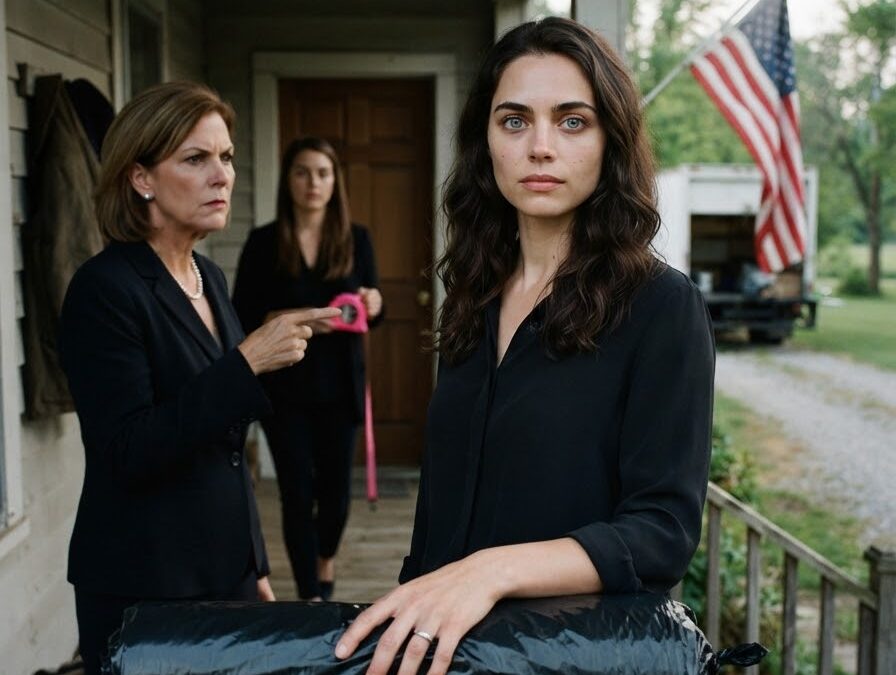
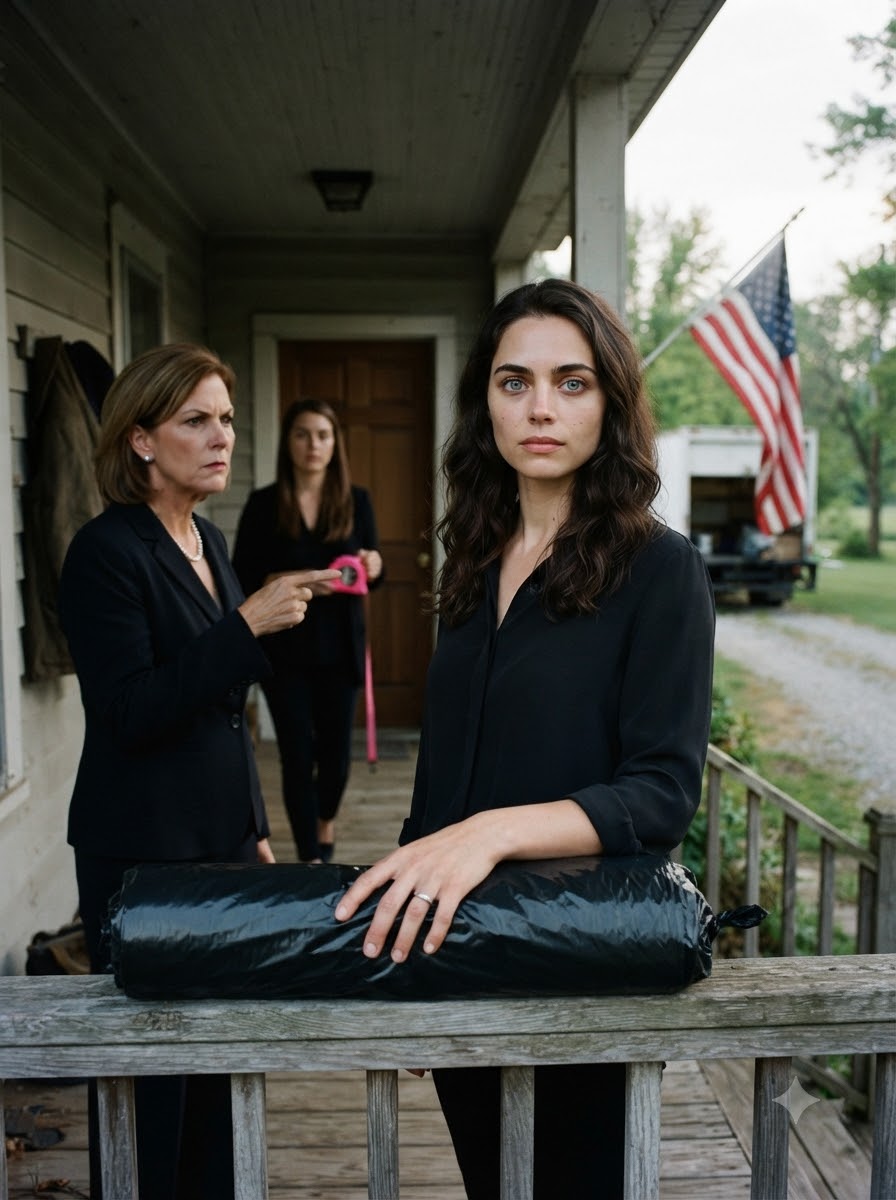
The morning after we buried my grandfather, my mother handed me a box of trash bags and told me I had until noon.
A rented moving truck was backing up the gravel drive behind her, beeping.
And my sister walked past me into the house with a tape measure in her hand like she’d been there a hundred times.
“I’m taking the master bedroom,” Brooke said over her shoulder and went up the stairs.
My mother pointed at the hall closet where Grandpa’s coat still hung.
“You were his burden, Lena. This house belongs to us now.”
She said it standing in the doorway she’d carried me through when I was five years old.
The same doorway she’d walked out of without me.
And she said it in front of a closet nobody had touched since Tuesday.
I didn’t argue.
I set the box of bags on the porch rail.
“Okay,” I said.
I could tell she didn’t know what to do with that.
My grandfather had told me three things before he died.
I’d done two of them.
One of them late.
The third one was a door.
My mother pulled a roll of black contractor bags out of her purse, shook one open, and reached for the first coat.
I walked past her down the hall to the study.
And I knocked twice.
To explain the knock, I have to go back nine days to the last thing he was awake enough to say.
We’d moved the hospital bed into the living room in August because he couldn’t do the stairs anymore and wouldn’t let me carry him.
That Monday night, the hospice nurse, a big, quiet woman named Pat, had checked his oxygen and squeezed my shoulder on her way out around nine.
And after that, it was just the two of us.
And the machine.
And the lamp with the crooked shade he’d never fixed.
He asked me for his book.
I knew which one he meant.
It was on the end table where it always was.
A yellow surveyor’s field book.
The kind with the waterproof pages.
The same kind he’d been filling since before I could read.
He’d used them at the county for 30 years and kept buying them by the dozen after he retired.
He tried to hold the pen and couldn’t.
And he looked at his own hand like it belonged to somebody who’d let him down.
“You write it,” he said.
So I did.
He told me the date.
And I wrote the date.
He told me what to put.
And I put it.
That was the first time in 25 years I’d written a line in one of his books.
I didn’t look at the line above it.
I didn’t look at the page before.
I kept my eyes on the exact spot where the pen was, the way you’d keep your eyes on the road in a storm.
He watched me not look.
And I think he knew exactly what he was watching.
Then he held up one finger, which was hard for him.
“One, don’t argue with your mother. She wins arguments. It’s the only thing she’s ever won.”
Two fingers.
“Two, call Ruth the night I go. Not the morning after. The night.”
Three.
“Three. Don’t open the study for them. You open it for Ruth.”
I asked him what he meant by that.
What was in the study that anybody would want?
And he closed his eyes for so long I thought he’d gone under.
“You’ll ask her when you want to know,” he said. “You never want to know, Lena. That’s your trouble. It isn’t a bad trouble, but it’s yours.”
He made me say all three back to him.
I said them.
He said, “Again,” the way he’d said it when I was learning my times tables.
And I said them again.
And somewhere in the second time through, he fell asleep with his mouth a little open and his hand on top of mine.
I sat there and didn’t move my hand for an hour.
He died at ten minutes after four in the morning.
I know because I wrote it down on the notepad by the phone, the way I write down the time of every call at work.
I called the hospice line.
I called the funeral home in Greenway.
The woman who answered said she was so sorry and asked for the address.
I gave it to her without thinking.
1140 Culter Road.
The address I’d been giving people since I was five.
I did not call Ruth.
I told myself it was four in the morning.
I told myself I’d call in daylight.
And then it was daylight, and I found other things to do.
And that was the first of his three things I got wrong.
I called my mother at seven, which was five in Arizona.
My father picked up.
He said my name like a question.
Then he said, “Hold on.”
I heard him walk through a room.
I heard him say, “It’s Lena.”
And I heard my mother say, “Well, what does she want?” before she had the phone.
I told her.
There was a pause.
Then she cried.
And I want to be fair about it because I’ve thought about it a lot since.
She cried for about 20 seconds.
And it sounded real.
Then she blew her nose, and her voice came back different.
Quicker.
Like she’d set something down and picked something else up.
“When’s the service? Which funeral home? Who’s handling the obituary? He was at home in the house? Who was with him?”
I told her I was.
“Of course you were,” she said.
And I still don’t know how she meant it.
Then she asked whether he’d been in a lot of pain.
I said not at the end.
And she asked whether he’d said anything about them.
About her.
I thought about three fingers held up in lamplight and said no, he hadn’t.
Which was true if you’re strict about it.
He hadn’t said anything about her.
He’d said things about me.
Then she said, “We’ll be there Friday. Don’t touch anything of Dad’s. The house isn’t going anywhere, but his things are family things, Lena. We’ll go through them together.”
Family things.
I stood at his kitchen counter next to his coffee cup with the ring in the bottom.
And I understood that the word family had been drawn around a group of people.
And I was standing on the other side of the line.
“Okay,” I said.
That was the word I had.
I’ve been saying it to her my whole life.
Over the phone.
Into voicemail.
Into the silence after she said summer.
“Have you called anyone?” she asked. “Lawyers, anything like that?”
“No.”
And it was true.
I could hear it make her calmer.
“Good. Don’t. There’s no need to get people involved. We’ll handle it as a family.”
She told me she loved me, honey.
And I heard myself say it back before I decided to.
I hung up and stood at the front window for a long time, looking at the mailbox at the end of the drive.
It was the window I’d stood at the summer I was five.
And I’d never once stood there since without knowing it.
They brought me on a Saturday in July of 2001.
[snorts]
I remember the car was already running in the driveway when my mother carried my suitcase up the porch steps because my father didn’t turn it off.
She was 25.
Grandpa was 61 and had been a widower for two years.
He came out on the porch in the shirt he wore to church and stood there with his hands in his pockets.
I asked my mother if I needed my winter coat.
I remember that because I was proud of the question.
It felt like a grown-up thing to think of.
“We’ll see,” she said.
Then she kissed the top of my head, told me to be good for Grandpa, and went down the steps.
Across the road, Mr. Brandt was standing on his own porch with a cup of coffee.
He didn’t wave at the car.
My grandfather took a yellow book out of his shirt pocket and wrote something in it while the car turned onto Coulter Road.
I thought he was drawing.
The summer ended.
He learned to braid hair from a videotape he got at the library and did it badly.
And then did it well.
He learned that I wouldn’t eat eggs if they touched the toast.
In October, the school sent a form home that needed a parent’s signature.
He called Arizona from the phone in the kitchen.
I sat on the stairs and listened to him leave messages.
Patient ones.
Then shorter ones.
Then one that was just his name and the number.
I didn’t know it then, but every one of those calls went into the yellow book.
A woman started coming to the house.
Young.
With a leather bag.
She and Grandpa sat at the kitchen table with papers for an hour at a time.
And she always brought me a peppermint from her coat pocket and asked what I was reading.
In January, my mother came back.
I wore the dress with the blue flowers because I thought she’d come to get me.
She was pregnant.
Big enough that she couldn’t button her coat.
And I remember being confused about that in the way a five-year-old is confused, where you notice a thing and don’t know what shelf to put it on.
We went to a building downtown with a metal detector and a long hallway with benches.
The young woman with the leather bag was there.
She gave my mother some papers and a pen.
My mother signed them standing up against the wall without reading them while my father looked at the exit sign.
I heard my mother say to the young woman in the voice she used with waitresses:
“She loves it here. She’s got the yard. She’s got him. It’s better for everybody, really, with the baby coming.”
The young woman didn’t say anything back.
She looked at me on the bench in my blue flowers.
Then she looked at the papers.
And she put them in her bag.
Then my mother crouched down in front of me, which wasn’t easy for her, and said:
“You’re going to be a big sister.”
I asked if I could come home with them now.
She looked at my father.
My father looked at the door.
“Be good for Grandpa,” she said.
She stayed two days.
She slept in her old room.
And on the second morning, the car was running in the driveway again.
I carried my winter coat out onto the porch and put it on in January because I thought if she saw I was ready, she’d remember.
I stood there in it until the car was gone.
Then until Grandpa came out and took me inside.
He didn’t say anything about the coat.
And I loved him for that before I had the word for it.
It was seven years before I called them myself.
I did it on my 12th birthday from the kitchen phone while Grandpa was frying pork chops with his back to me.
I’d rehearsed what I was going to say.
I’d written it on my hand.
A little girl answered.
She said, “Hello,” the way kids do, like it’s a game.
Then she put her mouth away from the phone and yelled:
“Mommy, who’s Lena?”
I don’t know how long I stood there.
Long enough for the pork chops to need turning.
Then my mother’s voice.
“Lena, baby, happy birthday. We were going to call tonight. Listen, we’re coming out this summer. I promise. Tell Grandpa we’ll do a real visit. Brooke’s dying to meet you.”
I said, “Okay.”
I said, “Thank you.”
I said the thing on my hand, which was that I’d made honor roll.
And she said, “That’s wonderful.”
Then somebody in the background needed her.
And that was the call.
I hung up and turned around.
My grandfather had turned off the burner and was writing in his book.
I asked him what he was writing.
He didn’t hide it.
He read it to me flat, like a man reading a gas meter.
“Day 2,449. Lena called Mesa. Diane said summer.”
I got so angry I couldn’t see.
I asked him why he’d write that down.
Why he’d write any of it down.
What kind of person keeps a book like that about his own daughter?
He kept the pen.
“Because a year from now you’ll wonder whether she said it. You’ll tell yourself maybe you heard her wrong. Maybe she meant something else. This way you won’t have to wonder.”
I told him I hated the book.
He said that was allowed.
Then he turned the burner back on.
We ate pork chops.
Neither of us said anything else about it.
That night, I went looking for a sweater in the hall closet and found three boxes on the floor I’d never paid attention to.
Taped shut.
His block capitals on the side.
DIANE BEDROOM 2003.
I sat on the floor in the dark with my hand on the tape and decided he was keeping her things for the day she came back.
It was the kindest explanation.
And I was 12.
I held on to it for a long time.
They didn’t come that summer.
They didn’t come the next five.
When I graduated from high school in June of 2014, I mailed an invitation to Mesa with the date and time underlined.
And I told myself I underlined it for clarity.
A card came back two days before the ceremony.
Fifty dollars and a note in a 12-year-old’s handwriting.
All loops.
Congrats from all of us.
My sister had signed for all of them.
Grandpa wore the only suit he owned, which had been to two funerals and no weddings, and sat in the third row of the gym.
Mr. Brandt sat next to him and took pictures with a camera that still used film.
Afterward, in the parking lot, Grandpa said the gown made me look like a judge, which was the closest he came to compliments.
And Hollis said he’d get the pictures developed at the drugstore.
He did.
They’re still in a drawer in the kitchen.
That same month, I heard him on the kitchen phone with my mother.
She was asking for money alone so my father could open his own heating and cooling shop.
Grandpa said no.
Once.
Without explaining.
I heard her voice get loud enough to come through the receiver from across the room.
She said he’d always chosen me over his own daughter.
That she’d never been able to compete with a charity case.
He said:
“I chose the one who was standing here.”
And hung up.
Then he wrote in the book.
I stood in the hallway and did something I’d gotten very good at.
I explained her.
Arizona was far.
She had Brooke to think about.
Money was tight.
The shop was a big deal.
And people say things when they’re scared about money.
By the time I’d finished, she was almost reasonable.
And I was almost fine.
I could do it in under a minute by then.
I’d had years of practice.
And the trick was to start before the hurt got all the way in.
The way you’d get a bandage on before the bleeding got going.
What I didn’t see at 18 was that every time I did it, I was agreeing with her that I didn’t count for much.
I asked him later whether I should call and thank her for the card.
He said I could.
“Write down what she says.”
I didn’t call.
If I didn’t ask, nobody could tell me no.
That fall, I enrolled at the community college 20 minutes away.
And I told everyone it was so I could keep an eye on him.
Some of that was even true.
I got very good at being calm for other people.
It turned out you could get paid for it.
The call came in at two in the morning in February, the winter he got sick.
All I had on my screen was a cell number and a tower location.
A man was screaming into the phone that his wife was on the floor.
He wasn’t saying words yet.
Just her name.
And the word floor.
And the word please.
I’ve had a lot of those.
“Sir, I need the address first,” I said. “Everything else I can fix. I can’t send anyone to nowhere.”
He gave it to me in pieces.
A road name.
Then a number.
Then the color of the mailbox.
I put the pieces together and sent it to Marcus at the next console.
Marcus had a crew rolling before the man finished saying the name of his street.
Then I got him on his knees next to her.
I got his hands where they needed to be.
I counted for him.
“One. Two. Three. Four.”
In the voice I use.
Low and even.
The one people at work say sounds like I’m reading a recipe.
He counted with me.
He lost it around 30 and started saying her name again.
And I said:
“Sir, I need you back on the numbers.”
He came back somewhere around minute three.
He asked if she was going to make it.
And I didn’t tell him yes because I didn’t know.
“The crew’s two minutes out. Keep counting with me. You’re doing it right.”
He kept going.
When the ambulance got there, I heard the door.
I heard the paramedics.
I heard him stop counting.
Then I hung up.
Because that’s the job.
You don’t get to know the ending.
I sat for a second with my hand on the headset.
The room was the way it always is at two in the morning.
Six consoles.
Four of them dark.
The big map on the wall with one green dot moving on it.
The smell of somebody’s microwave dinner.
I logged the call.
Time in.
Time out.
Units dispatched.
You’d be surprised how much of the job is writing things down so that later, when somebody asks what happened, there’s an answer that isn’t anybody’s memory.
Marcus rolled his chair over.
He’s 34.
A supervisor.
A good one.
And he’d been trying for a year to get me to test for his job.
“Four more years and you’re in my seat,” he said.
I told him I needed nights so I could be home with Grandpa during the day.
“I know what you need,” he said. “I’m telling you what you’re good at.”
He didn’t push past that.
He never pushed.
That was the whole reason I could stand to work next to him.
I drove home at seven with the sun coming up over the soybean fields.
Took my grandfather’s blood pressure.
Wrote it on the chart on the refrigerator.
And slept three hours.
I’ve thought about that call a lot since because of what it says about me that I didn’t understand then.
I could keep a stranger’s hands moving on his wife’s chest for six minutes.
I could do it every night.
I could do it for a man who was cursing at me.
And when my mother called on my 12th birthday, I couldn’t make one sentence.
I could give anybody an address except the one person I’d been waiting for.
I’d started at the county communications center at 21, right out of the college program, and stayed nine years.
People in Greenway called me the girl who never left.
And for a long time, I heard that as a compliment.
I dated some two men.
Both decent.
Both ended it because I wouldn’t move out of my grandfather’s house.
And the second one said on his way out that I was waiting for somebody, and it wasn’t him.
I didn’t argue with him.
I didn’t argue with anybody.
Then in January, the doctor said the words congestive heart failure and gave us a number of months that turned out to be about right.
And the next eight months went the way those months go.
Medication schedules taped to the fridge next to a business card he’d stuck up there with a magnet years before.
A lawyer’s card with two words on it in his handwriting.
CALL RUTH.
I saw it every day and didn’t read it.
Marcus swapped shifts with me so many times I stopped counting.
Mr. Brandt mowed the yard without being asked and left the mower where Grandpa could see it from the window.
Every evening, Grandpa wrote one line in his book with a hand that got worse.
And I never asked what he was writing.
I told myself that was respect.
I ran through my savings on a daytime aide, a college girl named Jess, who read him the paper.
And I didn’t mention the money to him.
He’d have hated being a burden.
I know now that I was the one who taught myself that word.
My mother just happened to say it out loud.
So on the Wednesday after he died, I made a list.
That’s what I do.
Funeral home.
Church.
Obituary.
Casket.
Flowers.
The ladies from the church who’d want to bring food and would need to be told when.
I did it at the kitchen table with his pen, in the order things had to happen, with phone numbers next to each one.
For the obituary, I wrote:
Survived by his granddaughter, Lena Hail.
Then I sat with the pen over the paper for a while before I added his daughter Diane and her family.
I don’t know who I added it for.
Mr. Brandt came across the road around three with a casserole in a dish with his late wife’s name on masking tape on the bottom.
Hollis Brandt is 79 and has lived across from this house since 1988.
He doesn’t sit down when he’s got something to say.
He stood in the kitchen doorway with his cap in his hand.
“Two weeks ago Tuesday,” he said, “a woman came by here with a clipboard. Real estate. Said your mother sent her to look the place over, take some measurements. I told her Walter was alive and could answer his own door, and she left.”
I said maybe my mother had been worried about him.
About the house.
About what would happen after.
I said it while I was writing the number for the florist.
And I heard how it sounded.
Hollis didn’t argue with me either.
He turned his cap over in his hands.
“I stood on my porch and watched that car leave in ’01,” he said. “I’ve watched every car that’s come up this drive since. I’m telling you what I saw two weeks ago. What you do with it is yours.”
Then he said:
“Your grandfather wrote it down and asked if I’d called Ruth yet.”
“I didn’t think I needed to yet.”
He set the casserole on the counter.
At the door, with his hand on the frame, he stopped.
“He said you’d say that.”
Then he went home.
That night, I opened my phone to get away from the list.
My sister’s account was the first thing that came up.
I follow her.
She doesn’t follow me.
I’d never asked her to.
The picture was our house.
Not a picture she’d taken.
A screenshot from the street-view maps.
The front porch.
The maple.
The mailbox with Kesler on it in my grandfather’s block letters.
Taken on some summer day when the grass was long.
Coming home to Ohio, the caption said, with a little house.
Tyler and I finally get a real house.
Somebody had commented:
“Oh my gosh, is that your grandpa’s?”
And Brooke had answered:
“It’s ours now.”
With a yellow heart.
She’d posted it Tuesday.
The day he died.
Before I’d called them.
I sat on my bed and did the thing I do.
Hours meant the family.
Real house meant they’d been renting.
Maybe she meant they’d stay for a while to help.
Maybe she didn’t know how it sounded.
She was 24.
I got the explanation about halfway built.
Then I looked at the timestamp again.
And the explanation fell over.
Through my open door, I could see the study.
And on his drafting table, the yellow book.
I got up and closed the study door.
I still didn’t sleep.
And that was new.
Usually, the explaining worked.
In the morning, I found the name of the real estate office Hollis remembered and called it at eight, when I knew someone would be setting up the phones.
I used my work voice.
I’ve never been able to describe it except to say it’s the voice you’d want if you were on fire.
“This is Lena Hail at 1140 Culter Road. I’m returning a call about a listing consultation.”
The assistant, a young woman named Kayla, put me on hold.
She came back cheerful, with keys clicking.
“Yes. Diane Hail, daughter of the owner. She asked about evaluation and a timeline for listing. She said probate would be quick since she’s the only child and that the granddaughter would be relocating. Did you want to reschedule the walkthrough?”
I asked what the timeline was.
“She wanted photos as soon as the house was cleared,” Kayla said. “She was pretty organized about it.”
I thanked her.
Hung up.
Then I did something I’d never done.
I took the notepad by the phone and wrote down exactly what she’d said.
Word for word.
The way I’d take a statement.
With the time at the top.
The granddaughter would be relocating.
My mother had a word for me.
And it was relocating.
And she’d used it with a stranger while my grandfather was alive in the next room.
My whole plan had been to get through the funeral.
Standing there with the notepad, I understood that the funeral wasn’t the event.
The funeral was the thing they had to wait through.
I went to the refrigerator and took down the card.
Three years earlier, he’d asked me to drive him to a lawyer’s office over the insurance agency on Main Street.
He wouldn’t say why.
And I didn’t ask.
I sat in the waiting room for 40 minutes with a magazine open to the same page and thought about what I’d make for dinner.
Hard.
So I wouldn’t think about why an 83-year-old man goes to a lawyer.
There was a door with a window in it between the waiting room and the office.
I kept my back to it.
When he came out, he looked tired and pleased with himself.
And in the truck, he said:
“It’s handled. You’ll not be put out. Don’t make me explain it. I hate explaining.”
“Okay.”
If I asked him what he’d signed, I’d be admitting he was going to die.
So I asked him what he wanted for dinner instead.
“Pork chops.”
And that was the end of it for three years.
Now I dialed the number on the card.
A woman answered on the second ring.
When I said my name, she made a sound I couldn’t read.
“I have been waiting for this call for three years,” Ruth Okapor said. “Did you call me the night he died?”
“No.”
“Wednesday. Today.”
“He said you wouldn’t.”
She didn’t say it unkindly.
She said it like a person checking a box.
“Come at two. Don’t bring anything. He left you some things to read.”
I told her my mother had called a real estate office.
“Then bring that too. Write down exactly what they said if you can remember it.”
I looked at the notepad in my hand.
“I already did.”
Ruth laughed once.
“Well, he’d like that.”
The drive to her office goes past the county courthouse.
I’d driven past it a thousand times.
And that day was the first time I looked at the doors and remembered the benches inside.
Ruth’s office was up a flight of stairs that had been there since 2001.
And so had she.
She was 58, with reading glasses pushed up into gray hair and a desk with nothing on it but three folders and a cardboard box.
She didn’t do a speech.
She opened the first folder and turned a paper around so I could read it.
It had the county recorder stamp on it.
Dated three years ago.
“Your grandfather deeded this house to you in 2023,” she said. “He kept what’s called a life estate, the right to live there as long as he lived. That right ended on Tuesday. The house is yours, Lena. It has been for three years.”
I stared at her.
“It doesn’t go through probate because it isn’t part of his estate. There’s nothing in probate for your mother to inherit, and nothing in probate for her to contest, because the house never went there.”
I read it twice.
My name was on it.
Typed with the address.
The address I’d been saying my whole life.
I’d been sitting in the waiting room when he’d signed it.
Thinking about dinner.
She opened the second folder.
A letter from Dr. Anand dated the same week.
One page.
A doctor’s plain statement that Walter Kesler knew what he owned, knew who his family was, and knew what he was doing and why.
And a small flash drive in a plastic sleeve.
“The signing was recorded in this room. Eleven minutes.”
She opened her laptop and turned it toward me.
I looked at the frozen first frame.
My grandfather in his church shirt.
In the chair I was sitting in.
His hands folded on the desk.
“Not today.”
She closed it.
Without a word.
Without a look.
“Then I’ll tell you one thing that’s on it. He says he’s doing this because you’ve been paying for that house since you were five in the only currency a child has.”
She pointed toward the frozen image.
“And the camera catches the waiting room through the door. Empty chair. You’re not in the room. If your mother ever says you made him do it, that empty chair matters more than you’d think.”
The third folder was older.
The cardboard was soft at the corners.
CONSENT TO APPOINTMENT OF GUARDIAN.
Under that:
Two signatures.
Notarized in Mesa, Arizona.
November 2001.
My father’s.
My mother’s.
“Your mother sat in that chair in January of ’02,” Ruth said. “Seven months along. She asked me if signing meant she’d owe child support. I said no. She signed.”
The young woman in the hallway with the leather bag and the peppermints.
I looked at Ruth.
And I could see her under the gray hair.
I couldn’t say anything for a while.
She let me not say it.
Then she lifted the lid off the box.
Twenty-two yellow field books.
Banded together with a canvas strap.
And on top, an index card in his capitals:
FOR LENA WHEN SHE ASKS. NOT BEFORE.
“He gave me these three years ago,” Ruth said. “He said if he handed them to you, you’d think he was building a case against her. He said if you asked, you were ready.”
I asked what he’d want me to do with them.
“He didn’t say. He was specific about most things. Not that.”
I asked her the other thing.
The one I’d been holding since the first folder.
Why he hadn’t told me.
Three years.
And every day I’d driven him to appointments and cut his pills in half.
And he’d let me think the house was a question.
Ruth took her glasses out of her hair and folded them.
“He said, ‘If I tell her, she’ll spend three years waiting for me to die instead of living with me.’”
She paused.
“He said, ‘She’d have started grieving me at the kitchen table, and I wanted my dinners.’”
That sounded like him.
It sounded so much like him that I had to look at the window for a minute.
Then she told me the rest in order.
Like a person who’s good at her job.
He’d paid her fee in advance through the end of October of whatever year he died.
Because, she said, quoting him:
“That’s about how long Diane takes to get tired.”
Then she told me what she couldn’t do.
“I can’t make them leave. I’m not the sheriff. I can make it expensive for them to stay. I can answer every letter they send. And I can be in the room if you want me in the room. Where you want me is your call, Lena. It’s your house.”
I asked her what my mother could actually do if she wanted to.
Ruth thought about it the way she thought about everything.
With her eyes on the desk.
“She can hire somebody to write me a letter. I’ll write one back. She can file something, and she’ll lose, and it’ll cost her money she doesn’t have. What she can’t do is take the house. The only person who can give it to her is you.”
She let that sit.
“I’ve seen people do that, you know. Give it back to keep the peace. I’d draw up that paper too if you asked me.”
She looked at me.
“I’d rather not.”
I carried the box down her stairs and put it on the passenger seat.
I drove home with it.
At every stop sign, I looked at it and didn’t touch it.
I put it on the study floor by the drafting table.
I didn’t open it.
On Friday, my phone rang.
My mother said:
“We landed. See you at the church, honey.”
“Okay.”
The service was at ten on Saturday at the Lutheran Church in Greenway.
The small brick one where he’d sat in the same pew for 50 years and complained about the same draft.
My mother arrived ten minutes late.
In black that still had the fold lines from the store.
My father a step behind her in a borrowed-looking sport coat.
My sister behind him with her phone already out.
My mother came down the aisle straight to me and put her arms around me.
And I need to say what that was like because I’d been braced for a lot of things.
And not for that.
It was the first time she’d held me in 24 years.
My body didn’t check with me.
My shoulders went down.
My face went into her collar.
She smelled like a rental car and hairspray.
And for about three seconds, I was a kid on a porch in a winter coat.
Then she whispered:
“It’s over now. We’re here.”
I felt her hand pat my back twice.
Brisk.
Like a person finishing a task.
Then she let go.
Turned to the pastor with her hand out.
Brooke had her phone up.
She was filming the sanctuary.
The flowers.
The casket.
Slowly panning for whatever she was going to post.
When she got to me, she lowered it and gave me a small wave.
The kind you give a coworker.
My father put his hand out to Hollis Brandt in the vestibule.
Hollis looked at the hand and didn’t take it.
My father put it back in his pocket like he’d expected that.
Nobody had asked my mother to speak.
She went up anyway after the pastor.
She stood at the lectern with her hand flat on it and her chin up.
“My father was a difficult man,” she said, “but he was mine.”
The whole church heard the word mine.
I watched the backs of people’s heads.
People who’d watched me get on the school bus at the end of Culter Road for 12 years.
I could feel them deciding what to think.
And I couldn’t do anything about it.
I sat on my hands.
Afterward, on the steps, she took my hand in both of hers in front of everybody.
The way you’d hold the hand of somebody you were worried about.
“We’ll stay at the house tonight. Obviously. That motel is dreadful.”
Brooke didn’t sleep.
I didn’t say anything.
I want to be honest about that because it matters later.
I didn’t say yes.
And I didn’t say no.
And she took the first one.
Marcus caught me in the parking lot in a suit I’d never seen, standing by his truck.
“You good?”
“Ask me Monday.”
He nodded like that was an answer.
My mother got into the rental car and drove to my house ahead of me.
She was inside before I’d parked.
The reception was at the house because that’s where you have it.
And by one, there were 40 people in the living room with paper plates.
The church ladies had the kitchen.
My mother walked through it like a buyer.
I watched her open a linen closet upstairs and close it.
I watched her open the door under the stairs and look at the water heater.
I watched her open the hall closet where his coats were.
She pushed the three boxes on the floor to one side with her foot, without looking at what was written on them.
Then reached past them to feel the wall.
I don’t know for what.
Brooke went up to my grandfather’s bedroom with a tape measure out of her purse.
A pink one.
From the bottom of the stairs, I watched her measure the doorframe and type the number into her phone.
“For the bed frame,” she said when she saw me looking. “Tyler’s is a king. You have to check the doors in old houses.”
My mother told the pastor’s wife that the roof would need doing before winter.
And that the kitchen was original.
Which she said the way you’d say a car had a lot of miles on it.
She told the woman who taught me fourth grade that it was such a relief to finally be able to take things in hand.
I heard both of those from across the room.
Because she wasn’t trying to keep them quiet.
Then she stood in the kitchen with a plate of someone’s lemon bars and asked Hollis pleasantly where Dad had kept the deed and the bank things.
Hollis said:
“Ask Lena.”
Then took a lemon bar off her plate.
So she asked Lena.
She found me by the coffee urn and put her hand on my arm.
Warm.
And left it there.
“Give me your house key, honey, so we can come and go tomorrow without waking you. You need rest. You look like you haven’t slept in a month.”
Then, in the same breath, lower:
“Did he leave a will? He never trusted lawyers.”
“He didn’t trust arguments.”
She laughed the way you laugh at a child who said something clever without knowing it.
She squeezed my arm.
“We’ll talk about it tonight.”
Then moved on to the pastor’s wife.
Through the half-open door of the study, I could see the box from Ruth’s office on the floor by the drafting table.
The lid on it.
I walked through the living room.
Not fast.
Past the pastor.
Past the woman who taught me fourth grade.
I closed the study door.
Turned the key in the lock.
Put the key in my pocket.
It was the first thing I’d locked in that house in my life.
Nobody saw me do it except my sister.
She was coming down the stairs with her pink tape measure.
She looked at the door.
Then at me.
She didn’t say anything.
Neither did I.
By eight, the church ladies had taken their dishes home.
And it was the four of us.
My mother had found his bottle of bourbon in the cabinet over the stove.
She poured herself some in one of his glasses.
And she was sitting in his chair.
Which nobody sat in.
Her shoes off.
Her feet tucked under her.
My father was on the couch.
Brooke was in the doorway to the kitchen looking at her phone.
“We’ll take Dad’s room,” my mother said.
Not to me exactly.
To the room.
“Brooke can have yours for now. You’ll be fine on the couch for a couple nights. You’re young.”
“Not tonight.”
I heard it come out of me.
It sounded like somebody else.
Someone I’d have liked to know.
My mother set the glass down on the arm of the chair.
“After everything—”
Brooke, from the doorway without looking up:
“Lena, it’s one night.”
My father, to the carpet:
“Your mother’s under a lot of stress.”
Three directions at once.
Each one a different tool.
And I knew all three of them.
I’d heard versions of all three on the phone for 25 years.
I did what I do at work.
When a caller argues with the instruction, I repeat it.
Same words.
Same voice.
No extra reasons.
Because reasons are handles.
“Not tonight. The motel’s ten minutes.”
My mother stood up in her stocking feet.
I braced for the argument.
It didn’t come.
She was too smart for that.
She’d never once in her life argued with me when she could wait me out instead.
She put on her shoes.
She left the glass on the arm of the chair.
At the door, she said:
“We’ll be back at nine. Have coffee on.”
And they went.
Brooke was the last one out.
She looked back at the house from the porch.
Up at the second-floor windows.
Then she got in the car.
I picked up the glass she’d left on the arm of his chair.
Washed it.
Dried it.
Put it back in the cabinet over the stove where it lived.
And I put the bourbon back.
I didn’t know why it mattered so much that they be where they were.
Except that it did.
Then I sat down in the hallway with my back against the study door and listened to the last of the rental car go down Culter Road.
And I did the thing I tell callers to do when they can’t breathe.
I counted down from ten.
I got to about six before I started to wonder if I was cruel.
It was her father’s funeral.
She’d flown in.
My sister had never been in this house until today.
And I’d sent her to a motel on the highway.
I was still sitting on the floor building the case against myself, doing a good job of it, when the phone on the kitchen wall rang.
Nobody called that phone except Hollis.
It wasn’t Hollis.
“Hi, this is Kayla from the office. Sorry to call on a weekend. I’m just confirming Monday at 10:00 a.m. for the listing photos. Mrs. Hail said the house would be cleared by then and her daughter would let us in.”
I stood in the kitchen with the cord stretched across the room.
“Which daughter?”
There was a silence on the line.
A real one.
“She didn’t say,” Kayla said more quietly. “I can call her back.”
“Don’t.”
I’d handle it.
I hung up.
And I stood there and let it land.
Cleared.
That was what the truck was for.
Not for bringing anything in.
For taking his things out.
His chair.
His bed.
His drafting table.
To a storage unit or a dump.
So the photographs would show empty rooms with good light.
Monday at ten.
She’d said nine tomorrow.
And now I knew why nine.
Then Hollis did call.
He’d watched the rental car leave.
And he wanted me to know that on the way to it, my mother had stopped in his yard and asked him a second time about the deed.
Whether Walter kept things in the bank or in the house.
He’d told her the same thing.
“Ask Lena.”
And she’d said:
“She won’t know anything. She never asks.”
He said it flat so I’d have the words exact.
I thanked him.
He said:
“Call Ruth.”
Then hung up before I could say I would.
I called Ruth at home at nine at night.
She picked up like she’d been sitting by the phone.
“They’re coming at nine tomorrow,” I said. “With a truck. There’s a photographer Monday. Can you be in the study at eight?”
There was a pause.
I heard her smile.
“Does the side door still stick?”
The study had been his office when he did private survey work after he retired.
And it had its own door onto the side yard for clients.
It had stuck since I was ten.
“Yes.”
“I’ll bring coffee, Lena. You don’t have to say anything you don’t want to say. You do have to knock. I’m not coming out on my own. It’s your house, so it has to be you.”
We settled on twice.
My phone buzzed.
Marcus.
You good?
I typed:
Ask me Monday.
Then deleted it.
Typed:
Come by Monday.
And sent that instead before I could think about it.
Then I went into the study and opened the box.
I took out two books.
The first two.
2001 and 2002.
I checked the dates on the covers the way I check an address before I send a truck.
I set them on the drafting table.
Square to the edge.
I didn’t open them.
I’d gotten as far as I could get that night.
And I knew it.
I was in the study before it got light.
His current book was where it always was.
On the corner of the table.
The one I’d written a line in nine days before.
I opened it to the last page.
There was my handwriting.
The date.
And the line he’d dictated.
Above it, in his shaky hand, slanting off the rule, was the line from the day before.
I got as far as my own name in it and closed the book.
I set it down.
I told myself later.
At 20 to seven, I had my phone in my hand.
My mother’s number on the screen.
The thought was simple.
And it was the oldest thought I had.
Call her.
Tell her not to bring the truck.
Tell her we’ll sit down and talk.
Just the two of us.
Make it easy.
Make it so nobody has to be in a room with a lawyer.
Nobody has to be embarrassed in front of Brooke.
Make it so she doesn’t get mad.
I could see the whole morning go smooth if I just pressed the button.
I had made 25 years go smooth that way.
Under her name on the screen was the text I’d sent Marcus.
Come by Monday.
I looked at that for a while.
I thought about what I’d want to tell him when he came.
Then I turned the phone face down on the drafting table next to the two yellow books.
And I left it there.
At ten after eight, the side door stuck.
Then gave.
Ruth came in sideways with two coffees in a carrier and two folders under her arm.
A gray suit like it was a workday.
She looked at the books on the table.
“You picked the right years,” she said.
She set the folders down.
Didn’t open them.
And sat in his drafting chair like she’d sat in it before.
Across the road, Hollis’s porch light came on in daylight and stayed on.
That was him telling me he was watching.
I drank the coffee.
I didn’t taste it.
Ruth asked me one question.
Whether I wanted her to speak first or wait for me.
“Speak first.”
“All right.”
Then, because she could see me looking at the phone face down on the table, she said one more thing.
“Whatever she offers you in there—and she’ll offer you something—you don’t have to answer it today. You can say you’ll think about it. That’s a whole sentence.”
I said I knew.
I didn’t entirely.
I’d never once in my life told my mother I’d think about it.
I’d always just said okay.
At 20 to nine, 20 minutes early, I heard a truck’s backup alarm in the driveway.
And the crunch of gravel under something heavier than a car.
Ruth didn’t get up.
“She’s early,” she said.
“Good. Early people say more.”
I went out into the hall.
And I opened the front door.
Because that was the third thing.
Let them in.
It was a 15-foot truck with a rental company’s logo on the side.
My father was driving it badly.
Cutting the wheel too late so the back tire went up on the grass by the maple.
My sister got out of the cab with a cardboard tray of three coffees.
Three.
I counted them the way you count anything.
And there wasn’t one for me.
My father lifted a box out of the passenger footwell and carried it up the steps.
The side of it said:
BROOKE, KITCHEN.
In marker.
They’d packed before they came.
They’d packed in Arizona.
My mother came up the steps last with her purse over her arm and the box of trash bags in her hand.
She handed it to me.
Pointed at the hall closet.
“His coats first. Goodwill won’t take the smell.”
Brooke went past me with the pink tape measure.
“I’m taking the master bedroom.”
Now I knew she’d measured the doorframe for it the day before.
At his funeral reception.
With the casserole dishes still on the counter.
My mother watched me not move.
“You were his burden, Lena. He said so to me on the phone plenty of times.”
I want you to understand what I knew when she said that.
Standing there with the box in my hands.
I knew that every call from this house to Mesa in the fall of 2001 had gone to a machine.
I knew that a man had written down every one of those calls in a yellow book with the date.
I knew that the last time I’d heard him talk to her on the phone 12 years ago, he’d said:
“I chose the one who was standing here.”
And hung up.
I knew she was lying.
And I knew I didn’t have to say so.
Because it was already written down.
And had been for a very long time.
“Okay,” I said.
She frowned.
She’d wanted something else from me.
Tears.
Or a fight.
And the frown told me so.
She took the contractor bags out of her purse.
Shook one open.
Started on the coats herself, impatient with me.
His barn coat first.
Down at the end of the driveway, Hollis Brandt was standing on the gravel with a mug in his hand like he’d come out to look at the weather.
I walked past my mother.
Past the closet.
Down the hall to the study.
And I knocked twice.
The door opened from the inside.
Ruth came out with a folder against her chest.
Into the hallway.
Into the light from the front door.
She looked at my mother and said:
“Diane. Glenn. It’s been a while.”
My mother dropped the bags.
The whole roll.
The one she’d opened.
And the barn coat that was halfway into it.
All of it on the hall floor.
I was watching her face.
And I saw it go somewhere.
I knew where.
A hallway with benches.
A young woman with a leather bag and a pen.
My father sat down on the arm of the couch without being asked.
The way you sit when your knees decide for you.
From the stairs, Brooke said:
“Who is that?”
Ruth walked into the living room.
Set a paper on the coffee table.
Turned it so anyone could read it.
And she said it to Brooke because Brooke was the one who’d asked.
“Walter Kesler conveyed this house to Lena in 2023. He kept the right to live in it for his lifetime. That right ended Tuesday. Nothing here passes through probate. There is nothing to inherit, and there’s nothing to contest in probate, because the house never went there.”
She looked at them.
“You’re standing in your sister’s house.”
Brooke came down two more steps.
Stopped.
The tape measure still in her hand.
She looked at me like she was seeing the house for the first time with somebody in it.
My father said quietly:
“Walter did that.”
To nobody.
And I heard in it that he wasn’t surprised.
Only that he’d hoped.
My mother found her voice.
It was the voice from the lectern.
“He was 83 years old. She had him alone out here for years. Nobody else was allowed near him. That’s undue influence, and we’ll contest it. Don’t think we won’t.”
Ruth put a second page next to the first without hurrying.
“A physician’s letter from the same week. And the signing was recorded in my office. Eleven minutes. Lena is in the waiting room the entire time. You can see the chair through the door. Your father says on camera why he’s doing it in his own words. You’re welcome to watch it here this morning or in a courtroom. Whichever you’d like.”
“Because she poisoned him against us,” my mother said. “Twenty-five years of it. Every day. What did you think he was going to say?”
Ruth didn’t answer that.
She laid a third folder on the table.
An old one.
Soft at the corners.
She put her hand flat on it.
Left it there.
“You’ve seen this one before,” she said.
My mother looked at the folder.
Looked at Ruth.
Did not open it.
Then my mother’s voice changed.
I had heard her do it on the phone.
But I’d never seen it.
And it’s a different thing to see.
Her shoulders came down.
Her chin came down.
She stepped over the bags on the floor and came toward me with her hands open.
And her voice was the one from the church aisle.
“Lena, baby, we don’t have to do this through her. Look at us. We’re family. We’re all that’s left.”
She came closer.
“Stay. We’ll all stay. Brooke and Tyler upstairs. You keep your room. Nobody’s putting anybody out. I never meant that.”
She took a breath.
“And when it’s time to sell, we split it three ways. Fair. And you never work another night shift in your life. You could sleep. When was the last time you slept?”
“Diane,” my father said from the arm of the couch.
And stopped.
I felt it.
I’m not going to pretend I didn’t.
I felt her hands on my back from the day before.
And the word baby.
And the three-way split.
That would have been my name on a piece of paper next to theirs.
In a family.
On purpose.
And the sentence was right there in my mouth.
Until the wedding.
Stay until the wedding and then we’ll see.
I had it ready.
I could feel the shape of it.
What stopped it wasn’t strength.
It was my sister.
Brooke had come down the stairs.
She’d picked up the old folder off the coffee table because she was the only one in the room who didn’t know what was in it.
She was reading.
CONSENT TO APPOINTMENT OF GUARDIAN.
Two signatures.
Mesa, Arizona.
November 2001.
She read it the way she’d read anything.
Fast.
Then she read it again.
Slower.
And she looked up at my mother.
“You were pregnant with me.”
“That’s not what that is,” my mother said.
I went into the study.
I picked up the second yellow book.
I opened it to a page I’d found the night before by the date and hadn’t let myself read.
I read it now.
Standing up at his table.
Then I walked out and put it into Brooke’s hands.
Not my mother’s.
Brooke read it.
I’ll tell you what it said because she read it out loud quietly.
The way you read something you don’t want to be true.
“Day 251. Card from Mesa. A girl. Brooke Anne. Lena asked if she was a sister or a replacement. Told her sisters are sisters.”
My sister stood there with the book open for a while.
Then she put it down on the coffee table carefully.
Open to the page.
Then she put the pink tape measure down next to it.
“He wrote those to turn you against me,” my mother said. “He hated me. He wrote down every little thing so he’d have it over me. That’s who he was. That’s who he always was. Ask anybody in this town.”
“He didn’t write them to turn anyone against you,” I said. “He wrote them so I’d stop wondering if I’d made it up.”
That was all I said.
I didn’t have anything to add to it.
And for once, I didn’t try.
She looked at my father for help.
My father was looking at the box at his feet that said:
BROOKE, KITCHEN.
And he didn’t look up.
Then my mother said the one thing she’d never said to me in my life.
In the kind of voice that meant she’d run out of other things.
“Fine. Then what do you want us to do, Lena?”
I went to the hall closet.
I pulled the three boxes out from under the coats.
One at a time.
Set them in a row in the hallway where she could see the sides.
“Anything of yours in this house is in here,” I said. “Grandpa boxed it in 2003. It’s labeled.”
She read her own name in her father’s capitals.
DIANE, BEDROOM, 2003.
He’d kept her things 23 years.
He’d kept them where she’d find them.
In the first closet she’d open.
I watched her understand that.
And I watched her decide not to.
“The truck’s due back tomorrow,” I said. “I’m not calling anyone. I’m asking you to take your boxes and go. If you’re still here at noon, Ruth files, and then it isn’t me asking anymore.”
Ruth, from the living room, said:
“And I’ll be canceling Monday’s photographer unless you’d like to.”
My mother picked up her purse off the floor.
She had one more.
And she used it.
“You’re just like him. Cold. You always were.”
I didn’t answer.
I opened the front door and stood beside it the way I’d stand beside a road if I were waiting for a truck I’d sent.
And I waited.
My father carried the boxes.
Three trips.
He didn’t say anything on the first two.
On the last one, he stopped next to me on the porch with the box against his chest.
Not looking at me.
Looking at the maple.
“He called me,” he said. “October of ’01. Nine, ten times. I let it ring.”
Then he went down the steps.
Brooke followed my mother out.
She stopped in the doorway like she was going to say something.
Didn’t.
And went.
She left the tape measure on the table.
The truck backed out onto Culter Road with the alarm going.
My father took the mailbox post with the back corner.
Not hard.
And didn’t stop.
Across the road, Hollis lifted his mug at me.
Ruth came out onto the porch and stood next to me.
“He paid me through the end of October. He said that’s how long she’d take to get tired.”
She put her hand on my shoulder for a second.
Then went back inside to get her folders.
I sat down on the top step.
That’s when my hands started shaking.
Both of them.
I let them.
Calm is something I do for a living.
It isn’t what I’m made of.
Hollis came up the drive after a while.
Sat down two steps below me.
Which for him was a speech.
And we watched the empty road.
Inside on the coffee table, the yellow book was still open to the page my sister had read.
The pink tape measure was next to it.
I left them both there for the rest of the day because I didn’t know yet what either of them meant.
She lasted three weeks.
He’d been off by a week.
It was a Saturday night in October.
I was at the kitchen table with a bowl of soup.
The phone said Brooke.
So I picked it up.
It was my mother.
She didn’t say hello.
She didn’t say she was sorry for anything.
And I noticed that I’d been waiting to see whether she would.
And I noticed that I’d stopped expecting it somewhere around the second ring.
“Brooke wants you in the wedding party,” she said. “June. Tyler’s family is asking questions about why you weren’t at the engagement dinner. About all of it. And I’m tired of making things up.”
She kept going.
“So here’s what I think. If we can just say the house is being sold and it’s settled between us, we can all move forward as a family. I’ve talked to a lawyer in Phoenix, and he says we have a case, but I don’t want to go that way.”
“Lena, I’m calling because I don’t.”
Ruth had told me about the lawyer in Phoenix.
He’d sent one letter.
She’d sent back the recorded deed and the doctor’s letter and an offer to schedule a viewing of the video at his convenience.
That was two weeks ago.
There hadn’t been a second letter.
I knew all that.
And I’ll tell you what I saw anyway, sitting at the table with my soup going cold.
Because it’s the truth.
I saw a June wedding.
I saw my sister in a white dress.
And me next to her in whatever color she picked.
And a table with a card on it with my name.
And a photograph.
One photograph where all four of us were in it.
And nobody looking at it would know.
I saw it clearly.
I’d been seeing it since I was five.
Then my mother said:
“I know you’re angry, but you got the house, Lena. Can’t you let me have my daughter’s wedding?”
My daughter.
One.
I took a breath.
I started counting down the way I do.
I got to about eight and realized I didn’t need to.
Nothing my grandfather had told me covered this part.
He’d said:
Don’t argue.
Call Ruth.
Open the door.
He hadn’t said what to do when she called back.
This part was mine.
“I’m not going to argue with you, Mom,” I said. “I’m just done waiting. I’ve been home since I was five. You’re the one who never came.”
She started to say something.
I kept going because I’d learned that from her.
The person who keeps going holds the room.
“Here’s what I’ll do. You can call on Sundays once. You don’t come to the house. I’m not selling. And I’ll come to Brooke’s wedding if Brooke asks me. Not you. And not as part of anything.”
There was a silence on the line.
It wasn’t the kind that’s about to cry.
“So that’s it,” she said.
“That’s it.”
I hung up first.
I’d never done that in my life.
The phone rang again before I’d set it down.
It was her from her own number this time.
I let it ring.
I put it face down on my grandfather’s drafting table.
And I stood in the study and listened to it buzz against the wood until it stopped.
I thought about my father on the porch with the box against his chest.
And how the same thing can be a coward’s choice or a person’s depending on who is doing it and why.
Then I picked the phone up and wrote to my sister at her own number.
Not the one my mother had used.
If you want me there, ask me yourself. I’ll come.
I sent it.
Then I went out on the front porch.
I got the flat bar out of the shed.
And I pried up the first rotten board.
The one by the top step that he’d been meaning to replace since spring.
I kept going until it was too dark to see the nails.
The lawyer in Phoenix never wrote again.
Kayla called from the real estate office to say the listing had been withdrawn.
And to say she was sorry.
I believed her.
One morning in October, Ruth and I stood at the counter at the county recorder’s office for 20 minutes with my grandfather’s death certificate and a form.
A woman stamped something.
Then said:
“You’re all set.”
And that was the whole ceremony.
The first Sunday, my mother called and talked for four minutes about how the house needed a new roof.
And how I’d never manage it alone.
And how the winters were going to eat me alive.
The second Sunday, she talked for two minutes about Brooke’s dress and didn’t mention the house.
The third Sunday, the phone didn’t ring.
I noticed around dinner time.
And I noticed that I was all right.
I’d expected that to feel like something ending.
It felt more like a window I’d been holding open finally being allowed to close.
And my arms being tired.
And that being fine.
Marcus came by on a Monday with two coffees.
He sat on the porch and looked at the boards I’d pulled up.
He didn’t ask me anything.
I went back to nights that week.
And slept six hours straight for the first time since January.
Then on a Thursday, a message came from my sister’s number.
In my sister’s words.
The way she types without capitals.
can i come saturday? just me.
Hollis brought the wrong nails.
He brought finishing nails for porch decking.
I told him so.
And he told me my grandfather had let him get away with worse.
We were still going back and forth about it when a car I didn’t know pulled onto the shoulder of Coulter Road and stopped.
Not in the driveway.
On the road.
My sister got out and stood at the bottom of the steps with her hands in her jacket pockets.
She looked at the boards.
At Hollis.
At me.
Then said:
“Can I hold something?”
I handed her the level.
She held it.
She was bad at it.
Then better.
And Hollis told her to keep her thumb off the bubble.
She took that from him better than she’d have taken it from me.
Around the third board, she asked, not looking at me:
“Are the books still here?”
I nodded toward the study window.
Twenty-four of them now on the shelf above the drafting table.
The strap off.
“Is the rest of my year in there?”
“It’s a lot of no call.”
“I know,” she said.
That was all.
Nobody hugged anybody.
Nobody said the word sorry.
And I noticed that I didn’t need her to say it for her to be there.
When we’d done the last board, she picked up her tape measure off the table by the door where it had been sitting for a month.
She measured the new decking end to end.
Told me the number.
“Good,” I said.
She left at four.
At the car, she said:
“Next Saturday?”
“If you ask.”
“I’m asking.”
“Yes.”
I stood on the porch after she’d gone and understood something I’d have argued with a year ago.
I still wanted a family.
I’d never stopped.
What had changed was that I got to say what the terms were.
Monday morning, I was on the porch at quarter to six with coffee before my shift.
In the cold.
The new boards pale under my feet.
I opened his last book.
And this time, I read the line above mine.
Lena asked if she should call Ruth now. Told her the night I go. She’ll do it late, but she does it right.
I read it twice.
Then I closed it and set it on the shelf with the others.
I had a new one.
Yellow.
Waterproof.
The same brand from the hardware store on Main Street.
I wrote the date.
Under it, I wrote:
Day one.
Porch boards done. Hollis brought the wrong nails. Brooke asked for Saturday. Said yes.
On my way to the car, I stopped at the mailbox.
It was leaning a little now.
And with the paint pen from the shed, under KESLER, in his capitals, as close as I could get them, I wrote:
HAIL.
He used to say:
“A line is where it’s recorded, not where somebody tells you it is.”
I got in the car and went to work.
If you’d been Lena, would you have opened that door at nine or told them the night before?
Let me know below.
And if you’d like to hear the next story, you know where to find








