My sister shoved me to the ground right in the middle of a family dinner. Mom said, “She’s just frustrated. You should be the bigger person.” Dad added, “Apologize to her and let it go.” My husband looked at me. “Are we just going to let them off the hook like always?” I replied, “No.” He unlocked his phone. The table fell silent.
She’s upset. Be the bigger person.
That is what my mother said while I was on the ground.
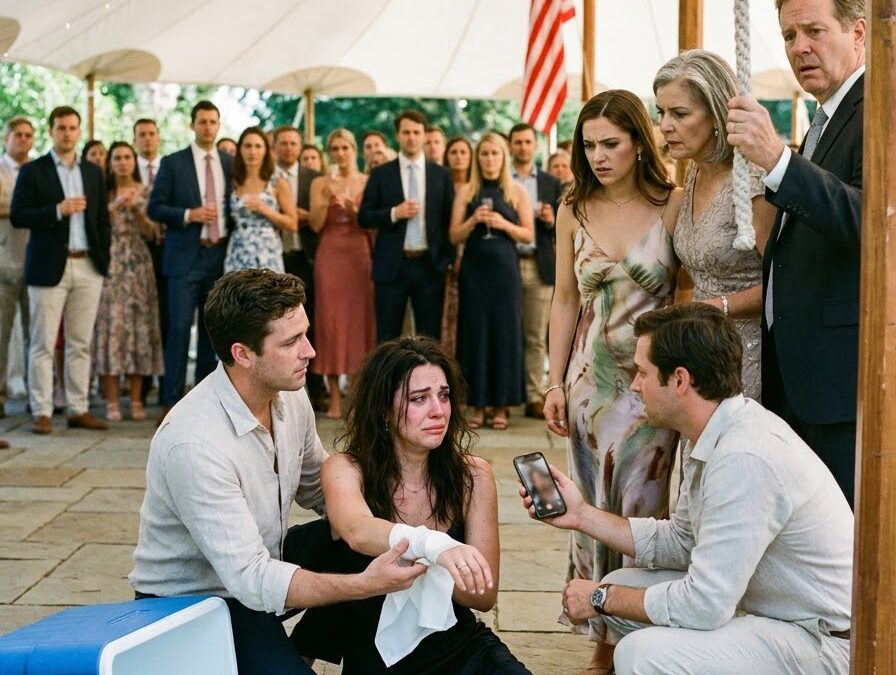
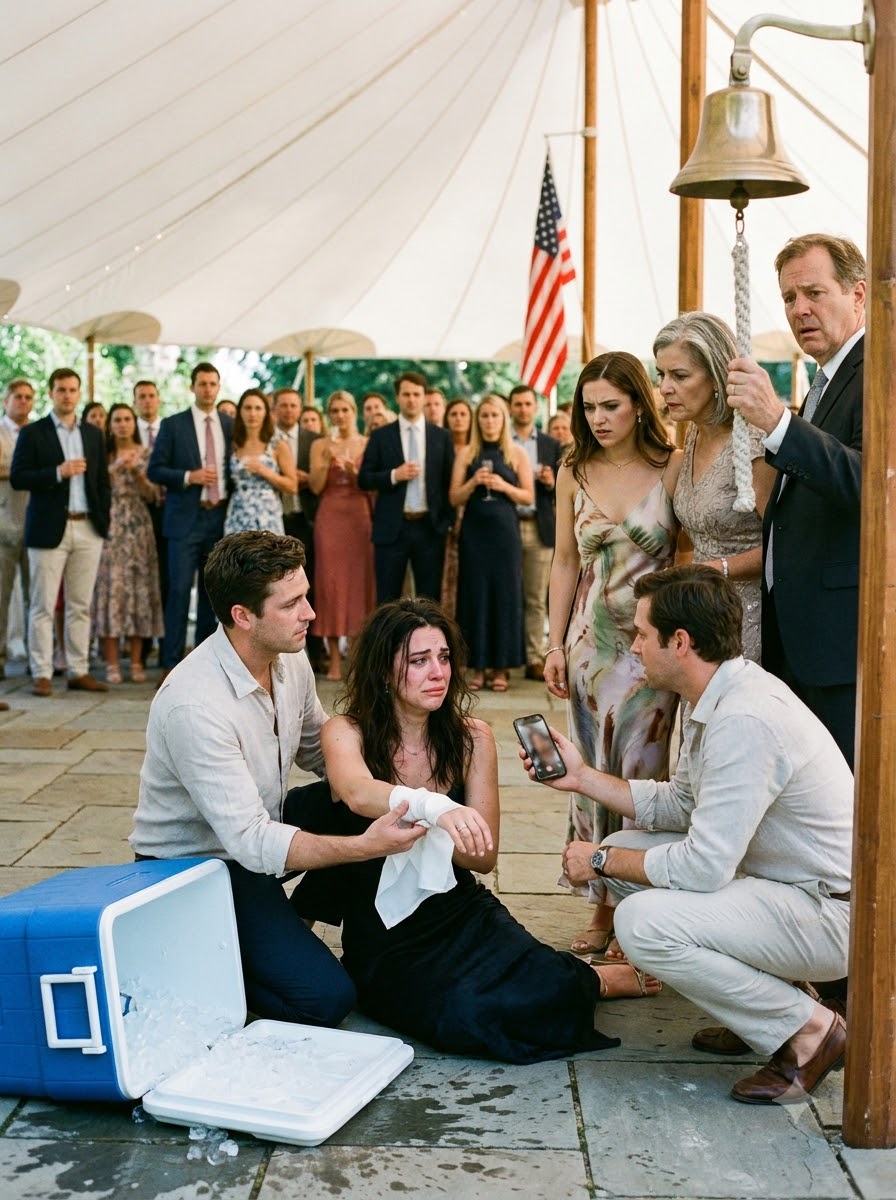
My sister had just knocked me down at her cancer-free party. 3 minutes after she rang the bell. 50 guests.
I went over the cooler. Ice on the patio, wrist raw. Nobody reached for me.
Mom reached for her.
Dad added, “Say sorry and move on.”
He still had the bell rope in his hand. He did not look at my wrist.
My husband looked at me. He knelt. He asked. Do we still give them the easy way out? Quiet, private, kind.
That had been the deal for two weeks.
My whole life, I had said yes.
I said, “No.”
He unlocked his phone.
The whole table went quiet.
They thought they knew what he had been saving. She thought she did.
The first thing on that screen was a photograph every one of them had already shared.
My name is Gina Browning and I’m 37 years old.
If you want to know what was on that phone, hit the like button and stay with me. I’m going to tell you all of it.
That morning, we sat in the car outside my parents house for 4 minutes before Nolan turned off the engine.
It was the last Saturday in April.
The tent was already up in the backyard. I could see the white peak of it over the fence, and I could hear someone testing a speaker.
One, two, one, two.
If she hasn’t told them, Nolan said, “We leave before the cake.”
She promised Nolan.
He didn’t argue. He just looked at me the way he looks at a monitor at 3:00 in the morning. Not worried yet, paying attention.
On the front porch, my father was polishing a bell.
It was a brass ship’s bell, the kind you see on old tugboats, hanging from a wooden stand he had built to himself in the garage.
A short rope hung from the clapper. Two words were engraved across the front.
Tessa strong.
Dad rubbed the brass in small circles with a rag. The same way he used to wax the hood of his truck.
When he saw our car, he lifted the rag and waved it at us like a flag.
He was smiling, a big open uncomplicated smile.
And that was how I knew nobody had told him anything.
Before I tell you what happened under that tent, you should know a little about me. Not much, just enough.
I’m the office manager at a dental practice in Camp Hill, Pennsylvania.
I started at the front desk when I was 19, and I never left. That was 18 years ago.
I know which patients lie about flossing.
I know which ones need a reminder call 2 days ahead, and which ones need it the night before.
I know which insurance companies will deny a claim the first time just to see if you’ll send it again.
I write everything down in a paper planner. My co-workers tease me about it, but when a number doesn’t match, I’m usually the first one to notice.
Nolan and I got married in September of 2018.
He’s a respiratory therapist at a hospital in Harrisburg, and he works nights.
He’s the kind of man who says 10 words when other people say 50, and nine of them are usually right.
We live 10 minutes from my parents in a small brick house with three bedrooms.
One is ours.
One is Nolan’s office, which is mostly a treadmill and a pile of scrubs.
The third one is painted sage green.
We painted it in September of 2024 on a Saturday with the windows open. Nolan got paint in his eyebrow and didn’t notice until dinner.
That room was supposed to be a promise.
Right now, there’s only one thing in it.
A wooden rocking chair that belonged to Nolan’s grandmother.
In my family, I’m the one who’s fine.
That’s not a compliment.
It’s a job description.
That rocking chair is still the only thing in that room.
The money for everything else went to my sister.
We walked around the side of the house instead of going through the front door.
The backyard looked like a wedding.
White tent, round tables, folding chairs with pink bows tied to the backs, a banner stretched between two poles.
Tessa strong, cancer-free.
About 50 people were already there, aunts, neighbors, women from my mother’s church, Tessa’s co-workers from the salon.
Dad came down the porch steps to hug me.
He was wearing a pink baseball cap with the same two words stitched on the front. underneath it.
His head was shaved close the way it had been for almost a year and a half.
Tomorrow I start growing it back, he said, and rubbed his scalp like it was a lucky charm.
My mother found me before I reached the tent.
She fixed my collar without asking.
Don’t make today about you, Gina.
I hadn’t said a word yet.
Then my sister came across the grass with her arms open.
She was wearing a white top with a wide neckline and her hair, which had grown back into a soft, shiny pixie cut, caught the light.
She looked healthy.
She looked beautiful.
She hugged me tight. The way you hug someone when people are watching.
Her mouth was right next to my ear.
Not today, she whispered. Please for dad.
She let go, smiled, and walked away before I could answer.
Not today meant she hadn’t told them.
It also meant she didn’t plan to.
I went into the garage because it was the only place I could breathe.
The big door was rolled up and dad had set the old TV on his workbench so guests could wander in and watch the slideshow.
I had made that slideshow.
Mom had asked me to back in February, 200 photos.
Tessa as a baby.
Tessa at prom.
Tessa in a hospital gown giving a thumbs up.
Behind the TV, Dad’s truck sat with its hood open.
It always does.
He says an engine should be able to breathe.
Mom came in behind me carrying a tray of plastic cups.
Where’s the blanket picture? She asked.
That’s the one everybody shared.
I knew which picture she meant.
Everyone in my family knew.
A hand resting on a blue quilted blanket, an IV line taped to the wrist.
Thousands of people had seen it.
I left it out, Mom.
She stopped.
She set the tray down on the workbench.
She looked at me a second too long, not confused, careful, like someone testing the ice before she steps on it.
To explain that look, I have to go back to the year I turned 12.
In the spring of 2001, I built a model of the Susuana Riverhed for the seventh grade science fair.
I worked on it for 5 weeks.
Plaster over chicken wire, tiny towns made of sugar cubes.
I painted the river blue, lighter where the water got shallow near Harrisburg.
My dad cut the plywood base for me in the garage.
The night before the fair, I came home from a sleepover and found my seven-year-old sister standing in the middle of it.
She had walked straight across the river in her socks.
The plaster had cracked into three pieces.
Sugar cube towns were stuck to her feet.
I didn’t scream.
Even then, I didn’t really scream.
I just stood in the doorway and said her name.
Tessa looked at me then at the door and said, “Mom said I could play in there.”
My mother came around the corner a second later drying her hands on a dish towel.
She looked at the model.
She looked at me and she didn’t deny it.
She had told Tessa she could play in there.
She just hadn’t thought about what was in there.
She’s seven.
Mom said, “You’re 12. Be the bigger person.”
That was the first time I heard those words.
It wasn’t the last.
I glued the river back together at 2:00 in the morning.
You could still see the cracks.
I got an honorable mention.
On the way to school, Dad stopped at a drive-thru and bought me a chocolate shake.
He didn’t say a word about the model or about Tessa.
He just handed me the shake and turned up the radio.
That became his way.
Kindness in the car, silence in the house.
The summer I turned 16, my father bought a truck.
It was a 1989 Ford F-150, two-tone red and silver, and it was a wreck.
Rust in both wheel wells, a cracked windshield.
A family of mice living in the glove box.
He paid a man in Shyman’s town $2,400 for it and towed it home on a Saturday morning while my mother stood on the porch with her arms crossed.
Built the same year as you, kiddo,” he said, slapping the fender.
“Ugly, stubborn, and worth saving.
I decided to take that as a compliment.
We spent the whole summer in the garage.
He taught me how to sand rust down to bare metal, [snorts] how to mix body filler and spread it thin, how to listen to an engine and hear the difference between a problem and a personality.
Tessa was 11.
She came out once, complained about the smell, and never came back.
That truck was the only thing in my family that belonged to just the two of us.
When we finished, Dad folded the handwritten bill of sale in half and put it in the glove box where the mice used to live.
So, we remember what she cost, he said.
And what she’s worth now.
He drove that truck for 20 years.
He still took it out every Sunday.
Years later, I would give up something I could never get back just so he wouldn’t have to sell it.
When I was 18, my college fund went sideways.
That’s how my mother put it.
The money went sideways for a while.
What she meant was that Tessa, who was 13, was having a terrible year at the public middle school.
Some girls had been cruel to her online.
She stopped eating lunch.
She cried every morning.
My parents moved her to a private Christian school and paid for a counselor twice a week.
I don’t say that to make it sound small.
She was really hurting.
But the money came from the account my grandparents had opened for my college and nobody asked me.
I found out when I opened the statement myself.
Balance $0.
You’re smart, Gina, Mom said when I brought the statement into the kitchen.
You’ll land on your feet.
Your sister doesn’t have that.
So, I landed on my feet.
I took classes at the community college at night and answered phones at the dental practice during the day.
I paid for my own textbooks.
I bought my own car.
Later, Tessa enrolled in cosmetology school twice and quit twice.
My parents paid both times.
I never said anything.
I told myself I understood.
She was fragile.
I was not.
I did land on my feet.
That’s the problem with landing on your feet.
Nobody thinks you need a hand.
That same year, when Tessa was 13, she decided she wanted her ears pierced.
Mom took her to the kiosk at the mall.
The girl behind the counter picked up the piercing gun, and before it even touched her ear, Tessa went white and slid off the stool onto the floor.
She never tried again.
She wore clip-on earrings all through high school.
She couldn’t watch someone get a flu shot on television without looking away.
In September of 2018, I married Nolan in a restored barn outside Carlilele.
It was a small wedding, about 90 people.
My father gave a toast.
He had written it on an index card and his hand shook.
And halfway through, when he got to the part about the truck, his voice broke.
That was when Tessa fainted.
She was 24.
She said later it was a panic attack, that the room had been too hot and too loud.
She went down right in the middle of Dad’s toast and she landed in a padded chair near the dance floor.
Everybody rushed over.
Someone called for water.
Someone else called for ice.
My mother held her head.
The first dance was delayed 40 minutes.
I stood in my wedding dress holding my bouquet and watched my family crowd around my sister.
Later that night in the hotel, Nolan took off his tie and sat on the edge of the bed.
She checked where the chair was, he said quietly.
Before she fainted, she looked right at it.
That’s not fair, I said.
She has anxiety.
You don’t know her.
He didn’t push.
He just nodded.
Okay.
It was the first time I defended my sister against the truth.
It wouldn’t be the last.
Nolan and I started trying to have a baby in 2020.
For a long time, we didn’t tell anyone.
You learn quickly that people mean well and say terrible things.
Just relax.
It’ll happen when you stop trying.
My cousin got pregnant on vacation, so we kept it between us and I tracked everything in my planner the way I track everything.
After 3 years, we saw a fertility specialist.
After four, we had a diagnosis.
Low ovarian reserve.
It means your body has fewer eggs left than it should for your age.
I was 35.
The doctor was kind and direct.
I appreciated both.
Every year matters, Gina, she said.
Not every month, but every year.
Our insurance didn’t cover IVF.
Most plans in Pennsylvania don’t.
So, we saved.
Nolan picked up extra night shifts.
I stopped buying anything that wasn’t on a list.
We opened a separate savings account and gave it a nickname so we’d never touch it by accident.
We called it Sage.
By September of 2024, Sage had $18,000 in it, enough for one egg retrieval and the medication.
We booked the retrieval for January.
That was the weekend we painted the third bedroom.
We decided to tell my family at Sunday dinner.
For once, I thought they’d get to be happy for me.
Sunday dinner at my parents house has been the same for 30 years.
Pot roast, mashed potatoes, sweet tea in the pitcher with the chipped lip.
Dad at the head of the table, mom in the chair closest to the kitchen.
On September 29th, 2024, I waited until dad had finished his second plate.
Then I put my fork down and told them.
I told them about the four years, the diagnosis, the money, the date in January.
My father’s eyes filled up before I finished.
He reached across the table, put his big rough hand over mine, and didn’t say anything at all.
Mom got up, came around the table, and hugged me from behind.
She smelled like dish soap and the same perfume she’s worn since I was a kid.
Oh, honey, she said, “Oh, Gina.”
For a moment, it was exactly what I had hoped for.
Across the table, Tessa was folding her paper napkin into halves, then quarters, then eighs, a small, tight square.
“Wow,” she said.
“Must be nice to have something everyone cares about.
It landed on the table like a dropped glass.”
“Mom laughed, the quick, bright laugh she uses to sweep things under a rug.”
“Tessa, come on.
I’m kidding.
I’m happy for you, obviously.”
Tessa smiled at me.
I’m just saying.
Must be nice.
Then she asked dad to pass the rolls and the moment was over and everybody went back to eating.
I didn’t think about it much.
Tessa said things like that.
She’d been saying things like that her whole life.
But I wrote the date in my planner that night.
Sunday, September 29th, told mom and dad.
Later, I would count forward from it one square at a time.
9 days later, on a Tuesday night, Tessa asked everyone to come to my parents house.
She didn’t say why.
She just texted the family group chat.
Can everyone come over tonight, please? It’s important.
When Nolan and I got there, she was sitting on the couch with a box of tissues.
Mom was already crying, though she didn’t know why yet.
Dad was standing in the kitchen doorway with his work boots still on.
Tessa said it slowly like she was reading it off a card.
Hodgekin lymphoma, stage three.
She had found a lump in her neck.
There had been a biopsy.
Chemotherapy would start in December at the Cumberland Valley Cancer Institute in Harrisburg.
Mom made a sound I had never heard a human being make.
Dad sat down on the stairs.
He didn’t choose the stairs.
His legs just stopped holding him.
He sat on the third step with his elbows on his knees and his boots flat on the carpet.
And he stared at the floor.
“My girl,” he said.
“My girl,” who couldn’t even get her ears pierced.
Tessa held up her hand.
Please don’t ask me about the medical stuff, okay?
You guys, I can’t.
If I talk about it, it’s real.
So, we didn’t ask.
That’s what you do.
You don’t make the sick person explain.
I sat down beside her and held her hand.
She squeezed back.
Her fingers were cold.
On the drive home, neither Nolan nor I said anything.
Nobody said the letters IVF in that house again for a year and a half.
By the middle of November, everything in my family was organized around Tessa.
She moved back into her old bedroom so mom could take care of her.
A friend from the salon set up an online fundraiser called Tessa Strong.
My mother’s church put her on the prayer list.
And my father, who had never touched his retirement account in 40 years of work, pulled $30,000 out of his 401k.
Then he started talking about selling the truck.
I found him in the garage one evening with his hand flat on the hood just resting there the way you’d rest your hand on a dog.
Fella at the parts store says I could get 15, maybe more.
He said old ones are worth something now.
Dad.
She needs it more than I need a truck, kiddo.
I went home and sat at the kitchen table with Nolan.
I opened the Sage account on my phone and looked at the number for a long time.
I knew what the doctor had said.
Every year matters.
I knew that if I gave this money away, it would take us at least two more years to save it again.
I would be 37, maybe 38.
I also knew what that truck meant to my father.
Nolan didn’t tell me what to do.
He never does.
It’s your call, he said.
It’s always been your call.
On November 12th, 2024, I transferred $18,000 to my sister.
In the memo line, I typed for Tessa, love, G, and N.
The next morning, I called the fertility clinic and canceled my January retrieval.
Then I drove to my parents house and told Dad not to sell the truck.
“I’ve got it,” I said.
He hugged me so hard my feet came off the ground.
Two weeks later, Tessa posted a long thank you on Facebook to everyone who had helped her.
She thanked her co-workers.
She thanked the church.
She thanked mom and dad for every single dollar.
My name wasn’t in it.
Dad never saw it.
He doesn’t do Facebook.
In the first week of December, right before her first treatment, the salon filmed Tessa’s co-workers shaving her head.
She said she wanted to do it before her hair started falling out on its own.
They put music behind it.
Everyone cried.
The video was shared thousands of times and the fundraiser jumped by $4,000 in one weekend.
That same night, my father spread the Sunday newspaper across the kitchen table and shaved his own head with the dog clippers.
Mom tried to stop him.
He waved her off.
I watched his gray hair fall onto the sports section in soft little piles.
When he was done, he ran his hand over his scalp and looked at himself in the dark kitchen window.
Not growing it back, he said, till she rings that bell.
I have to stop here for a second.
If you’ve ever been the reliable one in your family, the one they call last to celebrate and first to pay, tell me in the comments.
Just write the reliable one.
I want to know I’m not the only one.
Because that night, watching my father brush gray hair off his shoulders, I felt something I didn’t have a name for.
It wasn’t jealousy.
I would have given her my own hair if it could have helped.
It was the feeling of standing just outside a warm room.
Not growing it back till she rings that bell.
He said it like a promise.
15 months later, he ordered the bell himself.
Huh.
Tessa’s first treatment was on Friday, December 6th.
After that, she said it would be every 2 weeks.
Mom drove her most of the time.
Sometimes her friend Kayla did, and 11 times between December and the end of August, I did.
I rearranged my schedule at the office to do it.
I’d pick her up at 7:30, drive her to the institute in Harrisburg, and pull into the parking garage on the third level.
Every time she said the same thing.
“Stay close in case I get sick. I don’t want you in there. I don’t want you to see me like that.”
So, I stayed in the car.
3 hours 4.
I answered work emails.
I read.
I watched people walk in and out of the elevator with their scarves and their tired families.
Then Tessa would come back pale and quiet and lean her head against the window.
On the drives home, she asked about me.
That was new.
For 30 years, my sister had never asked me anything about my life that she couldn’t use as a doorway back to hers.
But now she wanted to know about IVF.
Every detail.
Tell me about the shots, she said once.
What time do you have to do them?
What does it feel like?
It helps me not think about mine.
So I told her.
The injections in the stomach at 9:00 every night.
The nurse who calls with your hormone numbers.
The empty room we had painted sage green.
I told her things I had never told anyone except Nolan.
Once she mentioned her doctor.
Dr. Hollander says I’m doing great.
I made a small tea in my planner for every drive.
By the end of August there were 11 of them.
She never once let me walk her in.
not in 11 drives.
That Christmas, I gave Tessa a green suede jacket with brass buttons.
She had stopped in front of it in a store window in October before everything and said it was the most beautiful thing she’d ever seen.
It cost more than I usually spent on anyone.
I didn’t care.
She put it on right there in the living room and spun around.
Then she came over to hug me and at the last second she flinched back and put her hand flat over her chest just below her collarbone.
Careful, she said.
My port.
Sorry. Sorry.
Later, while dad carved the ham, Nolan asked her a question.
He asked it gently the way he talks to patients.
Tessa had written in one of her posts that she was on a chemo regimen called ABVD.
Nolan knew that one of those drugs can scar the lungs, so patients on it have regular breathing tests, pulmonary function tests, PFTs.
“How are your PFTs looking?” he asked.
Tessa blinked at him.
“My what?”
There was a pause.
“Oh,” she said. “Yeah, those. They’re fine.”
In the car on the way home, Nolan was quiet for a long time.
Then he said, “Everybody on that drug knows what a PFT is. I run them. They hate them.”
Stop.
I said, “She’s exhausted. She’s on a dozen medications. She’s not going to remember the name of every test.”
Okay.
He didn’t say anything else.
I lay awake that night wondering why I had told him to stop so fast.
In the middle of January, Tessa had her fourth treatment.
Round four, she called it.
I offered to drive her.
She texted back, “Mom’s got this one. Thank you though. Love you.”
At Sunday dinner a few days later, Mom mentioned that Kayla had driven Tessa that Friday and that Tessa had stayed at Kayla’s apartment for the weekend because it was closer to the hospital and she couldn’t stand up.
I didn’t say anything.
I figured I had misread the text.
That Sunday night, Tessa posted a photo.
A hand resting on a blue quilted blanket, an IV line taped to the inside of the wrist.
The caption said, “Round four done. Can’t keep anything down.
Thank you for every prayer.”
That photo went everywhere.
Aunt Patty shared it.
The church shared it.
[snorts]
Women I had never met left comments full of praying hands and Bible verses.
My mother printed it out and put it on the refrigerator.
I looked at that photo for a long time, too.
Everyone did.
But I was looking at the blanket and at the hand and at how tired it looked.
I wasn’t looking at the wrist.
Mom thought Kayla drove her.
Tessa told me mom did.
Nobody thought to compare notes.
In February, my mother quit her part-time job at the pharmacy counter of the grocery store.
She’d worked there 11 years.
She said Tessa needed her home.
In April, Tessa told us the scan showed a spot.
They were adding more treatment.
She cried when she said it, and dad went out to the garage and didn’t come back in for an hour.
The fundraiser passed $24,000 that month.
In July, I noticed my mother paying for groceries with the credit card she used to keep for emergencies.
I offered to help with the mortgage.
She shut it down in one sentence.
It’s handled, Gina.
Then sometime in August, my mother changed.
I couldn’t have told you the exact day.
It was more like the weather turning.
For 10 months, she had posted in the church prayer group every Sunday night.
Tessa’s counts are good.
Tessa is tired but strong.
Tessa says, “Thank you for the casserles.”
And then nothing.
The prayer group went quiet.
She stopped going with Tessa to treatments.
She changed the subject whenever anyone asked how Tessa was doing.
In September, she called me at work.
Let her drive herself now.
Mom said she needs to feel normal.
She’s on chemo, mom.
She shouldn’t drive on treatment days.
Gina, let her drive herself.
In almost a year, my mother had never once told me to do less for my sister.
By Christmas of 2025, something had changed in the rest of my family, too.
Aunt Patty is my father’s older sister.
She’s 68.
She runs the women’s Bible study at her church, and she has always liked me.
When I was a teenager, she used to slip me $20 bills and tell me not to tell my mother.
That Christmas, she walked into my parents’ living room, hugged mom, hugged dad, hugged Tessa for a long time, hugged Nolan, and walked right past me.
She had a pink button pinned to her sweater.
Tessa strong.
Later, I was refilling the ice bucket in the kitchen when she came in behind me for a diet coke.
“Some people show up for family,” she said to no one in particular.
“Some people just show up for dinner.”
Then she walked out.
her daughter, my cousin Megan, gave me a long look from across the room.
Megan is 34.
We grew up at the same Thanksgiving tables.
She looked like she wanted to say something and couldn’t.
I stood there holding the ice bucket and tried to figure out what I had done.
I had given my sister $18,000.
I had driven her to the institute 11 times.
I had spent something like 40 hours in that parking garage.
Whatever Aunt Patty had heard about me, I wasn’t the one who told it.
On February 23rd, 2026, my mother called and asked me to make a slideshow for the party.
She said, “What party?”
“For when she’s done. I want everything ready. You’re good with that kind of thing.”
I was at my desk at work and I looked at the calendar beside my monitor.
Tessa’s final scan was scheduled for Friday, March 20th.
She had told us at Christmas that scan would tell us whether she was finished or whether there would be more.
Done.
I said, “Mom, the scan isn’t until March.”
I just want to be ready, Gina.
Is that a crime?
That same week, Dad showed me something on his phone in the driveway.
An order confirmation from a company in Maine that makes brass ships bells.
He had paid extra for the engraving.
“Cancer centers have a bell,” he told me, beaming.
When you finish, you ring it and everybody claps.
I want her to have her own, one she can keep.
He was so proud.
He showed me a sketch of the stand he was going to build.
I told him it was beautiful because it was.
But on the drive home, I kept hearing my mother’s voice on the phone, how sure she had sounded.
Nobody plans a victory party for a test that hasn’t happened yet, unless they already know the answer.
On Sunday night, March 8th, I sat down at the kitchen table with my laptop to start the slideshow.
Mom had sent me a folder of about 300 photos.
I went through them one by one, checking each at full size so nothing would look blurry on dad’s TV.
When I got to the blanket picture, I zoomed in the way I had on every other one.
That was when I saw the sparrow.
On the inside of the left wrist, just above the IV line, there was a tiny tattoo.
A little brown bird, no bigger than a thumbnail.
My sister does not have a tattoo.
My sister could not get her ears pierced.
My sister can’t watch a flu shot on television.
I sat there with my hand over my mouth until the screen went dark.
Nolan got home from his night shift at 7:30 the next morning.
I hadn’t slept.
I turned the laptop toward him before he even took off his coat.
He looked at the wrist for a long time.
Then he sat down, still in his scrubs, and ran a reverse image search.
It took about 40 seconds.
Gina, he said, this was posted in 2021 from Oregon.
The photo came from a blog written by a woman named Hannah Merritt.
She’d had Hodgekin lymphoma and had been treated with ABVD.
She had written about every stage of it.
The port, the nausea, the breathing tests, the hair, the last scan.
Nolan put Tessa’s posts beside Hannah’s.
Some of the sentences were almost identical.
We decided that morning to keep everything on Nolan’s phone, not mine.
My phone syncs to a shared photo album called Kesler Family.
My mother looks at it every day.
The woman in that photo finished chemo 3 years before my sister ever said the word lymphoma.
I wanted to be wrong, so I waited for the scan.
I told myself there could be an explanation.
Maybe she’d used someone else’s photo because she was embarrassed.
Maybe she’d copied a blog because she didn’t know how to describe what was happening to her.
I invented a dozen reasons, and I made myself believe each one for about an hour.
On Friday, March 20th, at 11:00 in the morning, Tessa texted the family group chat.
“Clean scan. I’m done.”
My phone buzzed 40 times in 10 minutes.
Dad sent a voice memo that was just him crying.
By dinner time, mom had picked a date for the party.
Saturday, April 25th.
I read the messages in my car behind the dental office, and I didn’t answer any of them.
That weekend, Nolan made a folder on his phone.
He named it round four because that was where it had started.
And on Monday, March 23rd, he found the rest.
Tessa’s friend Kayla keeps her Instagram public.
In January of 2025, she had posted a set of photos from a bachelorette party in Nashville.
Neon signs, cowboy boots, a rooftop bar on Broadway.
The location was tagged.
The date was the weekend of round four.
In the third photo in the background, holding a drink and laughing was my sister.
She had a pink cowboy hat pushed back on her shaved head.
She did not look like someone who couldn’t stand up.
And she was wearing a green suede jacket with brass buttons.
“That’s my jacket,” I said.
My voice sounded far away.
I bought that jacket.
Nolan turned the phone face down on the table.
Then he asked the question I had been avoiding for 17 months.
What do you want to do?
I didn’t know.
So for 2 weeks, I did nothing.
I went to work.
I answered the group chat with hearts and exclamation points.
I kept building these slideshow and I left the blanket picture out and I told myself I’d figure it out.
On Easter Sunday, April 5th, my cousin Megan caught me in the church parking lot after the service.
Her kids were already buckled into the back of her minivan with their Easter baskets on their laps.
She stood by my car with her keys in her hand.
I need to tell you something, she said.
You’re not going to like it.
She told me what Tessa had been saying about me for more than a year.
To Aunt Patty, to the church ladies, to anyone who would listen.
That I had never given a dime.
That I was too wrapped up in my own problems to help.
That I was jealous because Tessa was getting attention and I couldn’t have a baby.
And she told my mom, Megan said, that you said she gave herself cancer by partying.
I leaned back against my car.
I never believed it, Megan said.
But my mom does.
Then she hesitated.
There’s something else.
Mom’s been printing cards for the party.
Some surprise Tessa wants to do after the bell.
I saw one on her printer.
Something about fertility.
Fertility.
The only thing in my life she hadn’t touched yet.
On Saturday, April 11th, I asked Tessa to come to my house.
I didn’t tell her why.
I just said I wanted to talk.
The two of us.
She came over after her shift at the salon and walked through my front door the way she had a hundred times.
I took her upstairs to the sage room.
I’m still not sure why I chose that room.
Maybe I wanted her to see it.
She sat down in the rocking chair.
I stood by the window and handed her my phone.
Nolan had sent me one picture for this conversation.
Just one.
The blanket photo zoomed in on the sparrow.
That was his idea.
Show her enough to stop, he had said.
Not enough to fight.
Tessa looked at the picture for a long time.
Then she started to cry.
I was going to stop, she said.
I just didn’t know how.
I told her what I wanted.
She would tell mom and dad herself before the party.
She would close the fundraiser.
She wouldn’t take another dollar from anyone.
And whatever money she had left, she would start paying back to dad first.
And if I do that, then nobody else ever has to know.
Not the church, not Aunt Patty.
Nobody.
I took my phone back.
Quiet, private, kind.
That’s what I’m offering.
Nolan was standing in the doorway.
I hadn’t heard him come up the stairs.
This is the easy way out, Tessa.
He said, “It’s the only one you’ll get.”
She nodded.
She wiped her face.
She hugged me at the front door.
Two weeks went by.
She didn’t call.
She didn’t text.
On Friday night, April 24th, the night before the party, my phone finally buzzed.
Tomorrow’s going to be perfect.
Please don’t ruin Dad’s day.
Not I told them.
Not I’m scared.
Just don’t ruin it.
So, that’s where things stood that afternoon in my father’s garage when he pulled me aside.
He had a beer in one hand and a rag in the other.
The truck’s hood was up like always.
He leaned against the fender and grinned.
I’m going to tell you something, he said.
Don’t tell your mother yet.
Okay.
Monday morning, I’m pulling 12,000 more out of the retirement for Tessa so she can pay off her cards, get her own place, start fresh.
He patted the truck.
She deserves a clean start.
And I kept this old girl because of you, so I figure I can afford it.
The garage floor seemed to tilt.
Monday.
Two days.
$12,000 more dollars out of the account that was supposed to carry him and my mother through the rest of their lives.
A clean start from a disease that had never existed.
Dad, I said carefully.
Wait on the money.
He laughed.
A good laugh, a relieved laugh.
Wait for what, kiddo?
She’s alive.
He turned back to the engine before I could answer.
I watched him wipe down a hose that was already clean.
He was humming.
He hadn’t hummed in a year and a half.
I thought about telling him right there.
I thought about what it would do to him.
She still has today, I told myself.
She still has a chance to keep her promise.
Donna Fischer was sitting at the table farthest from the tent right against the back fence next to the recycling bins.
Donna has been my mother’s best friend for 30 years.
She has been an oncology nurse in Lancaster for 25.
She held me when I was a baby.
She came to my wedding.
And at a party for a woman who had just beaten cancer, she had been seated next to the empty soda cans.
I took a plate over and sat down with her.
“Well, look at you,” she said.
“Hi, honey.”
We talked about her grandkids for a minute.
Then she lowered her voice.
Your mom asked me not to talk shop today, which is fine.
It’s a party.
She pushed some potato salad around her plate.
But you know, I offered to sit with Tessa during her infusions, 20 times, maybe.
I’d have driven up any day.
She never once said yes.
She didn’t want anyone to see her like that.
M.
Donna nodded slowly.
I asked her once who her doctor was.
You know what she said?
Oh, you wouldn’t know him.
She shook her head.
Honey, I’ve been doing this 25 years.
I know everybody.
I didn’t answer.
I couldn’t.
Across the yard, my mother stood by the cake table with a knife in her hand, watching us, not smiling, counting.
A few minutes later, mom went into the house to get the cake.
As soon as the back door closed behind her, Aunt Patty came out from the tent carrying a shoe box.
She moved from table to table and set something down at every place.
A small pink card tied with a ribbon face down.
When she reached our table, she laid one in front of Donna and one in front of me.
I turned mine over.
On the front was a QR code.
Below it in curly gold letters.
Tessa’s next chapter.
Patty snatched it out of my hand.
Don’t you dare, she said.
That’s for after the bell.
She put it back face down and moved on to the next table.
I took out my phone and texted my sister two words.
You promised.
Across the tent, Tessa’s phone lit up in her hand.
She read it.
She looked up and found me across 50 people.
Then she turned her phone face down on the table like a card she wasn’t ready to play.
I want to ask you something before I tell you the rest.
If you had been standing where I was, would you have kept it private the way you promised?
Or would you have said it out loud right then in front of everyone?
Tell me in the comments what you would have done because for a few more minutes I still had a choice.
At 4:00, Dad tapped a spoon against his beer bottle, and everybody turned toward the patio.
He had carried the bell down from the porch and set it stand on the patio beside the big blue cooler where everyone could see it.
He stood next to it with the rope in his hand.
Tessa stood beside him in her white top.
Her hair shone in the sun.
Dad tried to give a speech.
He didn’t get very far.
18 months ago, he said, “My daughter told us.”
He stopped.
He shook his head and laughed at himself and wiped his eyes with the back of his wrist.
[snorts]
Everybody laughed with him.
It was one of the most loving sounds I have ever heard.
“Go ahead, baby,” he said.
He put the rope in her hand and wrapped his own hand around hers.
They rang it together three times.
The sound was bright and clean and louder than I expected.
It bounced off the neighbors houses.
50 people cheered.
Somebody whistled through their fingers.
My father cried openly, his pink cap pushed back on his head.
And I clapped, too.
I clapped because some part of me still believed she would ring that bell and then tell them that she would let it be over.
Tessa let go of the rope.
Dad kept holding it.
She picked up the microphone from the speaker stand.
Before we eat, she said, “I have one more thing to share, and it’s hard.”
She looked right at me when she said it.
She talked for about 90 seconds.
That’s all it took.
She told 50 people that chemotherapy had saved her life and that it had also taken something from her.
The doctors had warned her the treatment could damage her fertility.
“Now,” she said, her voice shaking.
She might never be able to have a baby without help.
She told them about the shots she would have to take at 9:00 every night.
About the nurse who would call her with her hormone numbers.
About how expensive it all was and how insurance didn’t cover it.
My words.
Every one of them.
The words I had given her in the car on the way to treatments she never had.
Then she said it.
There’s a room in my heart painted sage green, she said.
And I’m scared to walk into it.
People were crying.
Aunt Patty had a hand over her heart.
All over the tent, guests were turning over the pink cards and holding up their phones to scan the codes.
I could hear the little chimes.
Thank you for your donation.
Thank you for your donation.
The goal is 25,000.
Tessa said, “Anything helps. You guys already gave me my life. Now I’m just asking for a chance at a family.”
I looked at my mother.
She had come back out with the cake and she was standing very still behind the cake table.
Her face had gone completely blank.
She hadn’t known about this part.
I don’t remember deciding to walk.
I remember that I was standing and then I was crossing the patio and then I was beside my sister between the bell and the big blue cooler.
People probably thought I was coming to hug her.
I leaned in close so only she could hear.
Not this one, Tessa.
You don’t get to take this one, too.
Tell them or I will.
She kept smiling for the guests.
She lowered the microphone to her side.
Walk away, she said through her teeth.
You have one minute.
Walk away.
I could feel the cooler against the backs of my legs.
I could feel 50 people watching and not understanding what they were watching.
Her smile stayed on for the guests.
Her hands didn’t.
She put both palms flat on my chest and shoved me as hard as she could.
I went backward over the cooler.
The lid flew off.
Ice spilled across the patio stones in a hard, glittering rush.
I landed on my back with my right arm under me and my wrist scraped along the edge of a paver.
My head missed the stone by an inch.
For a second, I couldn’t breathe.
One of Tessa’s co-workers had been filming the bell and never stopped.
She [snorts] sent me that video a week later.
The shove happened 3 minutes and 4 seconds after the last ring.
Tessa was already backing away.
One hand clutched to her chest.
She grabbed me, she cried.
Don’t touch my chest.
My port’s still in.
She knows that.
She knows.
Ice water soaked through my shirt.
My wrist was bleeding in thin red lines.
And my mother ran right past me.
She stepped over the ice.
She stepped over my legs.
She went straight to Tessa and wrapped both arms around her.
In my family, whoever falls first gets caught.
I fell first.
Nobody came.
She’s upset, my mother said, looking down at me over Tessa’s shoulder.
Be the bigger person.
She didn’t say it angrily.
She said it the way you’d tell a child to put on her coat.
Like it was obvious.
Like it was the only reasonable thing.
I looked at my father.
He was still standing by the bellstand with the rope wrapped around his fingers.
He wasn’t looking at me.
He [snorts] was looking at the 50 guests, at the pink cards on every table, at his perfect day coming apart.
Say sorry and move on, he said.
Then quieter, almost pleading.
“Please, not today.”
“From somewhere under the tent,” Aunt Patty said loud enough to carry.
at her own cancer party.
And then everyone waited.
Lying on the wet stone, I understood something.
My mother wasn’t only defending Tessa.
She needed this yard to be quiet.
[snorts]
She needed it more than she had ever needed anything.
I didn’t know why yet.
The apology was right there where it had always been.
The easiest thing in the world.
I’d been saying it since I was 12.
Sorry you walked on my river.
Sorry you fainted at my wedding.
Sorry, I’m fine.
All I had to do was say it.
Nolan reached me first.
He knelt on the wet patio in his good khakis.
He picked up a bar towel from the ground and wrapped it around my wrist firm and fast like he had done it a thousand times.
He had then he looked at me, not at them, at me.
Do we still give them the easy way out?
two weeks.
Quiet, private, kind.
And [snorts] she had stood at a microphone and sold my sage green room to 50 people.
“No,” I said.
He nodded once.
He unlocked his phone, opened the folder called round four, and put it in my good hand.
The whole table went quiet.
Then the next table.
Then the whole tent.
“What?” Aunt Patty said.
He filmed it.
We all saw her grab Tessa.
That’s what they thought he’d been saving.
A video of a shove.
Tessa laughed.
A short high laugh.
She thought she knew exactly what was in that folder.
H.
I got up slowly.
Nolan kept a hand under my elbow until I was steady.
Then he let go.
I didn’t raise my voice.
I didn’t need to.
Nobody was talking.
I turned the phone toward the nearest table.
This is the picture Tessa posted in January of last year, I said.
“Round four.”
Most of you shared it.
A few people nodded.
Aunt Patty’s lips went thin.
Tessa, would you hold up your left wrist?
She didn’t move.
Just your left wrist.
Everyone looked at her.
Slowly, she lifted her hand.
Her wrist was smooth and pale.
Nothing on it.
I zoomed in on the photo on the sparrow.
The woman in this picture has a tattoo, I said.
My sister has never had a tattoo.
She couldn’t even get her ears pierced.
For a second, nobody moved.
Then Tessa laughed again.
She had her answer ready.
She’d had two weeks to get it ready.
I used a stock photo, she said, rolling her eyes.
Okay.
I didn’t want my real arm with a needle in it all over the internet.
Is that a crime now?
It’s not a stock photo, I said.
It belongs to a woman named Hannah Merritt in Oregon.
She posted it in 2021.
So I borrowed a picture.
Tessa turned to the tent and spread her hands.
You guys, I borrowed a picture.
A few people nodded.
Aunt Patty nodded hardest.
Nolan leaned over and swiped the screen once.
I held the phone up again.
This is the same weekend, I said.
Round four.
It was Kayla’s photo from the rooftop bar in Nashville.
The neon sign, the drinks, and in the background, laughing with a pink cowboy hat pushed back on her shaved head.
My sister wearing a green suede jacket with brass buttons.
The location is tagged Nashville, Tennessee.
And that’s the jacket I gave her for Christmas.
This time, Tessa didn’t have an answer ready.
I watched her look for one.
I rescheduled, she said.
Okay.
I reschedled that treatment.
You don’t know my schedule.
You don’t know anything about my schedule.
Then someone else spoke.
My father.
He had stepped down off the edge of the patio.
He was still holding the bell rope, but his arm had dropped to his side, and the end of the rope trailed on the stone.
“You said Kayla’s apartment,” he said slowly.
“Your [snorts] mother told me you were at Kayla’s apartment.
You said you couldn’t stand up.”
Tessa turned to him.
Daddy.
You said you couldn’t stand up.
It was the first time all day that Dad’s voice sounded like his own.
Tessa’s face changed.
I had seen it happen before.
When I was 12.
When I was 18.
When things stop going her way, something behind her eyes flips over like a card and a different person looks out.
She started to cry.
Real tears, fast and hot.
You want to know what this is?
She pointed at me, but she was talking to the whole tent now.
This is jealousy.
She’s been jealous of me my whole life.
And now I finally have something.
I finally get a chance.
And she can’t stand it.
Her voice cracked.
People leaned in.
She can’t have a baby, Tessa said.
So, she’s trying to take mine away.
It hit somewhere under my ribs.
I didn’t let it show.
A few people looked at me differently then, not with anger, with pity.
That was worse.
A woman from my mother’s church touched her husband’s arm like she was sorry for me.
At the next table, a man still had the donation page open on his phone, his thumb hovering over the button.
Gina.
My mother’s voice cut through the tent.
That’s enough.
She was still holding Tessa.
She said it the way she’d said it my whole life.
I looked at the phone in my hand.
I had more.
I didn’t know if more would matter.
From the far table by the fence, a chair scraped back.
Donna walked across the grass with her paper plate still in her hand.
She wasn’t fast.
She wasn’t dramatic.
She walked the way a nurse walks down a hallway at the end of a long shift.
“Call Dr. Hollander,” Tessa was saying.
“Call him. He has all my records. He’ll tell you.”
Donna stopped at the edge of the patio.
Mark Hollander, she said.
Tessa turned and I watched her realize who was speaking.
I worked with Mark Hollander for 10 years, Donna said.
In Lancaster before he went up to the institute.
Her voice was gentle, almost kind.
He retired in 2023, honey.
He moved to Hilton Head.
I was at his retirement party.
Tessa opened her mouth.
Nothing came out.
Donna looked at Tessa’s white top, at the wide neckline, at the smooth skin below her collarbone.
“And you just told everybody, “Your port’s still in.”
She said, “A port sits right here.”
She touched the spot on her own chest below the right collar bone.
It’s about the size of a quarter.
You can see the bump through a t-shirt.
With that neckline, I could see it from across the yard.
There’s no bump.
There’s no scar.
Nobody said a word.
Honey, Donna said, that’s not how any of this works.
She set her paper plate down on the nearest table very carefully, like it was something that could break.
Then she turned to my mother.
25 years, Linda, she said quietly.
I would know.
Donna didn’t look at Tessa after that.
She looked at my mother.
But Aunt Patty wasn’t finished.
People like Patty never are the first time.
Even if, she said.
Even if she got confused or embarrassed or whatever this is, it doesn’t make it right.
What you’re doing, humiliating her like this when you never gave her one dime.
I walked to her table.
I found the screenshot in Nolan’s folder and handed her the phone.
It was my bank transfer.
November 12th, 2024.
$18,000 to Tessa Kesler and the memo line for Tessa.
Love G and N.
Patty read it.
Then she read it again.
I watched her lips move.
She told me, Patty said slowly, that your parents gave her that money.
She told me you never gave her anything.
I know what she told you, I said.
Patty looked across the tent at Tessa.
Then she looked down at her own sweater.
With two fingers, she unpinned the pink button and set it face down on the table beside the pink card.
Behind me, I heard a folding chair open.
It was Megan.
She had pulled an empty chair from the next table and set it down behind my knees.
“Sit, Gina,” she said.
I sat.
My legs had started shaking and I hadn’t noticed.
This time, someone caught me.
It just wasn’t anyone who shared my last name.
The tent didn’t erupt.
That’s not how it happened.
Nobody shouted.
Nobody pointed.
It was smaller than that.
The man at the next table put his phone face down on the tablecloth.
Then the woman beside him did the same.
One by one, all around the tent, the phones went face down.
The little chimes stopped.
Mrs. Whitfield, who has lived next door to my parents for 20 years, leaned toward me and asked in a low, polite voice, “Honey, do you know how to cancel a donation on that site?”
I told her I thought she could report it.
At the back of the tent, the owner of Tessa’s salon picked up her purse, said something quietly to the woman beside her, and walked out the side gate without saying goodbye.
People had stopped looking at Tessa.
They looked at the grass, at their plates, at anything else.
Tessa saw it.
All of it.
She turned to my mother like a little girl reaching for a hand.
And my mother did what she has always done.
She stepped in front of her.
Put that away, Gina.
She said, we’ll talk about this privately as a family.
For 30 years, that word had worked.
Privately.
It meant this goes away now.
It meant you swallow it.
But Tessa pulled away from her.
Privately.
Her voice was high and ragged like last August.
My mother went still.
Tessa, she said, stop.
But Tessa was cornered.
And my sister has always done the same thing when she’s cornered.
When she was seven, standing in the ruins of my river, she looked at the door and said, “Mom said I could.”
She did it again now.
No, you don’t get to act like this is just me.
She pulled her phone out of her back pocket, her hands shaking.
Mom knew.
She’s known since August.
It came out fast in pieces.
Last August, Mom had decided to surprise her.
She packed a lunch, a turkey sandwich, and the lemon cookies Tessa liked, and drove to the institute on a treatment day.
The front desk told her they couldn’t confirm whether anyone was a patient there.
So, mom stood in the lobby and called Tessa’s phone.
And through the glass wall of the lobby, across the street, she watched Tessa answer it in a coffee shop.
She saw me, Tessa said.
And she didn’t say anything to anybody.
She texted me.
You want to see?
She found the message and read it out loud.
Then she held the phone up to my father’s face.
We will fix this.
Say nothing to anyone.
Let it end quietly.
My father didn’t take the phone.
He just read it where it was.
Tessa, give me that.
Mom said, “Tessa stepped back and kept scrolling.”
And then February, she said.
“You want February, Dad? Here’s February.”
She read my mother’s own words, typed a month before any scan.
Tell them the scan was clean in March.
We’ll have a party.
Ring the bell and it’s over.
The slideshow in February.
The bell from Maine.
A party date picked before the test was even taken.
My mother’s careful look in the garage that morning when she asked me about the blanket picture.
She had been trying to find out how much I knew.
Every piece suddenly had a place to go.
Donna spoke quietly from the edge of the patio.
You called me Linda last August.
You asked me just out of curiosity whether a cancer center would tell a mother if her daughter was a patient there.
She shook her head slowly.
I told you no, it’s private.
And you said that’s what I thought and you changed the subject.
My mother looked at Donna like she’d been slapped.
Then Tessa said the thing that told me exactly who my sister was.
You said it would be over, she said to mom.
It was never going to be over for me.
Everybody was finally—
She stopped.
That was why the pink cards had been printed at Aunt Patty’s house and not at my mother’s.
My mother had wanted to end it.
Tessa hadn’t.
Ring the bell and it’s over.
My father looked down at the rope in his hand like he had never seen it before.
Linda, he said.
Why?
It came out horse.
It wasn’t an accusation.
It was a real question from a man who needed an answer.
My mother didn’t answer.
Tessa did.
Because I paid your mortgage, she shouted.
Last July, $6,800 when you guys were three months behind.
Dad turned and looked at my mother, and I watched him understand that he hadn’t known.
My mother has handled every bill in that house for 40 years.
When she quit her job to take care of Tessa, the payment started slipping, and she never told him.
Last July, 3 months behind, she had taken $6,800 from Tessa.
Money that came from the fundraiser.
A month later, she saw Tessa in that coffee shop.
By then, telling the truth meant telling all of it.
That she had paid the mortgage on their house with money strangers had given to save her daughter’s life.
“Linda,” Dad said again.
My mother lifted her chin.
Her eyes were wet, but her voice was steady.
She sounded almost reasonable.
That was the worst part.
Gina always lands on her feet, she said.
Tessa would have broken.
I did what I had to do to keep this family together.
She said it like it was a kindness.
Like it was something she had done for me.
For a long moment, my father didn’t move.
Then he opened his hand and let go of the rope.
He reached up and took off his pink cap.
He looked at the words stitched on the front.
He turned it over once in his hands.
Then he set it down on the bellstand right next to the bell.
His scalp was pale in the late afternoon light.
He didn’t look at Tessa.
He didn’t look at my mother.
He walked across the patio over the melting ice and stopped in front of my chair.
He crouched down so we were eye to eye the way he used to when I was little and had skinned my knee in the driveway.
He looked at the towel around my wrist.
Blood had come through it in thin pink lines.
“Are you hurt?” he asked.
It was the first time anyone in my family had asked me that all day.
“My wrist,” I said.
He nodded.
“Okay,” he said.
“That was all just okay.”
But it meant I see it now.
I’m looking.
Then he stood and went from table to table, all the way around the tent, and picked up the pink cards one by one.
Every single one.
He stacked them in his big mechanic’s hand.
Nobody stopped him.
I stood up.
My legs held.
Tessa was standing by the bellstand, her mascara running, her phone pressed to her chest.
She looked at me like she was waiting for me to say something cruel, something she could use later.
I didn’t give her anything.
You don’t owe me an apology, I said.
You owe 50 people the truth, and you owe dad his retirement.
Then I turned to my mother.
She was still standing where she had been, one hand on the back of a chair.
For 30 years, she had always known exactly what to say to me.
I watched her search for it now.
Gina, honey, we can—
I’m not sorry, Mom, I said.
And I’m not moving on.
She waited for the rest.
There wasn’t any.
I’m just leaving.
Megan picked up my purse and walked with me without being asked.
Nolan was on my other side, not touching me, just there.
At the side gate, Donna stepped in and pulled me into a hug that smelled like hand lotion.
She didn’t say anything.
She just held on a second longer than people usually do.
I lifted the wooden latch on the gate behind us.
I heard Tessa brush past the bellstand on her way into the house.
She knocked the bell off it.
Maybe on purpose, maybe not.
It hit the patio once.
One flat, ugly clang.
Nobody picked it up.
That night, Nolan cleaned my wrist at the kitchen sink and closed the deepest scrape with two butterfly bandages.
Neither of us said much.
Around 10:00, I went upstairs and sat on the floor of the sage room with my back against the wall.
He brought me a cup of tea and sat down beside me.
And we stayed there until the tea was cold.
I didn’t cry.
I kept waiting to.
It didn’t come.
On Monday morning, my father did not withdraw $12,000 from his retirement account.
At 9:00, he texted me one word.
Didn’t.
By Wednesday, enough donors had reported the fundraiser that the site took it down.
Money went back to the people who asked for it.
Under one of Tessa’s old posts, Kayla left a comment saying Tessa had been with her in Nashville that weekend and that she’d had no idea about any of it.
The salon let Tessa go.
Dad asked my mother to stay with her sister in Allentown for a while.
She went.
Tessa moved into a friend’s spare room in York.
One night, I finally found where Dr. Hollander’s name had come from.
The institute’s website still had his photo on the staff page.
Nobody had taken it down when he retired.
I also wrote to Hannah Merritt.
I told her what her photo had been used for and that I was sorry.
She wrote back the next day.
Thank you for telling me.
That picture was taken the day I rang my bell.
One week after the party, my sister knocked on my front door.
It was Saturday, May 2nd.
She was standing on my porch in a gray sweatshirt with her arms crossed and a shopping bag at her feet.
She didn’t apologize.
I didn’t expect her to.
Everybody’s acting like I murdered someone, she said.
I didn’t hurt anybody.
People wanted to give.
It made them feel good.
It made Dad feel good.
I didn’t answer that.
She picked up the shopping bag and held it out.
Inside was the green suede jacket folded into a neat square.
I don’t want it, she said.
It’s ruined now.
I took it.
It was the only thing she ever gave back.
Where were you? I asked.
All those hours I sat in that garage.
She looked down at the porch boards.
The coffee shop across the street.
I’d go in the front of the institute and out the side.
I read.
Before I came back to your car, I’d put gray eyes shadow under my eyes in the bathroom.
11 drives.
40 hours on the third level.
Why, Tess?
For a second, she looked 7 years old.
Everybody was looking at you, she said.
You told them about the baby and mom cried and dad cried.
You never even needed anything and they still cried for you.
In this family, love goes where the crisis is.
She pressed her lips together.
Just once, I wanted it to be me.
I thought of the paper napkin folded into smaller and smaller squares.
Must be nice to have something everyone cares about.
I didn’t need my planner.
I already knew.
September 29th to October 8th.
9 days.
It wasn’t a baby test, I said.
It was a chance and you took it.
I closed the door.
Not hard.
I didn’t need it to be hard anymore.
Two weeks later, on Saturday, May 16th, I drove over to my parents house to return dad’s reading glasses.
He had left them in my car.
The garage door was open.
The garage was empty.
There was a dark oil stain on the concrete where the truck had been parked for 20 years.
The workbench was still there.
The old TV was still there, unplugged.
The truck was gone.
I stood there with his reading glasses in my hand.
I knew what had happened.
Tessa owed money.
Credit cards.
People asking for their donations back.
And my father, who had never been able to say no to her, had sold the one thing he had left.
I found him in the backyard pulling up the last of the tent stakes.
Dad, where’s the truck?
Sold her.
He leaned on the rake.
Fella from Carile got 195 for her.
He’s got a boy who’s 16.
They’re going to redo the interior together.
He smiled a little.
Good home.
Dad.
You can’t pay off Tessa’s—
Kiddo.
He shook his head.
This isn’t about Tessa.
He took a white envelope from his back pocket, folded in half.
My name was written on the front in his blocky capital letters.
Don’t open it here, he said.
Open it at home.
I sat in my own driveway for 5 minutes before my phone buzzed.
It was a bank notification.
A transfer had come in.
$18,000 from Wayne Kesler.
The memo line said, “For Gina, love, Dad.”
I went upstairs to the sage room, sat down in the rocking chair, and opened the envelope.
Inside was a single sheet of paper, yellowed and soft, creased so many times it felt like cloth.
The bill of sale for the truck from 2005.
The one he had put in the glove box where the mice used to live.
$2400 signed by a man in Sherman’stown and by my father on the back in blue ballpoint.
In the same blocky capitals he had written:
You drove her to every appointment she never had.
Nobody ever asked about yours.
I read it three times.
Then I cried.
Not at the party, lying in the ice.
Not on the floor of this room that night.
Or at the door with my sister.
here in a rocking chair in an empty green room holding a piece of paper about a truck.
It came up from somewhere very deep and very old and I let it.
He had sold the one thing that was only ours so he could give me back what I gave up to save it.
When I could see again, I noticed one more line at the bottom of the page, smaller, squeezed in above the fold.
When is it?
It was Thursday, May 21st.
I called the clinic on Monday and they fit me in because I was a returning patient.
Dad drove me.
He sat in the waiting room in his work jacket holding a paper cup of coffee he never drank, surrounded by couples and a rack of pamphlets he pretended to read.
His hair had grown in about half an inch, soft and gray like a brush.
The doctor looked at my new numbers and was quiet for a moment.
They’re lower than they were 2 years ago, she said.
I nodded.
I had expected that.
Every year matters.
Lower isn’t zero.
She said, “We can try.”
I want to be honest with you about what I didn’t get back.
I didn’t get back the year and a half.
I didn’t get back the $30,000 my father took out of his retirement.
Tessa hasn’t paid him a scent of it.
I didn’t get back the mother I thought I had.
She sent me a letter from Allentown.
It’s still sealed in the drawer of my nightstand.
Maybe someday.
Some things you don’t win back.
You just stop paying for them.
If there was ever someone in your life who quietly protected you when no one else was looking, or if you finally stopped being the bigger person, tell me about it in the comments.
And if this story stayed with you, subscribe.
I read everyone.
On the drive home, Dad asked if the room was still green.
Sage, I said.
Sage.
He nodded at the road.
Can I come see it?
I told him he could.
He came over on the last Sunday in May.
He brought something wrapped in a beach towel and set it on my kitchen table like it might break.
It was the bell.
There was a small dent in one side where it had hit the patio.
He had polished everything else.
Didn’t know what to do with it, he said.
Couldn’t throw it out.
Couldn’t keep looking at it.
He rubbed the back of his neck.
It never should have rung for her.
I picked it up.
It was heavier than I expected.
Nolan offered to hang it on the porch.
I said no.
I carried it upstairs to the sage room and set it on the window sill next to the rocking chair where the afternoon light comes in.
I didn’t ring it.
I didn’t touch the rope.
You’re not going to ring it? Dad asked from the doorway.
Not yet, I said.
Some bells you only ring when it’s true.
He stood there for a long time looking at the room, at the chair. at the bell at me.
It’s still on the windowsill.
It’s quiet.
My whole life, my family told me to be the bigger person.
When my river was broken.
When my college fund was gone.
When my sister fainted at my wedding.
And when she took my money, my words, and my sage green room.
I finally was big enough to stop making myself








