My son called the police the day I returned home from rehab carrying a cane and one small suitcase. While I was relearning how to walk, he had replaced the locks on the house I had owned for four decades. When the officer verified that the property was mine, Bradley moved closer. “She may own the house, but she doesn’t own everything inside it.” Then he pulled out a folder stamped with the name of a law firm I had never seen before.
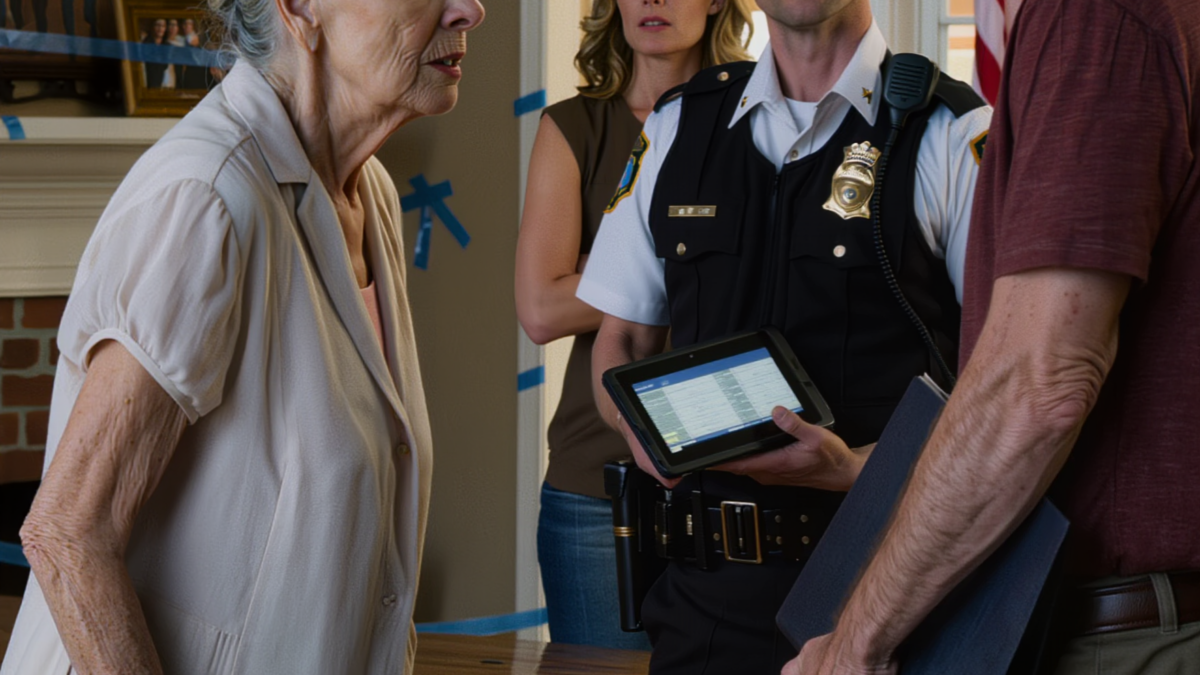
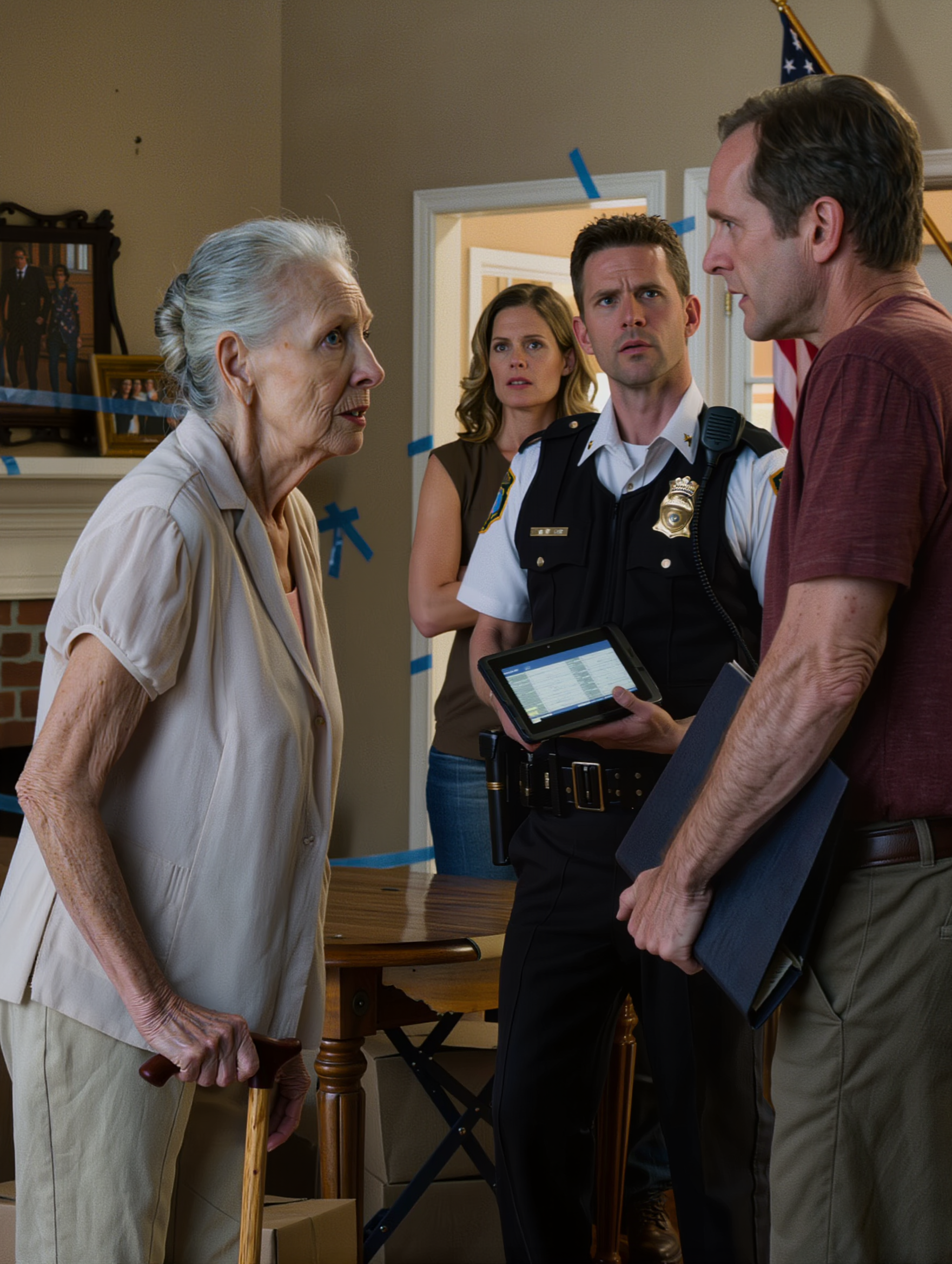
My son called the police to remove me from the house I had owned for forty years. When the first patrol car stopped at the curb, I was on the porch with my cane in one hand and my rehabilitation suitcase beside my feet. Inside my kitchen, Bradley was telling the dispatcher someone had entered without permission.
That someone was me.
My neighbor Fran stood close enough to catch me if my leg gave out. An hour earlier, she had driven me home, carried my suitcase up the steps, and watched me try a key that no longer fit.
“Margaret,” she had said gently, “that’s a new lock.”
I tried again anyway.
For weeks, Bradley had visited me in rehabilitation with clean cardigans and crossword books. He told me the mail was handled, the plants were watered, and I should concentrate on getting stronger.
“I have everything under control, Mom.”
Now an officer was walking toward the porch, and my son was opening my front door with a key I did not have.
“Thank goodness you’re here,” Bradley told him.
He sounded relieved. That hurt almost more than the lock.
Then he pointed at me and said, “She wasn’t supposed to come back.”
The officer’s name tag read MORALES. He asked whether I would be more comfortable sitting inside, and Bradley immediately began explaining why that was a bad idea.
Morales let him finish.
Then he looked at me. “Ma’am?”
“Yes,” I said. “I would like to sit in my house.”
Fran carried my suitcase. I followed her past the unfamiliar deadbolt and into a living room that barely looked like mine. My photographs were missing from the mantel. Roland’s mother’s quilt was gone. Beyond the doorway, I could see an empty space where my parents’ dining table had stood.
Bradley watched me notice it.
“We’ve already discussed this,” he said.
“No. You’ve discussed it.”
Morales checked my license, then opened the property records on his department tablet. Bradley leaned against the kitchen doorway, arms folded.
After a moment, the officer looked up.
“Mrs. Foss, the record lists you as the sole owner.”
My son’s expression tightened.
“She may own the house,” he said, “but she doesn’t own everything inside it.”
On the counter sat a navy folder stamped with a law firm’s name.
I looked at the folder. Bradley looked at me.
Then he reached for it.
“Leave it a minute, Bradley.”
My voice surprised him enough that his hand stopped.
I had spent most of that afternoon asking questions he refused to answer. Now the questions had narrowed to one.
“What do you mean, I don’t own what’s inside my house?”
He straightened. “That isn’t what I said.”
“It’s what we all heard,” Fran said.
The younger officer stood near the front entrance. Morales remained beside my chair.
“Let’s settle one thing at a time,” he said. “Mr. Foss, do you have anything showing that your mother cannot lawfully be here?”
“She just got out of rehabilitation.”
“That wasn’t my question.”
Bradley looked toward Kayla. She stood by the refrigerator, still wearing her purse over one shoulder. Two grocery bags sat on the counter beside the navy folder. A carton of eggs showed through the plastic.
They had been buying groceries for my kitchen while I was coming home to it.
“No,” Bradley said finally. “But she shouldn’t be alone.”
“I’m not alone,” I said. “Fran’s here.”
“You know what I mean.”
I did. That was becoming the trouble. I was beginning to understand everything he meant.
The fall had happened in February, on a morning that looked warmer through the window than it was. I had stepped onto the back porch to shake crumbs from a tablecloth. My heel found a patch of ice, and the next thing I remembered clearly was the sound of Fran calling my name.
She had heard me from her kitchen.
I spent two weeks in the hospital and the rest of that winter into spring in rehabilitation. There were days when putting on a sock seemed more difficult than anything I had done in seventy-four years.
Bradley came on Wednesdays and Sundays. Sometimes Kayla came too.
He would pull a chair beside my bed and show me photographs of the dogwood tree or tell me he had brought in the trash cans. Once, he peeled an orange and separated the sections onto a napkin because my lunch had gone cold while I was at therapy.
I remembered that orange now. His careful hands. The small kindness.
It made the rest harder to understand.
When my discharge date was confirmed, I called him. I left a message, then sent a text. Fran had already offered to drive me, and the therapist had gone over the plan with us. I would use the downstairs bathroom during the day, take the stairs slowly, and continue outpatient appointments.
I needed help with some things. Nobody had told me I needed someone else to take possession of my life.
Bradley had not answered.
At home, neither my key nor Fran’s spare worked in the front door. The side entrance still had its old lock. Fran tried her key there, and it turned.
We had entered without breaking so much as a latch.
Inside, my recipe box was missing from beside the stove. The counters smelled of a sharp floral cleaner. Pieces of blue painter’s tape marked the window frames, and little labels had been stuck near the baseboards.
LIVING ROOM. HALL.
I was staring at one when Bradley and Kayla arrived.
He had not asked how the ride home had been. He had not asked whether I was in pain.
“What are you doing here?”
When I asked about the labels, he said they were nothing. When I asked about my things, he said they were in storage.
When I asked why anyone needed room measurements, Kayla said, “We were trying to have everything arranged before you came back.”
Eventually, Bradley admitted he had spoken to a realtor.
Twice.
He had told her I would probably be moving into assisted living.
“Who told you that?” I asked.
“Mom, be realistic.”
“Who told you?”
Nobody had.
By then my leg was aching, and I had gone onto the porch for air while he stepped into the hallway with his phone. Through the screen, I heard him say someone had entered the property without permission.
I thought there must be some mistake right up until I heard him give my address.
Now Morales was asking whether Bradley lived with me.
“No,” I said. “He and Kayla have a house across town.”
“We’ve been staying here sometimes,” Kayla said. “To take care of things.”
“Did your mother ask you to move in?”
Bradley rubbed his forehead. “It wasn’t like that.”
“Did she authorize you to change the locks?”
“I was concerned about security.”
“Did she authorize it?”
“No.”
Morales made a note. He did not look impressed or angry. His calmness helped me stay in the chair instead of getting up to defend every corner of my home.
Then he asked about the missing furniture.
Bradley said, “Some things are at our house.”
“Which things?” I asked.
“The photographs. The quilt. Your china.”
“And the table?”
He looked away.
The kitchen seemed to become very quiet around that missing piece of furniture.
“Bradley.”
“We sold it.”
I stared at the space beyond him. My parents’ walnut table had stood under that window for nearly as long as we had lived there. Bradley had done homework at it. Roland had spread the Sunday newspaper over it. The morning after my husband died, I had sat there holding a cup nobody could persuade me to drink.
“You sold my table.”
“It was too big.”
“For what?”
“For what you’re going to need.”
He said it as if my future were a room he had already measured.
Fran moved beside my chair. “Who bought it?”
“A dealer.”
“How much?”
“This isn’t the time.”
I looked at Morales. “Is there some reason I’m not allowed to ask where my furniture went?”
“No, ma’am.”
Bradley’s face reddened.
Morales asked whether anything else had been sold. Eventually, my son admitted to two brass lamps and a cedar chest from the guest room. Several boxes of books had been donated.
“Nothing important,” he added.
Fran’s hand tightened on the back of my chair.
I had meant to ask another question. Instead, I looked at my son and found I could not speak.
He saw it. For a second, he looked ashamed.
Then he said, “You can’t keep everything forever.”
“I wasn’t asking for forever.”
Kayla shifted near the refrigerator. “We’ve spent weeks trying to help.”
“Then why didn’t you tell me?”
“You were recovering.”
“I could talk.”
Nobody answered that.
Morales explained that the officers were not going to sort out ownership of every lamp and box that afternoon. If belongings had been removed or sold without permission, I should document them and get advice about recovering them. But nothing Bradley had shown them gave them a reason to treat me as an intruder.
“Your mother has a right to be here,” he said.
Bradley looked at me with an expression I recognized from years of smaller arguments. It meant he expected me to help him end this without losing face.
I usually did.
I would make a joke, change the subject, or say we had both gotten upset. Later, alone, I would try to remember when his anger had become something I was responsible for preventing.
This time I said, “I want my keys.”
He touched his pocket.
“Mom.”
“And I want you and Kayla to go home.”
Kayla gave a short, startled laugh. “You’re serious?”
“Yes.”
Morales asked whether they had personal belongings to collect. Bradley said they did. The officer offered to remain while they gathered them, and I accepted.
My son stared at me.
“You’re letting strangers stand here while I pack?”
“You called them, Bradley.”
He went upstairs without answering.
For fifteen minutes, drawers opened over our heads. When he came down carrying a duffel bag, Kayla followed with a suitcase.
They had been keeping their clothes in my bedroom.
I had thought there was nothing left that afternoon that could surprise me. Bradley put two keys on the counter. He glanced at the navy folder, then at me.
“That paperwork is complicated,” he said. “Don’t start getting ideas from things you don’t understand.”
“Then you should have explained it when I asked.”
He picked up his bag.
At the door, he said, “You have no idea how much work this is going to be.”
I was so tired that I could feel my pulse in my repaired hip.
“Then it’s fortunate I’ve had forty years of practice.”
He left with Kayla. I watched through the window until their car disappeared.
There was no satisfaction in it. My son had come to that house hundreds of times. I had watched him leave for school, college, work, and both of his weddings.
I had never watched him leave because I was afraid of what he might do if he stayed.
Before the officers departed, Morales gave me the incident information and reminded me to photograph the rooms and preserve any relevant messages or paperwork.
“Do you have somebody who can stay tonight?”
“I’m staying,” Fran said before I could answer.
After the patrol cars pulled away, she brought my suitcase upstairs. I heard her pause in my bedroom.
When she came down, she said only, “We’ll put it right.”
She made tea, and we sat at the little folding table Bradley had placed where mine belonged.
One leg rocked when Fran set down her cup.
I looked at the navy folder on the counter.
I did not want to open it. I wanted my son to have been frightened and foolish. I wanted there to be some explanation that would make that afternoon smaller.
Fran followed my gaze.
“The envelopes underneath have your name on them.”
There were three. A utility statement, something from my insurance company, and a letter from Wexler, Dawson and Reed.
That one had already been opened.
I slid the pages out.
Seven years earlier, after Roland spent nine days in intensive care with pneumonia, we had finally arranged the paperwork we had kept postponing. Wills. Health care directives. Financial powers of attorney.
My financial document named Bradley to act for me if I became unable to manage my affairs. It required written medical certification before that authority began.
I had remembered the document as protection against a catastrophe.
Bradley had remembered it as something else.
The letter said the firm had reviewed a copy at his request. Based on what he had supplied, the required condition had not been established. Recovering from orthopedic surgery did not, by itself, satisfy the document’s requirements.
I read the next paragraph twice.
Until those requirements were met, the firm did not consider him authorized under that document to sell, transfer, or otherwise dispose of my property.
“What’s the date?” Fran asked.
“March eighteenth.”
She set down her cup.
Weeks before I came home, Bradley had asked a lawyer whether he could do this.
The lawyer had told him no.
I slept badly that night. At two, I remembered that returning two keys did not mean Bradley had returned every copy. Fran found me in the hallway, looking at the front door.
Without asking me to explain, she pulled a chair over and stayed downstairs with me until I felt ready to go back to bed.
The next morning, she called a locksmith.
This time, I watched him work. He handed the new keys to me. I kept one, gave one to Fran, and sealed the spare in an envelope.
Then I called Helen Barrett, the attorney who had prepared our documents years earlier.
I expected to have to convince her I was capable of understanding what had happened. Instead, she listened.
When I finished, she asked, “Do you have the March letter?”
“Yes.”
“And the original power of attorney?”
“In the fireproof box.”
“Bring both. Keep the messages about your discharge, too. And don’t sign anything Bradley brings you before we’ve talked.”
“I don’t want to get him into trouble.”
The words came out automatically.
Helen paused.
“Margaret, first we need to make sure he cannot keep making decisions in your name.”
That was something I could agree to without feeling I was handing my son over for punishment.
Fran drove me to Helen’s office that afternoon. I brought the folder, the opened letter, my old documents, and photographs of the rooms. I had also started a list of what was missing.
Writing that list had been harder than taking the pictures.
A photograph could show a blank mantel. It could not show how often I had glanced at the picture of Roland holding Bradley at three years old, both of them laughing at something outside the frame.
Helen read the power of attorney carefully.
“This document did not make Bradley an owner of anything,” she said. “And from what you’ve brought me, its conditions for his authority to act were not met.”
“So when he said the things inside the house weren’t mine?”
“We’ll ask him to explain that. But saying it doesn’t make it true.”
She asked whether I had signed anything while in rehabilitation, whether a realtor had contacted me, and whether I had ever agreed to a sale.
No. No. No.
She wrote down each answer.
I had spent the previous evening wondering whether I had somehow failed to make myself clear. Watching her record those simple answers helped.
Helen prepared a revocation of the old power of attorney. After I signed it, she arranged notice to Bradley and the institutions that needed to know. Then she began a written demand for an accounting of the property he had removed or sold.
“I don’t want to destroy my relationship with him,” I said.
Helen laid down her pen.
“Protecting your property and deciding what relationship you want with your son are separate questions. You don’t have to settle both today.”
I let out a breath I had been holding for weeks.
Then she opened the navy folder.
Inside were room measurements, lists of furniture, and estimates scribbled in Bradley’s handwriting. A printed email from an estate-sale company said they could discuss scheduling once his authority was confirmed.
Another email came from the realtor. She could provide a market estimate, she wrote, but she would need my signature or verified authority before proceeding with a listing.
People had been telling him to stop.
He had treated each one as another person who needed convincing.
Helen turned a page.
There was a list of belongings with initials beside them.
My china had a K. Roland’s watch had a B.
I touched the paper.
“He took the watch?”
Helen did not answer a question she could not yet answer. She moved the list closer so I could read it.
I had bought that watch for our twenty-fifth anniversary. After Roland died, I kept it in the top drawer of my dresser. Bradley knew where it was because once, after the funeral, we had opened the box together.
I had told him it would be his someday.
Under the inventory was a note about an assisted-living tour.
Mom will resist at first.
Below that, in the same handwriting:
Do not discuss sale until placement secured.
Fran turned toward the window.
I kept looking at the word placement.
It was so tidy. So removed from the woman sitting there in a blue cardigan, with a sore hip and a purse full of grocery receipts.
Bradley had planned to take me somewhere, get me settled, and tell me afterward that my home was being sold.
I remembered him peeling that orange.
For a long time, I had used his kindnesses to explain away the things that troubled me. Surely a man who brought his mother flowers could not also disregard her wishes. Surely the boy I had raised was still underneath every impatient answer.
He was. That was what made it difficult.
The man who brought the flowers and the man who wrote that note were the same person.
“What do we do?” I asked.
Helen closed the folder.
“We ask for everything back. We find out what cannot be returned. And we make certain nobody mistakes his wishes for yours again.”
Bradley called that evening.
“I got an email from your attorney.”
“Yes.”
“You revoked everything?”
“The power of attorney.”
“That was unnecessary.”
I stood at the kitchen counter, looking at the bare patch where my recipe box belonged.
“I read the March letter.”
He was quiet for a moment.
“That firm was being cautious.”
“They told you that you didn’t have authority.”
“They didn’t understand the situation.”
“What didn’t they understand?”
“How bad the fall was. How stubborn you can be.”
I moved the phone to my other ear.
“The estate-sale company didn’t understand either? Or the realtor?”
“You went through the whole folder.”
“Bradley, you were dividing up my belongings.”
“That was a preliminary list.”
“Your father’s watch had your initial beside it.”
“I wasn’t going to sell it.”
“I didn’t ask whether you were going to sell it.”
His breathing grew louder.
“You told me I could have it.”
“Someday.”
“What difference does it make if it sits in your drawer or mine?”
I put my free hand flat on the counter.
“The difference is whether I gave it to you.”
He said nothing.
Then he returned to the fall, the icy steps, the possibility of another emergency. I heard the fear in his voice. I also heard how easily he used it to move us away from the questions he did not want to answer.
“We can talk about help,” I said. “We could always have talked about help.”
“You would have said no.”
“You didn’t ask.”
“I knew what you’d say.”
“And you decided my answer didn’t matter.”
He hung up a minute later, after telling me I was making everything harder than it needed to be.
For once, I did not call back.
Over the following days, Helen handled the letters. I handled the house.
Fran helped me photograph empty drawers and shelves. We made coffee, rested, and worked one room at a time.
In my bedroom, I found Bradley’s dry-cleaning ticket on the dresser. Kayla had moved my nightgowns to a shelf in the linen closet to make room for her clothes.
I sat on the bed with the nightgowns in my lap.
That was the moment I cried.
Not in front of the police. Not when I read the letter. There, holding the soft cotton things I had bought for myself, I finally understood how comfortable they had become making room for their lives by packing mine away.
Fran sat beside me until I was ready to stand.
A week later, Bradley agreed to meet at Helen’s office. He brought Kayla and an attorney named Peter Sloan.
Bradley looked at my cane before he looked at my face.
“You’re still having trouble walking.”
“I’m getting stronger.”
“You should have let me pick you up.”
“Fran drove.”
He glanced at her, then took the chair across from me.
Helen began with the property.
The dining table and eight chairs had sold for eight hundred dollars. The lamps brought one hundred and twenty. The cedar chest brought one hundred and fifty.
“Where are the proceeds?” Helen asked.
“In my account,” Bradley said.
I looked at him.
“I was going to use them for her expenses.”
“Have you?” Helen asked.
“Not yet.”
Peter Sloan wrote something down.
The china, quilt, photographs, recipe box, and several other items were in Bradley’s garage. The books had been donated. He could give us the charity’s name, though there was no guarantee we could recover them.
Then Helen asked about the watch.
Bradley’s eyes settled on the edge of the table.
“It’s at my house.”
“Bring it back,” I said.
He looked up. “Mom.”
“Bring it back.”
“I’m his son.”
“And I’m the person you took it from.”
Kayla opened her mouth, then closed it.
Helen asked about the realtor. No listing had been signed. No buyer had made an offer. The house had not been transferred or promised to anyone.
I had known that from the papers, but hearing it stated across the table loosened something in my chest.
Then Helen put the March letter in front of Peter Sloan.
He read it slowly.
“Bradley, did you receive this?”
“Yes.”
“Before the furniture was sold?”
Bradley shifted in his chair.
“Yes.”
“Did you give me a copy?”
“I didn’t think it changed anything.”
Peter looked at him for several seconds.
“It changes your explanation that you reasonably believed the document authorized you.”
Bradley’s face flushed.
“They were looking at paperwork. I was looking at my mother lying in a rehabilitation bed.”
I watched his attorney set down his pen.
Helen said, “You were also speaking with your mother twice a week.”
“She wouldn’t face reality.”
“What reality?” I asked.
He turned to me.
“You can’t keep living like nothing happened.”
“I don’t intend to.”
“You fell outside. What happens next winter?”
“I hire someone to clear the steps.”
“What if you fall in the bathroom?”
“I have recommendations for grab bars.”
“What if nobody finds you?”
The question came out louder than the others.
Nobody spoke.
Bradley looked down at his hands.
“When Fran called, I was forty minutes away,” he said. “I couldn’t get there. I just kept thinking about you lying outside.”
It was the first time he had said that without using it to issue an instruction.
“I know you were frightened,” I said.
“You don’t know. Dad was gone, and then the phone rang, and I thought…”
He stopped.
For a moment, all I could see was my son trying to reach me.
I wanted to go around the table. I wanted to touch his shoulder and tell him everything was all right.
But everything was not all right, and comforting him could not be the price of telling the truth.
“I believe you were scared,” I said. “I was scared too.”
He looked up.
“But the fall doesn’t explain why you kept going after the lawyer told you no. It doesn’t explain why you sold my things, took the watch, or called the police when I came home.”
“I thought you’d see that I’d handled everything.”
“You wanted me to thank you for a decision I never got to make.”
He rubbed his eyes.
Kayla spoke quietly. “We thought if you saw the assisted-living place, you might like it.”
“Then why not invite me to see it?”
“We were gathering information first.”
“And the note about not discussing the sale until I was placed?”
She looked at Bradley.
He did not rescue her. She did not rescue him.
I sat back in my chair.
“I’m willing to make changes so I can live safely. I’m willing to pay for help. I’m not willing to discover those decisions have already been made while I’m learning how to walk again.”
Peter Sloan nodded once.
The rest of the meeting was practical, which helped me more than another hour of apologies would have.
Everything still in their possession would be returned within forty-eight hours. The sale proceeds would be repaid. Bradley would provide the dealer’s contact information so we could find out whether the table could be recovered.
Kayla mentioned money they had spent on the house.
“Send the receipts to Helen,” I said. “I’ll pay legitimate expenses.”
Bradley looked almost offended by how ordinary that sounded.
He had expected either surrender or a family war. I was asking for an accounting.
As we stood to leave, he said, “You could have done this without lawyers.”
I steadied myself with my cane.
“I tried doing it as your mother. You called the police.”
Two days later, movers brought my things home.
Fran stood with a copy of the inventory while I told the men where to put the boxes. One had CHINA written on it in Kayla’s handwriting. Another said FAMILY PHOTOS.
The quilt came out smelling faintly of their garage.
I pressed it against my face anyway.
Bradley arrived behind the truck. He stayed on the porch until I came out.
In his hands was the wooden watch case.
“I’m sorry,” he said.
I opened it. The watch lay on the velvet where it belonged.
He watched me touch the band.
“I wanted something that felt like Dad.”
“You could have told me that.”
“I know.”
I closed the lid before my hands began shaking.
He gave me an envelope with the money from the sold items. Then he told me the dealer still had the table and chairs.
“I asked him to hold them. He’ll return them for the eight hundred, plus delivery.”
For the first time in days, I could breathe without feeling something hard beneath my ribs.
“I want them.”
“I thought you would.”
I kept the money for the lamps and chest and arranged to use the rest to buy back the dining set. Bradley paid for the delivery.
It was a small thing compared with what he had done. It still mattered that he offered without making me ask.
The table came home the next morning.
Two men carried it carefully through the doorway and settled it beneath the kitchen window. There was a fresh scratch along one side. I ran my hand over it while Fran arranged the chairs.
“Furniture repair place could probably fix that,” she said.
“Probably.”
I was not ready to have another stranger take it away.
We put the ceramic fruit bowl in the center. Fran made coffee, and I sat down in the chair I had used for years.
The table wobbled slightly.
“Roland used to fold a piece of cardboard under that leg,” I said.
Fran found an empty cereal box, cut a square, and crouched down before I could object.
There were still missing books. The lamps and cedar chest were gone. Getting the table back did not reverse what had happened.
But that morning, I did not have to make do with the empty space.
During the summer, I changed the house.
A contractor installed a second stair railing and the bathroom grab bars my therapist had recommended. I had the loose porch boards replaced. I hired a service for winter snow and ice removal.
I bought a lighter laundry basket.
That last purchase annoyed me more than it should have. I stood in the store holding two plastic baskets, angry that something so ordinary required reconsideration.
Then I chose the smaller one and went home.
I was learning that accepting help did not mean handing over the rest of my decisions.
Fran drove me to therapy until I was cleared to drive again. My first trip alone was to the grocery store. I bought oranges, coffee, bread, chicken, and yellow tulips that cost more than I usually spent on flowers.
At home, I unlocked the door, put the groceries away, and set the tulips on my table.
Nobody congratulated me. Nobody needed to.
Helen helped me put new arrangements in place. Bradley would no longer be the person authorized to manage my finances if I became unable to do so. I chose people I trusted, including a professional backup, and made sure they understood my wishes.
I updated my will and made specific directions about certain belongings.
Roland’s watch would still go to Bradley.
That was my choice, too.
For almost three weeks, my son did not call.
At first, I checked my phone whenever I passed it. I wondered whether protecting myself had cost me the relationship permanently.
Then I reminded myself that I had not barred him from my life. I had barred him from selling it out from under me.
The distinction was easier to understand on some days than others.
In July, he called and asked whether he could visit.
“What for?”
“I want to talk. If you’ll let me.”
We agreed on Sunday at two.
He arrived alone and knocked.
I noticed that before anything else.
He waited while I came to the door. He did not try the knob. He did not call through the screen that it was only him.
Inside, his eyes moved over the restored photographs, the quilt, and the table.
I made coffee.
For a while, he held his mug without drinking.
“I’ve been trying to figure out how to say this without making excuses,” he said.
“All right.”
“I was wrong.”
I had wanted those words. Hearing them did not bring the relief I had imagined, but it made me willing to listen.
He looked down at the table.
“When the officer called you Mrs. Foss, it bothered me.”
“Why?”
“Because he didn’t know you.”
I waited.
“Then I realized he was treating you more respectfully than I was.”
His thumb moved along the mug handle.
“I kept saying Mom. Elderly. Fall risk. Like those words told everybody what to do with you.”
“They seemed to tell you.”
He nodded.
“I talked about you in rooms you weren’t in. After a while, coming to see you at rehab felt like the part where I kept you calm. The decisions were happening somewhere else.”
It was painful to hear. It was also the first explanation that sounded like the truth.
“And when I came home?”
He swallowed.
“You ruined the plan.”
I let him sit with that.
Finally, he looked at me.
“That’s why I called. I told myself it was safety, but I was angry because you wouldn’t leave.”
Outside, somebody started a lawn mower. I could hear a child laughing farther down the street.
I kept my hands around my coffee.
“I was afraid of you that night.”
His face changed.
“Mom.”
“I knew you had keys. I didn’t know whether you would come back.”
“I wouldn’t have hurt you.”
“You had already done things I thought you would never do.”
He lowered his eyes.
I had not planned to say it. Once I did, I was glad I had.
We talked for almost two hours. He admitted the locks had been his idea. So had the realtor. Kayla had found the assisted-living facility, but he had booked the tour. They had made the inventory together.
I asked because I needed to know whether he would take responsibility or hand the blame to his wife.
He took it.
Later, he told me they were having problems.
The old impulse came immediately. Ask questions. Make room. Offer money or a place to stay.
Instead, I said, “I’m sorry to hear that.”
He waited.
I took another sip of coffee.
When he left, he asked whether things could be normal again.
I thought about how normal used to feel. The little dismissals. The explanations I accepted because arguing wore me out. The way he said “Enough, Mom,” and expected silence.
“I don’t want that normal back,” I said.
His face fell.
“But I would like to have my son over for coffee.”
He looked at me for a moment.
“I’d like that too.”
It took more than that afternoon.
He called before visiting. If I was busy, he accepted another day. When I mentioned a bill, he did not immediately ask for my login information. When winter approached, he asked whether I had arranged snow removal.
“Yes.”
“Good,” he said.
Then he told me about a problem with his furnace.
I almost smiled into the phone. He had let my answer be the end of the matter.
Kayla came in November with a framed photograph that had been overlooked in their attic.
Roland and I were standing on a beach, with Bradley between us. We were sunburned and smiling. I remembered having sand in my shoes all the way home.
“I thought we’d returned everything,” she said.
“So did I.”
She handed me the frame.
“I’m sorry. For more than the photograph.”
I waited.
“I thought we were being practical.”
“You thought agreeing with you was the only sensible choice I could make.”
She looked down.
“Yes.”
I appreciated that she did not argue.
We spoke on the porch for a few minutes. She did not ask to come inside, and I did not invite her. We were not ready for that yet.
After she left, I put the photograph on the mantel.
At Christmas, Fran came for dinner. Bradley joined us, and Kayla came later for dessert.
Nothing remarkable happened. Nobody made a speech. We ate too much, argued mildly about whether the potatoes needed more salt, and watched Fran insist she had room for pie after announcing she could not eat another bite.
Bradley helped clear the table.
His hand stopped near the scratch.
“You never had that fixed.”
“No.”
“I could call somebody.”
I looked at him.
He caught himself.
“If you want me to.”
“Not now.”
“All right.”That quiet answer did more for us than another apology would have.
The following spring, the dogwood bloomed again. I still carried my cane for longer walks, and my hip complained before rain. Some mornings I missed Roland so sharply that I sat at the table before making coffee and let the house be quiet around me.
It was still my house to be quiet in.
Bradley came one Saturday to fix a loose board on the garden fence. He had asked first. I had said yes.
When he finished, he put away his tools and came to the porch.
“Thanks for letting me come over.”
“You fixed the fence.”
“That’s not what I meant.”
I knew.
For a moment, I saw the boy who used to stand there with a baseball glove, asking whether somebody could come out and play. Then I saw the grown man waiting for my answer.
“I’m glad you’re here,” I said. “I need you to keep asking.”
“I will.”
After he left, I went inside.
The house smelled of coffee and lemon polish. The quilt was over the sofa. My recipe box stood beside the stove. Upstairs, Roland’s watch rested in its wooden case.
Someday, I would give it to Bradley, or the instructions I had chosen would do that for me.
Not today.
Today, I had groceries to put away and a library book waiting beside my chair. Fran was coming over later, and I had promised to save her a piece of cake.
I closed the front door and turned the key in the lock I had chosen.
Then I went into my kitchen.








