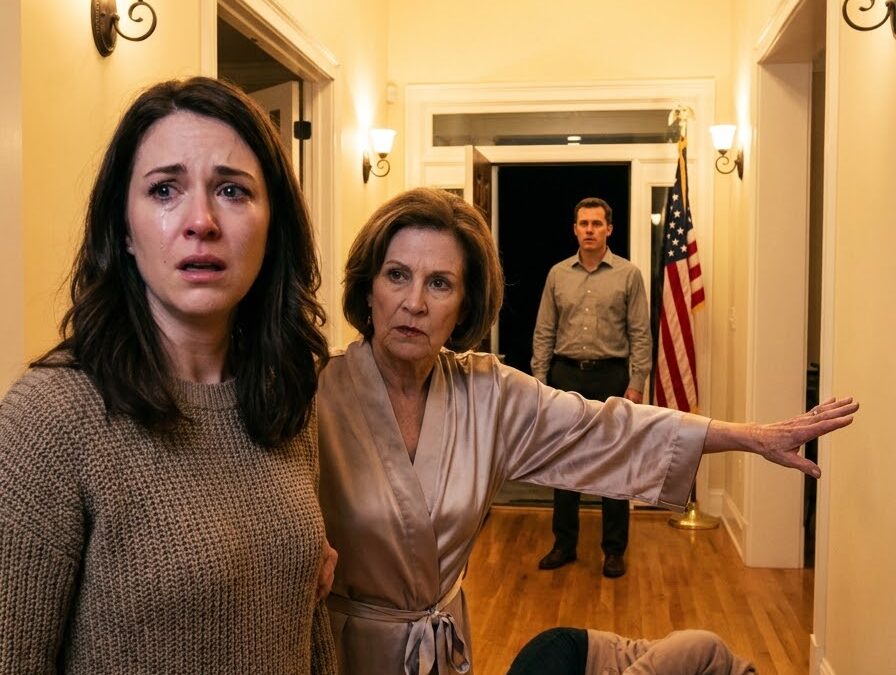
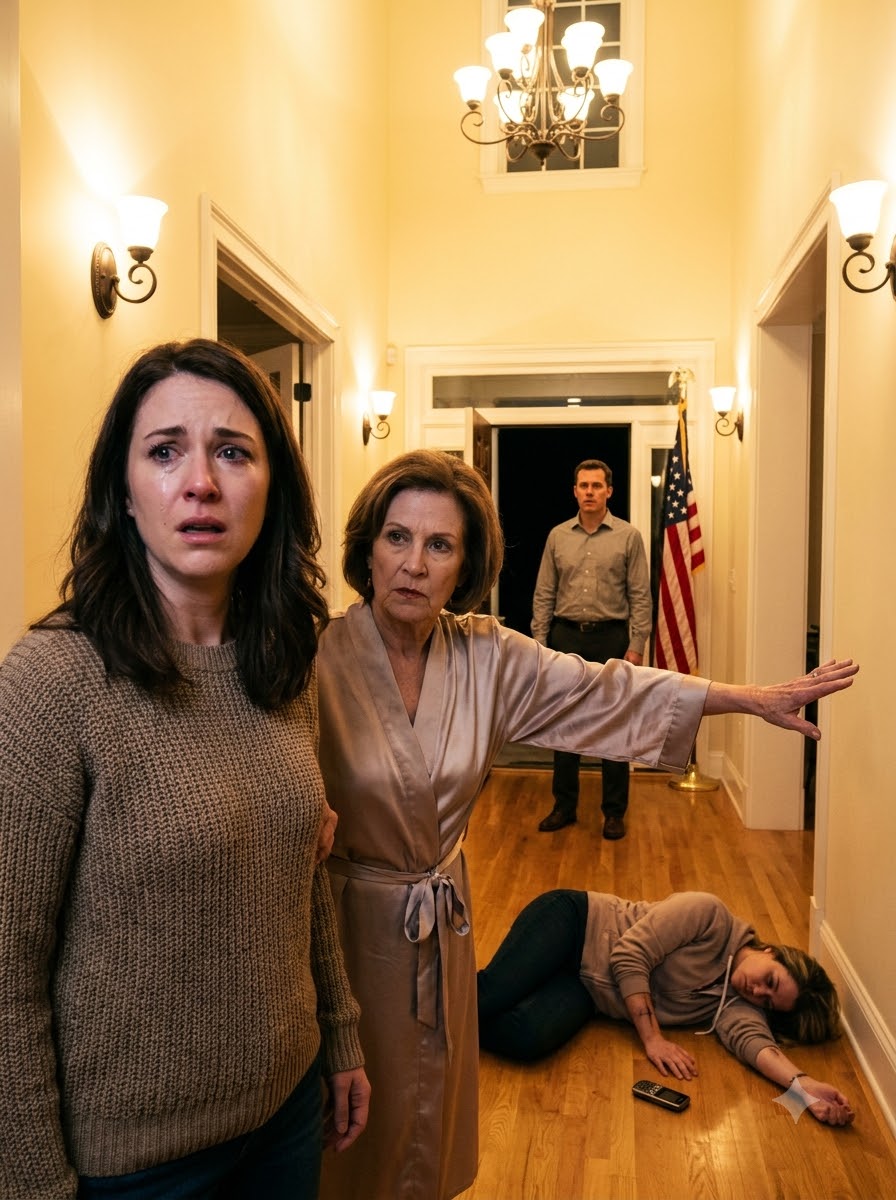
My youngest sister called me at 2 a.m.: “Sis, please come pick me up.” When I arrived at her husband’s house, her mother-in-law blocked the doorway and said, “No! She isn’t going anywhere.” I was forced to push my way in. Seeing my sister unconscious and covered in injuries made my blood boil…
At 2:07 in the morning, a number I hadn’t seen light up since my sister was 14 came alive on my nightstand. And when I answered, there was only breathing, and then, barely:
“Sis, please come get me.”
The screen said Lily old phone. I had typed that name myself 15 years ago, standing in a Walgreens with two cheap flip phones in a plastic clamshell. I had almost swiped it away as spam.
“Lily, where are you?”
A door opened somewhere behind her. Then a woman’s voice, soft and wide awake. The voice of someone who had not been asleep at all.
“Who are you talking to, sweetheart?”
The line went dead.
I called the old phone back. It didn’t ring. I called her regular number and got her voicemail, her bright recorded voice telling me to leave a message. I called her husband, Grant. Nothing. His phone was off.
I don’t remember deciding anything. I remember that by the time I understood whose voice that was—Diane Prior, Lily’s mother-in-law—I was sitting on the edge of the bed with my boots already on and my keys in my hand.
Why the old phone? And why was my sister calling from her in-laws’ house instead of her own?
It is 25 minutes from my apartment above the gym in Hillyard to Liberty Lake if you drive the speed limit on I-90. I did not drive the speed limit.
I tried the old phone twice more on the way. The interstate was empty except for a couple of semis and my own headlights. And every mile, I told myself the reasonable things. She’d had a fight with Grant. She’d had too much wine. Diane was the kind of woman who called the mailman sweetheart. There was a sensible explanation, and I would feel stupid in half an hour.
But my sister had said, “Come get me.”
And those were not random words between us.
I was 21 the first time I said them to her.
Our parents’ car went off Highway 2 on black ice on a Thursday in January. And on Friday, I drove to her elementary school to pick up a 9-year-old who did not yet know.
She was sitting on the bench outside the office with her backpack on both shoulders, the way she always wore it, kicking her sneakers against the bench.
I knelt down in front of her in that hallway that smelled like floor wax and wet coats. And before I told her anything else, I told her this:
“Whatever happens, I will always come get you. You call, I come.”
I dropped out of college that spring.
Our parents had left each of us a trust. Mine came to me at 21, and I spent it the way you spend money when you suddenly have a child: groceries, a used minivan, a dentist, and a lawyer named Howard Beck, who helped me become her guardian.
What was left years later became the down payment on a gym with my name over the door.
Lily’s share stayed locked up until she turned 30. Our father had been very particular about that.
He used to say, “Nobody is wise at 25.”
He had known himself at 25.
When she was 14, she got stranded at a school dance with a dead phone and walked two miles home in the rain because she didn’t want to bother anyone.
That was the night I bought the flip phones. One for her, one for me.
The rule was simple.
“One phone that always works. Keep it charged. Keep it in your bag. Never give the number to anyone else.”
I had kept paying $12 a month on her line for 15 years and never once asked myself why.
For 15 years, she had also taught the kids’ class at my gym on Tuesday afternoons. She started as a skinny teenager helping six-year-olds tie their belts and ended up running the whole thing. The parents loved her. The kids climbed on her like she was playground equipment.
She hadn’t taught that class in almost three weeks.
“Diane needs me for the gala committee,” she texted twice.
She’d stopped by while I was out, just long enough to drop something off. The last time I’d actually sat with her, she’d been thinner in the face, and she’d laughed when I asked what was wrong.
And I had let her laugh.
Here is the thing I had never said out loud to anyone.
When Lily married Grant three years ago in that big house by the lake with the white tent and the string quartet, I stood at the back and felt relief.
Not just happiness for her. Relief for me.
She belonged to somebody else’s family now, a nice family with a construction company and a boat. I could finally stop listening for the phone.
I was ashamed of that relief the moment I felt it, and I had been ashamed of it ever since.
On I-90 at 2:30 in the morning, it sat in my chest like something swallowed wrong.
The Prior house sat at the end of a cul-de-sac off the lake road, three stories of stone and glass. Every window was dark. Lily’s little blue Subaru was parked in the driveway.
The porch light was on.
Someone was awake.
I didn’t get a chance to knock.
The door opened while I was still on the second step, and Diane Prior stood in it like she’d been waiting behind it. Silk robe belted tight, hair brushed, reading glasses pushed up on her head. At 2:40 in the morning, she looked like she was about to chair a meeting.
“Victoria.”
She used my full name. Nobody calls me Victoria except my bank and my dentist. She said it the way you say a name you’re writing down.
“It’s very late.”
“Where’s Lily?”
“Lily had an episode tonight. She’s sleeping. She needs rest.”
She shifted her weight so her body filled the doorway, one hand on the frame.
“She’s not leaving.”
Behind her, down the long hallway, I could see Grant—sweatpants, T-shirt, arms folded tight across his chest—standing by the stairs.
He would not look at me.
The house smelled like chamomile tea gone cold.
“Then let me see her sleeping,” I said.
“You’re not family here, Victoria. This is our home.”
“Grant.”
I raised my voice just enough to carry down the hall.
“Where are her keys?”
He opened his mouth.
“Vic, it’s not what you—”
“Where are her car keys, Grant?”
He didn’t answer.
He looked at his mother.
I have spent most of my life learning to read bodies, and I could read that one from 40 feet away. A man with nothing to hide answers a simple question. A man who looks at his mother before he answers a question about his wife’s car keys is telling you something else.
I put my forearm flat against the door above Diane’s hand, and I stepped forward.
I did not touch her.
I pushed the door, and I walked.
And she did what anyone does when a door moves and a person comes through it. She stepped back two steps.
Then she turned her head and said loud and clear so her son would hear it:
“She shoved me. Grant, she shoved me. I’m calling the police.”
“Good,” I said, already moving down the hall. “Tell them to send an ambulance.”
There was light under the door of the downstairs guest room.
She was on her back on the guest bed, the comforter folded under her like someone had arranged her. Her breath came slow and far apart.
I counted it the way I count rounds.
Too slow.
“Lily. Lily, it’s me.”
Nothing.
I pressed my knuckles hard into her breastbone, the way they teach you in first aid, the way I’d seen cornermen do to fighters who went out cold under the lights.
Her eyelids fluttered and went still.
I had 911 dialed before I’d finished kneeling. I put the phone on speaker on the bed and rolled her onto her side so she wouldn’t choke. One knee bent, her head tipped back.
The dispatcher asked questions, and I answered them.
“Unresponsive, breathing but slow. Twenty-nine years old. I don’t know what she took. I don’t know if she took anything.”
Her sleeve had ridden up when I turned her.
On the inside of her upper arm were four small dark ovals and a thumb.
I pushed up the other sleeve.
The same.
Both sides, the same height.
I have seen those marks before on grapplers after a bad clinch. On my own arms after a long night of practice.
It is the shape a hand leaves when it holds a person who is trying to walk away.
I had never seen them on the girl I taught to tie her shoes.
I took pictures. Both arms. Flash on. The clock on the nightstand in the frame, because I have watched enough referees argue over what happened to know you want proof of when.
When I bent to get a better angle, I saw it under the bed.
Her old flip phone lying open, one bar of battery left.
Her sewing bag was tipped over beside it. Spools and fabric scraps spilled across the carpet.
She had crawled to it.
I could see the path.
Behind me in the doorway, Diane was on her own phone. A minute ago, she’d been telling someone about an intruder. Now her voice had changed.
“My daughter-in-law has taken my sleeping pills. She’s been very unstable for months. Please hurry.”
I heard both stories at once. Mine on the speaker and hers in the doorway.
And something came up my neck so hot I felt it behind my eyes.
My blood was boiling.
I mean that exactly.
My hands had started to close. I knew precisely what they could do, how many steps it was to the doorway, how little it would take.
I opened them.
I laid them flat on my thighs and kept them there.
I think it was the hardest thing I did all night.
The paramedics came in fast and quiet.
Diane met them in the hall and pressed a pill bottle into the first one’s hand.
“These are mine. She must have gotten into them.”
The police came two minutes behind, and I heard her tell them:
“She forced her way into my house. She shoved me.”
Grant climbed into the back of the ambulance.
“I’m her husband,” he said.
And that settled it.
They closed the doors.
An officer asked me to stay where I was. I kept my voice level.
“I’ll answer anything you want. I’m following my sister in my truck.”
At the hospital in Spokane Valley, I came through the emergency entrance a few minutes after them and ended up in the hallway outside triage, behind a blue curtain nobody had told me not to stand behind.
Diane was talking to a nurse.
“I gave her one of mine to calm her down,” Diane said. “She was so upset. She must have taken more after I went to bed.”
The nurse typed.
Then she pulled the curtain the rest of the way closed, and a security guard asked if I would please wait out front.
They don’t tell you anything in an emergency room if you’re not family.
I learned that at four in the morning in a plastic chair.
A patient’s sister isn’t family.
Not when the patient has a husband.
One nurse, an older woman with reading glasses on a beaded chain, came out once and crouched beside my chair.
“She’s stable,” she said quietly. “That’s all I can tell you.”
I could have kissed her.
A Liberty Lake officer found me around five and took my statement. I told it the way it happened: my forearm on the door, Diane stepping back, the hallway, the guest room.
He wrote it down without looking up.
“It’s a report, not an arrest,” he said when he was done. “But stay away from that house.”
I emailed the photos of Lily’s arms to myself so there would be a second timestamp somewhere besides my phone.
Then I sent them to Marcus Bell.
Marcus is 58, trains at my gym four mornings a week, and spent 26 years as a paramedic before his knees retired him.
I wrote one line.
Tell me I’m wrong.
He answered at ten after five.
Those are grip marks. Both arms, same height, someone standing in front of her and holding on. You’re not wrong. Keep the originals. Later, get the ambulance run report. It’ll list whatever the mother handed them.
I fell asleep sitting up and jerked awake every time the double doors hissed.
Around seven, I realized what I was doing.
I was waiting for someone to give me permission to see my sister.
I had signed her school forms for nine years. I had held her hair back when she had the flu.
And here I was in the chair they keep for strangers.
At 7:30, the nurse with the beaded chain came back.
“She woke up for a minute. She asked for Vic.” She hesitated. “Her husband says, ‘Not today.’”
They kept her another full day for observation.
The next morning, when Grant went down to the cafeteria, the same nurse caught my eye across the hall and tipped her head toward the door.
“Ten minutes,” she said. “She asked again.”
Lily looked very small in that bed, an IV in the back of her hand, her lips chapped and pale.
“Hey, Lil.”
“Hey.”
Her voice was scraped thin.
“You came?”
“I said I would.”
She stared at the ceiling, and I let her.
After a while, she started to talk slowly, like someone crossing ice.
“I drank the tea. I always drink the tea. Diane makes it every night. It helps me sleep.”
She swallowed.
“My keys weren’t in the bowl. I said, ‘Fine, I’ll walk to Vic’s.’ And they said, ‘Calm down,’ in the hall. They kept saying, ‘Calm down.’”
Her hand moved toward her upper arm and stopped.
“And then I was in the guest room. I don’t really remember. I remember crawling to my bag. They…”
She said they.
Not him. Not her.
And then I did the thing I would give a great deal to take back.
I leaned in and said, “How long have you been letting them?”
I stopped one word too late.
I heard it in my own voice.
Not a sister’s voice.
A coach’s voice.
The one I use on a fighter who dropped her hands and ate a punch she should have seen coming.
My sister had heard that voice her whole life.
She heard it now.
Her eyes went back to the ceiling, and something in her face closed like a door.
Grant came in carrying a bouquet of lilies.
Lily is allergic to lilies. Not badly, just enough to sneeze.
She thanked him.
He’d been crying, and I believe the tears were real.
“Mom overreacted,” he said. “The pills were a mistake. Lil, come home and we’ll fix this. We’ll get you help.”
He called me Vic, the way family does.
“The marks on your arms are from hands, Lily,” I said.
“She fell against the doorframe,” Grant said gently to me, as if I were the one who needed it explained.
Lily closed her eyes.
Then, while he was at the sink putting the flowers in water, she said one more thing very quietly.
“He reads my phone. I didn’t want him to see I’d called you.”
The nurse put her head in.
My ten minutes were up.
The next morning, her bed was empty and stripped.
“Discharged to her husband,” the charge nurse said. “About an hour ago.”
A text came while I was standing in the parking garage.
It was from Lily’s regular phone.
I’m okay. I need to sort things out with Grant. Please don’t make this bigger.
I read it three times.
Every sentence started with a capital letter and ended with a period.
My sister has not capitalized a text to me since she was 14.
I didn’t know what that meant.
Maybe she was being formal because she was angry with me. Maybe someone else had typed it.
I noted it, and I put it away.
I sat in my truck with both hands on the wheel and didn’t start the engine.
It felt like losing a fight with no bell and no decision. No one in the corner telling you what went wrong. Just the lights coming up and everybody going home.
Then I called the only grown-up I had left who had known my parents.
Howard Beck picked up on the second ring.
“Victoria,” he said, and there was something careful in his voice. “I was going to call you. Grant phoned me in September.”
He said it the way a man says something he’s been carrying.
Howard’s office is on the fourth floor of an old brick building downtown, above a bank that has changed names three times since my father first walked me up those stairs.
Howard is 71 now. He still wears a tie on Saturdays.
He couldn’t give me legal advice, he said before I’d even sat down. He was Lily’s trustee, and his duty was to her and to the trust.
But he could tell me what was in the public record, and he could tell me what he’d been told.
Then he laid it out.
Our parents’ trust for Lily held two things: the house we grew up in on the South Hill, rented to a young family since Lily married, and about $480,000 in investments.
All of it would go to Lily outright on her 30th birthday.
November 14th.
Five and a half weeks away.
“On September 3rd,” Howard said, “Grant called me. He asked about an early distribution for a family investment, he called it. I told him only Lily could request that and that I would want to speak with her alone.”
He folded his hands on the desk.
“Two weeks later, Lily came in by herself. She said she didn’t want anything early. She said Grant’s family was going through something and she didn’t want to be in the middle of it.”
He slid a printout across the desk, a legal notice from the newspaper.
Prior Homes, Grant’s father’s company, Carl Prior’s company, was in default on a construction loan of $1.1 million.
The bank had given them until December 1st.
The property pledged against it included the land for their new development and the house on the lake.
I sat there, and the pieces arranged themselves.
Not a marriage gone bad.
Not one bad night with too much wine.
A family with a deadline and my sister’s money five weeks away.
“Howard, if somebody got control of her affairs,” I said, “could they get to it?”
He chose his words carefully.
“If a court appointed someone to manage Lily’s finances, I would be obligated to work with that person. I can’t ignore a court order. Victoria, I’m sorry.”
He took a business card out of his drawer.
Priya Ramen, Attorney at Law.
“She’s very good. She handles guardianship cases.”
On the shelf behind him was a framed photograph of my parents on the day they signed the trust. My father in his one good suit. My mother laughing at something off camera.
I’d seen that picture a hundred times.
Sitting there, I realized I had never once asked what they’d wanted for Lily besides money.
I’d been too busy being 21 and terrified.
I’d thought I knew.
I’d thought the answer was me.
That night, after the 6:00 class cleared out, Marcus stayed to help me stack mats.
He listened to all of it.
Then he said, “The run report will show the bottle the mother handed the crew, her name on the label. The hospital records you can’t get. Only Lily can sign for those, and only when she’s free to sign.”
“So I’ve got pictures and something I overheard through a curtain.”
“You’ve got more than that.”
He set the last mat on the stack and looked at me.
“You walked into that house at two in the morning and you didn’t hit anybody. That’s your whole case. Keep it that way.”
After he left, I stood in front of the heavy bag and wrapped my hands out of habit, the way I’d wrapped them ten thousand times.
Then I didn’t hit it.
I wanted to.
I wanted to hit it until my shoulders gave out, but I understood, standing there, that hitting it would be for me.
It would be me forgiving myself for the coach’s voice in the hospital room, for the relief at the wedding, for three weeks of not asking.
I didn’t need to be forgiven.
I needed my sister to be believed.
I thought about my last fight.
Seven years ago in Las Vegas, I lost a decision and opened a cut over my eye. And while the doctor stitched me, I looked out at the crowd and saw Lily in the third row.
Twenty-two years old, crying so hard her shoulders shook.
I retired a month later.
Everybody assumed it was the eye.
It was her face.
I had never told her that.
I unwrapped my hand slowly and put the wraps in a drawer.
Three days later, Howard called before seven in the morning.
Grant had filed a petition in Spokane County Superior Court asking to be appointed Lily’s guardian and conservator.
Along with it, he’d asked for an emergency temporary order, and a judge had granted it without a hearing.
For up to 60 days, Grant had the power to make Lily’s medical decisions and manage her money.
The full hearing was set for October 30th.
Howard had been served because the trust was listed as Lily’s property.
He emailed me what he was allowed to send.
I read it standing behind the front desk of the gym with the morning class warming up and the radio playing a country song nobody had picked.
The hospital records called it an overdose of a sedative.
Diane’s declaration described months of episodes and said the family had brought Lily home for her own safety.
The police report described the respondent’s sister, a professional fighter, forcing entry at 2:40 in the morning and shoving the petitioner’s mother.
And then there was Grant’s declaration, signed under penalty of perjury.
Attached to it was a log of what he called Lily’s crises.
Seven entries. Dates, times, descriptions.
I read it like I was reading about a stranger.
Lily screaming at night.
Lily refusing to eat.
Lily throwing plates.
My sister has never thrown a plate in her life.
She apologizes to furniture when she bumps into it.
Then I got to September 16th.
Lily locked herself in the upstairs bathroom for four hours screaming. I feared for her safety and had to remove the door from its hinges.
I looked at that date for a long time.
Something about it snagged the way a sleeve catches on a nail.
September 16th.
I counted back on the calendar by the register.
It was a Tuesday.
Lily was here on Tuesdays.
And September 16th wasn’t just any Tuesday.
It was the last one she taught.
I didn’t say anything to Howard. I didn’t say it out loud to anyone.
I read the line about the door again, and I thought about the door to Lily’s room in our old house on the South Hill.
I never put a lock on it.
She asked once when she was 12, and I said, “What do you need a lock for? You can always just tell me to go away.”
She never did.
Then I did the math.
If Grant was appointed before November 14th, the money would go through him.
Even if the hearing got pushed back, the emergency order would stretch past her birthday into December, right up to the bank’s deadline.
They had built the whole thing out of paper.
Declarations. Records. A log.
I couldn’t fight that at their front door.
I would fight it with paper.
I took Priya Ramen’s card out of my wallet and called the number.
Priya Ramen was 45, small, very direct, and she did not waste a minute of my time or her own.
“First thing you need to understand,” she said. “Your sister has a right to her own attorney in this case. The court will also send someone called a court visitor to interview her privately. That matters. The emergency order covers medical and financial decisions for a limited time. You can file an objection as a family member, but honestly, Miss Caldwell, you’re more useful to Lily as a witness than as a party.”
“Then represent her.”
“I can’t represent both of you, and I can’t represent Lily unless Lily asks for me. If she does, I’ll take her. You’d be paying my retainer, but she’d be my client, not you. That means there may be things I can’t tell you.”
“How much?”
“Seventy-five hundred to start.”
That was the exact amount sitting in a savings account I’d labeled mats.
The floor at my gym was eight years old and patched with duct tape in two places, and I had been putting money aside for new mats for two years.
I signed without looking at the number again.
“One more thing,” Priya said. “If you go near that house again, you hand them this case, and every document they file from now on is going to call you a cage fighter. Be ready for that.”
I showed her the pictures of Lily’s arms. I told her what I’d heard Diane say at triage.
And then I told her about September 16th.
She went very still.
“Don’t tell anyone else,” she said. “Not Howard, not your friends, nobody. Pull the security footage and the door records today. Have someone witness the export. Keep two copies, and then be quiet. If it’s what you think it is, I don’t want them to know until they’ve sworn to it in front of a judge.”
That afternoon, she filed my objection and asked the court to send the visitor as soon as possible.
My gym security system keeps 60 days of footage.
September 16th was 25 days back.
That night, I sat in my little office with the lights off in the rest of the building and pulled it up.
The door log first.
Everyone who trains with me scans a key fob at the front door.
L. Prior. In at 3:52 in the afternoon. Out at 9:05 at night.
Then the camera over the main floor.
4:00.
The kids lining up on the mats.
Lily in her black T-shirt with the gym logo on it, kneeling in front of a seven-year-old named Mia Torres, tying Mia’s belt.
Mia untied it the second Lily stood up, giggling.
Lily tied it again.
Mia untied it again.
Lily put her hands on her hips in mock outrage, and Mia fell over laughing.
Three times.
I watched my sister laugh on a grainy screen, and something cracked open in my chest.
At 6:40, a pizza charged to the gym’s card.
I remembered it now.
I’d been in the office doing invoices all evening.
I came out to eat with her at the front counter.
She told me, “Diane needs me on Tuesdays from now on for the gala.”
And I said, “Okay.”
I didn’t ask why.
I went back to my invoices.
I went through the other six entries in Grant’s log one by one.
Most were evenings I couldn’t account for.
Two stopped me cold.
September 23rd, 4:30 in the afternoon.
Lily refused to get out of bed and screamed at me for two hours.
September 30th, 5:00.
Lily threw dishes in the kitchen and had to be restrained by my mother.
On September 23rd, the front door camera showed Lily walking in at 4:21 with a box of the kids’ class materials, handing it to my Tuesday assistant coach, and leaving at 4:43.
On September 30th, she came in at 4:55 to turn in her key fob and left at 5:14.
Both times I was out buying supplies.
Both times she hugged two of the kids on her way out.
Both times she looked over her shoulder at the parking lot.
Three of Grant’s seven sworn crises happened while my sister was standing in my gym.
Marcus came over at 10:00.
He watched me export every file.
He signed and dated a statement saying he’d witnessed it, with the time, and we made two copies.
When he left, I watched the clip of Lily and Mia one more time.
Then I turned the monitor off.
That was the last Tuesday, and I had been in the office doing invoices.
I sent the files to Priya with one word in the subject line:
Hold.
The court visitor’s name was Ms. Okafor, and I never met her.
Everything I know about her visit I learned from Priya and later from the report she filed with the court.
She went to the Prior house on October 16th.
Diane met her at the door and asked to sit in on the interview because Lily panics with strangers.
Ms. Okafor said no.
She was required to speak with Lily privately, and she would.
She asked Diane to wait in another room, and she closed the door.
Alone with her, Lily said three things that Ms. Okafor wrote down.
She said she wanted her own lawyer.
She said, “I want to leave, but I don’t know how to do it without hurting people.”
And she said that if anyone needed to reach someone she trusted, they could call Howard Beck.
Howard called Priya that afternoon.
The next day, on a call Ms. Okafor arranged, Priya spoke with Lily for 20 minutes.
And on October 17th, Priya filed notice that she was Lily’s attorney.
“She hired you,” I said when Priya told me.
I was sitting on the edge of the ring in the empty gym, the phone pressed hard to my ear.
“She asked for me, yes.”
A pause.
“I gave Ms. Okafor your photos and Howard’s notes about the September phone call. She took them. She didn’t promise anything.”
After we hung up, I stayed where I was, and the words kept circling.
I don’t know how to do it without hurting people.
My sister was in a house with people who had drugged her and held her down.
And she was still worried about hurting them.
And I knew where she’d learned that from me.
I had spent 20 years making sure nobody ever saw me struggle.
Not Lily. Not my parents’ friends. Not the other fighters.
I had protected everybody from my exhaustion, my fear, my relief at her wedding.
And I had called it strength.
My sister had watched me do it her whole life, and she had learned it so well that now she was protecting the people who were hurting her.
Still, for the first time, someone outside our family had written down what Lily wanted.
Not what Grant said she needed.
Not what Diane said she was.
What she wanted.
“They’re going to respond,” Priya had said before she hung up. “Get ready.”
They responded the next morning.
Grant’s attorney, a man named Richard Sloan, filed a supplemental declaration with a letter from a psychiatrist, Dr. Halverson.
Dr. Halverson had evaluated Lily at the Prior house on October 8th, two days after she came home from the hospital.
He found her flat, disoriented, and slow to respond.
He concluded she was at risk of harming herself and recommended a guardian.
October 8th.
Two days out of the hospital.
Back in that house.
Back to Diane’s tea every night.
“He examined someone who was sedated and didn’t know it,” I said.
I was in Priya’s office. I’d driven down because I couldn’t sit still.
“Of course she was slow to respond.”
“I know that. You know that. The judge doesn’t know it yet.”
Priya turned the page.
“And judges tend to respect a doctor’s letter, especially from a doctor with nothing to gain.”
“Nothing to gain? He’s on Diane’s gala committee.”
Priya looked up.
“How do you know that?”
“It’s on the gala’s website. I looked him up.”
She wrote it down.
Then she turned to the next page, and her face changed.
Sloan had asked the court to order me to stay away from the Prior home and to have no contact with Lily except through attorneys.
He cited the police report.
He called me “the sister, a professional cage fighter,” and “the destabilizing factor in the respondent’s life.”
The judge had already granted that part in a scheduling order the day before.
I was not allowed to call my sister.
“There’s more,” Priya said. “To prove where the sedative came from, we need the full hospital record and the paramedic’s report. Lily has to sign the release while she’s in that house under the emergency order with Grant handling her medical decisions. That is not going to happen.”
Lily’s regular phone was off.
Now, Priya told me, Diane was holding it for her.
Destabilizing factor.
I said it to myself in the truck on the way back.
Part of me was furious, and part of me—the part that still heard my own voice in that hospital room—was afraid it was true.
The second letter was waiting at the gym when I got back.
It was from the prosecutor’s office.
Diane had filed a complaint against me for assault.
The office was reviewing the matter and would contact me if anything further was needed.
I read it twice.
Then I folded it and put it in the desk drawer on top of my hand wraps and looked at the two of them lying there together.
A conviction for assault, even a small one, and my insurance company would have questions.
The state would have questions about whether I could keep running a children’s program.
Everything I’d built would fit in that drawer.
I couldn’t call Lily, but Priya could carry a letter.
I wrote it at the front counter that night.
I tore up four drafts.
The first three were too long.
They apologized for things she hadn’t asked me to apologize for, and they told her what to do.
The last one fit on half a page.
Lil,
I’m not coming to the house. Not because they told me not to.
Because when you want to leave, it should be your call. Literally.
The old phone still works.
So does mine.
V.
Priya visited Lily at the Prior house on October 19th.
As Lily’s attorney, she could see her client alone, and she made Diane leave the room.
She read Lily my note.
Afterward, she told me only what Lily said she could.
Lily listened to the note twice.
Then she said, “What if Dr. Halverson is right? What if I really am what they say?”
And Priya said, “Do you want to find that out somewhere you’re free to walk out of?”
Lily was quiet for a long time.
Then she asked what day the hearing was.
“She’s thinking,” Priya told me on the phone. “That’s all I can say. I’m not promising anything.”
After we hung up, I went upstairs to my apartment and opened the kitchen drawer where I keep the junk.
Rubber bands. Takeout menus. Dead batteries.
My flip phone was at the bottom.
The twin of hers, bought the same day.
The battery was dead.
I plugged it in on the counter and watched the little screen light up.
All my life, I had been the one who drove over.
I was finding out that waiting is something you do, too.
It just doesn’t look like anything from the outside.
The next night, after everyone had gone home, I sat in the middle of the mats with every light off except the one over the ring.
I wrapped my hands again.
I don’t know why.
Habit, maybe.
Something to do with them.
When Lily was 11, she used to do her homework in the corner of the ring while I trained, cross-legged, math book in her lap, one ear on the sound of gloves on pads.
She said it helped her concentrate.
She learned to tie a belt by watching me tie mine.
And years later, she taught a hundred kids to do it the same way, with the same little tuck at the end that nobody else at the gym bothers with.
Sitting there in the half-dark, I made myself look at something I had been stepping around for weeks.
For 20 years, I had come to get her every time.
School. The dance. A breakup. A flat tire on Sunset Highway.
I was good at it.
I was fast.
I was the one who showed up.
And somewhere along the way, coming to get her had become the thing I was good at instead of the thing she needed.
In that hospital room, I hadn’t asked her what happened.
I’d asked her how long she’d been letting it happen, as if she were a fighter who dropped her guard.
As if it were her fault for not calling sooner.
It was the same mistake I’d always made, only louder.
I had loved her by rescuing her, and sometimes that meant I didn’t see her at all.
So I made a decision alone on those patched mats.
If Lily didn’t call, I would go to court on October 30th with whatever I had, and I would take whatever came.
I would not go to that door again.
Not because of the order.
Because it was her door to open.
My phone buzzed.
Marcus: I’ll testify. Whatever you need.
I typed back, “Thanks.”
I unwrapped my hands and turned off the light.
The next afternoon at 1:40, the flip phone on my kitchen counter rang.
“Don’t come to the house.”
Lily’s voice was quiet, but it was clear.
Clearer than I’d heard it in a month.
“Be at the corner of Mission and Hail at three. I’m walking out myself.”
She hung up before I could answer.
I called Priya first.
My hands were shaking so badly I misdialed once.
“It’s a public street corner,” she said when I told her. “Four blocks from the house. She called you. You’re allowed to be on a public street.”
A beat.
“Go. Do not get out of the truck.”
I was there at 2:55.
I parked near a bus stop, kept both hands on the wheel, and watched the side mirror.
Every car that came down the street, my stomach dropped.
A woman walking a golden retriever.
A FedEx truck.
A kid on a bike.
3:00.
3:02.
I told myself she’d changed her mind, and I told myself that was allowed.
And I told myself I’d sit there until dark anyway.
At 3:04, I saw her.
She was coming down the sidewalk in a gray jacket too big for her, her sewing bag over one shoulder.
No car.
They still had her keys.
She walked like someone who’d been sleeping on pills for three weeks.
Careful. A little stiff. As if the ground might tilt under her.
But she was walking.
Nobody was holding her arm.
She was walking on her own.
Every muscle in my body wanted out of that truck.
I have never in my life held still for anything the way I held still for those 40 seconds.
She opened the passenger door and climbed in.
She sat.
She looked straight out the windshield.
“You didn’t come get me,” she said.
“No,” I said.
“You came.”
Then she turned and put her face against my shoulder, and I held my sister, and neither of us said anything for a long time.
When she sat up, she opened her sewing bag and took out two things.
Her flip phone.
Her driver’s license.
“That’s all I needed,” she said.
On the drive back to Spokane, she told me three days ago she’d started pouring Diane’s tea into the potted fern by the window whenever Diane looked away.
Her head had started to clear.
Today, Diane had a gala committee meeting, and Grant was at a job site.
She’d checked the calendar on the fridge twice.
She’d locked the front door behind her.
“I didn’t want them saying I’d stolen anything,” she said. “I’m not a thief.”
I laughed, and then I was crying, and I had to pull onto the shoulder of I-90 for a minute.
When I got back on the road, she was looking out the window at the river.
“They’ll come tomorrow,” she said.
They came at 9:30 the next morning.
Grant walked into the gym with two Spokane police officers and a copy of the emergency order in his hand.
Diane stood behind him in sunglasses like she’d come to a funeral she disapproved of.
The morning class stopped mid-drill.
“My wife is incapacitated,” Grant said. “The court said so. Her sister took her.”
One of the officers read the order.
He read all of it slowly.
Then he looked up.
“Sir, this gives you authority over her medical and financial decisions. It doesn’t say anything about where she lives or that you can take her anywhere.”
He turned.
“Ma’am, are you Lily Prior?”
Lily was standing by the front counter.
Her hands were trembling.
Her voice was not.
“I’m here because I walked here,” she said. “I’m an adult. I’ll be 30 in three weeks. I’m not going anywhere with him.”
“Look at her,” Diane said. “She’s shaking. She’s not well.”
Lily looked straight at her.
“I’m shaking because you’re here.”
The officer nodded once.
“Ma’am, sir, we’re done here.”
I stood behind the counter ten feet from my sister and did not move.
I want you to understand how hard that was.
All my life, when someone stood in front of Lily, I stepped in front of them.
Now I let her stand there alone and say it herself.
And watching her, I understood that I’d taken moments like this from her before.
Not cruelly.
Just by being faster.
On his way out, Grant stopped and looked at me.
“You did this?”
“No,” I said. “On September 16th, I was in the office doing invoices.”
He didn’t understand.
He wasn’t supposed to.
He followed his mother out the door.
That afternoon, Sloan filed a motion accusing me of abducting an incapacitated person.
Priya answered it with Ms. Okafor’s report and a statement from Lily.
And Lily, sitting in Priya’s office with a pen in her hand, signed the releases for her own hospital records and the paramedics’ report.
The records came three days later.
The paramedics’ report listed a bottle of prescription sleeping pills handed to the crew by Diane Prior.
Her name on the label.
Filled October 1st.
Thirty tablets.
When the paramedics counted them on October 4th, there were 19 left.
And the triage nurse’s note, written at 3:41 in the morning:
Mother-in-law states she gave patient one of her own sleeping pills to calm her down. States patient must have taken more.
I read that line ten times.
It was the sentence I’d heard through the curtain.
Somebody had written it down.
“Now,” Priya said, “Lily has to decide something.”
Priya told her she didn’t have to testify.
The documents might be enough.
Lily could sit at the table and let the paper speak.
Lily said no.
“If I don’t get up there,” she said, “they’ll say it’s because I couldn’t.”
That week, she did three things.
She wrote to Howard Beck.
No distribution from her trust to anyone but her, under any name, for any reason.
Howard wrote back one line.
Understood. Your father would have written it the same way.
She filed for protection orders against Grant and Diane, with a hearing set for November 6th.
And she let Priya file her declaration with the court on October 28th.
The Priors now knew Lily opposed them.
They knew about the nurse’s note.
They knew Priya had subpoenaed Diane’s pharmacy records.
They did not know about the footage.
That night, Lily and I ate pizza at the front counter.
The same counter.
The same pizza place.
She picked the olives off hers the way she has since she was six.
“Did you ever want to hit her?” she asked. “Diane at the door.”
“Every second.”
“Why didn’t you?”
I thought about it.
“Because then they’d have been right about one of us.”
She nodded slowly.
She didn’t say she forgave me for the hospital room, and I didn’t ask.
She just nodded and slid her olives onto my plate the way she always has.
On her way upstairs to bed, she stopped in the doorway.
“Courtroom 302,” she said. “Thursday. Nine.”
Courtroom 302 is smaller than you’d think.
Wood paneling, two flags, a clock that ticks loud enough to hear in the quiet parts.
I sat in the back row with Marcus on one side and Howard on the other.
My hands open on my knees.
Lily sat at the front table beside Priya.
Back straight, shoulders down, the way I used to teach her to sit in the corner between rounds.
Breathe.
Eyes forward.
Don’t show them anything.
Across the aisle, Carl Prior shook Sloan’s hand like he was closing a deal with a subcontractor.
Diane wore pearls.
Grant was crying before anyone had said a word.
Judge Amodore came in, and everyone stood and sat.
Sloan’s opening was smooth.
A young woman in crisis.
Months of decline.
An overdose.
A respected psychiatrist who found her a danger to herself.
A loving husband who only wanted to keep her safe.
“And a sister,” he said, turning just enough that the judge’s eyes would follow his to the back row, “a professional cage fighter who forced her way into a private home at two in the morning, assaulted a 62-year-old woman, and has since removed the respondent from medical supervision.”
Priya’s opening took under a minute.
“Lily Prior is an adult, Your Honor. The question in this case is not whether she was sedated. She was. The question is who put the sedative in her.”
Lily didn’t turn around to look for me.
She didn’t need to.
“Call your first witness, Mr. Sloan.”
“Petitioner calls Diane Prior.”
Diane was a good witness.
I’ll give her that.
She told the judge about a fragile young woman who’d married into the family and couldn’t cope.
About finding her that night with Diane’s own pills.
About keeping her home for her safety.
Her voice caught in all the right places.
She dabbed her eyes with the tissue she’d brought for the purpose.
“And then her sister burst in,” she said, “and knocked me back against the wall.”
Priya stood.
“Mrs. Prior, you said you found Lily with your pills. I’d like to read you something from the hospital record.”
She read the nurse’s note aloud.
“Mother-in-law states she gave patient one of her own sleeping pills to calm her down.”
She looked up.
“Did you say that to the nurse?”
“I never said that.”
“The nurse wrote it down at 3:41 in the morning. Are you telling the court she made it up?”
“I was upset. I don’t know what she wrote.”
Priya went on, calm as a metronome.
The paramedics’ report.
Diane’s name on the bottle.
Filled October 1st.
Thirty tablets.
Nineteen left three days later.
Then the pharmacy records.
August 28th.
September 18th.
October 1st.
Three fills of a 30-day prescription in five weeks.
“I have insomnia,” Diane said.
“Did you take 11 of those pills in three days, Mrs. Prior? Or did someone else?”
“Objection.”
“Overruled,” Judge Amodore said. “Answer the question.”
Diane looked down at the tissue in her hands.
“I don’t recall.”
Priya let that sit.
Then she said, “One more thing. You told the court today that my client’s sister knocked you back against the wall.”
The responding officer wrote down what you told him that night.
“Quote: ‘She pushed the door and I stepped back.’ End quote.”
Priya looked at her.
“Which is it, Mrs. Prior?”
Diane looked across the room at her husband.
Carl stared at the table, and I watched her move in the witness chair, her shoulders drawing back, her whole body leaning away from the question.
If she’d been standing, it would have been two steps.
Exactly the way she’d stepped back from her own front door.
I’d heard that sentence about the pills through a blue curtain at a quarter to four in the morning when nobody would let me past a waiting room.
Now it was in the record, read out loud, and she was the one who couldn’t answer it.
Grant was next.
He held up better than his mother, at least at first.
He talked about the log.
About loving his wife.
About taking the bathroom door off its hinges on September 16th because he was terrified for her.
He cried again.
I think he meant it.
I think he’d told that story so many times he’d moved in and started living there.
Priya stood.
“Mr. Prior, Exhibit 4. Your incident log.”
“Yes.”
“Is every entry in it true and based on your own personal observation?”
“Yes.”
“Under oath?”
“Yes.”
“Where was Lily on the afternoon of September 16th?”
“At home. In the upstairs bathroom. I just said—”
“And September 23rd?”
“Home.”
“September 30th?”
“Home. Those were episodes. I was there.”
“Thank you.”
When it was our turn, Priya called me to authenticate Exhibit 11.
I walked to the stand and swore to tell the truth.
Sloan got to question me first about whether I could vouch for anything at all, and he didn’t waste the chance.
“Miss Caldwell, you’re a professional cage fighter.”
“I was a professional fighter for 11 years. I retired seven years ago.”
“You forced your way into a private home at two in the morning.”
“On October 4th, at about 2:40, I put my forearm on a door and walked through it.”
“You’re named in a police report for assaulting Mrs. Prior.”
“I’m named in a police report. Mrs. Prior told the officer she stepped back.”
“And you removed the respondent from her husband’s care.”
“No. She walked to a street corner. I was parked there.”
He leaned on the rail in front of me.
“Miss Caldwell, you’ve spent your whole adult life hurting people for money. Why should this court believe a single thing you say?”
I looked at him, and then past him at my sister.
“I’ve spent 20 years learning exactly how much a human body can take,” I said. “That night, I used the least I know. My hands were open the whole time. You don’t have to believe me. The door log at my gym is a machine.”
Priya played Exhibit 11.
The door log came up first on the courtroom screen.
L. Prior.
September 16th.
In at 3:52 in the afternoon.
Out at 9:05 at night.
Then the camera.
The kids lined up on the mats.
Lily kneeling in front of Mia Torres.
The belt.
Mia untying it.
Lily tying it.
Lily’s hands on her hips.
Mia falling over laughing three times.
Then the pizza receipt at 6:40.
Then September 23rd.
The front door.
4:21 to 4:43.
Lily carrying a box.
Then September 30th.
4:55 to 5:14.
Marcus stood when Priya called him and told the judge he’d watched me export every file and had signed the statement himself.
The courtroom was so quiet I could hear the clock.
I wasn’t looking at Grant.
I was looking at Lily.
She was watching herself on that screen laughing with a seven-year-old.
And for the first time in a month, her face wasn’t apologizing to anybody.
When Priya recalled him, Grant said, “I may have gotten the dates mixed up.”
“Three out of seven,” Priya said. “All Tuesdays, all afternoons. You were at a job site. Did you assume no one would check?”
Sloan was on his feet.
“Your Honor, may we have a short recess?”
“Denied,” said Judge Amodore. “Sit down, Mr. Prior. We’re not finished.”
Then Priya called Howard, who told the court in his careful, old-fashioned voice about the phone call on September 3rd.
The request for an early distribution for a family investment.
Priya entered the newspaper notice.
Prior Homes in default.
$1.1 million.
December 1st.
The reason sat on the record right next to the lie.
“Your Honor,” Priya said, “my client wishes to testify.”
Lily walked to the stand the way she walks onto the mats before class.
Not fast.
Not slow.
She sat and folded her hands.
Priya kept it short, and Lily told it plainly.
The tea every night.
The car keys gone from the bowl.
Saying she’d walk to her sister’s.
Two pairs of hands in the hallway.
“Calm down. Calm down.”
The guest room.
The flip phone in her sewing bag.
Crawling to it.
“Why did you call your sister?” Priya asked.
“Because hers was the only number I knew by heart,” Lily said, “that wasn’t in that house.”
Sloan stood for cross.
He was gentle about it.
That was worse.
“Mrs. Prior, you can’t really remember October 3rd clearly, can you? You were sedated by your own account.”
“I don’t remember that night very well,” Lily said. “I remember Tuesdays. I’ve taught a kids’ class every Tuesday since I was 14. On September 16th, I tied Mia Torres’s belt three times because she kept untying it to make me laugh. I was not in a bathroom.”
“Dr. Halverson found you to be a danger to yourself.”
“Dr. Halverson met me for 20 minutes, two days after my mother-in-law’s pills, in my mother-in-law’s living room, with her standing outside the door. I’d like to be evaluated by someone who isn’t on her gala committee.”
Someone in the gallery coughed to cover a laugh.
Sloan tried one last thing.
“Your sister is a violent person, isn’t she?”
Lily looked at him for a long moment.
“My sister has never once raised her hand to me,” she said. “She raised me.”
I had held together through Diane and through Grant and through Sloan calling me a cage fighter to my face.
I didn’t make it through that.
Marcus handed me a handkerchief without looking at me.
He’d brought one.
Of course he had.
Lily turned to the judge.
“I don’t want to be rescued, Your Honor,” she said. “I want to be believed.”
Judge Amodore took off her glasses.
She ruled from the bench.
The petition for guardianship and conservatorship was denied.
The emergency order was vacated effective immediately.
The court found that the petitioner’s sworn incident log was materially false in at least three entries, and she was referring the matter to the prosecutor’s office and to Adult Protective Services.
If Lily wished, the court would order an independent evaluation by a provider of her choosing.
“Yes,” Lily said. “Independent, please.”
Then Judge Amodore looked over her glasses at Sloan.
“And for the record, counsel, the police report you’ve relied on regarding Miss Caldwell appears to describe a woman opening a door.”
Across the room, Howard caught Lily’s eye and nodded once.
On November 14th, the trust would go to her and no one else.
Out in the hallway, Grant caught up with us at the elevators.
His eyes were red.
“Lil. Lil, please. We can fix this. Mom went too far. I didn’t.”
“You took a door off a room I was never in,” Lily said. “That’s the part I can’t fix for you.”
Diane came up behind him, her voice low and shaking.
“You’ll regret this. We’re your family.”
Lily pushed the elevator button.
“My family drove here at two in the morning.”
Carl took his wife by the elbow and walked her away.
I didn’t say a word to any of them.
There was nothing left I needed to say.
I held my sister’s coat while she put her arms into it, the way I used to when she was nine and couldn’t find the sleeve.
There was no bell.
Just the elevator doors sliding open.
We had 15 days until she turned 30.
I slept through two of them.
The rest came the way real consequences come: slowly and mostly in envelopes.
On November 6th, a judge granted Lily protection orders against Grant and Diane for one year.
A few days later, I got a letter from the prosecutor’s office.
They had declined to file charges against me.
Insufficient evidence.
That same month, charges were filed against Diane and Grant.
A trial was months away, and I won’t pretend to know how it will end.
Lily filed for divorce.
In early December, a notice of sale went up on the Prior Homes development, and the house on the lake was on the list with it.
The independent evaluation took two afternoons.
The doctor found nothing that called for a guardian.
Lily read the report once, put it in a folder, and never brought it up again.
On November 14th, her 30th birthday, Howard Beck came to the gym in his tie and spread the papers across the front counter between the sign-in sheet and a jar of mouthguards.
Lily signed every page.
“Our parents’ house on the South Hill is mine now, and everything that came with it. The lease is up in January,” she said. “I’m moving back in. I want to cook in that kitchen again.”
She tried to pay me back for Priya’s retainer.
I said no.
She insisted.
We argued about it for three days, the way sisters do, until I said:
“Fine. Buy the mats for the kids’ corner.”
She did.
Bright blue.
The softest ones in the catalog.
I paid for the rest of the floor myself out of the fall self-defense classes, which had doubled after some of the Tuesday moms heard what happened.
I won’t tell you everything is fixed because it isn’t.
Some nights Lily still wakes at two in the morning with her heart pounding.
Some nights I do too.
When it happens, one of us texts the other on the old flip phones.
Usually it’s nothing.
You up?
Yeah.
Okay.
That’s all.
It’s enough to go back to sleep on.
December came and with it a Tuesday.
Lily taught the kids’ class that afternoon for the first time since September.
Mia Torres untied her belt three times.
Lily put her hands on her hips.
Mia fell over laughing.
I was in the office doing invoices.
This time I left the door open, and every few minutes I looked up.
After class, she came to the doorway spinning her car keys around one finger.
Her keys.
Her car.
“I’m going over to the house,” she said. “The tenants are packing, and I want to see the kitchen before they take the curtains down.”
She paused and smiled a little.
“Call me when you’re done here. I’ll come get you.”
I heard my own words come back to me in her voice.
I didn’t correct her.
That evening, she picked me up, and we stood together in the empty kitchen of the house where I raised her.
The light over the stove still buzzed the way it always had.
Lily opened the drawer beside the sink, the one where I used to keep the Band-Aids and the children’s Tylenol and an emergency $20 bill, and she plugged in her flip phone and laid it inside.
“You don’t need that anymore,” I said.
“I know.”
She pushed the drawer almost closed, leaving a gap for the cord.
“One phone that always works. You taught me.”
I looked down at my hands.
They still know how to do everything they ever knew how to do.
They always will.
But what I’m proudest of them for is the one night in October when they did nothing at all.
When they stayed open.
Because that is how my sister got to walk out of that house on her own two








