On Thanksgiving, my sister slapped me because I asked for the $20,000 I had lent her back. My mother screamed, “How dare you humiliate her!” My father pointed at the door: “Get out. We don’t need you anymore.” I left quietly. At 8 a.m., my father called asking about the mortgage payment. I replied, “You were the one who said you didn’t need me anymore.”
My name is Alicia Coleman. I am 45.
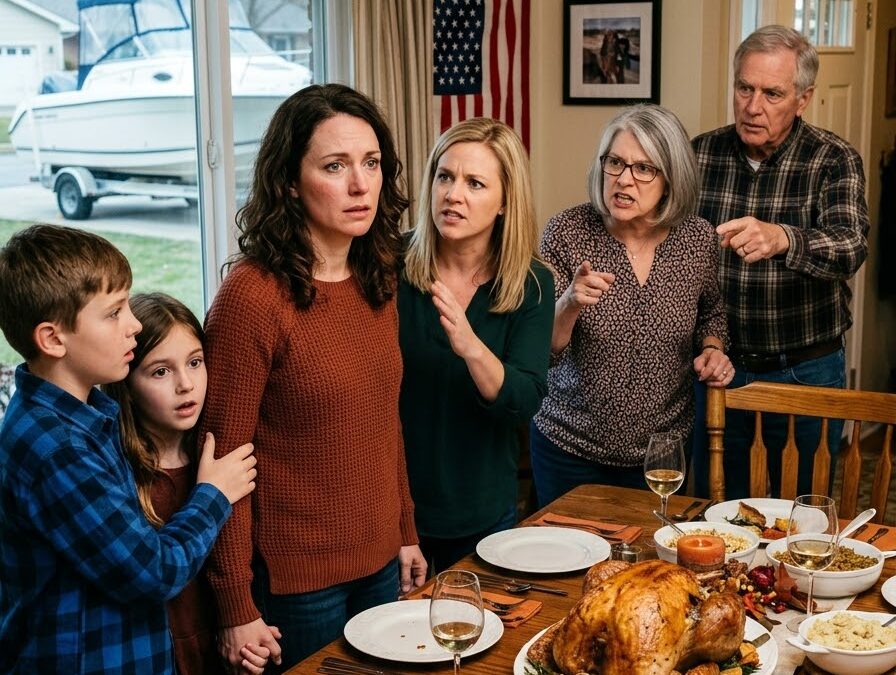
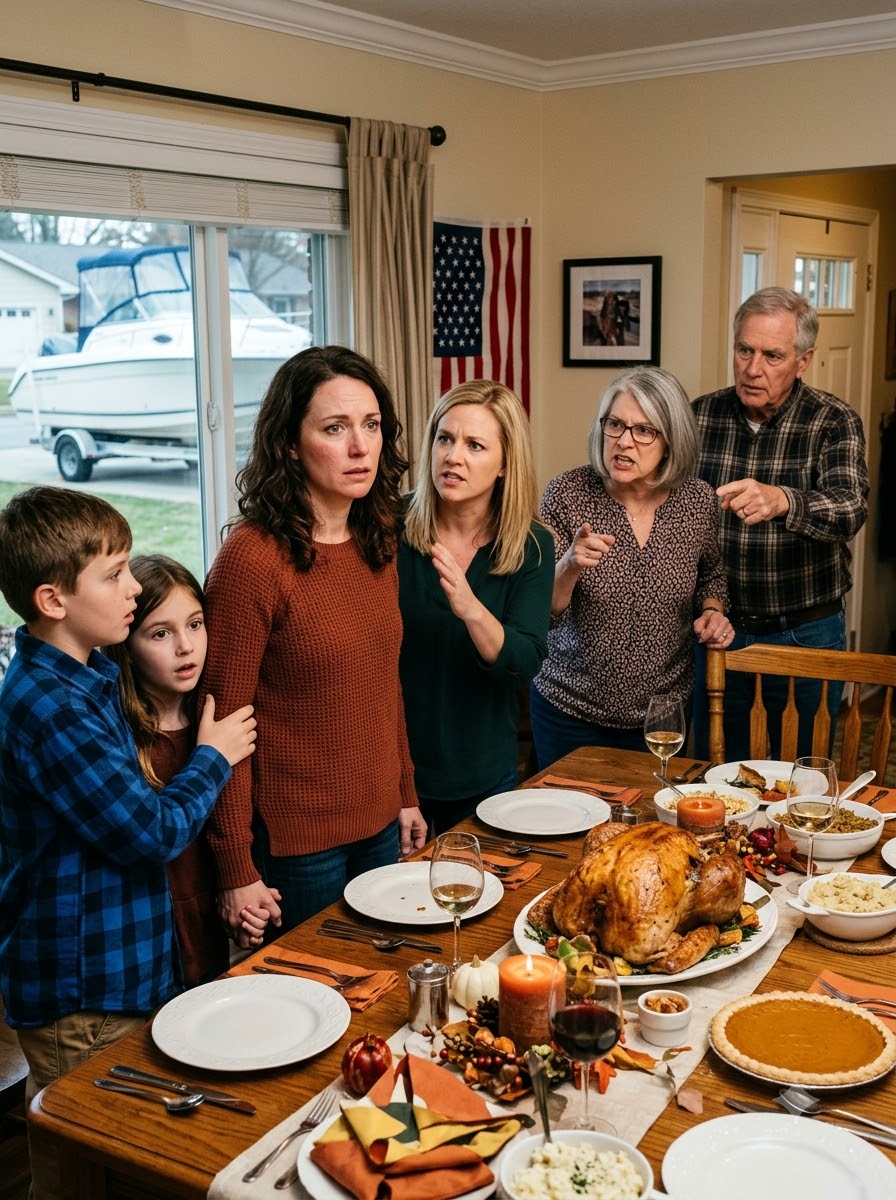
At Thanksgiving, my sister slapped me full in the face in front of my 12-year-old twins because I asked when she would repay the $20,000 I had lent her.
The room went quiet except for my mother.
She did not ask if I was bleeding. She stood up and screamed that I had humiliated her daughter.
My father looked at my mother first. Then he pointed at the door.
“Get out. We don’t need you.”
I took my children’s hands and walked past the pumpkin pie I had baked that morning.
I did not raise my voice.
I did not beg.
At 11:40 that night, I opened my banking app and stopped the payment that had kept their roof over their heads for 4 and a half years.
At 8 the next morning, my father called about that mortgage.
He was not calling to take it back.
He was calling because the house that had just thrown me out still expected my money.
By the time he hung up, he was no longer angry at me.
He was asking the first question my mother had spent years making sure he would never ask.
If you want to hear what I said to him and what he asked me after, hit the like button and stay with me. I’m going to tell you all of it.
To understand what my father was really asking that morning, you have to go back to 1:00 that afternoon when I pulled into my parents’ driveway with a pumpkin pie on my lap.
There was a boat where my father’s truck usually sat.
A base boat, white and green, the kind you tow behind a pickup on the weekends, parked so close to the garage that Dad’s truck had been pushed out onto the street.
My brother-in-law Todd was leaning over the side of it with a rag, working at a spot on the hull like it was something precious.
“Got a deal on her,” he said without looking up. “Cash talks.”
I didn’t think much of it.
I carried the pie and a dish of green beans up the walk, and my mother met me at the door with her hands already reaching for the casserole dish instead of for me.
“You’re on dishes after, honey,” she said. “Since you’re the professional.”
My mother has been saying some version of that sentence to me since I was old enough to hold a sponge.
I used to think it was affectionate.
That day, for reasons I couldn’t have explained yet, it landed differently.
Craig carried Nora and Wyatt’s contributions in behind me. A bag of dinner rolls the twins had picked out themselves.
My father was outside talking to my uncle Dale by the mailbox. And when he came in, he hugged me the way he always does, quick and a little stiff. Like hugging is a task he’s still not sure he’s doing correctly at 69.
Inside, the house smelled the way it always does on Thanksgiving.
Turkey and cinnamon and my mother’s particular brand of stress.
And for a moment, none of it felt any different from every other year I’d walked through that door with a dish in my hands.
We sat down around 1:30, 10 of us at a table meant for eight, elbows touching, my mother’s good china out because it was a holiday.
My father said the blessing, the same one he said every Thanksgiving since I can remember, thanking God for the food and for family and for another year together.
Craig sat beside me, quiet the way he gets at family gatherings that aren’t his own family, watching more than talking.
The twins were down at the far end of the table. Norah already bored with the adult conversation. Wyatt more interested in the roles than anything being said around him.
My aunt Peggy asked Meredith how she was feeling, and Meredith said she was doing better.
And then, because Peggy is the kind of person who follows one question with the real one, she asked about the disability claim.
“Still waiting,” Meredith said, cutting her turkey into small, careful pieces the way she’s had to eat since she was 15. “11 months and they still want another form. The system’s a joke.”
I watched my father’s hand go still over his plate just for a second.
He didn’t say anything.
He set his fork down, picked it back up, and kept eating.
My mother turned to me before the silence could stretch.
“Alicia’s doing great, though, aren’t you? Six fans now.”
“Two, Mom,” I said. “Same as last year.”
“Well, it sounds like a lot to me,” she said.
And the conversation moved on to whether Dale’s knee replacement had actually helped or just given him a new thing to complain about.
“I want to be honest about something.”
I heard Meredith say, “Still waiting.”
And some old instinct in me filed it away as one more thing not to poke at.
I have spent 26 years not poking at things in this family.
But I had a decision already made before I sat down at that table, made 3 days earlier at my own kitchen counter with Craig standing across from me, and I intended to keep it.
Dessert came out at 2:40.
I had baked the pumpkin pie myself that morning, the way I do every year, and I was cutting the first slice when I asked my question.
I kept my voice low.
I kept it kind.
I am not proud of much about that day, but I am proud of how I asked.
“Mirror,” I said, “I’m not asking for all of it right now. I know the van’s dying and I could use some of it back. But is there any news on the backpay?”
Meredith’s fork stopped halfway to her mouth.
“Are you seriously doing this at Thanksgiving?”
“I’m just asking if there’s news.”
“It’s $20,000, Mayor,” I said, because I thought foolishly that saying the number out loud might make the conversation more honest, not less.
My father’s head came up.
“20,000?” he said, looking from me to Meredith. “I thought it came—”
He never finished the sentence.
Meredith stood up so fast her chair scraped back against the floor, and she slapped me before I had time to understand what was happening.
The sound of it was louder than I expected, a flat crack that stopped every conversation at that table at once.
My hand was still holding the pie server.
Norah screamed.
Wyatt grabbed my arm.
My mother was on her feet almost as fast as Meredith had been.
“How dare you humiliate her?” she said, her voice climbing, pointing a finger at me like I was the one who had raised a hand to someone. “In front of everyone.”
I didn’t say anything.
My cheek was burning and my ears were ringing slightly, and I was doing the thing I always do when I am too shocked to feel the right amount of anger yet, which is go very still and very quiet.
My father looked at my mother.
I noticed that.
I noticed it then, and I would think about it for weeks afterward, the half second where his eyes went to her face before they came to mine, like he was checking which version of this moment he was supposed to have.
Then he pointed at the door.
“Get out,” he said. “We don’t need you.”
I set the pie server down on the tablecloth.
I picked up my purse.
I took Norah’s hand in one of mine and Wyatt’s in the other.
And I walked past the rest of that pumpkin pie, past my aunt Peggy staring down at her napkin, past my uncle Dale looking anywhere but at me, and out the front door Craig was already holding open.
I did not raise my voice on the way out.
I did not beg anyone to explain themselves.
Some people would call that weakness.
It wasn’t.
It was the first moment in 26 years that I understood all the way down that nothing I said in that house was going to change what that house had already decided about me.
I had one question that afternoon.
It wasn’t the one they thought I was asking.
[snorts]
To understand why that room reacted the way it did, you need to understand how money worked in that house because it had nothing to do with what anyone could see.
My parents bought their house in 1994, a modest three-bedroom on the east side of Tulsa.
The kind of place with a carport instead of a garage and a maple tree in the front yard that was barely taller than the roof line back then.
My father worked 44 years at a plant that made components for small aircraft engines, standing at the same machine most of that time, coming home with metal shavings in the cuffs of his pants.
My mother worked at the post office.
From the day they married in 1979, my mother handled the money.
Every Friday, my father brought home his check and handed it to her whole without opening the envelope.
And every month, the bills got paid and nothing ever bounced.
And that was the extent of what my father knew about our family’s finances for 46 years.
“Your mother handles that,” he used to say, like it was something to be proud of.
And in a lot of ways it was.
She never once let us go without.
But there is a difference between trusting someone and never once checking.
And my father never once checked.
There was a file cabinet in the little room off the kitchen my parents called the office. A beige two-drawer thing with a lock.
And my mother kept the key on the same ring as her car keys.
Most of what was in there was ordinary. Insurance papers, tax returns.
But there was one folder in the top drawer that nobody but my mother touched, and it had been there longer than almost anything else in that cabinet.
It was gray and it said Meredith Medical on the tab in my mother’s handwriting.
I think about that file cabinet more than almost anything else from my childhood.
It sat in a room barely big enough for a desk and two chairs, and my mother would disappear into it after dinner some nights, and we all understood without ever being told directly that whatever happened in there was not for us to ask about.
My sister was diagnosed with Crohn’s disease in 1999 when she was 15.
She’d been losing weight for 3 months and nobody could figure out why.
And then one night she doubled over in pain at the dinner table and we ended up in the emergency room.
And a week later we had a name for what was wrong with her.
It is a real disease.
It is not something anyone in this story made up.
And I want to say that clearly because everything that came later does not erase that my sister has genuinely suffered with her body for 26 years.
I was 19 that year, taking classes at the community college and working two shifts a week at a diner.
My mother started that gray folder within a month of the diagnosis, hospital bills and insurance letters and prescription records.
And she also started saying a sentence to me that would define the next two and a half decades of my life.
“You’re the strong one, Alicia,” she told me, standing in that kitchen with a stack of medical bills in her hand. “She needs us. You just need to hold on.”
I cut back to part-time at school.
I picked up more cleaning jobs.
By the time I was 22, I was writing checks for my sister’s medication out of my own account when my parents came up short.
$4,000 over about 3 years.
And I never told anyone.
I didn’t think of it as a debt.
I thought of it as what a strong daughter does.
I remember one Christmas, maybe 2005 or so, watching my mother slide an envelope into that folder before anyone else came downstairs.
Quick and practiced, the way you’d hide something you didn’t want examined too closely.
I didn’t think anything of it at the time.
Children rarely question the shape of the sacrifices being asked of them until much later, if they question them at all.
That folder got thicker every year.
26 years later, it would be the thing that ended my mother’s version of this family.
But I’m getting ahead of myself.
I built a life alongside all of that.
I married Craig Dunn in 2007, a good, steady man who manages a regional grocery chain and has never once raised his voice at me in 18 years of marriage.
In 2009, I started Bright Side Home Cleaning with one used van and a handful of clients I’d picked up doing side work.
By the time Nora and Wyatt were born in 2013, I had six employees and two vans, and I kept the Coleman name because it was already on the business.
Craig set one rule early in our marriage, back before the twins were born.
“If your family asks for money,” he told me, “we decide together. Not because I don’t trust you, because I’ve met your mother.”
I laughed when he said it.
I agreed to the rule easily, the way you agree to something you don’t think you’ll ever actually be tested on.
I kept that rule for 14 years.
Then my father retired.
He lost his job to a round of layoffs in August of 2020, 4 years earlier than he’d planned, and his pension came in smaller than either of my parents had budgeted for.
My mother retired from the post office that December.
And in May of 2021, on a Tuesday afternoon, my mother called me while I was folding laundry and told me the mortgage was $1,600 a month and they were 400 short every month since Dad’s pension came in.
“Then let me just cover the whole thing,” I said.
It felt like an easy decision.
It felt like the kind of thing the strong one does.
“Don’t tell Dad it’s all of it. He’d be embarrassed.”
“I’ll handle your father,” my mother said.
She gave me the account number for their joint checking that same call.
She told me to send it on the 28th of each month so it would clear before the mortgage was due on the 1st.
I set up the recurring transfer that night.
$1,600.
And the first payment went out on May 28th, 2021.
I never saw a mortgage statement.
I never asked for one.
That was the first mistake, and it lasted 54 months.
There is a pattern to how a family decides who gets thanked and who gets used.
And I lived inside that pattern for years without ever naming it.
It doesn’t announce itself all at once.
It arrives in small installments.
A toast here, a missing thank you there, until one day you look back and realize the pattern has a shape.
And the shape has your name written into every quiet corner of it.
Meredith married Todd in June of 2017.
I paid $2,400 for the photographer as my gift to them.
And on the day of the wedding, I spent the reception hauling folding chairs and running a mop over the reception hall floor with two of my own employees because the venue’s cleaning crew had cancelled and somebody had to do it.
In her toast, my mother thanked everyone who made the day possible.
She thanked Peggy.
She thanked Dale for lending his truck.
She thanked a man from church who’d loaned some folding chairs.
She did not say my name.
“She thanked the guy with the chairs,” Craig said to me quietly later, while I was still in my cleaning clothes at my sister’s wedding. “She didn’t say your name.”
“It’s M’s day,” I told him, and went back to mopping.
That was the pattern.
I paid and somebody else got thanked.
It had started long before that wedding.
When I went into labor with the twins in May of 2013, my mother came to the hospital, stayed about two hours, and then left because Meredith had a bowel prep scheduled for a procedure the next afternoon.
“Mir’s prep starts at 4,” she said. “I have to go.”
My father stayed.
He held Wyatt in the hallway for 4 hours while I recovered from a C-section.
And when I woke up and asked where everyone was, he was still there, asleep, sitting up in a plastic chair.
“I’m still here,” he said when I touched his arm.
I would need to remember that later when he was the one who told me to leave.
In 2016, a windstorm tore shingles off my parents’ roof, and I paid $6,800 to have it replaced because my mother said the insurance deductible was more than they could manage that month.
3 years later, in June of 2019, my parents refinanced the house, pulling out an additional $25,000.
My mother told me the money was for the roof and for one of Meredith’s procedures.
I knew the roof had already been paid for by me 3 years earlier.
I didn’t say anything.
My father mentioned the new mortgage payment to me once that same summer, standing in the driveway with a cup of coffee.
“Payment’s a thousand and change now,” he said. “Manageable.”
My mother, a few feet away, said, “Close to that. Don’t worry about it,” and changed the subject to whether I’d seen the new grocery store going in on 61st Street.
A thousand and change.
I heard it.
I filed it away somewhere I wouldn’t have to look at it.
Right next to everything else.
I’ve asked myself many times since why I never corrected any of it.
Why I let my mother believe I was sending $600 a month when it was nearly three times that.
Why I let my husband believe it was a few hundred instead of the real figure.
I think the honest answer is that admitting the size of it out loud would have meant admitting how much of myself I’d handed over without ever being asked to.
It’s easier to carry a secret than to carry the shame of realizing you built it yourself.
I want to tell you about the lie I told because it matters.
In the spring of 2021, not long after I set up that transfer to my parents, Craig asked me how much I was sending them.
I told him a few hundred a month to help with the house.
That was not true.
I never corrected it.
Every year after that, when Craig suggested we replace the work van with 210,000 m on it, the one my employee Tammy drove 3 days a week, I told him business was tight and we’d do it next year.
We said that for 3 years running.
On the night of Thanksgiving, sitting at my own kitchen table after the twins had finally fallen asleep, I opened the banking app, and I did the math I had never once let myself do.
54 transfers.
$1,600 each.
I had never added it up.
I think some part of me was afraid of the number.
The way you’re afraid to step on a scale after a year, you know, wasn’t good to your body.
$86,400.
I did the math for the first time on the night my own father told me to get out of his house.
But before I tell you what I did with that number, you need to know about the other one.
The $20,000.
Because that was the debt everyone at that table had actually been talking about.
And I still didn’t know that night what those five photographs my sister sent me back in January had left out.
I should say clearly that none of what follows changes the fact that my sister was genuinely frightened in that hospital bed or that Crohn’s disease has genuinely shaped her entire adult life in ways I have never had to face myself.
What changes is what happened to the help I offered because of it.
My sister spent six days in the hospital in December of 2024, from the 9th to the 15th, when her Crohn’s flared badly enough to cause a partial bowel obstruction.
It was frightening.
I drove over most evenings after work and sat with her, and my mother was there constantly, always with that gray folder and a legal pad, writing down notes I assumed were about her recovery.
My father stood in the hallway a lot, bringing everyone coffee because standing in a hallway holding a cup of coffee was the only way he knew how to help.
Todd was there for about a third of those six days.
He had work, he said.
“They’re saying we owe all of it, Lis,” Meredith told me one night, gripping my hand from the hospital bed. “All of it.”
I told her we’d figure it out.
“Just get better,” I said.
I meant it the way you mean things you haven’t thought through yet.
I noticed, though I didn’t think much of it at the time, that my mother wrote something on her legal pad that said, “Call insurance regarding appeal.”
She knew there was insurance.
She knew there was a process.
I filed that away, too, without understanding yet that I was filing it.
3 weeks after Meredith came home, on January 12th, my phone lit up with five photographs.
Hospital bills.
The kind with a lot of small print and a big number at the bottom labeled amount build.
The total across all five came to $19,640.
Meredith asked for 20,000, round numbers, and she promised to pay me back the second her disability back pay came through.
“I hate asking,” she wrote. “The second my disability back pay hits, it’s yours. Every dollar.”
I sent $12,000 on January 14th and 8,000 more on January 16th, with the memo line reading hospital loan because some instinct in me even then wanted a record.
I told Craig it was about $5,000 for Mr. hospital costs.
That was the second lie.
I didn’t notice where those photographs ended.
Cut off cleanly just below the total build line, with no insurance paid line and no patient responsibility line anywhere in the frame.
I noticed the number at the bottom.
That’s what my sister was counting on.
Whether she’d have put it to herself in those words or not, I paid rent to nobody for the version of my sister I still believed in.
I checked in on her by text every couple of weeks that spring, and she always answered with something short and grateful sounding.
And I told myself that was enough, that the money would come back eventually, that I didn’t need to make her feel worse by asking.
10 months went by.
In April and again in July, Meredith texted the same two words.
“Still waiting.”
In September, she showed up to a family dinner with a brand new phone.
That same month, my employee Tammy, a single mother who has worked for me for 3 years, asked to borrow $300 to cover a car repair.
She paid it back in full on October 10th with a handwritten thank you note I still have stuck to my refrigerator.
Two weeks later, my own van, the one with 210,000 miles, threw its transmission, and the repair cost $2,300 I hadn’t planned to spend.
I wrote a text to my sister 11 times that November.
I deleted it 11 times.
On November 20th, Craig found the 12th draft still sitting in my phone.
He sat down across from me at the kitchen counter and told me gently to just ask her in person at Thanksgiving, quietly after the meal, not in a text where she could take 3 days to answer or not answer at all.
“And if she’s not a decent person about it?” I asked him.
“Then you’ll know,” he said.
I baked the pumpkin pie the next morning the way I do every year, and I agreed to his plan, and I told myself I would only ask if there was news.
Nothing more.
I did not plan for a slap.
I did not plan for my mother’s voice climbing over the table or my father pointing at his own front door.
You know what happened when I asked.
What you don’t know is what happened after I closed the car door.
The drive home took 25 minutes from the east side of Tulsa down to our house on the south side, and it was the longest 25 minutes I can remember.
In the back seat, Nora was quiet for most of it.
And then, right as we turned onto our street, she asked the question I’d been waiting for and dreading in equal measure.
“Why did Aunt Mayor hit you?”
“Because I asked her a question she didn’t want to answer, baby,” I told her.
I could see the red mark on my cheek in the rearview mirror, already starting to fade at the edges.
Wyatt held my hand the whole way and didn’t say anything at all.
Craig kept both hands on the wheel, and at a red light two blocks from our house, he finally spoke.
“Whatever you decide,” he said, “I’m with you. But decide.”
I didn’t know yet what I was deciding.
By the time we pulled into our driveway, I did.
I just didn’t know if I’d actually be able to go through with it.
The house was quiet by the time we got the kids settled.
Nora didn’t want to talk about the slap anymore, but she wanted the hallway light left on, which she hadn’t asked for since she was nine.
Wyatt fell asleep almost the moment his head hit the pillow, the way he always does when something has worn him out more than he can put into words.
I checked on both of them twice before I finally came back downstairs.
The kids went to bed around 10:00.
Craig stayed up with me at the kitchen table, not saying much, just present.
The way he does when he knows a decision is mine to make and not his to make for me.
He made a pot of decaf neither of us really wanted just to have something to do with his hands.
I thought about calling my mother.
I thought about it for a long time, actually, turning the idea over the way you turn over a stone to see what’s living underneath it.
I imagined the conversation going the way every conversation with her had gone for 26 years.
My anger absorbed and repackaged as my problem.
My hurt somehow becoming evidence of my selfishness.
I didn’t call.
At 11:40, I opened the banking app on my phone.
The recurring transfer was right there where it always was.
Mom and Dad.
Mortgage.
$1,600.
Next scheduled date, November 28th.
My thumb hovered over the cancel button for longer than I want to admit.
I thought about the gray folder.
I thought about the roof I paid for twice.
I thought about my mother saying, “You’re the strong one, Alicia,” in that kitchen when I was 19 years old.
And I thought about my father pointing at his own front door a few hours earlier and telling me they didn’t need me.
Fine, I thought.
Let’s see.
I canled it.
The confirmation screen told me the change could not be undone before the next scheduled date.
There was something almost anticlimactic about it.
A small gray box on a phone screen.
No dramatic music.
No sense of a curtain falling.
Just a line item disappearing from a list.
I closed the app, set my alarm for 6, and went to bed knowing I probably wouldn’t need it.
I slept maybe 2 hours, drifting in and out, replaying the sound of that slap and the sight of my father’s hand rising to point at the door.
I woke before my alarm and lay there in the dark for a while, listening to Craig’s steady breathing beside me, wondering if I’d made a decision I could live with or a mistake I’d spend years regretting.
I didn’t know yet which one it was going to turn out to be.
The phone rang at 8:00 exactly.
“Dad,” the screen said.
“Hey, kiddo,” he said, and his voice was ordinary, the voice he uses every month, like this was any other call. “Your mother says your 600 didn’t come through. Mortgage is due Monday.”
“You told me you didn’t need me,” I said.
There was a pause on his end.
“It was Thanksgiving. Everybody was—”
“Dad,” I said. “It’s not 600, it’s 1600. It has been 1,600 every month since June of 2021.”
8 seconds of silence.
I counted them.
“Your mother said—” he started.
And then I heard her voice in the background, sharp and close to the phone.
And then the sound of the phone changing hands.
“Don’t you dare do this to your father,” my mother said. “Don’t you dare.”
The call ended.
I don’t know if she hung up or if he did.
I sat there in my kitchen with the phone still warm in my hand, and I understood something I hadn’t let myself understand the night before.
My father hadn’t been lying to me for 4 and 1/2 years.
He’d been lied to.
And I had just handed him the first piece of proof.
I pulled up the transfer history.
54 payments, month after month, each one align with a date and an amount.
And I sat there and screenshotted them one year at a time while the coffee maker finished behind me.
My mother had been keeping two versions of this family the entire time.
One for my father.
One for me.
Craig came into the kitchen in his robe, saw my face, and asked, “How much, Lis?”
“The real number? 1,600 a month,” I said. “54 months. And the 20,000 was 20, not 5.”
He didn’t say anything for a moment.
“I need a minute,” he said, and left for work early before either of us had really talked it through.
I sat alone with 54 lines of transfer history and a cold cup of coffee.
That was the first price I paid for what I’d done.
It would not be the last.
The messages started the next morning.
Meredith texted first.
“Mom says you cut them off over money. Dad’s going to lose the house because you got your feelings hurt.”
And then, a few minutes later:
“It was one slap and honestly, you deserved it.”
My mother left a voicemail the following evening.
Her voice was flat and wounded at the same time, a tone she has perfected over decades.
[snorts]
“Your father hasn’t eaten,” she said. “I hope you’re happy.”
I didn’t respond to either of them.
I took screenshots.
And I noticed something that told me more than the messages themselves.
Neither one of them said the number.
Not once.
Nobody wrote 1600.
Nobody wrote 600.
The silence around that specific number told me they knew exactly what it meant to say it out loud.
For those first two days after the call, I moved through my own house like a stranger in it, running the business as usual, quoting jobs, answering calls from clients, while some other part of my mind kept replaying 8 seconds of silence on a phone line.
I didn’t cry.
Not really.
I just felt strangely light, the way you feel after setting down something heavy you’d forgotten you were carrying.
Craig and I sat down properly on the night of December 1st, 3 days after the call.
He didn’t bring up my family first.
He brought up the van, the one with 210,000 mi, that I’d let Tammy keep driving instead of replacing it because replacing it would have meant admitting where the money was actually going.
“You’re not the one who did something wrong to them,” he told me. “But you did something wrong to me.”
“Everything on the table from now on.”
“Everything,” I said.
And I meant it.
I showed him the full transfer history that night and the texts from Meredith and the two lies I’d told him over the years.
And he listened without interrupting.
And at the end of it, he just nodded once, the way he does when he’s decided something and doesn’t need to make a speech about it.
My mother called the next morning at 7, and her voice had changed completely from the voicemail.
Business-like.
Rehearsed.
“Let’s not do this,” she said. “Just send the 600 to your father’s account and we’ll forget Thanksgiving ever happened.”
I understood immediately that my father was sitting somewhere near her, close enough to hear her side of the call, and that she was trying to lock the old number back into place in front of him before he could ask any more questions.
“Which 600, Mom?” I asked.
There was a long silence.
And then she hung up without answering.
But she had said it in front of him.
And for the first time in a long time, my father was actually listening.
While I waited to see what he would do with what he’d heard, I did some looking of my own.
Todd and I had been friends on Facebook since Meredith’s wedding, though I’d muted most of what he posted years ago because of his politics.
On December 6th, I unmuted him and scrolled back to February.
There it was.
A post from a boat dealership dated February 23rd, 2025.
“Congrats to Todd V on his 2016 base boat. Cash customer.”
Meredith had commented underneath it.
“Best husband. He earned it.”
6 weeks after I’d sent $20,000 for hospital bills, my brother-in-law bought a boat with cash.
I saved the screenshot and told myself not to jump ahead of what I actually knew.
A boat and a hospital bill were two facts sitting next to each other.
They weren’t align yet.
On the evening of December 8th at 10 6, my phone lit up again.
“Dad, cell.”
“Don’t tell your mother I called,” he said before I’d even finished saying hello. “Can you meet me tomorrow? I’ve got some papers I don’t understand.”
I didn’t know what to expect walking into that meeting.
Part of me was braced for him to have changed his mind overnight, to have talked himself back into believing whatever version of events let him sleep easiest.
That has happened before in smaller ways over smaller disagreements.
This time was different, though I didn’t know it yet.
We met at a diner on the east side the next morning, a place with orange vinyl booths that hasn’t changed its menu since I was a teenager.
My father was already there when I arrived, a bank envelope sitting on the table in front of him, still sealed at one corner like he hadn’t quite been able to bring himself to open it all the way.
He told me what he’d done.
The day before, he’d gone to the branch where he and my mother have banked for over 30 years, shown his driver’s license, and asked for 24 months of statements on their joint checking account.
46 years of marriage.
And it was the first time in his life he’d ever asked to see one.
He slid the papers across the table and pointed at a line with his finger, tapping it twice like he needed to make sure it was real.
“28th of the month. Transfer from A. Coleman, $1600.”
Then on the 1st:
“Mortgage payment, $1,10.”
Then on the 29th:
“Zel to Meredith Vance, $500.”
And below that, a phone bill charge of $90 that repeated every month like clockwork.
“Your mother told me the payment was $1,10 and you covered 600,” he said. “I thought we made up the rest ourselves. Pension, Social Security.”
“You did make up the rest, Dad,” I told him. “She just sent your rest to Meredith.”
He sat with that for a while, turning his coffee cup slowly on its saucer.
“I never opened one envelope,” he said, mostly to himself. “46 years.”
Then he asked me to do the math out loud because he wanted to hear the total from someone who wasn’t his wife.
I took a napkin and wrote it out for him.
54 payments * 1,600 is 86,400.
54 payments time 1,10 is 54,540.
The difference: $31,860.
500 a month plus 90 going somewhere else every single month for 4 and 1/2 years.
“That’s a truck,” he said quietly.
Then he picked up his phone, scrolled for a moment, and turned the screen toward me.
A text from Meredith, dated October 5th.
“Dad, disability finally came through. 11,400 back pay. Don’t tell Mom I told you first.”
I read it twice.
My sister had known for nearly 2 months before Thanksgiving that her backay had arrived, and she’d sworn my own father to secrecy about it, turning him into an accidental accomplice in a lie aimed at me.
“She hit you the second I opened my mouth,” he said. “I thought she was just mad.”
“She wasn’t mad. She was fast.”
He folded the napkin with the math on it into quarters and put it in his shirt pocket.
“I’m paying December myself,” he said. “From our money. I want to see if it’s actually there.”
On December 12th, he called the mortgage company directly and made the payment himself.
$1,10 out of the joint account.
And it went through without a hitch.
The money had always been there.
It had simply never been his to know about.
That night, he moved his things into the spare bedroom.
My mother found out the next morning.
“You went behind my back to the bank,” she said.
“You went behind mine for 4 years, Gail,” he said back.
And it was the first time I ever heard my father call my mother by her first name in anger.
That same day, my mother called her sister Peggy and told her my father had been forgetful lately, confused about things.
Maybe it was his age.
On December 13th, Peggy called me, her voice careful.
“Is your father okay?” she asked. “Your mother says he’s confused.”
“Is he?”
I told her he was the least confused he’d been in years.
My mother had one weapon left in that house.
The gray folder in the file cabinet she’d kept locked and untouched for 26 years.
She had no idea my father had made a spare key to that cabinet back in 1994 when they first moved in and had never once needed to use it until now.
On Sunday, December 14th, while my mother was at church, he used it.
Inside the folder marked Meredith Medical, he found a hospital billing statement from February that neither of us had ever seen.
Total charges: $19,640.
Insurance paid: $16,460.
Patient responsibility: $3,180.
Stamped paid February 7th, 2025.
Behind it, a copy of a Social Security disability approval letter dated September.
He photographed both pages and sent them to me with almost no message at all.
“$3,180,” he wrote. “That was the bill. Your sister told you it was all of it.”
I sat at my kitchen table and laid three dates side by side in my mind.
January 16th, the money went out.
February 7th, the real bill got paid for a fraction of what I’d sent.
February 22nd, 6 weeks after the loan, a boat dealer posted about a cash customer named Todd.
Now there was a line.
Not just two facts sitting near each other.
I didn’t respond to his message right away.
I sat with those three dates for a long time, letting the shape of what they meant settle in fully before I let myself feel anything about it.
Anger would come later, in the room where it actually mattered.
For now, I just needed to understand what I was looking at.
A few hours later, my father sent one more text.
“Sunday, 2 p.m. Everyone at the house. I asked Peggy to come. I’m asking you, Alicia, not telling you.”
We were back at that table on December 21st, 4 days before Christmas.
But nothing about the room was the same as it had been at Thanksgiving.
The house looked the same from the outside.
The same maple tree bear of leaves now.
The same carport with my father’s truck back where it belonged.
But walking up that path a second time felt entirely different than it had four weeks earlier.
I wasn’t walking in as someone hoping to be heard.
I was walking in as someone who already knew what the papers in my hands were going to prove.
There was no food this time.
My father sat at the head of the table in the chair my mother usually occupied.
A bank envelope in front of him and a folded napkin beside it that I recognized as the one from the diner.
Peggy sat next to him, her coat still on like she hadn’t decided yet whether she was staying.
My mother stood by the counter for a moment before finally sitting down across from him.
“This is cruel, Vernon,” she said. “4 days before Christmas.”
“Thanksgiving was 4 weeks ago, Gail,” my father said. “Sit down.”
Craig and I sat near the front door in almost the exact spot where I’d been standing when he pointed me out of the house.
Meredith and Todd arrived 15 minutes late.
Todd set a key ring down on the table without thinking about it.
A small rubber fob shaped like a fish hanging from it, the kind that comes free with a boat.
For a moment, before anyone spoke, I looked around that table and tried to see it the way a stranger might.
10 people gathered close on a Sunday afternoon.
Everyone dressed like it was any other family visit.
Nobody watching from the street would have guessed what was about to happen inside.
My father opened the bank envelope and began to read from the statements out loud slowly, the way he probably once read Torque specifications off a work order.
“28th,” he said. “From Alicia, 1600. First, mortgage, 1,010. 29th, to Meredith, 500.”
He turned the page and read the next month.
The numbers identical.
The pattern unbroken.
“I was managing our household,” my mother said.
“With her money,” my father said. “And you told me she sent six.”
“I didn’t know what Mom was—” Meredith started.
“You told me in October, Meredith,” Peggy said, cutting her off, her voice quieter than everyone else’s, but somehow the one that filled the room in this kitchen. “You said Alicia sends a lot more than Vernon knows and not to tell him.”
She looked at my mother.
“You asked me to tell people at church that Vernon was losing his memory. Gail, I’m not doing that. I came here today because I’m done doing that.”
My father looked at me.
“Your turn,” he said.
I laid three things on the table, one at a time.
The photograph Meredith had sent me in January, cropped clean below the total.
The hospital statement my father had found in the gray folder showing the real number.
The screenshot of the boat dealership’s post from February 23rd.
“$3,180,” I said. “That was the actual bill. Where did the other $16,820 go?”
Nobody answered for a moment.
Then Todd, staring at the table, said, “The boat was her idea. She said, ‘Your sister wouldn’t miss it.’”
Meredith turned to look at him like he’d just handed a stranger her diary.
“She has been sick her whole life,” my mother said, her voice rising the way it had at Thanksgiving.
“I know, Mom,” I said. “I paid for her pills when I was 22. I’ve never once asked her to be well. I asked her to be honest.”
My father set his phone on the table.
Screen up.
The October text still open.
“And October, Myrr,” he said.
Meredith’s face went pale in a way I’d never seen before.
My father read the message aloud, the words landing heavier from his mouth than they had on the screen.
“Disability finally came through. 11,400 back pay. Don’t tell Mom I told you first.”
“You sat at this table and told your sister you were still waiting,” he said. “I’ve thought about it every night for 3 weeks. You weren’t angry when you hit her, Mare. You were quick. You hit her so I’d stop talking.”
Nobody said anything.
Meredith looked at my mother.
And my mother looked down at the tablecloth.
And Todd turned the little fish keychain over once in his fingers and didn’t say anything else at all.
My sister never answered my father’s question.
Her silence sat in that room longer than any words could have, and everyone at that table understood exactly what it meant.
I watched my sister in that silence and felt something I hadn’t expected to feel, which was not triumph.
It was closer to grief for the version of her I’d spent 26 years protecting.
The version who needed me because she was sick.
Not the version who had learned that being sick meant she never had to be honest either.
Both of those things could be true about the same person.
I was only now letting myself see the second one.
I thought about Norah’s question from the car weeks earlier.
Why did Aunt Mare hit you?
“Because I asked her a question, and she didn’t want to answer, baby.”
[snorts]
I had answered my own daughter honestly before I’d even understood how honest that answer really was.
Finally, my mother spoke again, and her voice had shifted from defensive to something almost desperate.
“You said it yourself, Vernon,” she said. “We don’t need her. You pointed at the door.”
For a moment, nobody at that table moved.
Even Craig, who had been silent the entire meeting out of respect for the fact that this wasn’t his family to referee, shifted slightly in his chair.
The way you do when you sense a room is about to tip one way or the other.
My father was quiet for a long moment after my mother said it.
When he finally spoke, his voice had none of the defensiveness I might have expected.
It had something closer to grief in it.
“I said what you’ve been saying for years, Gail,” he said. “Alicia’s too busy for us. Alicia doesn’t call enough. Alicia thinks she’s better than this family now that she’s got her business. I said it because you’d been saying it to me for years in one form or another. And I never once checked if any of it was true.”
He looked at me.
“It wasn’t.”
I didn’t cry.
I put my hand flat on the table next to the three pieces of paper I’d laid out, and I let that sit in the room for a moment before I said anything back.
“Alicia,” my father said, “say what you need. I’ll make it happen.”
My mother started to say something else, some version of an objection, but my father held up a hand and she stopped.
I told them what I needed.
Four things.
And I said them the way you’d read a grocery list because I didn’t want this to sound like revenge, and I don’t think it was.
First, not one more dollar would go into my mother’s account ever again.
Second, whatever remained of the $11,400 Meredith had received would come to me immediately, and the rest of the 20,000 would be repaid at $250 a month on the 15th.
Third, any future medical bill for my sister that I chose to help with would go straight to the hospital or the pharmacy.
Never through anyone’s hands ever again.
Fourth, nobody would discuss me at church or with Peggy without me being in the room.
“So you’re punishing your sick sister?” my mother said.
“I’m paying her doctor’s mom,” I said. “I’m just not paying her husband’s boat.”
My father looked at Meredith.
“Tomorrow morning,” he said, “I’m driving you to the bank.”
My sister looked at him the way she used to look at me whenever she needed something.
A specific softening around the eyes that had worked on me for 26 years.
It didn’t work on him.
Not anymore.
I folded my three pieces of paper and left them sitting on the table when we got up to go.
I didn’t need to carry them home.
They’d already done what they needed to do.
The next morning, December 22nd, my father drove Meredith to the bank himself.
$6,000, the remainder of her back pay after whatever else it had gone toward, moved into my account with the memo line reading, “Loan repayment 1.”
Todd didn’t go with them.
That night, my father slept in the spare bedroom again.
And I heard later that my mother told Peggy on the phone he’d come around eventually.
“I don’t think so, Gail,” Peggy told her.
Christmas came three days after that.
I hadn’t expected the phone to ring at 7:30 in the morning.
And when it did, the screen said, “Dad” again.
But this time he was calling from Peggy’s house, where he’d gone the night before.
“I’m not asking for anything,” he said. “I just wanted to hear the kids.”
I handed the phone to Norah and Wyatt, and they talked to their grandfather for 10 minutes about presents and a video game and whether he’d come to their basketball games in the spring.
I stood in the kitchen and listened.
And somewhere in the middle of it, Norah asked, “Grandpa, are you at Aunt Peggy’s?”
“For now,” he said.
I didn’t know yet where “for now” was going to lead.
I’d find out in February.
The weeks after Christmas settled into a strange new quiet, the kind that comes after a storm has passed, but before you figured out what the landscape looks like now.
I went back to work.
Craig and I talked more honestly than we had in years.
Not just about my family, but about all the small ways I’d learned to manage things alone instead of together.
It was its own kind of repair, slower than anything that happened at that dinner table, and in some ways more important.
Peggy called me on January 11th, a Sunday afternoon, her voice steadier than it had been at the confrontation.
She apologized for 26 years of carrying my mother’s version of events from room to room without once asking me for mine.
She told me she wasn’t going to speak about me at church anymore.
Not for me and not against me.
Just not at all.
I told her that was enough.
I didn’t need her to correct the record.
I just needed her to stop being part of writing it.
My mother started going to church alone after that.
Peggy mentioned once, almost in passing, that she sat by herself now in the third pew, the same pew our family had occupied for as long as I could remember.
I didn’t feel triumphant hearing that.
I felt something closer to tired.
3 weeks later, my father signed a lease.
On February 1st, he moved into a one-bedroom apartment in a 55 and over community 10 minutes from my house.
He wasn’t filing for divorce.
He told me once, standing in the mostly empty living room of that new apartment with boxes still stacked against one wall, that he simply couldn’t sit across a breakfast table anymore from someone who’d lied to him every morning for 4 and a half years without him knowing it.
On February 3rd, $600 arrived in my account.
Memo line reading:
“The 600, going the right direction this time.”
I called him immediately to tell him he didn’t owe me anything.
“I owe you the years I didn’t ask,” he said. “This is what that costs.”
[snorts]
He told me he’d keep sending it every month until the $31,860 was repaid or he died, whichever came first.
I put the first payment straight into a college fund for the twins and didn’t argue with him again after that.
My mother waited until March to call.
When she finally did on the 20th, there was no apology in her voice, only a kind of brisk impatience, as though enough time had passed that the whole thing should be behind us.
“Your father’s being dramatic,” she said. “Let’s just move on.”
“I’ll come when you can say the number out loud, Mom,” I told her.
The silence on the other end of the line lasted long enough that I almost thought the call had dropped.
Then she hung up.
I bought a new work van on March 28th.
$36,900.
The first real thing I’d let myself buy for the business in 5 years.
Tammy drove it on its first run, and I taped her old thank you note from October onto the visor before she pulled out of the lot.
Meredith’s payments came in reliably now.
$250 on the 15th of every month.
And I logged each one without responding because our relationship at that point was a ledger, not a conversation.
In the middle of April, Meredith sent me something I hadn’t expected.
A hospital statement from a routine follow-up appointment.
And this time, nothing had been cropped out of the photograph.
Patient responsibility: $1,240.
Printed clearly at the bottom, the same as everything above it.
I called the hospital’s billing office myself and paid the $1,240 directly, the way I’d said I would back in December.
And it never passed through anyone’s hands but mine and theirs.
It wasn’t forgiveness.
It was just the system working the way I’d built it to work.
Spring came to Tulsa the way it always does.
All at once.
The maple trees at my own house filling out green almost overnight.
The kind of season that makes it easy to forget how bare everything looked back in November.
I found myself thinking less often about the slap and more often about ordinary things again.
Payroll.
A new client on the west side.
Whether Wyatt needed new cleats before the season started.
By the middle of May, I’d repaid myself in ways that had nothing to do with money.
I had my new van, a routine that no longer required me to hide anything from my husband, and $13,000 of the original loan still outstanding, which Meredith kept chipping away at, $250 at a time.
I also had a birthday to plan.
The twins turned 13 on Saturday, May 16th, and we held the party at our house in the backyard with a cake Craig had ordered from the bakery Norah likes and a table full of the kind of decorations that only matter to a 12-year-old turning 13.
My father arrived early, driving himself over from the apartment, wearing a shirt I recognized as one my mother used to iron for him every Sunday.
He [snorts] brought the twins each a card with cash inside and stayed the entire afternoon, throwing a football with Wyatt in the yard until his niece complained loudly enough that he had to sit down.
My mother sent a card in the mail that arrived 2 days before the party.
$50 folded inside and her signature and nothing else.
No note.
Meredith didn’t come, but she had sent all four of her monthly payments on time since February.
And between those and the $6,000 from December, she’d repaid $7,000 of the $20,000.
My father had sent four payments of his own by then, too.
$2,400 toward the $31,860 he’d set out to repay, a debt that was never legally his, but that he seemed determined to settle anyway.
At one point during the party, Norah tugged on my sleeve and nodded toward my father, who was helping Wyatt light candles on the grill for hot dogs none of the kids actually wanted since they were all holding out for cake.
“Is Grandpa okay?” she asked.
“He’s better than okay, baby,” I told her. “He’s here.”
After the cake had been cut and the last of the guests had gone home, my father asked if he could say grace before everyone finally scattered for the evening.
Something he’d never once done at my table before.
He bowed his head over paper plates and half-eaten slices of cake, and thanked God for another year with his grandchildren, and for a daughter who still let him in the door.
Later, once the kids were inside watching something on television and Craig had brought two glasses of iced tea out to the back porch, my father and I sat together in the two chairs we keep out there.
The same two chairs that have sat on that porch since we moved in.
“I should have asked sooner,” he said, looking out at the yard instead of at me. “About the money. About you.”
I didn’t say anything.
I let him keep going.
“I need you, Alicia,” he said. “I’m asking. I’m not telling.”
“I know, Dad,” I said. “I’m here.”
We sat there for a while after that.
Not saying much else.
Listening to the sound of the twins laughing at something on the television inside, the screen door letting the noise drift out to us in pieces.
I thought about the pumpkin and pie I’d left sitting untouched on a tablecloth back in November.
About a door my father had once pointed me through.
And about how strange it was that the same man had months later asked to say grace at my own table instead.
I don’t know if my mother will ever say the number out loud.
Some part of me suspects she won’t.
That she’ll spend whatever years she has left believing her own version of what happened at that table.
And I’ve made a kind of peace with that.
I’m not waiting on her apology to live my life.
I already have the one that mattered.
They told me they didn’t need me.
They were right about one thing.
They never needed my money.
They needed my silence.
I stopped giving them.








