She called me at midnight, her voice trembling: “Don’t come home. Go somewhere else.” I asked why. She simply said: “Please trust me.” So I listened. A few minutes later… police cars had surrounded my street.
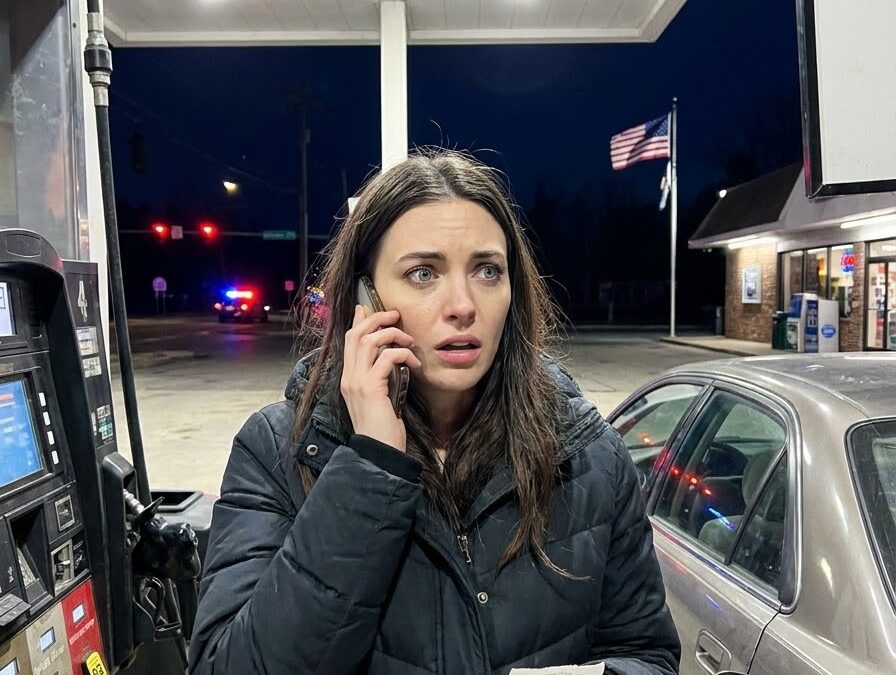
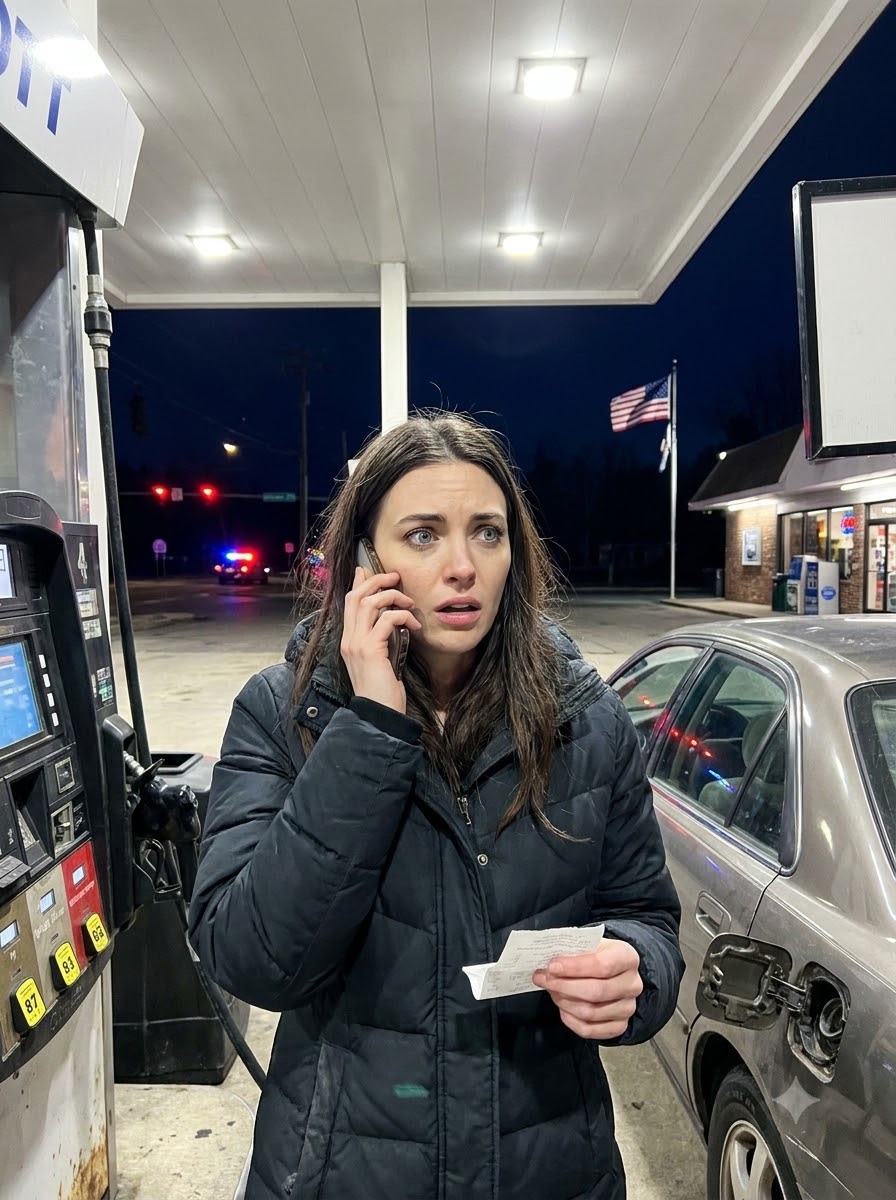
I had the gas nozzle in one hand and my receipt between my teeth when my phone lit up on the hood of the truck.
It was 11:58 at night on Highway 441, and the screen said Grandma.
My name is Miriam Vogle. I’m 33, and I inspect houses for a living.
My grandmother’s voice was shaking.
“Don’t go home. Go anywhere else.”
I asked her why.
She just said, “Please trust me.”
And the line went dead.
So I listened.
Ten minutes later, there were six police cars on my street.
My back porch was on fire, and my brother was sitting on my sidewalk with his hands zip-tied behind him.
That was the easy part of the night.
The hard part was finding out how my grandmother knew and who had known for ten years.
Welcome back to Calm Drama Stories.
This is where families come apart quietly at kitchen tables and in driveways, and where the person everyone counted on to stay quiet finally speaks in a level voice.
If you’ve ever been the one your family called only when they needed something, this one is for you.
Drop a comment and be sure to subscribe.
I called her back before the nozzle stopped dripping.
Four rings, then her voicemail, the one my grandfather recorded in 2014 that she never changed.
I tried again from the driver’s seat.
Nothing.
My grandmother was 79 and lived in the back bedroom of my parents’ house in Belleview, 12 miles south of my place, and she did not make phone calls at midnight.
She went to bed at nine with the news on.
I pulled out onto 441 heading north toward Okala because I didn’t know where else to point the truck, and I told myself I’d decide at the turn.
The phone rang again before I got there.
“Mom, is your brother there yet?”
That was her opening line.
Not hello.
“He’s upset, Miriam. Don’t let him in if he shows up.”
“Why would Grayson be at my house at midnight, Mom?”
“He left a little while ago. Your father heard the garage.”
“Heard what in the garage?”
“Just don’t make it a thing.”
Then she hung up on me, which she does when a conversation stops going her way.
I sat with that for a while.
My grandmother had told me not to go home and wouldn’t say why.
My mother wanted to know if my brother had reached my house and wouldn’t say why.
Neither of them had asked where I was.
I didn’t take the turn onto my street.
I pulled into the gravel lot of the little Baptist church on the corner, six houses down from mine, and cut the lights.
The sign out front was missing a letter, so it said:
WE COME.
The first patrol car passed me with no siren, just blue light sliding across my windshield like water.
Then the second.
Then the third.
I walked.
I don’t know why I didn’t drive the last six houses except that some part of me still thought a woman walking up a sidewalk could not be in trouble.
There was a glow behind my roofline.
Orange and wrong.
An Okala Fire Rescue engine was backing onto my lawn.
An officer stepped in front of me with his palm up.
“Ma’am, I need you to stay back.”
“It’s my house.”
He looked at me the way people look at you when they’re deciding whether you’re about to fall down.
Officer Dyer.
“Was anyone inside?”
“No. My grandmother told me not to go home.”
He wrote that down.
Then he said:
“So she’s the one who called it in.”
I didn’t understand what he meant yet because I was looking past him at the curb.
My brother was sitting on it.
Grayson.
Twenty-seven years old, in the gray hoodie he’d worn at dinner, with his wrists behind his back and a second officer standing over him.
He saw me, and his face did the thing it has done since he was six.
“Mary, tell them I came to help.”
In the grass beside my hose reel, where I had never once set a gas can, there were two red gas cans lying on their sides.
Someone had written VOGLE on both of them in black marker.
All capitals.
The letters leaning left.
My father writes his name on everything in his garage.
I’ve seen that handwriting on a coffee can of screws.
I looked at the cans and then at my brother.
“Help with what, Grayson?”
He didn’t answer.
Behind me, my neighbor, Mrs. Abernathy, was standing in her driveway in a housecoat, holding her own phone with both hands.
Officer Dyer touched my elbow.
“Ma’am, your grandmother. She’s the one who called.”
At seven the next morning, I was standing at the yellow tape in my own backyard, holding a gas station coffee I couldn’t taste.
The back porch was gone.
The kitchen wall behind it was black to the trusses, and the trusses over the kitchen looked like charcoal sketches of trusses.
The rest of the house was standing.
And it stank.
A man in a state fire marshal polo was crouched at what used to be my back door.
When he saw me, he stood up and walked over instead of waving me in.
“Detective Chandler. You’re the owner?”
I said I was.
“You’re a home inspector, so you know why I can’t have you past that tape.”
“I do.”
Then I pointed anyway, because pointing is most of my job.
“The deepest char is at the threshold. Not the yard. Not the porch railing. The door. And that dark line running out into the grass isn’t a yard fire. That’s a trail.”
He didn’t look where I pointed.
He looked at me.
“I don’t discuss origin with homeowners.”
“I’m not asking you to discuss it. I’m telling you what I see.”
The air still smelled like wet smoke with gasoline underneath it.
Sweet and sharp.
Sitting in the grass where the sun hadn’t reached.
He let a second go by.
“You have any photos of this porch before last night?”
“I have 40 of them from the inspection I did on my own house six weeks before closing because I inspect every house I buy the same way I inspect everybody else’s.”
“Send them.”
Then, without changing his tone, he said:
“And where’s the brush pile your brother told my officers you asked him to burn?”
I looked at the slab.
Bare concrete.
My hose reel.
A melted doormat.
There had never been a pile.
My parents pulled up at 7:30 in my father’s truck.
My mother got out before it stopped rolling.
She was still in her scrubs from the dental office.
The pale blue ones.
Name badge pinned crooked, which meant she’d been up all night and never changed.
She came straight to the tape.
And I stood up a little straighter because some old part of me was waiting for it.
“Where is he? Did they take him?”
That was the first thing my mother said to me, standing in front of my burned house.
My father stayed by the truck.
“Maran County Jail, Mom. They took him at about one.”
“He went over there to make things right after dinner. You know how he gets.”
“He got here with a lighter, Mom.”
Then I looked past her at my father, who was studying his boots.
“He brought your gas cans, Dad.”
My father looked at the two red cans on the evidence tarp.
At his own handwriting on them.
Then he looked at his boots again and didn’t say anything.
My mother’s voice dropped the way it does when she wants something to be over.
“Don’t, Miriam. Don’t do this. You can take it. He can’t.”
Mrs. Abernathy was on her porch across the street with her coffee, close enough to hear.
I watched her hear it.
I didn’t answer my mother.
I didn’t have a level sentence ready, and I don’t say the other kind.
She waited two seconds for me to fold.
When I didn’t, she pulled her keys out.
“We’re going to the jail to see about his bond. Come with us or don’t.”
My father got back in the truck without looking at the house.
I stayed at the tape.
It was the first time in my life I’d let them leave without me.
Nine hours before the first patrol car, I had been sitting at my mother’s dining table in Belleview with a plate of her pot roast and a feeling I couldn’t name.
She’d invited me to talk about the house.
I’d closed on the house eight days earlier, so I’d assumed she meant congratulations.
She meant Grayson.
“It’s a three-bedroom, Miriam. You’re one person.”
She said it like a math problem.
“Grayson and Britney could take the back two rooms for a year. No rent. Just until he gets on his feet.”
Brittany looked at her plate.
My father looked at the ceiling fan.
My grandmother sat at the far end with a slice of her own key lime pie in front of her that she never touched.
Under the tablecloth, she put her hand on my wrist.
Dry and cool.
And left it there.
“No,” I said.
“You didn’t even think about it.”
“I thought about it for six years while I saved the down payment.”
Grayson pushed his chair back.
He didn’t yell.
He never yells at the table.
“You bought that house to prove you don’t need us.”
“I bought it because I could.”
He stood up and picked up his keys.
“Enjoy it.”
Then he went out through the kitchen to the garage.
A minute later, I heard my father go out after him and the garage door rolling up.
Nobody finished the pie.
My grandmother’s hand stayed on my wrist until I stood up to leave.
She walked me to the door, which she never does.
And on the porch, she said:
“Drive careful.”
I thought she meant the road.
I didn’t look back at the garage.
The door was still open, and the light was on.
By Friday afternoon, I was sitting on the edge of a bed at a motel on Silver Springs Boulevard with my laptop open and my hair still smelling like smoke after two washes.
The window unit dripped onto the carpet every 11 seconds.
The first call was my insurance adjuster, a woman named Ms. Fen, who talked like she was reading off a card because she was.
“Your claim is on hold pending the fire marshal’s origin and cause determination.”
“I understand.”
“I’m required to tell you that if a family member set this fire with your consent, there’s no coverage.”
“There was no consent.”
“Then we wait for the report.”
And I liked her a little for not pretending it was good news.
The second call was my mother.
“We posted his bond. Twenty-five thousand. Your father took it out of the boat fund.”
“Okay.”
Because I couldn’t think of what else to say about the boat fund.
Then she got to it.
“His lawyer says this is simple. If you tell them you asked Grayson to burn the pile from your renovation, it’s an accident. He’s a kid who did his sister a favor and it got away from him. It all goes away.”
“The renovation was paint and a bathroom vanity. Mom, there is no pile.”
There was a pause on the line.
I heard the dental office phone ring behind her.
So she was at work doing this on her break.
Then my mother said, in the calmest voice I have ever heard from her:
“There could have been.”
I sat there with the phone against my ear and the window unit dripping.
I don’t think she heard herself.
I think that’s the part that stayed with me.
Saturday, I drove down to Belleview to see my grandmother because she was the one person who’d tried to keep me alive that week, and I hadn’t spoken to her since.
My mother answered the door.
She let me in, which surprised me.
Then she didn’t leave the room, which didn’t.
Grandma was in her chair by the window in the back bedroom, the Florida room my parents had closed in for her when she moved down in 2019.
She looked smaller than Thursday.
I sat on the ottoman and took her hands.
She squeezed mine hard.
“Grandma, how did you know?”
Her eyes went past my shoulder to the doorway.
“Not here.”
“Grandma.”
She leaned in an inch.
“Ask me when she’s not home.”
My mother’s voice came from the door.
“Mama’s tired, Miriam. Let her rest.”
“She’s holding my hand, Mom. She’s fine.”
“She’s been confused since Thursday. The doctor said to keep things calm.”
Grandma’s grip on my fingers did not feel confused.
It felt like a woman holding on to a railing.
On my way out, I passed through the kitchen.
Her little flip phone, the prepaid one she’d had for eight years, was sitting on the counter, plugged into the wall next to the sugar jar.
An arm’s length from my mother’s chair.
“It’s charging,” my mother said before I asked.
“Grayson was in the garage,” she said before I asked that either.
When I got to my truck, Britney was standing at the top of the garage apartment stairs with her arms crossed, watching me.
She didn’t wave.
She didn’t go inside either.
She just watched me back out of the driveway like she was memorizing my license plate or deciding something.
Monday morning, I was on my back in a crawl space on the northwest side of Okala with a headlamp on and a spiderweb in my hair because a fire doesn’t cancel other people’s closings.
The buyers were a couple in their late 20s.
First house.
They had followed me around the outside like ducklings.
The husband was crouched at the access hatch.
“Everything okay under there?”
“Depends on how you feel about your junction box.”
The one over my head had a scorch mark on the cover the size of my palm.
Old.
Painted over.
I photographed it three times with the flash and once without.
Then wrote it up on my tablet the way I write everything.
What it is.
Where it is.
What it means.
What to do.
His wife’s face appeared beside his in the hatch.
“Do you ever soften it if the seller’s a nice guy?”
“The house doesn’t know he’s nice.”
She laughed.
Then stopped because she’d remembered something.
“You’re the one from the news, aren’t you? The fire. The brother.”
The crawl space smelled like damp dirt and mouse.
I could feel the cobweb sliding down the back of my bob.
I decided I didn’t have a speech for this.
“Right now, I’m the one under your house.”
That did it.
They backed off.
I finished the run.
And when I slid out of the hatch into the sunlight, the wife handed me a bottle of water without saying anything.
Which is the nicest thing a stranger did for me that month.
My phone had buzzed twice while I was on my back.
Detective Chandler.
No greeting.
Scene’s released. Meet me at your house at 2. Bring the photos.
I sat on the buyer’s side step with dirt on my elbows and typed back a yes.
Then I sat there a minute longer because it was the first time since Thursday anybody had asked me to bring something instead of give something up.
Chandler was already at the back of the house when I pulled up, standing on the slab where my porch had been with his hands in his pockets.
He waited while I walked through the burned kitchen instead of around it because I needed to.
The vinyl floor had bubbled up like skin.
When I got to the threshold, I crouched.
He crouched with me.
The aluminum sill was warped into a shallow bowl, and the char on the framing beside it went deeper than anywhere else I’d seen in the house.
“Deepest char is at my door,” I said. “Not the yard. The door.”
He tapped the sill with the cap of his pen.
It rang hollow.
“You’re not wrong.”
Then he stood up and said the next part to the yard instead of to me, the way people do with hard things.
“Your brother’s story has changed since Thursday. He says you asked him to burn a debris pile left over from your renovation and it got away from him.”
“The renovation was paint and a bathroom vanity. There was nothing to burn. I sent you the photos.”
“I’ve seen the photos. Then your mother gave a statement Friday. She says there was a pile.”
I stayed crouched at my own back door for a second because standing up felt like a lot.
My mother had told a state fire marshal detective a story about my yard, and I had never been in it.
“I need yours sworn in writing at my office,” Chandler said. “Take your time. Not too much of it.”
“Okay.”
“And I need to talk to the woman who called 911. Edith Halman.”
“My grandmother.”
“Your mother says Mrs. Halman isn’t well.”
I looked at the bowl in the sill.
“She’s the only one in that house who is.”
If you’ve ever stood in what’s left of something you built and heard your own mother tell a stranger a story you were never in, you know the kind of quiet I’m talking about.
Stay with me.
The part where I finally stopped being quiet is coming.
And it happened in her living room.
If you’re new here, subscribe so you don’t miss how it ends.
My father came to the motel alone that night.
He didn’t knock.
He was sitting on the tailgate of my truck under the parking lot light when I came out for ice.
So I sat down next to him.
For a while, we watched the moths.
“You remember the shed?” he said.
I did.
April of 2016.
The week after we buried my grandfather.
The old shed at the Silver Spring Shores house burned down at two in the morning with Grayson’s dirt bike locked inside it.
I was 23 and living in Gainesville.
I’d come home for the funeral and stayed.
My father said it was lightning.
“Dad, you said it was lightning.”
“Because that’s what I told State Farm, Mary. And they paid, and we moved on, and he was 17.”
He took an envelope out of his shirt pocket and set it on the tailgate between us.
Then he put my old lug wrench on top of it so the wind wouldn’t take it.
He’d written MIRIE on the corner in marker.
“That’s $61,000. It’s the rest of the boat fund and some of the retirement. It’s yours. Rebuild. Just tell them you asked him to burn the pile.”
I didn’t touch it.
Quieter, he said:
“I don’t know how to have a son in prison. I know how to have a daughter who’s fine.”
I looked at him.
At the gray in his mustache.
At the way he was holding on to the edge of the tailgate.
“You never asked if I was.”
He nodded like that was fair.
And it didn’t change anything.
“Your mother says you can take it. He can’t.”
That was her sentence in his mouth.
Word for word.
He got up and went to his truck without waiting for an answer because he already had the answer he’d come with.
I sat there until the ice bucket sweated through.
Then I picked up the envelope and put it in my glove box.
I didn’t tear it up.
I want to be honest about that.
Brittany texted me Tuesday from a number I didn’t have saved.
Walmart. Noon. Your truck.
It was raining the way it rains in Marian County in March.
All at once and sideways.
She ran from her car to my passenger door with a nail salon tote over her head and got in smelling like acetone and wet hair.
She was 25, and she’d been living with my brother in my parents’ garage apartment for a year.
She looked like she hadn’t slept since Thursday either.
She didn’t do small talk.
“Cynthia told me what to say. That Grayson was home with me until 12:30. That we were watching TV.”
Rain hammered the roof so hard we had to lean in.
“Were you?”
“I was asleep by 11. He was in the garage with your dad.”
“Then don’t lie to a cop.”
“Miriam, I live in their garage. I don’t have anywhere else to be.”
“Then say you were asleep.”
“That’s true.”
She pressed the heels of her hands into her eyes.
“That’s not what they want.”
“I know what they want.”
She was quiet long enough that I thought she’d decided to leave.
Then she said:
“He said something after dinner before he left. He wasn’t even mad. He said, ‘She’ll come running back when she’s got nowhere to go.’”
I watched the rain sheet down the windshield.
“He said it like it was a kindness. Like he was doing you a favor.”
“Will you tell Chandler that?”
She shook her head fast.
“I can’t. Not yet.”
“The number’s on the card in my cup holder if you change your mind.”
She took the card at the door with the rain coming in.
She turned around.
“He’s not sorry, Miriam. He’s waiting. He thinks you’ll fold, and then you’ll be back in that house and it’ll be like before.”
Then she ran.
Wednesday morning, I met the contractor and the adjuster in my front yard at the same time on purpose because I wanted the numbers set out loud in front of each other.
Hugh Dockery has rebuilt half the block houses on the southeast side.
He walked the exterior with a clipboard and rapped the wall with his knuckles every eight feet.
Ash puffing off with each knock.
“Block’s fine. It’s the roof and the kitchen and everything the smoke touched, which is everything.”
He wrote a number and turned the clipboard around.
$148,000.
Ms. Fen read it upside down and didn’t flinch, which I respected.
“The mortgage is still due on the first,” I said.
“Yes.”
“I have $9,400 in savings and two inspections canceled this week because the buyer’s agent wasn’t comfortable with the news coverage.”
“I understand.”
Then she said the thing she’d driven out to say.
And she said it to my face.
“Ms. Vogle, if your sworn statement matches your mother’s, we deny the claim. Consent by the insured. If it matches the fire marshal’s, we pay eventually.”
I did the math out loud so nobody could pretend it wasn’t math.
“So the truth costs $148,000 and my brother, and the lie costs $148,000 and my license, and the house is gone either way.”
Hugh looked at his boots the way my father does.
Then he said:
“I’ll start on a handshake if the claim’s clean. I’ve done it before for people I trusted.”
I thanked him.
Ms. Fen put her tablet in her bag and paused.
“Your grandmother’s 911 call helps you considerably, unless someone convinces me she didn’t know what she was saying.”
“Someone’s working on it.”
“I figured.”
Then she got in her car.
Thursday morning, my mother was at the dental office and my father was on the lake.
I let myself into the Florida room through the side door with the key my grandmother had pressed into my hand at Thanksgiving for emergencies.
She was dressed and waiting in the chair with her purse in her lap.
Before I could sit, she got down on one knee, slower than she used to, and pulled a navy-blue suitcase out from under the bed.
My grandfather’s luggage tag was still on the handle.
“I packed it the night of the fire,” she said. “I’ve been waiting for somebody to ask.”
I sat on the floor next to her and asked.
She told it plain.
April 2016.
The week after Grandpa’s funeral.
She was staying at the Shores house because she couldn’t sleep in her own.
Two in the morning.
She got up for water and saw Grayson come through the kitchen from the yard with a red can in his hand and the shed already going orange behind him.
“I stood right there. He looked at me. He was 17, and he looked at me like I was the problem.”
In the morning, my mother took her into the laundry room and closed the door.
“She said, ‘You say nothing, Mama, or you’ll be the one who broke this family.’ So I said nothing, and your father called it lightning, and I let him.”
She smoothed the suitcase like it was a dog.
“When I heard the garage door Thursday night and smelled that gas through my window, I knew. I’d known for ten years. I said, ‘Don’t go home,’ because I didn’t say it in 2016.”
“Why did you call me before you called the police?”
“Because you were the one still on the road. He was already where he was going.”
Then she said the 911 operator had asked if she was sure.
“I told her I’ve been sure since 2016.”
“Come with me right now. I’ve got the truck.”
She shook her head and pushed the suitcase back under the bed into the same clean stripe in the dust.
“Not out the side door like a thief. When you come for me, you come through the front and you say it in the room.”
She patted my cheek.
“Your mother has made me an appointment. A memory doctor. The 30th.”
Out in the garage, the door rolled up.
Grayson was standing in the doorway of her room when I stood up.
Barefoot.
Damp hair.
A towel over one shoulder.
Like a man who’d been washing his truck and heard voices.
His bond conditions said no contact with me.
I knew that.
He knew that.
He leaned on the doorframe anyway.
“You could end this with one sentence, Mary.”
“So could you.”
He smiled a little.
The way he did when we were kids and he’d already decided I was going to give in.
“I’m not the one with a house to rebuild.”
My grandmother’s hand found my wrist again.
Grayson looked at her.
Then back at me.
He dropped his voice like he was being kind.
“I wasn’t going to let anything happen to you. I was going to come get you after. I had a blanket in the truck.”
I have thought about that sentence more than any other sentence in my life.
He’d planned for me to be standing on my lawn at midnight in whatever I slept in, watching my kitchen burn.
And he’d brought me a blanket for it.
I didn’t say anything.
I picked up my keys and walked past him without touching him, which took some geometry in that doorway.
I went out through the kitchen because I wasn’t going to use the side door either.
His truck was in the driveway with the tailgate down.
In the bed, next to the tie-down straps, a gray fleece blanket was folded in a perfect square.
It was the neatest thing I’d ever seen my brother do.
I took one picture of it because I take a picture of everything.
Then I put my phone away.
Britney was at the top of the garage stairs again, arms crossed.
This time, she nodded at me once.
I was at the end of the street when my phone buzzed with a text from my mother.
You were at my house without asking.
My mother came to the motel that night.
She knocked like a landlord.
When I opened the door, she stayed on the walkway and held out a manila envelope with a clinic logo printed on the corner.
A neurology group with a Leburg address.
I didn’t take it.
She set it on top of the window unit.
“That’s Mama’s cognitive evaluation. The 30th. One o’clock. And there’s a place in Leburg with a bed held. It’s very nice. It’s assisted.”
“She’s 79 and she does the crossword in pen.”
“She called the police on her own grandson in the middle of the night. Miriam, that’s not a well woman.”
“That’s the only well woman in your house.”
She let that go by.
She’d come to say a thing.
And she said it with her keys already in her hand.
“Sign the statement Monday. Grayson’s lawyer has it typed. You asked him to burn the pile. It got away. Nobody meant any harm. Sign it, and Mama stays home, and we tear up the appointment.”
“And if I don’t?”
She looked at me the way she looks at a patient who won’t open wide.
“Then Mom’s confused, and you’re alone, and you’ll be fine. You can take it. He can’t.”
I let the air conditioner hum for a second.
Then I said:
“Say the middle part again, Mom.”
She didn’t.
She knew which part I meant.
She walked down the stairs to her car.
The envelope sat on my window unit with the clinic logo facing me.
I left it there.
When I went out to the truck later, I opened the glove box.
My father’s envelope was still in it with MIRIE on the corner.
I looked at it a while.
Then I shut the glove box and went back inside.
Two envelopes.
One in the truck.
One on the air conditioner.
Both of them were the same offer.
Calbrick taught me this job.
He’s 68, retired, and he still knocks his knee against a bed frame to test it, which is what he was doing in my bedroom on Friday while I stood in the doorway trying to breathe through my mouth.
The room hadn’t burned.
It had cooked.
The mattress was black on the side nearest the hall.
The ceiling was the color of a smoker’s lung.
Hugh needed a scope of work, and I’d asked Cal to walk it with me because I didn’t trust my own eyes in my own house.
Cal wrote on his pad without looking up.
“You’d have been in this bed.”
“Asleep. Midnight on a Thursday. I’d have been right there.”
“Write it.”
“Cal, it’s my family.”
He capped his pen.
“Then write it like it’s a stranger’s house. Same font. Same margins. What it is, where it is, what it means.”
“I have never once written a report for my own family.”
He looked at me over his reading glasses with ash on the knees of his khakis.
“That’s why they’ve never read one.”
I stood in that doorway a long time.
Every house I’ve ever inspected, I’ve told the buyer the truth about the roof.
Even when the seller was a widow.
Even when the agent begged.
Because the house doesn’t care who’s nice, and the person moving in deserves to know what’s over her head.
I had done that for 400 strangers.
I’d never done it once for the people who taught me to keep quiet about a shed.
Cal held the pad out to me.
I took it.
Then I went out to the truck, set my laptop on the hood in the sun, and opened a new file.
I typed the header the way I type all of them.
Property.
Date of observation.
Inspector.
Under Inspector, I typed my own name.
And I didn’t soften anything after that.
I wrote the statement that night at the motel like an inspection report because it’s the only form I trust.
Date of purchase.
Date of my own pre-purchase inspection.
February 2nd, with 40 photographs of a lanai slab that had a hose reel on it and nothing else.
Date of the dinner.
What was said.
What time I left.
What I saw at the pump.
At the church lot.
At the curb.
And at the threshold.
Two gas cans and whose handwriting.
One gray blanket folded.
No debris pile ever, at any time, at that address.
And no conversation with my brother about burning anything.
I read it back twice.
And it held.
My phone buzzed at 10:40.
Britney.
She was whispering with the sound of the garage apartment’s mini fridge behind her.
“They moved it.”
“Moved what?”
“Your grandma’s appointment. It’s not the 30th anymore. It’s the Friday after next. One o’clock. And at ten that morning, Cynthia’s having everybody over. Estelle’s driving up. She’s calling it a family meeting.”
“For what?”
“For you to sign.”
Then she went quiet.
I heard the fridge cycle off.
“Miriam, he was in the kitchen tonight with your mom. He told her you’d fold. He said, ‘She’ll fold. She always does.’”
I sat there with the cursor blinking after the word signed.
“Tell me you heard him say that.”
“I heard it. I was on the stairs.”
“Thank you.”
“You don’t owe me anything.”
“I know.”
She hung up.
Down the walkway, the ice machine dropped a load into its bin.
I typed my name after signed.
Saved the file.
Named it the way I name all of them.
The address.
The date.
And the word FINAL.
Then I set an alarm for Monday.
And for the first time since the pump, I slept through the night.
The Bureau of Fire, Arson, and Explosives Investigations keeps an office in Okala that looks like an insurance agency with better locks.
Monday at nine, I sat across a small table from Detective Chandler with my statement printed and my photos on a thumb drive.
He read every page while I watched a pen on a chain move every time the air kicked on.
When he got to the February 2nd photos, he spread six of them on the table.
Lanai slab.
Hose reel.
Doormat.
Screen door.
The corner where the pile would have been if there had been a pile.
“Walk me through why you took these.”
“Because I inspect every house before I buy it, including my own. I document the condition of every surface. If there had been a pile, I’d have photographed it. I photograph everything.”
“So there was never a pile.”
“There was never a pile.”
He slid the statement across for my signature.
I took my own pen out of my jacket instead of the one on the chain because I sign every report with the same pen.
And this was a report.
He watched me do it.
Then he said the thing he’d been holding.
“You understand this directly contradicts your mother’s sworn account. Depending on how the state attorney feels, she could be looking at a false information charge.”
“I didn’t write hers.”
He almost smiled.
“Good answer.”
He capped the thumb drive and put it in an evidence sleeve.
“One more thing. Your brother’s attorney is going to say you’re doing this for the insurance money.”
“Then he can read the photos, too. They were taken before there was any money to want.”
I stood up.
“Miss Vogle.”
I turned around.
“The 911 caller, Mrs. Halman. I still need her.”
“I know.”
I walked out into the sun with my pen in my pocket and my old life somewhere behind that door.
I didn’t go back for it.
My mother called before I’d left the parking lot.
The steering wheel was too hot to hold, so I held it with two fingers and let her talk.
“You put your own mother in front of a detective.”
“No hello again. I put a statement in front of a detective. Mom, you were already there.”
“Grayson’s lawyer says after Friday, none of this matters. After Friday, Mama isn’t a witness to anything. She’s a patient.”
“That’s what the appointment is for.”
“The appointment is for her own good.”
Then, because she can’t help it:
“You can take it. He can’t.”
“Friday, then. Ten o’clock. I’ll be there.”
“Good.”
I could hear her relax because she’d heard what she wanted to hear.
Which was me coming to the house.
She hadn’t asked what for.
She hung up.
I sat with the truck running and the air on high.
Then the phone rang again.
Chandler, who I’d left 90 seconds earlier.
“The state attorney filed this morning. First-degree arson of a dwelling.”
“Okay.”
“That’s the charge. The case is your statement, the scene, and a 911 call from a woman your mother says is confused. I need Mrs. Halman in a room with me on the record before somebody puts a doctor’s letter in a file.”
“Can you go get her?”
“No. She’s an adult. Nobody has reported her missing, and it’s not my house. If she walks into my office, I’ll talk to her. I can’t walk into theirs.”
I looked at my own hands on the wheel.
“Then I’ll bring her.”
“Through what door?”
“The front.”
“Call me when you’re on the road.”
He hung up.
And I sat there and understood that the next thing I did was going to cost me my mother.
Tuesday, I signed a month-to-month lease on half a duplex on the northeast side of Okala.
Two bedrooms.
Terrazzo floors.
A carport.
$1,100 a month.
I didn’t have it.
Wednesday, Cal and I carried a steel bed frame in from the Habitat ReStore.
Forty-five dollars.
The price still on it in marker.
We set it up in the small room.
He wiped it down with a blue shop rag while I put the mattress on.
“Who’s it for?”
“Somebody who packed three weeks ago.”
He didn’t ask anything else.
Which is why he’s my friend.
When the bed was made, I stood in the carport and called my father because he was the one who’d answer.
“Friday. Ten a.m. I’m coming for Grandma.”
Silence on his end.
Then a breath.
“Mary, your mother’s got Estelle driving up. She’s got the lawyer’s paper on the table. She thinks you’re coming to sign.”
“I know what she thinks. I’m coming through the front door, Dad, and I’m leaving through it. And Grandma’s coming with me if she wants to.”
“Estelle’s going to be there.”
“Good. More chairs.”
He didn’t laugh.
Then, very low:
“Mary. The cans.”
I waited.
He didn’t finish.
“I know whose they are, Dad. So does Chandler. The only person who hasn’t said it out loud is you.”
I hung up before he could decide because it wasn’t mine to decide for him.
Cal came out of the duplex with the rag in his back pocket and looked at me.
“Friday,” I said.
“I’ll be by the phone.”
Three weeks earlier, I’d been standing at a gas pump listening to my grandmother beg me not to go home.
[clears throat]
Now I was setting up a bed for her in a rented duplex because the house she lived in had a calendar with her name on it.
If you’ve ever had to be the front door for someone, you know what Friday felt like.
Stay with me.
And if you haven’t yet, subscribe.
Thursday night, the night before, my phone rang from a number I didn’t know.
It was my grandmother whispering.
“Brittany got my phone out of the kitchen drawer. She’s a good girl. I’ve got the TV on so nobody hears.”
I could hear it.
Some game show.
Applause coming in waves.
I was sitting on the bare mattress in the small room, and the plastic smell from the ReStore still hadn’t aired out.
“Tomorrow I’ll have my shoes on,” she said.
“Grandma, are you sure?”
“I’ve been sure for ten years, honey. I just didn’t have a ride.”
I asked her the thing I’d been carrying since the pump.
“Why me first? Why not the police first?”
She was quiet.
The applause rose and fell.
“Because you were the one still on the road. He was already where he was going. Nothing I said to a police officer was going to change where he was going. But you, I could still turn around.”
I put my hand flat on the mattress.
“And Miriam, when you say it tomorrow, say it slow. They’ve never heard you. They’ve heard you agree. And they’ve heard you leave. They have never once heard you say a whole thing all the way through.”
“Ten.”
“Ten.”
Then, before she hung up, in the same voice she’d used at the pump:
“Wear something you can drive in.”
I laughed.
Which I hadn’t done in a while.
I set the alarm for seven.
Then I laid my navy windbreaker over the chair with the white T-shirt folded under it.
The way I lay out clothes before an inspection I know is going to be a bad one.
I left the duplex on Friday morning with the windbreaker zipped halfway and my father’s envelope in the chest pocket, where the check had been sitting since I’d moved it out of the glove box the night before.
Chandler’s card was in the other pocket.
Phone at 100%.
I drove down 441 with the radio off.
Passed the gas station.
I did not look at pump four.
Belleview.
My aunt Estelle’s car was in the driveway behind my father’s truck.
The garage door was up, and Grayson’s truck was in it.
Tailgate closed this time.
I parked on the street.
I did not go to the side door.
I did not use my key.
I walked up the front walk, passed my mother’s crotons, and rang the doorbell.
It plays two notes.
I stood there like an inspector on a porch, which is the one thing I have always known how to do.
My mother opened the door.
She’d done her hair.
“You came.”
“I said through the front.”
Behind her, Estelle’s voice:
“Let her in, Cyn.”
My mother stepped back.
From the doorway, before I’d taken a step, I could see all the way through the living room to the chair by the window where my grandmother was sitting.
Her purse on her lap.
Her hands folded on it.
And on her feet, the soft white shoes she only wears to church.
She was looking at the front door.
She had been, I think, for a while.
I stepped over the threshold.
And I noticed I’d done it because I notice thresholds now.
My mother had arranged the room.
She was in her chair by the lamp, the one nobody else sits in.
Estelle was on the sofa with her purse beside her like a second guest.
My father stood at the china cabinet with his arms folded, where he could see the door to the garage.
Britney was in the kitchen doorway.
Not quite in the room.
Not quite out of it.
And she didn’t look at me.
Grayson was in the garage.
Which meant he was on the other side of a door with his ear on it.
On the coffee table, squared to the edge, was a typed statement with a yellow sticky arrow pointing at the signature line.
Next to it, a pen from the dental office.
Next to that, the clinic envelope.
One o’clock.
My mother didn’t get up.
“Sit down, honey. This doesn’t have to be hard.”
I sat on the edge of the armchair across from her.
Unzipped my jacket.
Took out my father’s envelope.
Set it on the coffee table on top of the typed statement.
MIRIE facing up.
“Uncashed. Same envelope Dad left on my tailgate. I wanted you to see it was the same one.”
Estelle leaned forward.
“Miriam, your mother is bending over backwards for both of you.”
“I know, Aunt Estelle. I’ve watched her bend for him my whole life.”
My mother’s mouth went thin.
My father looked at the envelope.
Then at the garage door.
“Then sign,” my mother said, “and we’ll never speak of this again. That’s what family does. We handle it at home.”
She pushed the dental pen an inch toward me across the table.
I didn’t pick it up.
I took out my phone instead.
I opened the file with the address and the date and the word FINAL.
My grandmother by the window set her feet flat on the floor.
“He can’t do prison, Miriam,” my mother said.
She said it to Estelle as much as to me.
“He’s not built for it. You can take it. He can’t.”
The ceiling unit clicked on over our heads.
“I’m going to tell you what I wrote since nobody in this room has asked.”
And I read it to them from my phone the way I read a report to a buyer on a porch.
No faster.
No slower.
“Property: my address.
“Date of observation: March 12th, 12:15 a.m., and March 13th, 7:00 a.m.
“Origin: the deepest char is at the back-door threshold. Not the yard. The door.
“A pour trail runs from the grass to the threshold, consistent with an ignitable liquid applied at the door and lit there.
“There was no debris pile at this property at any time.
“Forty photographs dated February 2nd show the lanai slab bare.
“Two red gas cans were recovered from the grass beside the hose reel.
“Both are marked VOGLE in black marker.
“Capitals leaning left.”
I looked up at my father.
“That’s your handwriting, Dad.”
Then back down.
“A gray fleece blanket was observed folded in the bed of the suspect’s truck on March 19th at this address. Photographed.”
I put the phone face down on my knee.
Nobody said anything for a while.
Estelle had turned to look at my father.
My father’s arms had come unfolded.
He looked at the coffee table.
At his own envelope with his own marker on it.
Then he said so quietly that Britney leaned in from the kitchen:
“Those are my cans.”
My mother said:
“Darl—”
“They’re mine, Cyn. My handwriting. Off my shelf.”
“Darl, that doesn’t mean anything.”
“It means they were on my shelf at eleven and they weren’t at midnight.”
And that was when the door to the garage opened.
My brother came in barefoot, leaving wet prints on the tile.
He’d been washing his truck again.
He stood in the kitchen doorway next to Britney, who stepped away from him without seeming to.
His face was red the way it gets before it goes white.
His bond said he couldn’t be in a room with me.
He came into it anyway.
Nobody stopped him because in that house nobody ever had.
“I wasn’t going to hurt you.”
That was how he started.
Not hello either.
“It was just the porch, Mary. Just the porch. You were supposed to come home to us.”
My mother said:
“Grayson, go back to the garage.”
He didn’t.
He pointed at me with his whole arm.
“She bought that house to leave. She bought it so she’d never have to come to Sunday dinner again. And everybody at this table knew it. I was bringing her back. That’s all I was doing. I was bringing her back where she belongs.”
Estelle had put her hand over her mouth.
My father had gone very still by the cabinet.
Britney was looking at the floor.
At the wet footprints.
And I could see her deciding.
I stayed in the armchair.
I didn’t raise my voice because I’d practiced not raising it for 33 years, and I wasn’t going to waste it now.
I looked at my mother.
Not at him.
Because she was the one who’d built the room he was standing in.
“I can take it, Mom. Now we find out if he can.”
“Mary.”
My brother said it in the voice from the curb.
I didn’t answer him.
I’d answered him at the curb.
I turned my head toward the window where my grandmother was sitting with her church shoes flat on the floor and her purse in her lap.
And the room turned with me.
“Grandma, do you want to come with me?”
She stood up.
It took her a second, the way it does now.
One hand on the arm of the chair.
Nobody helped her.
And she didn’t need them to.
She held her purse in front of her with both hands.
She looked at my mother.
Then she said it slow, the way she’d told me to.
“Cynthia, in 2016, you took me into the laundry room, and you told me if I said what I saw, I’d be the one who broke this family. So I said nothing. I let your husband call it lightning. I sat at this table for ten years and said nothing. And I watched you break this family by saying nothing louder than anybody in it.”
“Mama, you’re not well.”
“I’m 79 years old. I know what a gas can smells like.”
Estelle made a small sound.
My grandmother went on.
“Three weeks ago, I called the police on my own grandson at midnight in my nightgown because I finally said it. And I’m done saying nothing.”
She turned to me.
“Miriam, it’s under the bed.”
I got up.
I walked past my brother, who did not move out of my way.
So I went around him.
Down the hall to the Florida room.
I knelt and pulled the navy suitcase out of its clean stripe in the dust, with my grandfather’s luggage tag swinging on the handle.
I stood it up on its wheels.
Then I walked it back through that house.
The wheels clattered on the terrazzo in the hall.
Went silent across the living room carpet.
Passed Estelle on the sofa.
Passed my father at the cabinet.
Passed my brother with his wet feet.
And started clattering again when they hit the tile by the front door.
My grandmother was already there with her hand on the knob.
My mother stood up for the first time.
“Mama, if you walk out that door—”
My grandmother turned around.
“Then you’ll be fine, Cynthia. You always said the strong ones are.”
Behind us, in the kitchen doorway, Britney bent down and picked up a canvas bag from behind the door where she must have set it that morning.
She looked at my mother.
“I’m not saying he was home with me. I was never going to.”
“Britt.”
She walked past him the same way I had.
My grandmother opened the front door.
The Florida sun came all the way in.
Grayson followed us out onto the lawn, shouting the way he’d shouted on the curb.
And this time, it was my father who spoke from the porch.
Not loud.
“Get inside, Grayson. You’re not allowed near her.”
My brother stopped on the grass like he’d hit a fence.
I lifted the suitcase into the cab behind the driver’s seat.
My grandmother let me hand her up into the passenger side.
Britney climbed in the back with her canvas bag on her knees.
When I closed the door and turned around, my mother was on the porch with one hand on the white column.
There was a smudge on the paint where she’d been holding it.
“I thought you could take it,” she said.
“I could. I did. That was never the question.”
She didn’t have another sentence.
I’d never seen her without one.
Then my father came down the front walk.
Passed his son on the grass.
Stopped at my fender.
“The cans were mine. I’ll call your detective and tell him myself today.”
“Then tell him, Dad. Not me.”
He nodded once, the way he nods at a foreman.
He looked at my grandmother through the windshield and touched two fingers to the hood.
Then he went back up the walk and stood between my brother and the street.
I got in.
My grandmother had her purse on her lap and her seat belt on.
“Where are we going, Miriam?”
“Anywhere else, Grandma.”
I pulled away from the curb with three car doors closed and my mother still on the porch.
At the stop sign, I called the number on the card in my pocket.
“Detective Chandler, we’re on our way. Front door.”
Chandler was standing in the lobby of the bureau office when we came through the glass door.
My grandmother on my arm.
Brittany a step behind with her bag.
He’d put on a jacket for it.
“Mrs. Halman,” he said. “You walked in.”
My grandmother let go of my arm so she could stand on her own for him.
“I was driven. Same thing.”
“Ma’am, I have to ask before we start. Are you sure about what you heard and smelled that night?”
“Detective, I’ve been sure since 2016. I just didn’t have anybody to tell.”
Britney said from behind us:
“I’ll go next. I’ve got something, too.”
He looked at the three of us.
At the suitcase I’d wheeled in because I wasn’t leaving it in the truck.
Then he held the inner door open.
My grandmother sat down in the lobby chair first.
Set her purse on her lap the way she had in my mother’s living room.
Then bent and took off her church shoes because her feet hurt and because nobody in that building was going to tell her she couldn’t.
Then she went in.
In October, my brother stood up in a Marian County courtroom and pleaded to first-degree arson of a dwelling.
Four years in state prison.
Ten years of probation after.
And a restitution order with his name on it and nobody else’s.
Because by then there was no boat fund and no retirement to put in front of him.
His lawyer had asked for the accident story right up to the end.
And there was nobody left to tell it.
My mother went into Chandler’s office in April with her own attorney and corrected her statement in writing.
The state attorney let her and didn’t charge her.
And I was glad.
And I did not call to tell her.
I was glad.
My father called Chandler the afternoon we left, the way he said he would, and told him about the shelf.
In May, my claim paid all of it.
Hugh Dockery started on the roof the first week of June and put a steel threshold on the new back door without my asking.
He said he’d read about it.
My father drives up on Tuesdays.
He sits on the edge of the ReStore bed in the small room and drinks coffee with his mother-in-law and doesn’t say much.
Then he drives home to a house where the chair by the window is empty.
My mother hasn’t come.
I’ve told my father she can on a Tuesday with him and that Grayson will never have this address.
That’s my term.
And I haven’t been asked to change it.
Britney took a job in Gainesville.
She sends my grandmother pictures of her cat.
The certificate of occupancy came through on a Thursday.
I drove back to the duplex to tell her.
She was already standing in the doorway in her church shoes with the navy suitcase beside her.
She had taken my grandfather’s luggage tag off the handle.
In its place was a new one.
And on it, in her pen-and-crossword handwriting, was my address.
“Go home, Miriam,” she said.
“Are you coming?”
“I packed.”
Being the one who can take it was never a gift my family gave me.
It was the reason nobody ever had to look.
That’s my story.
One phone call at midnight.
Two gas cans with my father’s handwriting.
A suitcase that waited three weeks under a bed.
If someone in your family has always been the strong one, call them tonight and ask how they’re doing.
And then wait for the real answer.
If you’ve been that person, this is your sign that you’re allowed to stop caring.
Thank you for being here.
Drop a comment, hit subscribe, and I’ll see you in the next.








