“She’s a burden. It was her brother who actually earned this house,” my father whispered. Little did they know, I was the one who held the title. I didn’t say a word; I simply sold that $1.3 million home while they were busy packing for their trip to Europe.
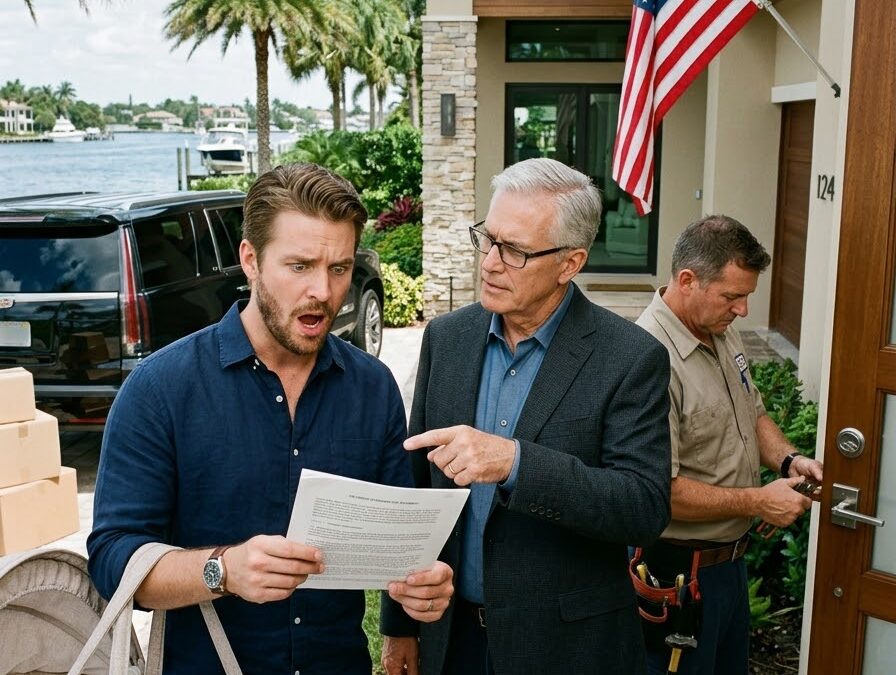
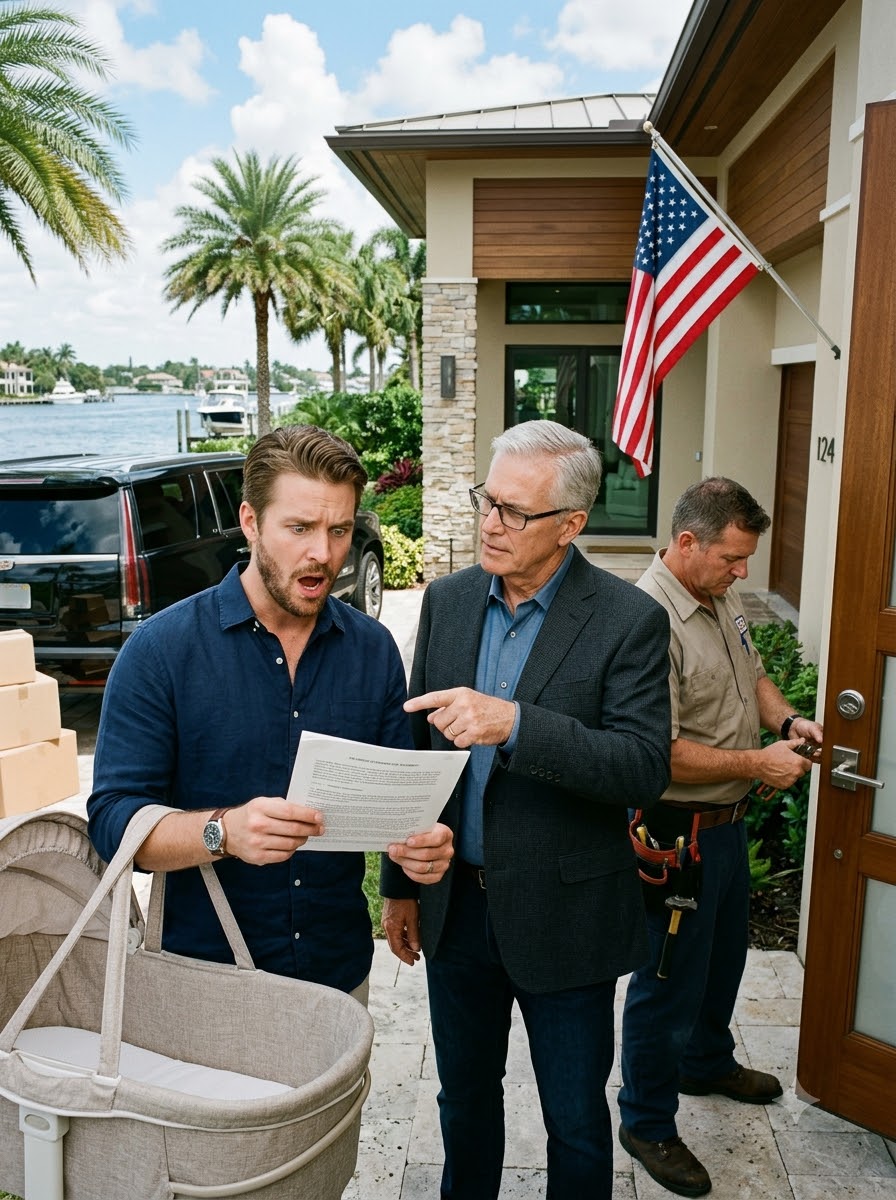
My dad whispered to Mom, “She is a burden. Her brother earned this house. She is just occupying space.”
They did not know I held the title to the estate.
I said nothing and simply sold the $1.3 million house while they packed for their luxury European vacation. Three weeks later, their keys did not fit the door.
Surprise. A burden did this.
My parents spent five years telling anyone who would listen that my brother rescued our family from ruin. That was the polite fiction we maintained right up until the afternoon I stood in our hallway and heard what my father really thought of me.
I stood perfectly still as his voice carried from the kitchen over the hum of the central air conditioning. He was slicing a grapefruit on the granite island and telling my mother that I was a burden.
He said Barrett earned this house.
He said I was just occupying space.
They were packing for a three-week luxury vacation to Italy. They were convinced that my brother owned the roof over their heads and that I was simply a financial drain overstaying my welcome in the downstairs suite.
They had no idea I held the title to the property.
They had no idea my name was the only one on the deed.
I did not walk into the kitchen. I did not drop my coffee mug. I just stayed perfectly quiet and decided to sell the house while they were overseas.
My name is Hazel Ashford. I am 32 years old, and I evaluate commercial risk for a living. I read the fine print. I calculate liabilities, and I know exactly when a bad investment needs to be liquidated.
Welcome to Sophia Revenge. This is the channel where quiet women stop protecting the egos of the people who take them for granted and start keeping the receipts instead. If you have ever been the invisible safety net for your family, drop your age in the comments and tell me what it cost you.
Then stay right here, because the people in this story had no idea what they were about to lose.
The Florida heat was already baking the asphalt outside the Clearwater house. Inside, the air was 68 degrees and smelled of cut citrus and expensive espresso.
I stood in the shadow of the hallway holding a damp ceramic mug. Condensation gathered on the glazed clay and rolled down my knuckles.
My father kept his voice low, but the vaulted ceilings of the open floor plan carried every syllable. He leaned over the counter, the serrated edge of his knife hitting the cutting board with sharp, rhythmic taps.
“She is a burden, Eleanor,” he said.
My mother wiped down the espresso machine. She did not look up.
“We will have Barrett sit her down and talk about moving out when we get back from Europe,” she replied.
Her tone was casual, the way someone discusses pruning a dead branch off a garden hedge.
“It is his property. He should not have to tiptoe around his sister in his own house.”
I looked down at my hands. The ceramic felt solid and heavy against my skin.
The foundational myth of our family required a savior, and five years ago, they had cast my older brother Barrett in that exact role.
When the foreclosure notices began arriving in certified envelopes, Barrett had swaggered into the dining room in a tailored suit. He promised to save the estate. He wrote checks. He shook my father’s hand and accepted the tearful gratitude of my mother.
Not one of them knew his checks had bounced.
I knew.
I took the phone call from the bank when his funds failed to clear. I sat in my small office, looked at the numbers, and made a choice to protect my father’s pride.
I liquidated my 401(k), assumed the six-figure debt, and quietly purchased the deed under a private LLC.
For half a decade, I treated my family as an investment in peace. I quietly routed a portion of my underwriter salary into the property taxes, watching the escrow account drain and refill.
I never asked for a receipt.
I never asked for a thank-you.
I let them host Sunday dinners and raise their glasses to Barrett’s fictional generosity.
A palmetto bug scuttled along the baseboard near my shoe. It paused, antennae twitching, then retreated into the dark gap beneath the drywall.
I watched it disappear.
I listened to my mother list the packing requirements for their Italian vacation.
I knew Barrett was funding that trip by taking out cash advances on my father’s own credit lines, laundering the money through his accounts to look like a devoted son giving his parents the world.
“A burden,” my father repeated.
He took a bite of the grapefruit.
“We need to focus on Barrett and Vivien now. The baby is coming. The downstairs suite would make a perfect nursery wing.”
He was giving away the rooms I paid for to the son who nearly left them homeless.
I set my mug on a folded linen towel resting on the hall table. I placed it down with precise care, ensuring the ceramic made no sound against the wood.
I reached into my purse and found my car keys.
I did not need to scream or cry or demand an apology.
I evaluate risk, and my family had just become an unacceptable liability.
I turned my back to the kitchen, walked out the front door into the blinding sunlight, and decided it was time to let the bank do the talking.
Two hours later, the front door opened and the air shifted.
Barrett arrived with his pregnant wife, Vivien. They carried glossy travel brochures and the unearned confidence of people spending someone else’s money.
I was standing in the kitchen pouring a glass of ice water.
Barrett tossed a folded itinerary onto the island, leaning over it like he owned the marble beneath his hands.
“He booked the best suites in Rome,” Vivien said, resting a hand on her stomach.
She smiled at my mother.
“He just wants you both to relax.”
My father clapped Barrett on the shoulder.
“A good son,” he said.
Barrett caught my eye.
He walked around the island and cornered me by the refrigerator, out of our parents’ line of sight. He reached into his pocket and slid a crisp $500 bill across the counter.
“Look,” he said, dropping his voice into a fake, patient register. “Mom and Dad need this trip. Vivien and I need your suite for the nursery renovations. Take this. Find an extended-stay motel for a few weeks and give us some space. You have overstayed your welcome on my property.”
He tapped the counter twice.
The arrogance radiated off him, hot and blinding.
He genuinely believed his own lie.
He had played the landlord for so long that he forgot he was standing on a floor I bought.
I looked at the green paper on the stone.
Five hundred dollars to vacate a waterfront home that belonged to me.
I picked up the bill. I folded it into a perfect tiny square and slid it into the pocket of my slacks.
“Thank you, Barrett,” I said.
My voice was entirely flat.
“I will make sure my things are out before they get back.”
“Good,” he said, turning his back to me. “That is all I ask.”
I walked past him and went to my room.
I opened my laptop and pulled up the contact card for a luxury real estate broker I knew from work. I typed a single sentence and hit send.
The listing needed to go live at midnight.
Cash buyers only.
The broker replied within four minutes. He asked for the address and my timeline.
I told him I needed professional stagers in the house by Wednesday morning and a closed cash deal within a week.
He sent back a simple text confirming the details.
The transaction was set in motion with a few taps on a glass screen, silent and irreversible.
I sat on the edge of my bed and looked around the downstairs suite.
My father called it a burden.
Barrett called it a nursery asset.
The walls were painted a soft gray, a color I chose and paid a contractor to apply three years ago when my mother complained the original white was too stark.
The hardwood floors gleamed because I scheduled the deep-cleaning service every other month.
I touched the cool cotton of my bedspread and felt the final fragile threads of my family loyalty snap.
I could hear them upstairs, glasses clinking, laughter echoing down the stairwell.
They were toasting to Italy, to Barrett, to a future built entirely on my invisible labor.
I let the sound wash over me, feeling nothing but cold, sharp clarity.
They wanted me gone.
They were about to get exactly what they asked for.
The clock on my laptop shifted to midnight.
The screen refreshed.
A new email appeared in my inbox from the broker.
The subject line contained a single address—my address—and a live link to the private real estate network.
I clicked the URL.
There it was.
The waterfront property I had bled for, reduced to a gallery of high-resolution images and a description targeting corporate buyers.
The asking price sat at $1.3 million.
Cash only.
Five-day close.
I scrolled through the photographs of the vaulted ceilings and the granite island where my father had carved his grapefruit.
Seeing the house packaged as a commodity stripped the remaining sentiment from my chest.
It was no longer a home.
It was a liquidation asset.
I opened a new tab.
If I was going to sever this tie, I needed to know exactly how deep the rot went.
Five years ago, when I assumed the mortgage, the bank required me to remain a viewing party on my parents’ primary checking account to ensure the property taxes were funded.
My parents forgot I had that access.
I never used it to spy, only to verify the tax escrow cleared every November.
Tonight, I pulled the statements for the last 90 days.
Barrett did not have a job.
He had a lifestyle.
He called himself a venture capital consultant, a title that required expensive suits and zero actual revenue.
My parents believed he was a financial genius.
I am a commercial underwriter.
I track money for a living.
It took me less than 12 minutes to dissect the anatomy of his generosity.
The luxury Italian tour cost $22,000.
I traced the deposits hitting the travel agency.
The funds originated from a shell account Barrett opened in Delaware.
I worked backward from that shell account and found the source.
He was not using his own wealth.
He was initiating relentless cash advances against my father’s remaining credit lines, transferring the borrowed debt into his own routing numbers, and then paying the travel agent.
He was burying our father in high-interest unsecured debt to buy him a vacation.
Wearing the mask of a devoted son, he was siphoning the last drops of their retirement to build a monument to his own ego.
I closed the laptop.
The glow vanished from the dark walls of the downstairs suite.
I lay back on the mattress and listened to the silence of the house.
They were sleeping upstairs, dreaming of Rome and Venice, financed by a son who was stealing their future and a daughter they wanted to evict.
The sun rose on Monday with a heavy humidity that promised rain.
My parents were scheduled to fly out on Tuesday morning.
The kitchen became a staging ground for designer luggage and travel documents.
Barrett and Vivien arrived before 8:00 in the morning holding coffees they bought from the expensive café down the street.
Barrett walked in like a project manager inspecting a construction site.
He dropped a stack of paint swatches onto the dining table.
Vivien trailed behind him, holding a tape measure.
She wore a floral maternity dress and a smile that never quite reached her eyes.
“We are thinking alabaster for the nursery walls,” Vivien said to my mother. “It brings out the natural light better than the gray Hazel chose.”
My mother nodded, zipping a leather cosmetic case.
“Alabaster is much warmer. The gray always felt a little sterile to me. It will be wonderful to have the baby downstairs.”
I stood at the sink, rinsing my breakfast plate.
I did not point out that the gray paint cost me $1,200.
I did not tell them that alabaster would look terrible against the existing baseboards.
I watched the water wash over the porcelain.
Barrett stepped up to the sink beside me.
He smelled of expensive cologne and artificial confidence.
He leaned his hip against the counter, blocking my path back to the hallway.
“Did you look into those extended-stay motels yet?” he asked.
His voice was pitched low with false intimacy designed to mimic sibling concern.
“The contractors are coming on Thursday to tear up the carpet in your suite. I really do not want your furniture getting covered in drywall dust. It is better for everyone if you are out by Wednesday night.”
He was rushing my exit so he could play the benevolent landlord while our parents were thousands of miles away.
He wanted the house empty to maintain his illusion.
I turned off the faucet.
I dried my hands on a dish towel.
“My things will be out before Thursday,” I said.
Barrett offered a tight, patronizing smile.
He reached out and patted my shoulder.
“See? That is what family does. We accommodate each other.”
I walked past him.
My phone vibrated in my pocket.
It was the broker.
A corporate buyer out of Chicago had already requested a private tour for Thursday morning.
The timeline was tightening like a snare.
The next 24 hours became an exercise in extreme compartmentalization.
I sat in the living room while my father gave Barrett a tour of the breaker box, explaining the quirks of the plumbing as if Barrett owned the copper pipes.
I watched Barrett nod solemnly, playing the responsible heir.
Every time they turned their backs, I texted the staging company.
The stagers required a clean sweep.
No personal photographs.
No clutter.
They needed the property to look like a high-end hotel.
I coordinated their arrival for Wednesday at noon, calculating the exact window when Barrett and Vivien would be leaving for their own weekend spa trip in Naples.
They thought I would be spending that time packing my modest life into cardboard boxes.
Tuesday morning arrived with the chaotic energy of a major departure.
The airport taxi idled in the driveway.
My mother rushed around the kitchen, checking the stove burners for the third time.
My father stood by the front door wearing a pressed linen shirt, checking his gold watch.
Barrett loaded their heavy suitcases into the trunk of the taxi.
He hugged our mother, promising to send photos of the nursery progress.
My father shook Barrett’s hand, gripping it tight.
“Hold down the fort, son,” my father said.
“You know I will, Dad,” Barrett replied.
My father turned to me.
I stood on the porch holding the door open.
He did not offer a hug.
He looked at my plain work clothes, a stark contrast to Barrett’s designer polo.
“Help your brother out while we are gone,” my father said. “Do not make this transition harder than it needs to be. You have had a free ride here for a long time. It is time to let Barrett build his family.”
I looked directly into his eyes.
He saw a compliant daughter.
He did not see the architect of his impending reality.
“Have a safe flight,” I said.
The taxi pulled away, disappearing down the palm-lined street.
Barrett stood in the driveway watching them go.
He let out a long breath, a physical shedding of the devoted-son persona.
He turned to me, his expression hardening.
“Do not leave a mess when you pack,” he said. “I am taking Vivien down to Naples for a few days to celebrate the start of the renovations. I want this place spotless when I get back on Sunday.”
He got into his SUV and drove away.
The silence of the house settled around me, heavy and thick.
I locked the front door.
I walked to the security panel on the wall and entered the master override code.
I systematically disabled the interior cameras.
The lenses pointed at the living room, the kitchen, and the hallway went dark.
I left the exterior doorbell camera active so Barrett could see the street, keeping his false sense of security intact.
At precisely noon on Wednesday, a large white box truck backed into the driveway.
Three professional stagers stepped out carrying clipboards and rolling racks.
They walked into the house and went to work.
I stood in the center of the living room and watched them dismantle my parents’ aesthetic.
The dated floral couches were carried out and replaced with sleek mid-century modern leather.
The heavy drapes were removed, letting the Florida sun flood the room.
Family portraits were swapped for abstract canvas art.
The house was shedding its history, preparing to welcome a stranger.
My phone buzzed.
The broker confirmed the Chicago buyer was flying in.
The trap was set.
The bait was placed.
And the people who called me a burden were somewhere over the Atlantic Ocean drinking champagne paid for with stolen money.
I wiped down the kitchen counters one last time, erasing every fingerprint they left behind.
The staging crew worked with the ruthless efficiency of a demolition team.
By 3:00 on Wednesday afternoon, the waterfront property was unrecognizable.
I stood near the foyer, inhaling the scent of lemon polish and fresh linen that had successfully masked my mother’s heavy floral perfume.
The staging company brought in abstract geometric rugs and low-profile accent chairs, stripping away the dark mahogany sideboards my parents bought in the ’90s.
Every surface was cleared.
The porcelain figurines were boxed.
The golf trophies were hidden.
The house no longer belonged to a family.
It was a blank canvas optimized for a high-net-worth acquisition.
I walked over to the internet router tucked inside the hallway closet.
My fingers traced the warm plastic casing.
Barrett relied on this network to monitor his domain from afar.
He synced his smartphone to the thermostat, the garage doors, and the interior security feeds I had already disabled.
I pulled up the administrator panel on my laptop and changed the primary Wi-Fi password, locking the new credentials behind a randomized string of characters.
I left the isolated guest network active for the front doorbell camera.
Let him watch the perimeter.
I owned the interior.
Ten minutes later, my phone lit up with a text message.
It was Barrett.
He was 200 miles south in Naples, likely sitting in a plush robe, waiting for a hot-stone massage when the exterior camera caught one of the staging crew carrying my mother’s dated floral sofa out the front door.
The digital notification must have interrupted his relaxation.
“Glad to see you finally hired movers,” his message read. “Do not scratch the hardwood floors on your way out. Vivien wants them pristine for the crib delivery next week.”
He saw men moving furniture, and his ego filled in the blanks.
He assumed I was crumbling under his authority, packing up my quiet life to make room for his expanding family.
He did not know the interior lenses were blind.
He did not realize the men on his screen were not taking my belongings away.
They were erasing his inheritance.
“I will make sure the floors are perfect,” I typed back.
I hit send and slid the phone into my pocket.
The crew wrapped up their work and departed, leaving me alone in the transformed space.
I went to the laundry room, grabbed a microfiber cloth and a bottle of mild surface cleaner, and dropped to my knees in the living room.
I am an underwriter.
I deal in risk mitigation and flawless execution.
Meticulous people do not leave messes, and I was about to ask a stranger for a seven-figure cashier’s check.
I crawled along the edge of the room, wiping down the white baseboards inch by inch.
The repetitive motion grounded me.
I scrubbed away a scuff mark near the sliding glass doors.
I wiped dust from the corners where the heavy drapes used to hang.
With every swipe of the cloth, I calculated the exact financial drain this structure had been.
I thought about the year I skipped a necessary dental surgery to cover a sudden spike in the property taxes.
I thought about the career promotions I delayed because I could not risk relocating away from the family anchor.
This house was a sinkhole disguised as a castle.
My knees ached against the hardwood, but I did not stop until the perimeter of the ground floor was immaculate.
The sun began to dip below the horizon, casting long, sharp shadows across the staged furniture.
The house felt hollow.
It was beautiful, but it was dead.
I had successfully severed the emotional tether binding me to the drywall and the foundation.
My laptop chimed from the kitchen counter.
It was an email from my broker.
The listing had populated across the private networks, bypassing the public real estate sites to target corporate buyers and wealthy snowbirds seeking immediate possession.
These were individuals who did not need mortgage contingencies or bank appraisals.
They transferred wealth through encrypted wire codes.
The broker requested a phone call.
I dialed his number, watching the water on the bay turn a deep, bruised purple in the twilight.
“The Chicago buyer is serious,” the broker said.
His voice was brisk, stripped of any sales pitch.
“He is a retired corporate attorney looking for a winter residence. He does not want to wait out a traditional closing period. He wants a turnkey property, and he is flying down tonight. We have a private showing booked for tomorrow morning at 9:00.”
I leaned against the granite island.
The speed of the transaction was the boulder rolling down the hill, gathering momentum impossible to stop.
“I will be ready,” I replied. “I will clear out before he arrives.”
“Make sure there are no personal items visible,” the broker advised. “He wants to walk in and see his own future, not someone else’s past.”
“There is no past left here,” I told him.
I ended the call and walked back to the downstairs suite.
My bedroom was stripped bare.
The stagers had brought in a sleek platform bed dressed in crisp white linens, replacing my solid oak frame.
I had packed my single suitcase earlier in the day, a modest collection of work clothes and essential documents, leaving it hidden inside the trunk of my car.
I brought a cheap air mattress into the empty walk-in closet, inflating it with a noisy electric pump.
This was my final night in the property I bled to save.
I lay on the plastic ridges of the air mattress, staring up at the dark ceiling.
I thought about my parents walking the cobblestone streets of Rome, dining on truffles, and pretending they were royalty.
I thought about Barrett sipping expensive wine in a luxury resort, boasting to his pregnant wife about his brilliant real estate maneuvers.
They were all floating on a fragile bubble of my silent labor.
Tomorrow morning, the needle would drop.
The Chicago buyer represented the end of my invisible servitude.
I closed my eyes, visualizing the paperwork, the title transfer, the final wire hitting my routing number.
The anxiety that had gripped my chest for five long years began to evaporate, replaced by a cold, calculating anticipation.
I was liquidating the lies.
The sun would rise, the buyer would walk through the front door, and the family myth would shatter into a million unsalvageable pieces.
The alarm on my smartphone vibrated silently against the hardwood floor at 5:00 in the morning.
I woke up on the deflated ridges of the air mattress, breathing in the scent of chemical polish the staging crew left behind.
Thursday morning arrived with a thick fog rolling off the bay.
I fed my rescue cat, Barnaby, ensuring his ceramic bowls were tucked deep inside the utility closet where no prospective buyer would spot them.
I grabbed my laptop and drove to a local coffee shop to wait out the scheduled showing.
The Chicago buyer was scheduled for 9:00.
I ordered a black coffee and watched the clock on my screen, my mind calculating the endless variables of a commercial real estate transaction.
My phone rang at 10:15.
The broker sounded breathless, his voice lacking the usual polished restraint of his profession.
The buyer walked through the front door, spent 20 minutes pacing the lower level, and submitted a full-price offer before he even saw the upstairs bedrooms.
$1.3 million.
No contingencies.
No bank appraisals.
A five-day close.
The funds were already sitting in an escrow account ready to be wired.
I opened my email right there at a small corner table in the café.
The digital document required four electronic signatures.
I read every single clause.
My background in commercial risk assessment trained me to look for hidden traps, but this contract was pristine.
The immense wealth of the buyer erased the usual hurdles that cause residential deals to fall apart.
I clicked the final box on the screen.
The asset was officially under contract, and the legal gears began to grind forward.
I spent Friday and Saturday finalizing my own transition.
I signed a lease for a one-bedroom apartment in a working-class neighborhood 30 minutes inland.
The rent was $1,400 a month.
It featured laminate countertops, beige carpets, and a view of a murky retention pond.
It was a sharp, brutal contrast to the luxury waterfront estate I was leaving behind, but the cheap walls belonged to me.
The absolute silence of the small space was mine.
I paid the first and last month’s rent directly out of my checking account, feeling a profound sense of relief wash over my shoulders.
Back at the staging ground, I maintained my minimal existence in the walk-in closet, eating protein bars and waiting for the mandatory inspection scheduled for Sunday.
Sunday afternoon brought a stifling, oppressive heat.
The private home inspector arrived exactly at 1:00.
He was a heavyset man carrying a thick canvas tool bag and a thermal imaging camera.
I let him in through the side door, offered a brief nod, and retreated to the kitchen with a tall glass of ice water.
He started his meticulous work on the second floor, testing outlets and measuring the water pressure.
Thirty minutes into his evaluation, the heavy mahogany front door swung open without warning.
Barrett strolled into the foyer.
He wore pastel golf attire, expensive leather loafers, and mirrored sunglasses.
He had cut his weekend spa trip in Naples short to grab a specific titanium putter for a Sunday afternoon tee time with his friends.
He stopped abruptly on the entry mat.
The mirrored lenses slid down the bridge of his nose.
He took in the mid-century modern furniture, the abstract canvas art, the total absence of our parents’ dated floral patterns.
He did not question the sudden, miraculous transformation of the space.
His profound narcissism simply processed the visual information and converted it into a compliment to himself.
Barrett pulled out his smartphone and started recording a video.
“Check out the new vibe,” he said to his camera, panning the lens across the staged living room. “I told you guys I hired a top-tier designer to prep the estate for the nursery. We are going for a minimalist, clean aesthetic. Mom and Dad are going to lose their minds when they get back from Rome. This place finally looks like it belongs to me.”
He walked farther into the house, narrating his fictional architectural vision, completely oblivious to the reality unfolding around him.
Then the home inspector stepped out of the downstairs guest bathroom.
The man wore a polo shirt with a corporate inspection logo and held a digital tablet.
Barrett dropped his phone to his side.
The casual arrogance in his posture instantly morphed into aggressive entitlement.
“Who are you, and who let you in here?” Barrett snapped.
His voice was sharp with unearned authority.
The inspector paused, looking at Barrett from head to toe.
The inspector evaluated properties for high-net-worth clients every single day.
He knew exactly what a wealthy owner looked like, and Barrett looked like a man playing dress-up.
“I am doing the evaluation on the plumbing systems,” the inspector replied calmly. “Are you the owner’s son?”
Barrett puffed out his chest, insulted by the demotion.
“I am the owner,” he lied smoothly. “What exactly are you evaluating? We did not authorize any plumbing work today. You need to clear these things with me first.”
The inspector tapped a stylus against his digital screen.
“I found a hairline crack in the ceramic tile behind the toilet base. It is minor, but it needs to be documented for the final report.”
Barrett scoffed, crossing his arms over his chest.
He completely misunderstood the context of the conversation.
A home inspection meant a property sale.
But Barrett lived in a fabricated reality where the house was his eternal kingdom.
He assumed our father had scheduled a random preventative maintenance check before leaving for Europe and forgotten to mention it.
Barrett bluffed his way through the interaction to protect his fragile ego.
“Fine,” Barrett said, waving his hand dismissively. “Put it on your little report. Just do not track dirt onto my new floors. We have a baby on the way, and I want this place sanitized before the crib arrives. Finish your work and lock up when you leave.”
The inspector stared at him for a long moment, recognized the futility of arguing with a fool, and nodded.
Slowly, Barrett typed a rapid message on his phone. I stood motionless in the shadows of the kitchen, watching him send a text to our parents in Italy. He was probably telling them the renovations looked amazing and that he was managing the contractors perfectly.
He walked to the hall closet, grabbed his titanium putter, and walked right out the front door. He was completely oblivious to the legal guillotine poised directly above his neck.
I drank the rest of my water, feeling the cold liquid slide down my throat.
The inspector moved on to the electrical panel in the garage.
I walked into the utility closet and retrieved Barnaby. The cat complained softly as I placed him into his plastic carrier.
I grabbed my single suitcase by the handle.
I walked through the kitchen, my shoes making no sound against the polished hardwood.
I did not look back at the vaulted ceilings.
I did not look back at the granite island where my father called me a burden.
I walked out to my car, loaded my small life into the passenger seat, and started the engine.
I drove toward my $1,400 apartment, navigating away from the wealthy coastal enclave and into a neighborhood where people actually worked for their money.
The trap was fully armed.
The countdown clock was ticking rapidly toward the final closing day.
In less than 48 hours, the wire transfer would clear. The legal documents would be recorded with the county clerk, and the physical locks on that massive wooden door were going to change forever.
The sterile chill of an air-conditioned corporate suite provided the backdrop for Tuesday morning.
I sat across a vast mahogany conference table inside the escrow agency. The room smelled of bleached paper and burnt coffee brewing in a plastic machine down the hall.
An administrative assistant slid a thick stack of legal documents across the polished wood. She handed me a heavy metal pen.
My hand did not shake.
I gripped the cool barrel of the pen and began applying my signature to the warranty deed.
Every stroke of dark blue ink severed another invisible chain binding me to the toxic foundation of my past.
The notary public sat next to me, methodically stamping each page.
The heavy thud of her mechanical seal echoed against the bare walls.
It was the sound of undeniable finality.
We finished the paperwork in less than 40 minutes.
I declined the offer for a celebratory bottle of cheap champagne.
I walked out of the glass building and sat inside my sedan.
At precisely 11:45, my mobile device chimed from the passenger seat.
A notification illuminated the lock screen.
The escrow wire had cleared the Federal Reserve network.
Seven figures of liquid capital now rested securely inside my private banking portfolio.
The money was clean.
The liability was gone.
I put the vehicle in drive and headed toward my newly rented space, letting the coastal property become a closed chapter.
At 2:00 that afternoon, a commercial locksmith van backed into the wide paver driveway of the house I no longer owned.
The new proprietor, a retired corporate litigator originating from the Midwest, parked his rented luxury sedan near the curb.
He stepped out onto the concrete wearing a tailored linen jacket, projecting the calm authority of a man who had spent four decades dismantling hostile witnesses in federal court.
He was joined almost immediately by Barrett.
My brother had just returned from a high-end boutique, his luxury SUV packed to the roof with infant merchandise.
Barrett stepped out of his driver’s seat holding a massive cardboard box containing an imported smart bassinet.
He spotted the locksmith pulling a heavy drill out of the work van.
“Hey!” Barrett shouted, dropping the heavy box onto the driveway pavement. “What do you think you are doing? Get away from that door.”
The locksmith paused, resting the drill against his work belt, and looked toward the retired litigator.
The older man adjusted his silver wristwatch and walked slowly toward Barrett.
“We are changing the deadbolts,” the litigator stated.
His voice was level and devoid of any emotional fluctuation.
“Who are you?”
“I am the owner of this estate,” Barrett fired back, taking a threatening step forward.
He pointed a manicured finger at the stranger.
“And you are trespassing. Pack up your tools right now, or I am dialing 911.”
The litigator did not flinch.
He did not raise his voice.
He simply reached into the breast pocket of his linen jacket and withdrew a trifold sheet of premium printer paper.
He unfolded the document and extended his arm, holding the page exactly at Barrett’s eye level.
“I highly doubt that,” the older man replied, “because according to the county clerk, I took possession of this parcel exactly two hours ago.”
Barrett snatched the paper out of the man’s hand.
His eyes darted frantically across the bold legal headers.
He scoffed, his chest puffing out in a desperate display of fabricated dominance.
“This is a forgery,” Barrett sneered. “My parents’ names are Winston and Eleanor. They own this land. I manage it for them. You have been scammed by a fake title company.”
The litigator offered a thin, pitying smile.
“Read the grantor line, son.”
Barrett shifted his gaze down the page.
The blood drained out of his face, leaving his tanned skin a sickly shade of gray.
The ink did not spell Winston.
It did not spell Eleanor.
It spelled Hazel Ashford LLC, printed in bold, undeniable typography directly above the official county recording stamp.
“This is impossible,” Barrett stammered.
His voice cracked, losing its deep theatrical resonance.
“My sister is a broke underwriter. She lives in my basement.”
The litigator retrieved his document, folding it neatly back into his pocket.
“Your sister is a very sharp businesswoman who just executed a flawless commercial transaction. Now, I suggest you remove your vehicle from my property before I have it towed at your expense.”
Barrett lost whatever remained of his fragile composure.
He pulled out his smartphone and dialed the emergency dispatcher.
He paced the length of the manicured lawn, screaming into the receiver that intruders were breaking into his family compound.
He genuinely believed his own delusions.
He thought the uniform of the law would arrive and validate his fictional royalty.
Two patrol vehicles arrived within eight minutes.
The officers stepped onto the grass, resting their hands on their utility belts.
Barrett rushed toward them, gesturing wildly toward the litigator and the locksmith.
“Arrest them,” Barrett demanded, his breath coming in ragged gasps. “They are trying to steal my home.”
The lead officer held up a hand, signaling Barrett to stop talking.
He turned to the older man in the linen suit.
The litigator calmly produced his photo identification, the freshly stamped warranty deed, and the signed closing disclosures.
The officer reviewed the paperwork, his eyes scanning the official county seals.
He handed the documents back with a respectful nod.
The officer then turned his attention to my brother.
“Sir,” the officer said, his tone shifting into a rigid command. “Produce your driver’s license.”
Barrett fumbled with his expensive leather wallet, pulling out his plastic card.
The officer scrutinized the piece of plastic, cross-referencing the name against the deed he had just verified.
The mathematical reality of the situation crashed down upon the driveway.
“You have zero legal standing here,” the officer stated firmly. “You are not on the deed. You are not on the mortgage as of this morning. You are trespassing on private property.”
Barrett stared at the officer, his mouth opening and closing without producing any sound.
The fabricated empire he had built over five years was dissolving in the humid afternoon air.
The lies he told his friends, the fake wealth he flaunted to his wife, the unearned superiority he weaponized against me—all of it evaporated under the glaring sun.
“I need you to gather your personal belongings from the driveway and vacate the premises immediately,” the second officer instructed, taking a step closer to enforce the mandate. “If you refuse to leave, we will place you in handcuffs.”
Barrett stumbled backward.
His knees buckled slightly.
He reached down to grab a secondary package from the pavement, but his hands were shaking so severely that he dropped a large box of premium organic diapers.
The cardboard split open, sending dozens of white infant garments spilling across the perfectly trimmed green grass.
He did not bend down to pick them up.
He scrambled into his luxury SUV, slammed the heavy door, and sped away from the curb, leaving black tire marks on the asphalt.
Thirty miles inland, I sat at the cheap laminate counter of my new kitchen.
The silence of the small apartment was profound.
My smartphone began to vibrate against the Formica surface.
The screen flashed with Barrett’s caller identification.
I did not reach for it.
I watched the device rattle across the table until the call rolled over to voicemail.
Ten seconds later, it rang again.
Then a third time.
Then a fourth.
I opened my visual voicemail application.
The digital transcription software converted his frantic audio into neat paragraphs of text.
The first message was a chaotic stream of profanity and confusion.
He demanded to know what kind of illegal stunt I had pulled.
The seventh message shifted into a desperate plea, begging me to answer the line and explain how he was supposed to tell Vivien they had no nursery.
By the 15th call, the text transcription captured the raw, unfiltered terror of a man realizing he was drowning in his own deception.
I scrolled through the paragraphs of panic, reading the words while sipping a glass of tap water.
The golden boy of the family had finally met a problem he could not lie his way out of.
His calls continued to flood my inbox, but I simply turned the volume down, letting the visual text cascade silently down my screen.
The truth was out, and I did not have to say a single word to deliver it.
The orange glow of a streetlamp filtered through the cheap vinyl blinds of my rented living room.
I sat on a metal folding chair at a small laminate table, eating garlic noodles from a cardboard takeout container.
The ambient noise of the working-class complex surrounded me.
A neighbor was playing a television at a low volume.
A car engine turned over in the parking lot.
These were ordinary sounds, grounding and real, a sharp contrast to the suffocating artificiality of the coastal estate I had just liquidated.
My smartphone rested next to my wooden chopsticks.
The screen illuminated, vibrating against the tabletop.
The caller identification displayed a country code indicating a transatlantic origin.
It was an international cellular relay from Rome.
I did not reach for the device.
I chewed my food, swallowed, and watched the incoming call interface time out.
The screen went dark for three seconds before lighting up again with a new notification.
A voicemail had been deposited into my inbox.
I tapped the visual transcription icon, allowing the automated software to convert the audio file into a block of text while simultaneously playing the recording through the bottom speaker.
My father’s voice filled the small kitchen area.
The tone was laced with an arrogant, booming authority, the specific cadence he utilized back when he was a successful executive, long before bad investments and willful ignorance hollowed out his portfolio.
“Hazel, you have lost your mind.”
The audio crackled with international static, but his fury was pristine.
Barrett had reached him first.
My brother, cornered by law enforcement on a driveway he did not own, had spun a frantic, desperate narrative to protect his fragile ego.
Barrett told our parents that I had committed a brazen act of corporate sabotage.
He claimed I hacked into the county property database, forged complex warranty deeds, squatted on the premises, and somehow manipulated a title agency into changing the physical locks.
Winston swallowed the fiction without a single moment of hesitation.
He chose to believe the absurd lie because the alternative required him to admit his golden son was a fraud.
“Your brother is filing a police report right now,” my father continued through the speaker. “I am cutting this vacation short to deal with your criminal behavior. You are going to hand those keys back to Barrett tonight, or I swear to you, I will have my attorneys bury you under federal fraud charges. You do not steal from this family. You do not disrespect the roof Barrett put over your head. Fix this immediately.”
The recording ended with a sharp click.
A younger version of myself would have experienced a spike in heart rate.
The old Hazel would have hyperventilated, drafted a dozen frantic text messages defending her innocence, and begged for a rational conversation.
The old Hazel was conditioned to act as the emotional shock absorber for every crisis my family generated.
The woman sitting at the laminate table simply picked up her chopsticks and took another bite of noodles.
The garlic was sharp.
The sauce was warm.
My pulse remained entirely steady.
I did not need to shout over a transatlantic cellular connection to prove my innocence.
I evaluate commercial risk for a living.
I traffic in data, ink, and binding contracts.
I wiped my fingers on a paper napkin and opened my laptop.
The screen cast a cool blue light across the dark room.
I navigated to my encrypted digital vault, a secure folder I had maintained for half a decade.
I did not write an emotional response.
I prepared a dossier.
I opened a PDF merging application and began assembling the architecture of their ruin, piece by piece.
Page one was the original notice of default from the winter of 2019.
The bank letterhead sat at the top, followed by my father’s full legal name, the property address, and the bold red typography warning of imminent foreclosure.
The document listed the exact dollar amount of the arrears, a sum that had kept my mother awake at night, crying into her pillow.
Page two contained high-resolution scans of Barrett’s personal checks, the ones he proudly handed to the bank officer while my parents wept with gratitude.
Across the front of each check was the unforgiving ink-stamped rejection from the teller.
Insufficient funds.
The date on the rejection aligned perfectly with the week Barrett played the savior at our dining room table.
Page three featured the LLC incorporation documents.
The paperwork showed my name as the sole managing member.
Directly beneath that was the wire transfer confirmation receipt.
The ledger showed the exact moment I drained my retirement accounts, transferring my own hard-earned capital to satisfy the bank and assume the mortgage.
The chain of title was flawless.
Page four shifted the timeline to the present day.
It was a digital verification of employment record.
Barrett had been telling the family he was managing a lucrative venture capital portfolio.
The reality, pulled from standard background verification databases, showed his corporate profile had been deactivated in February.
He had been unemployed for six consecutive months, playing golf on a Tuesday while pretending to be a master of the universe.
Page five was the lethal blow.
I attached the credit card statements I had pulled from my father’s accounts earlier in the week.
The header displayed Winston’s Social Security identifier.
The columns detailed an astronomical spike in unsecured debt.
I highlighted the relentless series of cash advances initiated at automated teller machines in Florida.
Directly beside those highlighted rows, I placed the travel agency invoices for their Italian luxury tour.
The mathematics were irrefutable.
The cash withdrawn in Florida mapped exactly down to the cent to the payments processed by the tour operator in Rome.
Barrett was not treating them to a European vacation.
He was burying our father in high-interest debt, laundering the borrowed funds through his own accounts and wearing the mask of a devoted provider.
I merged the five images into a single optimized digital file.
I named the document Reality Check.
I picked up my smartphone and opened the messaging application.
The group thread titled Family Updates sat at the top of my screen.
The most recent messages were sent 12 hours ago.
They were cheerful photographs of my parents eating gelato near the Trevi Fountain, accompanied by heart emojis from Barrett and Vivien.
The contrast between their curated digital happiness and the incoming financial reality was stark.
I dragged the PDF file into the text box.
I did not type a lengthy paragraph defending my honor.
I did not ask for an apology.
I tapped the screen and typed a single brief sentence.
“Read the fine print.”
I pressed send.
A small green progress bar zipped across the bottom of the interface.
The file was transmitted across the ocean, landing on their devices with a quiet ping.
The delivery status updated immediately.
I sat back in my folding chair and watched the digital body language unfold on the screen in real time.
The read receipts changed color.
Barrett opened the message first.
Two seconds later, Winston’s icon indicated he had viewed the file.
Eleanor followed immediately.
A small typing indicator bubbled next to Barrett’s name.
Three gray dots pulsing in a loop.
He was trying to craft another lie, attempting to construct a frantic excuse to get ahead of the explosion before our parents could process the data.
He was typing fast, the dots dancing on my screen.
Then the bubbles vanished.
He stopped typing.
He realized there was no combination of words in the English language that could outmaneuver five pages of official banking records.
A moment later, my father’s icon showed the typing indicator.
The bubbles appeared for ten seconds.
Then they disappeared.
Then they appeared again, hesitating, starting and stopping.
The silence stretching across the Atlantic Ocean was palpable.
It was the heavy, suffocating quiet of an arrogant man watching his entire worldview collapse under the weight of empirical evidence.
Winston was standing in a hotel lobby in Rome, holding a piece of glass and metal, realizing his golden boy was a thief.
His generational wealth was an illusion, and the daughter he discarded was the only reason he had slept with a roof over his head for the last five years.
I did not wait for the inevitable barrage of questions.
I did not wait for the excuses, the bargaining, or the rage.
I swiped down on my phone screen and tapped the icon shaped like a crescent moon.
Do Not Disturb.
All incoming cellular signals, text messages, and application notifications were instantly blocked.
The device went dark.
I set the phone face down on the laminate counter.
I picked up my wooden chopsticks, stirred the garlic noodles, and took another slow, deliberate bite.
The cheap vinyl blinds rattled softly against the windowpane as a gentle evening breeze rolled off the retention pond outside.
For the first time in five years, my pulse was steady, my mind was clear, and the narrative no longer belonged to the loudest storyteller in the room.
It belonged exclusively to the paperwork.
The automated focus mode on my mobile device deactivated at precisely six in the morning.
I sat up in my new bed, the thin sheets tangling around my ankles.
The digital display illuminated the dim bedroom of my inland apartment.
A cascade of missed-call notifications populated the screen.
None of them belonged to my brother.
At 5:45, a single voicemail had arrived from Vivien.
I tapped the playback icon while walking toward the small kitchen.
My sister-in-law sounded unrecognizable.
The haughty confidence she carried through my former residence was gone, replaced by hyperventilating panic.
She had discovered the truth before the sun even rose.
Barrett had returned to their rental property the previous afternoon, empty-handed, rambling about a fake title company and his stolen house.
Vivien demanded to see his financial ledgers.
When he refused, she tore through his leather briefcase.
She found the forged credit applications, the maxed-out statements bearing my father’s name, and the past-due notices he had intercepted from the mail.
She did not wait for a detailed explanation.
She dragged his designer luggage onto the driveway, pushed him out the front door, and engaged the deadbolts.
Barrett was currently locked out, adrift and running from his own wreckage.
I deleted her audio message.
I poured cold tap water into a glass.
At 6:10, the phone rang.
The caller identification displayed a landline originating from a foreign country code.
It was a luxury hospitality desk in Rome.
I accepted the connection and pressed the device to my ear.
The background noise transmitted a vivid scene.
I could hear the distinct acoustic echo of a grand marble lobby, the quiet clinking of porcelain espresso cups, and the hushed murmurs of European accents.
Cutting through all of that elegance was my father’s voice.
It lacked the booming resonance from his furious voicemail the night before.
His tone was thin, ragged, and vibrating with genuine terror.
“Hazel,” he whispered into the public receiver. “We are stranded.”
I leaned against the laminate countertop.
I did not interrupt him.
I let the silence force him to continue.
He spilled the humiliating details in frantic, disjointed sentences.
Eleanor had approached the front desk to settle the incidental charges and finalize their departure for the next leg of their tour.
The impeccably dressed concierge ran the plastic rectangle Barrett had provided them.
The terminal flashed a red error code.
Denied.
Winston, attempting to preserve his dignity in front of the Roman staff, smoothly produced his own emergency card.
He handed it over, expecting the pristine embossed numbers to save face.
The machine rejected that one, too.
“The desk manager told me my balance exceeds the maximum limit by $12,000,” Winston said, his shame echoing across the Atlantic. “That is impossible. I keep a zero balance on that account for international emergencies.”
“It is not impossible,” I replied.
My tone was devoid of any sympathy.
“You saw the ledger I sent yesterday. The cash advances originated in Tampa. Your son drained your safety net to buy your plane tickets.”
Winston ignored the logic, pivoting to his next point of failure.
He tried reaching his golden boy.
He dialed Barrett’s cellular number a dozen times from the hotel lobby phone.
The automated carrier message informed him the line was disconnected.
“He is not answering,” Winston said, his voice cracking. “The hotel is demanding immediate payment for the room taxes, the spa treatments, and the dining tabs. They are threatening to involve the local authorities. I need you to wire funds to the front desk right now. Call your bank and authorize a transfer to this establishment.”
He issued the demand like a chief executive barking orders at a subordinate.
He still believed the old hierarchy existed.
He thought the events of yesterday were a temporary glitch in his matrix of control.
I took a slow sip of water.
The liquid cooled my dry throat.
“I am not wiring anything to Rome,” I stated clearly.
“You have to.”
He raised his voice, the desperation bleeding through the phone line.
“You owe us that much after the stunt you pulled with the property. You forged those eviction papers. You humiliated your brother in front of the neighbors. I am going to deal with your insubordination the minute I return to Florida. But right now, I need you to clean up this logistical mess.”
He expected me to grovel.
He anticipated the familiar sound of my nervous apologies, the frantic typing on my keyboard as I rushed to absorb his financial collateral damage.
He was waiting for the obedient daughter to surrender.
“There were no forged papers,” I informed him, keeping my vocal cadence flat and professional. “The title transfer was executed legally through a licensed escrow agency. The equity belongs entirely to me. I sold the asset to a retired litigator from Chicago. The keys you hold in your pocket unlock a door that is currently guarded by a new security system. You have no real estate. You have no hidden fortune. Barrett is a fraud who weaponized your Social Security number to fund a lifestyle he could not afford.”
Heavy silence hung on the line.
The grand marble lobby in Rome must have felt like a sterile prison.
“You are lying,” he stammered, but the conviction was gone.
He was arguing with gravity.
“You saw the insufficient-funds stamps on his checks,” I continued, methodically dismantling his denial. “You saw the bank statements. You saw the date I formed the limited liability company. I saved you from public foreclosure five years ago. And in return, you stood in my kitchen and called me a burden. You gave my bedroom to a man who stole your retirement.”
I heard a sharp intake of breath.
Eleanor was standing next to him.
I could hear her faint, trembling voice asking what was happening.
Winston hushed her, producing a frantic, desperate sound.
“Hazel, please.”
The executive authority evaporated, replaced by the naked terror of an elderly man stranded on a foreign continent without a single dollar to his name.
“The concierge is watching us. They have our passports behind the desk until the balance is cleared.”
“That sounds like a severe liability,” I observed clinically.
“Your brother—”
Winston started, then stopped.
The illusion of Barrett the savior fractured and disintegrated right there in the hotel lobby.
The reality of the forged cash advances finally penetrated my father’s stubborn ego.
He realized the architect of his luxury vacation was the exact same person who engineered his bankruptcy.
“My brother is currently unemployed, homeless, and facing potential wire-fraud charges if you decide to report the unauthorized activity on your credit file,” I supplied. “He cannot help you. Vivien locked him out of their rental house hours ago. He is running from his creditors.”
Another stretch of agonizing quiet transmitted through the earpiece.
I walked over to my small kitchen table and sat down.
The space was tight, featuring cheap blinds and scuffed linoleum, but it was a fortress built on truth.
I did not feel pity.
I did not feel malice.
I felt the absolute equilibrium of a balanced ledger.
“What are we supposed to do?” Winston asked.
The question marked the exact moment the tectonic plates of our family structure permanently shifted.
The patriarch, the man who dictated the terms of my existence for 30 years, was asking me for instructions.
The boulder dropped, crushing the golden-child myth and leaving nothing but the raw, unvarnished truth in its wake.
“You are going to hand the receiver to the desk manager,” I instructed. “I will negotiate a settlement for the outstanding incidental charges using my own routing number. I will purchase two economy tickets back to Tampa.”
“Economy?”
He echoed the word, tasting it bitterly in his mouth.
“We flew first class on the way here.”
“You flew on stolen money,” I corrected him swiftly. “You will return on my terms. When you land, you will not be returning to a waterfront mansion. You will wait at the terminal until I arrange a standard rideshare to pick you up.”
“Where will it take us?” he asked.
The fight was drained from his vocal cords.
“It will take you to my new address,” I said. “I have a spare room. You will sleep on an inflatable mattress until we determine how you are going to survive the financial ruin your son created.”
“Hazel, I—”
He choked on the words.
An apology could not bridge the chasm he dug.
“Hand the phone to the manager,” I repeated.
I heard the plastic receiver fumbling against a marble counter.
A man with a thick Italian accent introduced himself, his tone clipped and suspicious.
I switched into my corporate negotiation persona, authorizing a direct wire transfer to release my parents from their luxurious captivity.
The transaction was clinical, precise, and executed without a single ounce of sentimentality.
My father realized he was entirely dependent on the daughter he tried to discard.
I logged into the international airline portal.
The booking interface immediately presented a dozen premium upgrades for extra legroom, priority boarding, and luxury lounge access.
I bypassed every expensive option.
I selected two non-refundable seats located in the very last row of the economy cabin, positioned directly adjacent to the lavatory compartment.
The tickets did not include complimentary checked baggage.
They would be forced to negotiate their massive suitcases at the ticketing counter using whatever sparse funds they had scavenged in Rome.
I entered my personal debit card credentials into the payment gateway.
The digital receipt materialized in my inbox later.
The billing section displayed my full legal name in bold typography as the sole purchasing agent.
They were flying across the globe entirely on my dime, and the paper trail offered definitive proof of my financial sponsorship.
Fourteen hours passed.
The automatic doors at the Tampa International baggage claim slid open, unleashing a suffocating wall of dense coastal humidity onto the arrival curb.
My parents stepped out onto the damp concrete.
They were physically exhausted, their posture crumpled under the brutal constraints of the cheap seats.
They dragged massive hard-shell designer suitcases stuffed with imported ceramics, silk garments, and leather goods acquired on a fraudulent spending spree they could never repay.
Their eyes scanned the chaotic line of idling vehicles.
They looked eagerly for the familiar imposing silhouette of their son’s custom black luxury sport utility vehicle.
The space remained entirely empty.
Instead, a generic silver hatchback bearing a rideshare decal pulled up to the designated passenger zone.
The driver popped the rear hatch.
My father, a man accustomed to skycaps and private valets handling his burdens, was forced to manually hoist 80 pounds of luggage into a cramped trunk.
My mother’s expensive linen travel outfit clung to her sweating skin in the brutal afternoon heat.
They climbed into the back seat, sinking into cheap synthetic upholstery that smelled faintly of vanilla air freshener and stale fast food.
The driver merged onto the interstate, charting a course directly away from the affluent coastal peninsula.
The scenery outside the window shifted rapidly.
Manicured medians and gated-community entrances faded away, replaced by endless stretches of commercial strip malls, discount auto-parts retailers, pawn shops, and concrete overpasses.
The vehicle signaled right, entering the sprawling parking lot of my mid-tier residential complex.
The architecture consisted of repetitive beige stucco blocks separated by strips of sunbaked grass.
A murky retention pond bordered the main entrance, its surface choked with thick green algae and discarded plastic debris.
The driver parked near a cluster of dented metal mailboxes, unloaded their heavy bags onto the cracked sidewalk, and drove away without a single word of farewell.
My parents stood completely abandoned in a ZIP code they had spent their entire adult lives mocking at their private country-club luncheons.
I stood in the open doorway of Unit 204.
I wore plain denim jeans and a simple cotton shirt.
I did not step out onto the exterior concrete breezeway.
I did not extend my arms for a welcoming embrace.
The physical boundary I established remained absolute.
They navigated the steps, the plastic wheels of their heavy luggage scraping loudly against the rough surface.
They crossed the aluminum threshold.
I pushed the door shut behind them, the deadbolt engaging with a sharp metallic click.
Eleanor froze in the narrow entryway.
Her gaze darted frantically across the cramped square footage.
She took in the scuffed laminate flooring, the generic flush-mount ceiling lights casting a harsh yellow glare, and the basic Formica countertops in the galley kitchenette.
The scent of industrial carpet shampoo lingered stubbornly in the stale air.
A muffled footstep echoed clearly from the unit directly above us.
The suffocating reality of a working-class existence closed in around her.
She clutched her imported leather handbag against her chest as if the drywall itself contained an infectious disease.
Her pristine country-club ecosystem had officially vanished, replaced overnight by an environment that offered absolutely zero social status.
My father abandoned the handle of his suitcase.
The bag tipped backward, striking the baseboard with a loud crack.
A deep flush of crimson crept up his neck.
The sheer physical exhaustion of the transatlantic journey battled violently with his deeply ingrained narcissism.
This environment was a direct insult to his successful ego.
He could not mentally process the demotion from a waterfront mansion featuring vaulted ceilings to a transient beige box.
He refused to accept that the foundation of his wealth had been an elaborate fiction designed by a fraud.
He squared his shoulders, inflating his chest to project dominance.
He attempted to reclaim the narrative through sheer volume and intimidation.
He completely ignored the reality of the maxed-out credit cards.
He bypassed any mention of Barrett’s criminal financial behavior.
Instead, he zeroed in on the capital.
“This petulant administrative stunt ends right now,” he declared, utilizing the booming executive voice that used to terrify his corporate subordinates decades ago. “You bypassed my authority to liquidate my real estate, but I am still the head of this family. I demand immediate access to the escrow accounts holding the $1.3 million.”
He stepped closer to the center of the living room, invading my space in a desperate bid to reestablish the old hierarchy.
“That capital represents generational wealth,” he insisted, layering corporate jargon over his rising panic. “It is a family trust. It belongs to me to manage, protect, and distribute. You are going to transfer those funds into my primary checking account by the close of business tomorrow so I can secure proper lodging for your mother and fix the disaster you engineered behind my back.”
I did not raise my voice to match his frantic frequency.
I did not interrupt his desperate fictional monologue.
I let him expend his remaining adrenaline on a fantasy that no longer existed in the real world.
I simply turned my back to him and walked over to my small circular dining table.
A thick, heavy binder rested on the seat of a wooden chair.
I wrapped my fingers around the rigid black spine and lifted it.
The covers bulged with hundreds of printed pages organized perfectly by color-coded dividers.
I turned around, stepped up to the edge of the table, and dropped the massive volume flat onto the wood surface.
The heavy thud cut through his speech instantly, echoing loudly against the bare walls of the apartment.
I placed my palm flat on the vinyl cover and pushed.
The quiet slide of undeniable proof across the table shattered the remaining silence, stopping exactly six inches from his fingertips.
Winston stared at the rigid vinyl cover.
His posture remained stiff.
He refused to reach out and touch the physical object, as if the plastic binding carried an electric charge.
I did not wait for him to find his courage.
I stepped forward, gripped the edge of the cover, and flipped it open.
The heavy metal rings snapped sharply against the cardboard backing.
The first page was a master spreadsheet.
The columns were organized with ruthless precision.
Date.
Payee.
Description.
Amount.
Funding source.
The font was plain, printed in dark black ink.
The rows stretched down the entire length of the page, continuing onto the next sheet and the next.
This was not merely a record of expenses.
It was a forensic autopsy of their entire lifestyle.
I turned to the divider labeled Utilities and Taxes.
I pointed to a block of highlighted rows dating back to the summer of 2021.
The central air-conditioning unit at the coastal estate had failed during a historic heatwave.
Barrett told them he leveraged his high-level industry contacts to procure a replacement compressor at a steep discount, covering the cost as a gift.
The spreadsheet revealed a different reality.
The row displayed a $9,000 electronic transfer originating directly from my primary checking account, paid to a local commercial heating and cooling contractor.
I flipped another page.
The Pinellas County Tax Collector receipts were stacked in chronological order.
$32,000 dispersed over a five-year period.
I paid these invoices while Winston carved imported roasts at the head of the dining table, raising crystal glasses to toast Barrett and his fictional business acumen.
The paper trail exposed the hollow core of those Sunday dinners.
Eleanor slowly approached the table.
The stifling heat of the afternoon commute still clung to her wrinkled linen blouse.
Her eyes scanned the printed columns, struggling to process the sheer volume of transactions listed under my name.
She traced her finger down the list until her nail stopped at a specific date.
October 12, 2022.
The amount listed in the adjacent column was $4,000.
“What is this charge?” Eleanor asked.
Her voice was barely a whisper, frail and shaking.
“That was for your dental surgery, Mom,” I answered calmly, keeping my tone entirely conversational. “The bone graft and the implant procedure you required when your lower bridge cracked.”
Eleanor shook her head, a reflexive denial bubbling up to the surface.
“Barrett took care of that procedure. He told us his consulting firm maintained a surplus medical fund for executives. He paid the clinic in full.”
I turned the page, revealing a clear photocopy of a certified bank draft.
The payee was the specific oral surgery clinic in downtown Tampa.
The remitter printed in the top-left corner was Hazel Ashford.
The signature resting on the bottom line was mine.
I kept the carbon copy in a fireproof safe for two years.
“Here is the cashier’s check from my account,” I told her.
Eleanor stared at the photocopy.
Her breath caught in her throat, producing a soft, ragged gasp.
The false narrative she clung to for years began to dissolve, washed away by the undeniable proof of a canceled check.
She looked at me, her eyes wide with a horrified realization, but I did not offer a comforting smile.
I turned to the next colored divider.
The initial sections mapped out my silent labor.
The subsequent tabs peeled back the layers of active deception engineered by the golden child.
I flipped past the household maintenance receipts and opened a folder marked Fraudulent Liabilities.
“This section details the financial obligations your son generated without your consent,” I explained.
I presented a multi-page loan origination packet.
The header bore the distinct logo of a prominent automotive finance corporation.
The collateral listed on the second page was a high-performance electric sedan, a Tesla Model S.
The borrower name printed across the top was Winston Ashford.
The Social Security identifier matched my father perfectly.
The employment history listed Barrett’s defunct venture capital firm as the primary source of income.
“He needed a luxury vehicle to impress his imaginary clients,” I stated, pointing to the forged signature on the dotted line. “His personal credit score hovered in the low fives. He utilized your identity to secure the financing. The monthly payments are currently 90 days past due. The lender has already initiated the repossession protocol.”
Winston reached out.
His hand trembled as his fingertips grazed the fraudulent signature.
It was a clumsy, rushed imitation of his own penmanship.
The patriarch, who just moments ago demanded access to a million-dollar escrow account, suddenly realized he was the victim of severe identity theft.
The son he idolized did not just fail to provide.
He actively harvested his father’s pristine financial standing, leaving behind a trail of toxic debt.
I did not give them time to recover their breath.
I flipped to the very last section of the binder.
The final document was a printed transcript.
The text looked like a script from a stage play featuring timestamps and speaker attributions.
I stepped away from the dining table and walked over to the kitchen counter.
I opened my laptop.
The screen booted up instantly.
I navigated to my media folder and clicked an audio-file icon.
A digital waveform appeared on the display.
I turned the external speakers to maximum capacity.
“Three weeks ago,” I said, turning back to face them, “before you left for the airport, I was standing in the hallway holding a coffee mug. You thought you were alone. The interior security camera system captured the ambient audio from the kitchen.”
I pressed the space bar on the keyboard.
The laptop speakers broadcast the recording.
The acoustic quality was sharp and unforgiving. The rhythmic scrape of a knife hitting a cutting board echoed through the small apartment.
Then Winston’s voice rang out.
The tone was casual, arrogant, and cruel.
“She is a burden, Eleanor.”
The audio captured the distinct sound of a drawer opening.
“Barrett earned this house,” the recorded version of my father continued. “She is just occupying space. We will have Barrett sit her down and talk about moving out when we get back from Europe. It is his property.”
The digital waveform fell flat.
The playback stopped.
The silence that filled the beige living room was heavy, thick, and suffocating.
The physical evidence of my immense financial sacrifice sat directly beside the acoustic proof of their profound betrayal.
The ledger holding five years of paid utility bills, property taxes, and medical expenses rested just inches from the transcript where they casually discussed my eviction.
The contrast was devastating.
It eliminated any possibility of a defense.
They could not claim ignorance.
They could not blame a misunderstanding.
My parents stood frozen on the scuffed laminate flooring.
Winston stared at the black binder, his jaw slack, the color entirely drained from his face.
Eleanor covered her mouth with her trembling hands, tears pooling in the corners of her eyes, spilling over her lashes and cutting through the dust on her cheeks.
They were stripped bare.
The grand illusions they held about their wealthy, successful son were dead.
The false narrative they constructed about their lazy, burdensome daughter was destroyed.
Most importantly, the lies they told themselves about their own righteous authority were exposed as hollow vanity.
They were standing in a cheap apartment with maxed-out credit cards and ruined credit scores, forced to reckon with the undeniable fact that they worshiped a parasite and discarded their only savior.
The acoustic echo of the digital recording faded into the sterile walls of the living room, leaving behind a silence so dense it felt difficult to inhale.
Winston remained anchored to the scuffed laminate flooring, his gaze permanently affixed to the open binder resting on the table.
He attempted to formulate a response.
His jaw worked up and down, the muscles twitching along his jawline, but his vocal cords misfired.
There was no corporate jargon available to spin this crisis.
There was no authoritative executive voice left to deploy.
He glanced down at his left wrist.
A reflexive motion honed over decades of commanding boardrooms.
A heavy gold luxury timepiece gleamed under the cheap fluorescent lighting of my rental unit.
He had spent thousands on that specific accessory to project an image of enduring success.
He stared at the ticking hands, the reality finally penetrating his cognitive dissonance.
My underwriter’s salary had paid the utility companies to keep the electricity flowing so he could read the dial on that watch in the dark.
The overwhelming volume of my silent labor acted as a physical weight pressing relentlessly down upon his shoulders.
Winston was a man who operated his family structure like a sovereign monarchy.
He issued directives from the head of the granite island.
He demanded unwavering loyalty and dispensed approval based on a fictional hierarchy where he sat at the absolute apex.
He thought about the tailored suits he wore, the premium cigars he smoked on the back patio overlooking the bay.
Every luxury was a parasite feeding on my discipline.
He had structured his entire worldview around the premise that he was a provider.
To accept that he was a dependent entirely sustained by the daughter he actively plotted to evict required a total dismantling of his psychological architecture.
Now the empirical data laid bare on the wooden table proved his kingdom was heavily subsidized by the exact citizen he had tried to exile.
The arrogant bluster he carried across the Atlantic Ocean, the demanding posture he assumed when he walked through my front door—all of it dissolved into the stale air-conditioned breeze.
His fingers began to tremble.
The slight vibration started in his knuckles and traveled rapidly up his forearms, a physical manifestation of a profound psychological short circuit.
He was experiencing the catastrophic collapse of his own identity.
The patriarch realized with brutal and undeniable clarity that he was the actual burden.
His knees buckled.
Winston collapsed heavily into one of the cheap wooden dining chairs.
The joints groaned under his sudden weight.
He brought both of his hands up to his face, burying his aging features deep into his palms.
A low, guttural sound escaped his chest cavity.
It was not a performative display of regret designed to manipulate a specific outcome.
It was an ugly, racking sob born from the deepest trenches of humiliation.
His broad shoulders heaved with each ragged breath.
Decades of unearned pride, the stubborn vanity that had blinded him to the basic mechanics of his own survival, washed away in a flood of genuine shame.
He wept for the affluent man he thought he was, and he mourned the parasitic reality he had ultimately become.
The tears leaked through his fingers, spotting the cuffs of his expensive linen travel shirt.
Eleanor watched her husband disintegrate.
She stood paralyzed near the kitchenette, trapped between the broken man weeping at the table and the daughter standing impassively near the counter.
The tears streamed freely down her own cheeks, carving wet tracks through her ruined, smeared cosmetic foundation.
The enabling mother, who had spent years turning a blind eye to the financial discrepancies just to maintain the peace of her country-club existence, finally grasped the true cost of her willful ignorance.
Eleanor remembered the countless times she had corrected my posture, criticized my modest wardrobe, and urged me to be more like Barrett.
She recalled baking Barrett’s favorite artisan pastries, celebrating his forged successes while treating my financial contributions as an invisible, expected baseline.
The guilt manifested as a physical nausea in her stomach.
She took a tentative, shaky step forward.
She extended her right arm, her fingers reaching out across the small space toward my shoulder.
She sought comfort.
She craved a physical connection, a maternal touch that might miraculously absolve the immense guilt radiating from her core.
I did not allow the contact.
As her fingertips grazed the air inches from my cotton shirt, I took a single deliberate step backward.
The physical distance between us remained strictly enforced.
My posture was relaxed, my breathing even, but my boundaries were forged from impenetrable steel.
I looked at the two shattered figures occupying my small living room.
They were stripped of their coastal real estate, their luxury vehicles, and their fabricated dignity.
“I did not sell the house to destroy you,” I said softly, ensuring the volume of my voice remained perfectly level and devoid of malice. “I sold it because I am done funding a lie.”
The heavy, remorseful silence that followed my statement lasted exactly four seconds.
It was immediately obliterated by a ferocious, rhythmic pounding striking the exterior metal door of Unit 204.
The sheer force of the impact rattled the cheap doorframe, sending a localized vibration through the laminate flooring beneath my sneakers.
Someone was hammering against the steel with the side of their fist, desperate and frantic.
The sudden noise jolted Eleanor backward.
Winston flinched, lifting his tear-stained face from his hands, his eyes wide with confusion.
The cheap blinds clattered against the window glass as another barrage of strikes hit the entryway.
I walked to the narrow foyer.
I did not ask for the identity of the visitor.
The chaotic rhythm of the knocking carried a very specific, familiar panic.
I grasped the brass deadbolt mechanism and twisted it to the left.
Before I could even turn the knob, the door flew open, propelled inward by an erratic shoving momentum.
My brother stumbled across the aluminum threshold, nearly losing his footing on the welcome mat.
The manicured, pastel-wearing golf enthusiast who had confidently strutted through my former residence on Sunday afternoon was entirely gone.
The man standing in my foyer looked feral.
Barrett was thoroughly disheveled.
His designer polo shirt was untucked, wrinkled, and stained with dark patches of sweat across the collar and chest.
His meticulously styled hair was matted to his forehead.
A dark bruise was blooming along the ridge of his left cheekbone, a fresh injury indicating a recent severe physical altercation.
He smelled of stale alcohol, adrenaline, and raw terror.
He had been running for three days.
When Vivien locked him out of the rental property and froze their joint accounts, Barrett was left exposed to the unregulated underground markets he had utilized to float his lifestyle.
He was no longer dealing with polite bank managers issuing certified letters of default.
He was cornered by ruthless private lenders, dangerous individuals who did not care about his fake venture capital firm or his polished vocabulary.
They cared about the $100,000 he owed them, and they had clearly caught up to him to deliver a preliminary warning.
The golden child was experiencing the terrifying gravity of a free fall without his customary safety net.
For 35 years, every mistake he made had been quietly erased by a check written by someone else.
He had never faced a consequence he could not charm his way out of.
Now the charm was dead.
The bank accounts were frozen.
The people hunting him were not susceptible to a charismatic smile or a forged signature.
Barrett ignored the presence of our weeping parents entirely.
He did not register Winston’s broken posture or Eleanor’s terrified expression.
His survival instincts had narrowed his peripheral vision down to a single hyperfocused objective.
He locked his panicked gaze onto my face.
His chest heaved as he gasped for oxygen, his eyes darting frantically around the small apartment as if expecting his pursuers to crash through the windows.
He lunged forward, stopping just inches from my face.
“Give me the house money,” he demanded, his voice cracking into a high-pitched, desperate shriek. “You have a million dollars sitting in your bank right now. I know you do. Wire it to me immediately. I need the cash this second or they are going to kill me.”
He reached out his trembling hands, grasping wildly at the empty air between us, attempting to seize the financial lifeline he believed he was still entitled to demand.
Barrett bypassed me entirely, his erratic tunnel vision locking directly onto the man sitting at the circular dining table.
He misread the grim tableau presented in my small kitchen.
He assumed the tears streaming down our father’s face were tears of shared victimhood, a mutual grief caused by my supposed treachery.
Barrett launched into his habitual manipulation, defaulting to the lifelong strategy that had always provided him shelter.
“Dad,” he gasped, his voice adopting a shrill, whining cadence that grated against the acoustic limits of the room. “She stole our money.”
Barrett gestured frantically toward the entryway where I stood.
He did not bother to make eye contact with me.
I was merely a rogue obstacle in his narrative.
“We have to sue her right now,” he pleaded, leaning over the table, placing his shaking hands dangerously close to the black vinyl binder. “She hijacked the property deed. She robbed our family trust. We need to call your corporate attorneys and file an emergency injunction to freeze her accounts. She cannot get away with this treason.”
He expected the patriarch to rise, bellowing commands, eager to defend his heir.
He expected the old system of blind loyalty to engage and protect him from the approaching consequences.
Winston looked at the son he had worshiped for three decades.
The patriarch looked past the wrinkled pastel fabric, past the fresh contusion blooming on the cheekbone, and saw the parasite for the very first time.
The forensic ledger rested mere inches from Winston’s fingertips.
The black ink printed on those white pages had already convicted the man currently begging for a legal defense.
Winston placed both palms flat against the wooden surface of the table.
He pushed himself upright.
His joints popped in the tense, stagnant air.
He drew a ragged, uneven breath, pulling his shoulders back to achieve his full height.
Barrett interpreted the upward movement as a call to arms.
He believed his father was preparing to wage war on his behalf.
“Tell her, Dad,” Barrett urged, a sickly grin of anticipated victory stretching across his mouth. “Tell her she is going to a federal penitentiary for this stunt.”
Winston did not speak a single word.
He raised his right hand.
The motion was swift, fueled by an agonizing mixture of profound grief, sharp betrayal, and blinding clarity.
The palm of his hand connected with the side of Barrett’s face.
The impact produced a sharp, echoing crack that snapped through the beige apartment like a dry tree branch breaking under extreme pressure.
The kinetic force twisted Barrett’s neck sideways.
He stumbled backward, his expensive leather loafers catching on the frayed edge of the cheap area rug.
He lost his center of gravity entirely.
He crashed hard onto the unyielding cushions of my discount sofa, his limbs tangling awkwardly against the synthetic fabric.
The strike left a bright red imprint blooming across his jawline, overlapping the dark purple bruise he had brought inside with him.
Eleanor let out a sharp, choked gasp.
She retreated another step toward the galley kitchenette, pressing her spine against the refrigerator door, but she did not rush forward to comfort her golden child.
She remained frozen in place, finally allowing severe consequence to occupy the same room as her son.
The physical blow shattered the final fragile remnants of Barrett’s fabricated reality.
The arrogant venture capitalist persona disintegrated instantly, leaving behind a terrified, hollow shell of a man.
He pulled his knees tight against his chest, buried his face into the armrest of the couch, and began to wail.
It was a grotesque, high-pitched sound of total surrender.
The performative anger evaporated.
He stopped trying to weave a fictional narrative and started vomiting the raw, unfiltered truth.
“They’re going to kill me,” Barrett sobbed, the words muffled and wet against the upholstery. “I borrowed capital from unregulated brokers. I owe $100,000. The grace period expired on Friday morning.”
He lifted his head.
His eyes were red and swollen, and a thick line of saliva pulled at the corner of his mouth.
The illusion of his immense wealth was stripped away, exposing a man drowning in a lethal ocean of illicit debt.
He had bypassed traditional banking institutions when his credit score plummeted, seeking loans from dangerous individuals who did not mail past-due notices on official company letterhead.
They sent messengers who fractured bones and demanded exponential interest.
“Vivien found the ledgers,” he confessed, his voice vibrating with unchecked terror. “She found the past-due notices hidden in the trunk of my car. She discovered the credit applications I drafted using your personal information. She packed my bags, changed the smart locks on the rental house, and secured an emergency restraining order. She told me the federal investigators are already pulling the bank wire records. I am going to be indicted for wire fraud. I forged your signature on the automotive loan, Dad. I forged it on everything.”
The room absorbed his rapid, breathless confession.
The binder on the table was no longer just a historical record of my financial contributions.
It was a mirror reflecting a looming prison sentence and immediate physical peril.
The reality of the felonies he committed against our own flesh and blood hovered in the humid air.
Barrett slid off the edge of the sofa.
His knees hit the scuffed laminate flooring with a dull, hollow thud.
He abandoned whatever microscopic scrap of dignity he had left.
The golden child, the man who had confidently tossed a $500 bill across a granite island and demanded my swift eviction just three weeks prior, began to crawl.
He dragged his body across the cheap linoleum.
The tailored fabric of his golf trousers gathered dust from the floorboards.
He moved with the desperate, frantic energy of a cornered animal seeking a solitary exit.
He navigated the short distance across the living room, heading directly toward my sneakers.
He stopped at my feet.
He reached out his trembling fingers, hovering mere inches from the denim fabric of my jeans.
He was terrified to make actual physical contact, recognizing that I held the absolute power to determine his fate.
He looked up at me from the floor.
His face was a mask of pure agony.
“Hazel, please,” he begged.
His vocal cords scraped the bottom of his throat, producing a raspy, broken whisper.
“You hold seven figures in an escrow account. I know you do. I only need a fraction of it to survive.”
He clutched his hands together in a gesture of pathetic supplication.
“Write me a check,” he pleaded, tears carving clean tracks through the grime on his cheeks. “Authorize a digital transfer. Pay off the brokers before they find me again. I will sign a binding promissory note. I will sign away my entire inheritance. I will draft a legal contract surrendering any future claim to this family.”
He leaned forward, bowing his head toward the tips of my shoes.
He wanted to maintain a transactional relationship because currency was the only language he truly understood.
“I will pack a bag and disappear from the state tonight,” he promised, his breathing shallow and rapid. “You will never have to look at my face ever again. I will vanish. I will cease to exist. Just give me the cash. Save me from a federal cell. Please, Hazel. You are the only one who has the liquidity to fix this.”
He remained kneeling on the floor, a broken king offering his crown in exchange for a single gasp of oxygen.
The patriarch stood silent near the dining table, rubbing his stinging right hand.
The matriarch wept quietly against the kitchen appliance.
The shift in the power dynamic was permanent, undeniable, and total.
I stood above the wreckage of the Ashford family, staring down at the architect of their misery, holding the ultimate authority to either grant him a lifeline or let him sink into the abyss he dug with his own two hands.
The silence that followed his desperate bargaining stretched into a long, defining moment.
I looked down at the trembling figure curled near my boots.
For years, I had analyzed commercial risk, weighing the probability of default against the potential for a secure return.
My brother was the ultimate bad investment.
He was a volatile asset featuring a catastrophic history of failure, deception, and moral bankruptcy.
Every logical metric indicated that issuing a financial bailout would only yield a deeper, more profound cycle of abuse.
Barrett squeezed his eyes shut, anticipating my rejection, bracing for the verbal execution he knew he richly deserved.
He expected me to unleash a torrent of righteous fury.
He assumed I would wield my newfound leverage to humiliate him, to kick him while his chest touched the linoleum, to extract a pound of flesh for every dollar I had secretly paid to preserve his fragile ego.
The cheap fluorescent bulb above the entryway flickered, emitting a faint electronic hum.
The ambient noise of a passing siren echoed through the thin glass of the apartment window, a sharp reminder of the legal reckoning waiting just outside the door.
The entire family mythology had been incinerated in less than an hour, leaving a thick, choking ash of reality in its place.
I kept my hands resting loosely at my sides.
I did not step away from his kneeling form, nor did I reach down to pull him upright.
The undeniable truth was that his destruction would provide a swift, clinical satisfaction.
Allowing the private lenders and the federal prosecutors to dismantle his life would serve as the ultimate logical penalty for a lifetime of relentless theft.
But as I watched my father rubbing his raw palm and my mother suffocating on her own grief, the equation shifted.
Destroying Barrett would not build a foundation.
It would only leave a crater.
I evaluated the broken pieces scattered across my floor and prepared to issue a verdict that none of them could possibly anticipate.
I took a single step backward, forcing his clutching fingers to slip away from the hem of my jeans.
The friction of denim sliding out of his grasp produced a faint scraping sound in the quiet room.
He remained on his knees, his chin tipped upward, his red eyes locked onto my face.
He was waiting for the financial pardon that had defined his entire existence.
I inhaled a slow breath of the conditioned air.
“I am not writing you a blank check, Barrett,” I stated.
My vocal delivery carried no malice, no triumph, and zero hesitation.
The remaining color drained from his cheeks.
His jaw dropped a fraction of an inch.
“And I am not paying off your lenders,” I added, sealing the vault on his anticipated rescue.
A raw, suffocating panic seized his features.
His lungs hitched.
He understood the lethal mathematics of underground debt.
By refusing to wire funds to his illicit brokers, I was forcing him to face the physical and legal consequences of his own hubris.
He opened his mouth to launch another desperate petition, but I raised my right index finger, demanding his silence.
“But,” I continued, letting the conjunction hang in the space between us, “I will retain a premier criminal defense attorney on your behalf. I will fund a legal team to negotiate a structured plea deal with the federal prosecutors regarding the forged automotive applications and the credit-card identity theft.”
He blinked, struggling to process the parameters of this unprecedented arrangement.
A plea deal required a guilty plea.
It required standing in front of a federal judge and admitting his crimes on the public record.
“Furthermore,” I said, maintaining the ironclad boundary, “I will pay for a licensed inpatient rehabilitation facility, a lockdown clinical center specializing in gambling, compulsive spending, and severe behavioral addictions. You will surrender your mobile devices. You will submit to psychiatric evaluation. You will undergo rigorous daily therapy.”
I shifted my gaze away from the kneeling man and pivoted toward the kitchenette.
Eleanor was gripping the edge of the Formica counter, her knuckles stark white against her pale skin.
Winston remained stationed by the wooden dining chair.
His broad shoulders slumped inward, rendering his tall frame small and fragile.
“You can stay in the spare bedroom down the hall,” I told them.
The offer was a stark departure from the palatial waterfront estate they had abandoned just days prior.
The secondary room in my unit measured 12 by 12 feet.
It contained a single mattress resting on a metal frame, a plastic dresser, and a bare window overlooking the algae-covered retention pond.
It offered basic shelter stripped of all prestige and luxury.
“But you will live on a strict financial diet,” I instructed, delivering the terms of their sanctuary. “You will no longer possess credit cards. You will receive a weekly envelope containing physical cash designated for basic groceries and essential household supplies. You will learn to manage your own lives, wash your own garments, and cook your own meals. There will be no catering. There will be no country-club dues. You will navigate the reality of the working class until we determine how to stabilize your ruined credit profiles.”
It was a radical act of grace structured with impenetrable steel borders.
I offered survival instead of a firing squad, but the survival required them to actively dismantle their toxic egos.
A low, guttural growl vibrated near my feet.
Barrett scrambled upward, his loafers slipping against the linoleum before he finally found his footing.
The abject terror that had driven him to his knees evaporated rapidly, replaced by a feral, cornered rage.
The prospect of admitting guilt, surrendering his autonomy to a clinical facility, and losing his fabricated status was far more terrifying to him than the loan sharks hunting him down.
His narcissism flared, functioning as a desperate defense mechanism against accountability.
“You are trying to control me,” Barrett hissed, his upper lip curling into a furious sneer.
He wiped the mixture of saliva and tears from his chin using the back of his hand.
He stepped closer, attempting to tower over my frame, utilizing his physical height to project a dominance he no longer possessed.
“You have always been jealous of me,” he spat, the venom returning to his vocal cords. “You finally get your hands on some real capital, and you want to use it to play God. You want to lock me in a psychiatric ward so you can torture Mom and Dad in this miserable, depressing concrete box. You want to strip away my dignity.”
“You surrendered your dignity the moment you stole your father’s identity to lease a sports car,” I countered, keeping my chin level and my eyes locked onto his dilated pupils. “The attorney and the rehabilitation center are the only lifelines I am extending. Take them, or walk out that door and face your creditors alone.”
“I am not pleading guilty to anything,” Barrett roared.
The sudden spike in volume caused Eleanor to whimper and cover her ears.
He gestured wildly toward the exterior door.
“And I am not going to a lockdown hospital to sit in a circle and talk about my feelings with a bunch of losers. I need raw cash. Just give me the liquid funds. Transfer $50,000 right now. I can hit a casino in Biloxi, double the stack at the high-limit tables, pay off the brokers, and fix this entire situation by Monday morning.”
His delusion was staggering.
He was standing inside the smoking crater of his own life, actively pitching a gambling strategy to dig himself out.
I stared at him, observing the frantic twitch of his jaw and the manic gleam in his eye.
The addiction was a parasite that had consumed his central nervous system.
“No.”
A single syllable, heavy and final.
Barrett threw his arms up in the air.
He let out a primal scream of frustration, a jarring noise that tore through the fragile quiet of the evening.
He pivoted sharply, his loafers skidding across the entry mat.
He grabbed the brass doorknob, twisted it fiercely, and yanked the heavy metal door inward.
The humid night air rushed into the foyer, carrying the distinct scent of distant rain and engine exhaust.
“Keep your dirty money,” he yelled over his shoulder, his face twisted in a mask of childish defiance. “I do not need your charity. I will find another broker. I will secure the capital myself.”
He stepped over the threshold, moving with the reckless momentum of a man sprinting directly toward a cliff.
“The offer is permanently withdrawn,” I announced to his retreating back.
Barrett did not pause.
He slammed the door shut with enough kinetic force to shake the framed art hanging on the adjacent wall.
The sharp impact severed his only tether to safety.
His rapid footsteps echoed down the exterior concrete breezeway, fading into the ambient noise of the surrounding neighborhood until the night swallowed him whole.
I reached out and twisted the deadbolt, locking the mechanism with a definitive click.
I turned back toward the kitchenette.
The chaotic energy of his exit slowly drained from the atmosphere, leaving a profound, aching stillness in its wake.
My parents stood near the refrigerator, their postures broken, their expressions hollow.
They had just witnessed their beloved heir choose the chaotic spiral of his addiction over the grueling work of redemption.
The golden child had banished himself.
I walked past them, heading toward the hallway closet to retrieve a set of clean bed linens.
The true trial was about to commence.
The immediate threat of physical violence had stormed out into the dark, but the quiet, agonizing process of forcing two arrogant socialites to survive a brutal detox from luxury was officially underway.
Seventy-two hours stretched across the cramped dimensions of Unit 204 like a heavy physical weight.
The detox from affluence was a brutal, silent ordeal that played out in the mundane corners of my rented apartment.
Eleanor stood in front of the stacked laundry center housed inside a narrow hallway closet.
She stared at the analog dials and the chipped white enamel finish of the washing machine.
For over a decade, a premium domestic service had retrieved her soiled linens, returning them perfectly pressed and wrapped in thin plastic garment bags.
Now she held a plastic measuring scoop filled with generic powder detergent.
The scent was harsh and chemical, lacking the gentle lavender infusion she preferred.
She dumped the granular soap over a pile of faded bath towels and pushed the heavy metal lid down.
The machine roared to life, shaking the thin drywall as the spin cycle engaged.
Eleanor sat on the edge of the guest mattress, listening to the mechanical churn.
Her pristine manicure was beginning to chip.
The loss of her country-club status was no longer an abstract concept.
It was a tangible reality internalized through the rhythm of basic household chores.
Winston faced his own reckoning on Friday afternoon.
I handed him a single $50 bill.
His assignment was simple yet entirely foreign to his recent existence.
He needed to procure basic sustenance for the weekend.
He walked out the front door, navigating the uneven, sunbaked sidewalks toward a discount grocer located three blocks away.
He did not carry a thick leather wallet bulging with platinum credit cards.
He carried paper currency that belonged to me.
He returned 90 minutes later, his tailored linen shirt soaked with perspiration.
He placed two thin plastic grocery bags onto the kitchen counter.
He pulled out a loaf of sliced white bread, a carton of eggs, a jar of peanut butter, and a block of store-brand cheddar cheese.
He reached into his pocket and placed $3.40 in loose change next to the items.
He stared at the silver coins resting on the laminate surface.
He confessed, his voice barely rising above a whisper, that he had been forced to put a package of chicken breasts back on the shelf in front of a long line of waiting customers because he miscalculated the local sales tax.
The former executive, a man who once managed massive corporate budgets and leveraged complex market investments, was brought to his knees by the simple arithmetic of survival.
The suffocating arrogance that had fueled his worldview was starved out of his system.
He pulled out a kitchen chair and sat down, quiet, humbled, and finally present in the real world.
Dawn broke on Monday, accompanied by a heavy, relentless coastal downpour.
Rain lashed violently against the bedroom windowpanes, flooding the gutters of the apartment complex.
A faint, rhythmic tapping sounded against the exterior door.
It lacked the ferocious, demanding energy of Thursday night.
This knock was hesitant, weak, and thoroughly defeated.
I unlatched the brass deadbolt and pulled the door inward.
Barrett stood on the concrete breezeway.
The intervening three days had aged him ten years.
He had spent 72 hours sleeping in the reclined driver’s seat of his luxury sport utility vehicle, parked under the glaring sodium lights of a 24-hour retail supercenter.
His pastel golf attire was heavily soiled, clinging to his shivering frame, darkened by the driving rain.
A thick shadow of coarse stubble covered his jawline, obscuring the fading purple bruise on his cheek.
He smelled of damp upholstery, stale sweat, and profound despair.
The manic defensive rage that had propelled him out of my home was entirely extinguished.
He was empty.
He crossed the threshold slowly, moving like a man whose bones were filled with lead.
He did not look at our parents, who were sitting quietly at the dining table eating bowls of plain oatmeal.
He walked directly toward the kitchen island where I stood.
Barrett reached into the front pocket of his ruined trousers.
His hand trembled severely, his knuckles white with tension.
He withdrew a heavy metallic key fob adorned with an imported automotive crest.
He placed it gently onto the wet laminate surface.
He reached into his other pocket and pulled out his expensive smartphone, the exact device he utilized to orchestrate his fraudulent financial empire and evade his illicit brokers.
He set the black glass rectangle directly next to the keys.
He surrendered his mobility, his status symbols, and his connection to the underground debt markets in one fluid, silent motion.
He lifted his head.
His bloodshot eyes met mine.
For the first time in his entire adult life, his gaze was completely stripped of calculation.
There was no hustle, no angle, no hidden agenda, and no fabricated charm.
I saw only raw, agonizing vulnerability.
“I need help,” he whispered.
The admission tore through his vocal cords, raspy and honest.
It was a pebble dropping into a quiet pond, sending ripples of restorative justice through the kitchen.
I did not gloat.
I did not demand a groveling apology for the insults he had hurled at me before storming out into the night.
I reached into the drawer beside the sink and pulled out a thick manila folder.
I slid a six-page legal document across the counter, positioning it right next to his surrendered items.
It was a binding accountability contract drafted by the defense attorney I retained on Friday morning.
The stipulations were uncompromising.
By signing the paperwork, he was agreeing to immediate admission into a locked inpatient dual-diagnosis clinical facility.
He was granting me full power of attorney over his remaining financial architecture to conduct a forensic audit.
He was committing to absolute, unwavering compliance with his legal counsel.
This document was not a weapon forged for vengeance.
It was a structured scaffold designed to rebuild a shattered human being from the ground up.
Barrett did not ask to review the clauses.
He did not attempt to negotiate a softer outcome or bargain for a loophole.
He picked up a cheap ballpoint pen resting near the sink.
He leaned over the paper and signed his true legal name on the bottom line of the final page.
He did not add the arrogant sweeping flourishes he utilized when forging our father’s signature on the loan applications.
His handwriting was small, shaky, and authentic.
The moment the ink dried on the paper, the screen of my mobile device illuminated.
A custom ringtone chimed through the quiet apartment, cutting through the ambient sound of the rainstorm outside.
The caller identification displayed the name of the premier criminal defense lawyer.
I answered the connection and placed the device on speaker mode, allowing the attorney’s voice to project clearly across the kitchen.
The lawyer delivered the update with clinical precision.
The federal prosecutors had reviewed the initial disclosure packets and the evidence of his impending rehabilitation admission.
They were willing to structure a plea agreement that bypassed a lengthy mandatory prison sentence, acknowledging his willingness to surrender and seek intensive psychological treatment.
However, the legal leniency carried a monumental, life-altering condition.
Barrett would be required to make full, unmitigated financial restitution to every single victim of his identity theft and wire fraud.
The massive debt could not be discharged through bankruptcy proceedings, nor could it be settled through a lump-sum payment from an outside benefactor.
The court order mandated aggressive wage garnishment.
Once he successfully completed his inpatient therapy, the former venture capitalist would be forced to secure manual wage-earning employment.
Eighty-five percent of his future paychecks would be seized by the federal government and redistributed to his creditors for the next decade.
The path to redemption required him to work with his bare hands, sweating for an hourly wage to slowly repay the millions he had stolen with a pen.
I executed the financial architecture with the same rigorous detachment I applied to my corporate underwriting files.
The seven figures sitting in my accounts were not a prize to be squandered, nor were they a slush fund for rescuing irresponsible relatives.
I drove to a wealth-management firm in downtown St. Petersburg, sitting across from a fiduciary planner.
I established an irrevocable trust.
I transferred the entirety of the coastal property proceeds into this protected vehicle, naming myself as the sole trustee.
The principal capital was legally entombed, insulated from any external creditors, future liens, or desperate midnight pleas.
The investment portfolio generated a steady, predictable monthly dividend.
I utilized a fraction of this yield to secure a modest residence for my parents.
I located a two-bedroom unit situated inside a quiet, unassuming senior-living community in Largo.
The architecture featured single-story stucco buildings, shared shuffleboard courts, and communal carports.
It was a million miles away from the elite yacht clubs they used to frequent.
I purchased the condo outright, but I kept the deed registered strictly under my corporate entity.
They were granted a lifetime lease with zero equity.
No one could ever borrow against the drywall.
No one could leverage the foundation to fund another illusion.
Winston and Eleanor moved into the compact space during the final week of October.
The transition was jarring, lacking the swift, catering hands of professional movers.
They unpacked their own boxes.
They navigated the tight dimensions of a galley kitchen that barely accommodated two people standing side by side.
Yet the absence of crushing debt provided a strange, unfamiliar oxygen.
My father, a man who once commanded boardrooms and dictated global market strategies, realized he needed a purpose to anchor his shifting identity.
He walked into a neighborhood hardware retailer located half a mile from his new doorstep.
He filled out a paper application highlighting his extensive knowledge of structural maintenance and basic plumbing skills he had acquired decades ago before his ego eclipsed his work ethic.
The store manager hired him as a floor associate.
Winston traded his tailored linen shirts for a stiff canvas apron bearing a corporate logo.
He spent his shifts walking the concrete aisles, guiding weekend do-it-yourself enthusiasts toward the correct aisle for copper piping or heavy-duty fasteners.
His lower back ached by the end of his shifts, and his feet swelled inside his practical work boots, but a profound transformation took root within his chest.
On a Tuesday afternoon, he received his very first physical paycheck.
It was a meager sum compared to his former executive bonuses, but it represented genuine, unvarnished effort.
He walked into a local supermarket.
He pushed a wire cart down the aisles, carefully selecting fresh vegetables, a carton of milk, and a modest cut of beef.
He calculated the sales tax in his head, ensuring the total remained within his budget.
He stood at the register and handed the cashier crisp bills he had earned with his own two hands.
A quiet, enduring dignity replaced the hollow arrogance that used to define him.
He carried the plastic bags back to the condo, a provider in the truest sense of the word.
Meanwhile, Barrett faced the grinding gears of the federal justice system.
He stood before a magistrate judge wearing a plain suit provided by his public defender.
He leaned into a microphone and articulated his guilt, entering a formal plea on the public record.
The gavel struck the wooden block.
The judge sentenced him to five years of supervised probation, mandatory psychiatric compliance, and severe financial restitution.
My brother transitioned directly from the courthouse into a locked inpatient clinical center.
He spent 90 days stripping away the neurological wiring of his severe addictions.
He learned to identify the gaping emotional voids he had tried to fill with forged sports cars and luxury European vacations.
When the medical staff deemed him stable, he transferred into a sober-living halfway house located in a gritty industrial sector of Tampa.
The transitional facility enforced a rigid hierarchy of accountability.
Barrett shared a cramped bedroom with three other recovering addicts.
He was assigned daily chores, sweeping the communal floorboards and scrubbing the shared bathroom fixtures.
The man who once demanded a private suite for a nursery now slept on a thin twin mattress, adhering strictly to a 10:00 curfew.
To satisfy the court-ordered wage garnishment, Barrett secured employment with a commercial groundskeeping crew.
The former venture capitalist became a manual laborer.
His days began before the sun crested the horizon.
He rode in the back of a rattling utility truck, surrounded by the smell of diesel fuel and cut grass.
The Florida heat was an unforgiving teacher.
Barrett spent his afternoons pushing heavy rotary mowers across expansive corporate lawns.
He wielded a gas-powered weed trimmer, the intense vibration traveling up his forearms, leaving his muscles trembling and fatigued.
The stifling humidity soaked his high-visibility work shirt within minutes of clocking in.
The sun baked his skin, turning his pale complexion a deep, weathered bronze.
His soft, manicured hands developed thick, rough calluses.
Blisters formed and popped, replaced by hardened tissue.
Every Friday, the landscaping company issued his wages.
The federal government intercepted the deposit, funneling 85 percent of his earnings directly into a victim compensation fund to repay the identity-theft debts.
Barrett retained barely enough capital to cover his weekly bunk fee at the halfway house and purchase basic hygiene supplies.
He ate cheap sandwiches and drank tap water.
Yet the grueling physical exhaustion provided a strange, necessary medicine.
The chaotic, manic energy that used to drive his endless grifts was burned away under the blazing coastal sun.
He was too tired to scheme.
He was too exhausted to construct elaborate fables.
He found a grounding rhythm in the repetitive motion of trimming hedges and edging sidewalks.
He was literally and figuratively pulling weeds, clearing the toxic overgrowth from his own soul.
A full calendar year evaporated into this rigorous new normal.
The seasons shifted subtly, the brutal summer heat giving way to the mild breezes of autumn.
I maintained a healthy, deliberate distance.
I did not visit the senior-living community unannounced, nor did I drive past the landscaping sites to check on Barrett’s progress.
I protected my own psychological peace, guarding the boundaries I had erected with fierce determination.
I provided the framework for their survival, but I forced them to build the actual house.
I sat in my apartment reviewing the quarterly trust statements and the automated alerts detailing the restitution payments.
The numbers told a story of slow, painful, but undeniable progress.
The generational curse of entitlement and financial abuse was effectively broken.
The toxic cycle was starved of its oxygen.
My family was no longer pretending to be a wealthy dynasty holding court in a waterfront castle.
They were learning the grueling, beautiful mechanics of being honest people.
The foundation was finally solid because it was anchored in truth.
The explosive drama of the previous year settled into a quiet, enduring rhythm of daily accountability, setting the stage for a reunion that none of us could have predicted.
The fourth Thursday of November arrived, accompanied by a crisp, unseasonably cool breeze rattling the cheap vinyl blinds of my living-room window.
The air inside the small apartment smelled deeply of roasted sage, melted butter, and caramelized onions.
I stood at the narrow laminate counter, carefully carving a 12-pound turkey I had purchased on sale at the local grocery store.
There were no imported truffles sprinkled over the side dishes.
There were no crystal wine decanters lined up on a polished mahogany buffet.
The beverage options consisted entirely of tap water poured into thick glass tumblers and a plastic pitcher filled with unsweetened iced tea.
The grand performative excess that used to define our holiday gatherings was permanently gone, replaced by the bare, honest mechanics of a simple meal.
Eleanor walked out of the cramped galley kitchen holding a heavy ceramic bowl filled with mashed potatoes.
She wore a plain cotton sweater and dark, practical slacks.
Her hands lacked the glittering diamond rings and the platinum tennis bracelets she had pawned nine months prior to cover an unexpected automotive repair.
She set the bowl down on the scuffed wooden dining table, adjusting its placement with a quiet, genuine pride.
She had peeled and boiled the root vegetables herself, following a recipe she clipped from a community newspaper.
Winston sat at the opposite end of the table wearing his faded canvas work trousers and a simple plaid flannel shirt.
The thick, rough calluses on his palms were highly visible as he arranged the stainless-steel silverware next to the porcelain plates.
The suffocating competitive tension that used to choke our family dinners was entirely absent.
They did not need to impress a phantom audience of coastal elites.
They were simply present.
A solid, rhythmic knock sounded against the exterior metal door.
I wiped my hands on a cloth towel, crossed the narrow foyer, and turned the brass deadbolt.
Barrett stood on the concrete breezeway.
The Florida sun had baked a permanent weathered bronze tint into his complexion, and fine lines of deep physical exhaustion fanned out around the corners of his eyes.
He wore his high-visibility landscaping-company shirt.
The neon-yellow fabric was severely faded from dozens of cycles in the industrial washing machines at the sober-living facility.
His physical posture was completely transformed.
The aggressive, chest-puffing arrogance that used to dictate his every movement was eradicated, replaced by a grounded, deliberate stillness.
He held a clear plastic clamshell container in his rough, blistered hands.
Inside the plastic casing sat a standard store-bought pumpkin pie.
He stepped across the aluminum threshold, meeting my gaze directly without flinching or looking for an angle.
“I bought dessert,” he said, his voice steady and remarkably low. “I picked up an extra weekend shift, clearing brush on the interstate median to cover the cost. It is not much, but I bought it with my own earned wages.”
The admission carried a profound, heavy gravity in the small entryway.
This $10 pastry represented hours of grueling, bone-deep manual labor under a punishing sun.
It was an offering of undeniable truth, untainted by forged signatures or hidden credit advances.
I reached out and took the plastic container, feeling the cool condensation on the lid.
“It is exactly what we needed,” I replied, stepping aside to let him fully enter the space.
We gathered around the small circular dining table.
The dimensions of the furniture were tight, forcing our elbows to occasionally brush against one another as we passed the ceramic serving bowls.
Nobody complained about the lack of premium catering.
Nobody mentioned the cramped square footage of the rental unit.
The conversation flowed softly, focusing on Winston’s upcoming inventory shift at the hardware store and the new commercial irrigation techniques Barrett was learning on his municipal routes.
They spoke exclusively about honest labor, trading the currency of authentic effort instead of boasting about fabricated yields and imaginary portfolios.
Halfway through the meal, Winston cleared his throat.
He reached for his thick glass tumbler, lifting the tap water a few inches off the wood surface.
The ambient noise of the apartment faded, leaving only the faint hum of the refrigerator compressor in the background.
He looked across the table, his eyes locking onto mine.
The deep lines etched into his face carved a map of a brutal, necessary humbling.
“I want to say something,” my father began, his vocal cords thick with raw, unfiltered emotion. “For 30 years, I measured my worth by the ZIP code on my mailbox and the balance in my accounts. I demanded unwavering respect without ever truly offering it. I allowed my pride to rot the very foundation of this family, and I rewarded the lies that kept me comfortable while punishing the daughter who actually kept me safe.”
He gripped the glass tighter, a slight tremor shaking his wrist.
“You did not just save us from a catastrophic financial collapse, Hazel. You saved us from ourselves. You forced us to strip away the poison. I wake up every single morning and put on a canvas apron. I sweep the concrete aisles. I earn my daily bread. And for the very first time in my entire adult life, I actually respect the man I see in the mirror. You gave me that. You gave all of us a second chance by refusing to fund our delusions. Thank you.”
He raised the water glass slightly higher, his eyes brimming with unshed tears.
He did not ask for his wealth back.
He did not hint at a future where he reclaimed his throne.
He simply acknowledged the profound grace he had been given.
A heavy, beautiful silence settled over the remaining food.
I placed my fork down on the edge of my plate.
I pushed my chair back, the wooden leg scraping softly against the linoleum flooring.
I walked down the short hallway and stepped into my bedroom.
I opened the top drawer of my nightstand and retrieved a small, flat object.
I walked back into the living room, my footsteps quiet against the floorboards.
I stopped directly behind Barrett’s chair.
He turned his head, looking up at me with a question forming on his lips.
I reached over his shoulder and placed a five-by-seven-inch wooden frame flat onto the table, setting it right next to his plate.
The frame did not contain a family portrait or a scenic landscape.
Trapped beneath the clear glass was a single piece of paper currency.
It was a crisp, pristine $500 bill.
It was the exact same bill he had shoved across the granite island of our former coastal estate a year ago, accompanied by his demand that I vacate the premises and secure a cheap motel room.
Barrett stared down at the green ink.
The air left his lungs in a sudden, sharp gasp.
The physical memory of his supreme arrogance, his cruelty, and his monumental delusion stared back at him through the glass casing.
I placed my hand gently onto his shoulder.
It was the very first time I had initiated physical contact with him since the night he stormed out into the rainstorm.
The fabric of his faded work shirt was rough beneath my palm, carrying the faint scent of cut grass and topsoil.
“In case you ever forget where we started,” I said softly, ensuring my tone carried absolute forgiveness rather than a lingering threat. “Keep it. Let it serve as a daily reminder of the devastating cost of a lie and the enduring value of the truth.”
Barrett reached out with his dirt-stained fingers.
He traced the smooth wooden edge of the frame.
The final stubborn barrier of his psychological armor shattered completely, collapsing inward.
He dropped his head forward, his chin resting heavily against his chest.
He began to cry.
These were not the frantic, manipulative tears of a cornered addict dodging loan sharks.
This was the quiet, agonizing, beautiful release of a man experiencing true restorative justice.
He wept for the sister he tormented, and he wept for the radical grace she provided when he deserved absolute ruin.
“Thank you,” he whispered, his voice fracturing into a dozen broken pieces, his tears falling onto the Formica tabletop. “Thank you for not letting me die in the dark.”
Eleanor reached across the tight space, placing her bare hand over his trembling knuckles.
Winston nodded, wiping a stray tear from his own cheek, offering a silent gesture of solidarity to the son he was finally learning to know.
I sat back down in my chair, looking at the three people gathered in my small kitchen.
We were entirely stripped of the waterfront mansions, the country-club memberships, and the designer labels.
We held zero status in the eyes of the coastal elite.
But as the afternoon sun filtered through the vinyl blinds, illuminating the modest Thanksgiving feast and the honest faces sitting around the cheap table, a profound realization washed over the room.
The toxic generational curse was officially broken.
We were stripped of everything superficial, but we were authentically, painfully whole, experiencing true unconditional love for the very first time.








