The night before my younger sister’s wedding, she texted me: “Mom and I have talked it over. We think it would be best if you didn’t attend the ceremony. Your mere presence would draw all the attention to you. Families are supposed to support each other, after all. Please don’t come.”
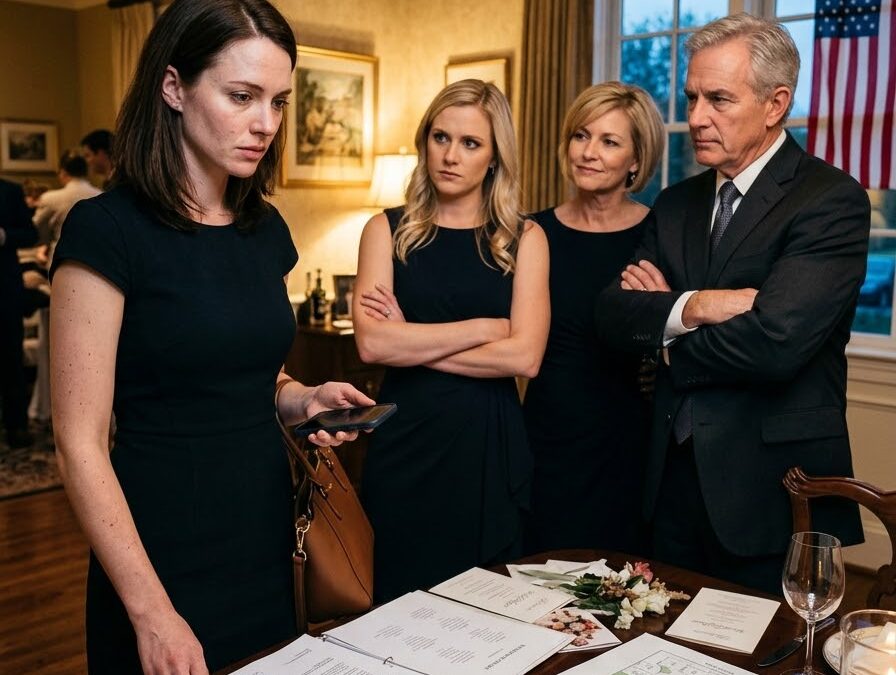
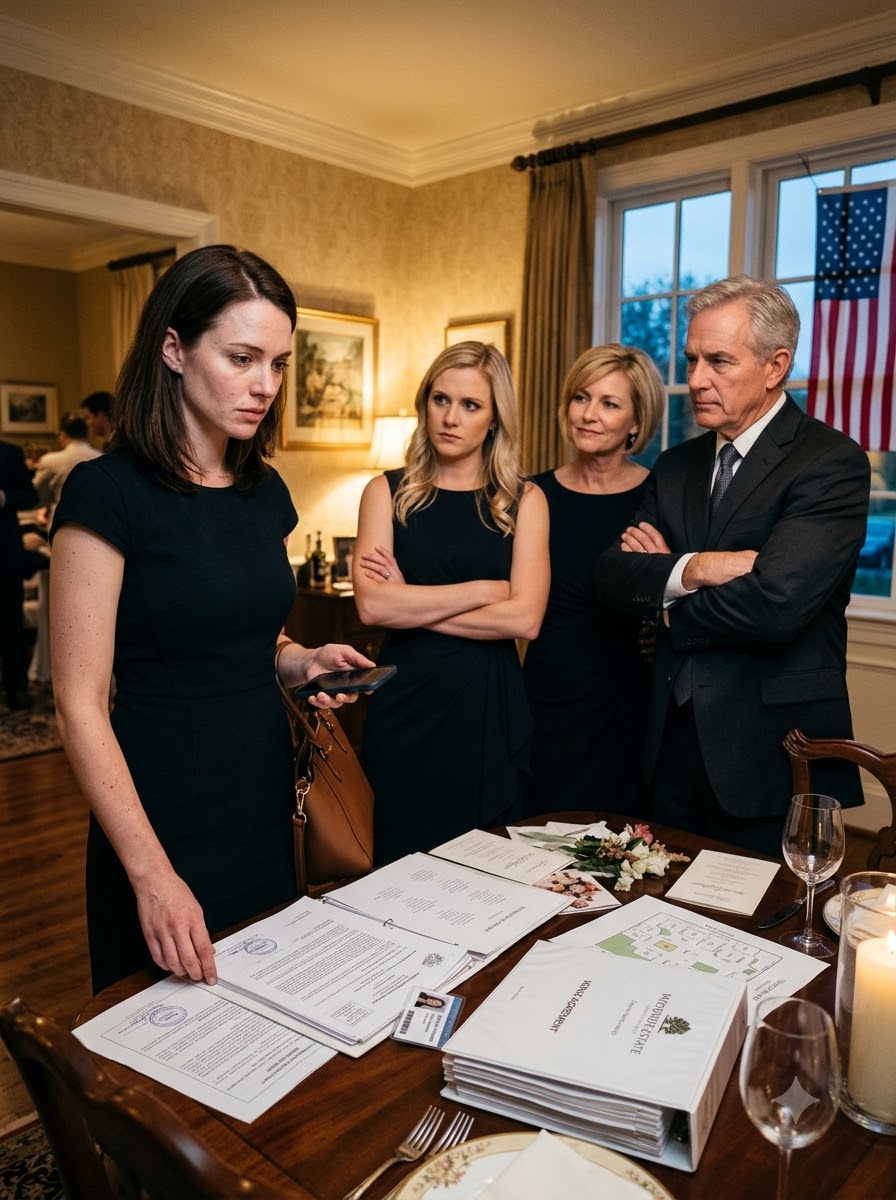
The morning of my sister Heather’s wedding, my mother called me laughing.
She said I was bluffing.
She said I’d never actually do it.
She told whoever was in that kitchen with her that by noon I’d be apologizing and begging for my seat back, same as always.
My mother was wrong.
And she found out she was wrong at 8:47 a.m., when the venue coordinator called to inform her that the reservation no longer existed.
But I’m getting ahead of myself.
My name is Renee Kulam.
I’m 36 years old, and I’m a structural engineer based out of Calgary.
I’ve spent the last 12 years designing the load-bearing systems of buildings that other people take credit for.
So, what happened with my family at my sister’s wedding was, in a certain sense, completely on brand.
Here’s what you need to understand about my family before any of this makes sense.
French Canadian on my mother’s side, and in that tradition, the family is the unit, the institution, the whole point.
My mother, Annette, ran the household the way a general runs a campaign.
Total information control, a clear hierarchy, and a deep suspicion of anyone who developed ambitions outside the perimeter.
My father, Roland, was quieter but loyal to Annette in the way of someone who had learned decades ago that peace was cheaper than honesty.
And then there was Heather, my younger sister by four years.
Heather, who had stayed.
Heather, who had done everything right by our mother’s accounting.
Moved 10 minutes away, took a job at the same school board where Annette had worked for 22 years, married a man from a good family in Lethbridge.
Heather, who had been the point of the whole operation since the day I left for university in Vancouver and committed the same original sin my family never quite forgave.
I preferred somewhere else.
I had never once been invited to stop preferring somewhere else.
For 12 years, I sent money home with the regularity of someone filing quarterly taxes.
$12,000 toward the roof replacement in 2018, when my parents couldn’t cover the full amount without drawing down their RRSP and my father’s financial adviser told them not to.
8,000 when my mother’s hip surgery meant 6 weeks of home care that provincial coverage didn’t fully absorb.
The monthly top-up to Heather’s rest when she was doing her early childhood education certification and working part-time at a daycare that paid almost nothing.
A new furnace the winter of 2021, when the old one quit at minus 32 and the wait list for installers was 2 weeks long.
I found a company out of Red Deer who could come in 3 days, and I paid the invoice directly.
I told myself I was being a good daughter from a distance.
I told myself the money was the language I spoke when I couldn’t be there in person.
What I understand now, sitting on the other side of all of it, is that the money was a substitute I accepted in place of the thing I actually wanted, which was to be considered part of the family.
The money kept arriving.
The consideration never did.
I flew from Calgary to Lethbridge for Heather’s wedding weekend, genuinely happy.
That’s the part that still catches me sometimes.
How happy I was on the plane.
Heather and I had talked more in the months leading up to the wedding than we had in years, and I had let myself believe that Callum, her fianceé, was a steadying influence.
He seemed grounded, thoughtful.
His mother, Patricia Hennessy, was a retired nurse who’d grown up in Cape Breton and moved west.
And every time I’d spoken with her at holiday gatherings, she’d been warm in a way that felt earned rather than performed.
I rented a car at the airport.
Nobody offered to pick me up, but I’d stopped expecting that.
My parents lived on the same street they’d bought on in 1988, and the house still smelled like the fabric softener Annette had used my entire life.
Lavender, a little industrial.
Underneath it, something like cedar.
I walked in through a door that was unlocked, which was the only thing that hadn’t changed, and found my mother in the kitchen surrounded by orza ribbon and a stack of programs that needed to be folded and tied.
She looked up when I walked in.
“Oh, good. You can help with these.”
Not hello.
Not good trip.
Just, you can help with these.
I sat down and started folding programs.
Heather came through the back door 20 minutes later with a paper bag from a bakery and four different conversations already running on her phone, managing everything at once, the way brides do the day before their wedding.
She hugged me over the top of my head because she didn’t want to put the bag down.
And then she was gone into the next room.
My aunt Lorett, my mother’s older sister, was the one who actually looked at me.
She came in from the back porch where she’d been reading, and she stopped in the kitchen doorway and said:
“Renee, when did you get in? You look tired.”
“Just landed,” I said.
“Come have tea when you’re done with those.”
Aunt Lorett was 71 and had the particular composure of someone who had watched her younger sister operate for seven decades and had made her peace with it a long time ago.
She was the only person in that house who consistently looked at me like I was actually there.
The rehearsal dinner was at a restaurant in town, and there was no seat for me beside Heather and Callum at the main table.
There was a spot near the back with cousins I hadn’t seen in 6 years, which was fine and also not fine in a way I didn’t name out loud.
When the speeches started, my father talked about watching Heather grow up and become the woman she was.
Generous.
Grounded.
Present.
He lingered on present.
He didn’t look at me.
I called my friend Joseline from the parking lot during the dessert course.
Josine had been my closest friend since our first year at UBC, and she had the particular gift of being able to say the true thing without making you feel worse than you already did.
“Tell me again why you keep going back,” she said.
“Because she’s my sister.”
“She’s your sister at dinner. Is she your sister everywhere else?”
I didn’t have a good answer for that.
Here’s the thing about Heather’s venue that nobody in my family had thought to mention out loud.
The Whitmore Estate in the Oldman River Valley was not a venue you could simply book by calling with a credit card.
The Whitmore family had converted their historic property into an event space 10 years earlier, but they had kept an unusual clause in their rental agreement, one that had roots in the original heritage designation on the land.
Because a significant portion of the grounds had been part of a Depression-era agricultural cooperative, the Whitmore family had retained a condition that any large-scale event on the property required what the contract called a professional co-signatory.
Meaning a licensed professional in good standing whose credentials could be verified and who would remain the responsible party of record through the date of the event.
For most events, this meant a lawyer or a doctor or an accountant.
Someone with a professional license number the Witmores could call if something went sideways.
Six months before the wedding, Heather had called me in something close to a panic.
The venue coordinator had flagged the clause, and Callum’s family didn’t have anyone who fit.
Could I help?
I was a registered professional engineer in Alberta.
My stamp was exactly what the Whitmore needed.
I said yes before she finished asking, the way I always said yes.
I reviewed the contract myself.
Professional habit.
And the clause was clear.
The co-signator’s name remained on the booking through the event date.
Their credentials stayed on file, and they were required to be reachable by the venue on the day itself in case of liability questions.
The clause also stated in plain language that the co-signatory could withdraw their registration up to 48 hours before the event, at which point the booking became void and the deposit non-refundable unless the venue was able to confirm a replacement co-signatory within 12 hours of withdrawal.
Which, given the credential verification process, was virtually impossible.
I read this.
I initialed each page I signed.
Heather said, “Thank you very much,” and moved on to the next item on her list.
Nobody else in my family read a word of it.
To them, the Witmore Estate simply materialized.
Another confirmation that the Kulobes were the kind of family who got nice things.
Proof of some vague collective standing.
When Callum’s parents came for dinner that spring, I heard my father tell David Hennessy that they had long-standing connections in the valley, and it had taken some doing, but they’d managed to secure the Whitmore for the date.
He said:
“We’re very well connected down there.”
Like it was something he’d built with his own hands.
I sat at that table and said nothing.
I’d learned a long time ago that correcting my father in front of company was a category of embarrassment that would follow me for months.
The exclusions from the wedding weekend arrived in a particular order that I’ve since come to understand was not accidental.
First, the seating at the rehearsal.
Then the family photos.
Heather called out names in the photographer’s backyard, and mine was not among them.
And when I stepped forward out of habit, Annette touched my arm and said quietly:
“Just the immediate family for this one.”
And I stepped back and stood against a hedge while my parents and my sister arranged themselves into a frame.
I was immediate family.
I had been immediate family my entire life.
But I had learned to absorb these moments the way you learn to absorb weather.
Move through it.
Don’t stop.
Don’t let them see the flinch.
The last thing that happened, the thing that changed everything, came at 9:18 p.m.
Sitting in my motel room with a bag of chips from the vending machine and a very bad cup of coffee.
My phone lit up with a text from Heather.
“Renee, Mom and I talked. We think it’s better if you’re not at the ceremony. You make everything about yourself just by being there. This is my day. Real family supports that. Please don’t come.”
I read it three times.
Not because I didn’t understand it.
I understood it completely on the first pass.
I just needed a moment to confirm that it said what it said.
I called Heather.
The phone rang twice, and then my mother answered.
Which told me everything.
“This is hard for all of us, Renee,” Annette said.
Which was such a remarkable sentence given the circumstances that, for a moment, I couldn’t speak.
My father’s voice came in from the background, clarifying the way he did when he wanted to sound reasonable.
“You don’t fit into the picture we’re trying to create this weekend. You never have. It’s not personal.”
I told him evenly that I had been her sister for 32 years and I would like to know how that was not personal.
“You always make everything a confrontation,” Annette said. “You flew out here. We didn’t ask you to. We didn’t ask you for anything.”
There it was.
The rewrite in real time.
12 years of financial contributions converted in a single sentence into an uninvited imposition.
“She’s bluffing,” my mother said to the room, not quite covering the phone. “She’ll fold. She always folds. By morning, she’ll be sorry and asking to come.”
She said it the way someone reads a weather forecast they’ve checked a thousand times.
Absolutely certain of the outcome.
I sat on the edge of the motel bed and looked at the stipple ceiling and felt something clarify inside me.
The way a structure clarifies when you finally see the load distribution correctly.
The whole 12 years laid out in blueprint form.
I pay.
They absorb.
I give.
They accept.
I am excluded.
I find a way back in.
Repeat.
The pattern was not an accident.
The pattern was a conclusion they’d drawn from data I had personally generated.
My mother wasn’t predicting the future.
She was reading a history I had written.
I called Joseline.
“They uninvited me,” I said.
A pause.
“From the wedding?”
“From the ceremony.”
“Yes.”
“Renee,” Jose said slowly. “You’re the KO signatory on the booking.”
I let that sit for a second.
“I know,” I said.
“What does the withdrawal clause say?”
“48 hours to void the booking. 12-hour window after that for them to find a replacement, which requires credential verification. That takes a minimum of three business days.”
Another pause.
“So the window for them to replace you,” she said, “has already closed.”
“Yes.”
I could hear her thinking.
“Then are you sure you want to do this?”
I thought about my father’s voice saying, you didn’t fit into the picture.
I thought about stepping back from the family photos and standing against the hedge.
I thought about 12 years of wired money and paid invoices and a furnace installed in 3 days so my parents didn’t freeze.
And I thought about my mother telling a room full of people that I was bluffing.
“I’m sure,” I said.
But I almost didn’t act.
That’s the part I have to be honest about because people assume the story goes smoothly from decision to execution, and it didn’t.
I sat on that bed until 11:30 at night arguing with myself.
I thought about Heather in her dress.
I thought about Callum, who had never done anything wrong to me.
I thought about Annette being humiliated and whether she deserved that.
I kept coming back to the same two facts.
One, I had a legal and professional responsibility as co-signatory that I could not in good conscience discharge for an event I had been formally barred from.
Two, my mother had already decided I would fold.
She had already told people I would fold.
She was sleeping soundly right now on the strength of that certainty.
I wasn’t going to fold.
I set my alarm for 6:30.
In the morning, I showered, made another bad cup of motel coffee, and at 7:00 a.m., I called the Whitmore Estates event line.
The coordinator, a woman named Diane, answered with the particular alert calm of someone who had been managing venue logistics since well before the guests woke up.
“This is Renee Kulom,” I said. “I’m the professional co-signatory on file for the Bumont Hennessy booking today. I’m formally withdrawing my co-signatory registration and professional credentials from the booking effective immediately.”
A short silence.
“Miss Kulom, I want to make sure you understand what that means for the booking.”
“I do,” I said. “Without a verified co-signatory, the booking cannot proceed under the terms of the heritage clause, and the 12-hour replacement window has passed.”
“That’s correct,” Diane said. “I’ll need written confirmation.”
“It’ll be in your inbox in 10 minutes.”
I sent the email before my coffee was gone.
Short.
Formal.
Dated.
The kind of document that exists as a clear record.
Then I sat in the parking lot of the motel and watched the sun come all the way up over the edge of the valley and felt the particular quiet of a decision that is final.
My aunt Lorett called me at 9:15.
Not to argue.
She called because she was already at my parents’ house, and she wanted me to know what had happened.
She said my mother had seen my response text the night before.
The one where I’d written simply:
“Understood. Real family can find their own co-signatory.”
And she’d read it out loud to the kitchen like a punchline.
Heather laughed.
Roland didn’t react, which was his version of agreeing.
Annette told the room I was posturing, that I’d never risk the professional embarrassment, that by morning I’d be at the church in the second pew trying to pretend nothing happened.
She was so sure, Lorett told me, that she’d slept completely through the night.
“What happened this morning?” I asked.
Lorett’s voice was quiet and careful.
“Heather called the Whitmore to confirm the florist arrival time, and the woman who answered told her the booking had been cancelled.”
She said the word cancelled the way you’d say something had been taken off life support.
The next hour assembled itself in pieces through texts from Lorett and one accidental voicemail from a cousin who clearly did not mean to call me.
My mother called the Whitmore four times.
She tried apologetic.
Then insistent.
Then something Lorett described as frantic bargaining.
Diane held the line with the calm of someone who had seen family crises before and was not personally responsible for them.
Without a verified co-signatory, the heritage clause could not be waved.
The venue could not host the event.
She was sorry.
My father grabbed the phone for the last call.
He was loud, Lorett said.
The way Roland got loud when he’d run out of other tools.
Volume did nothing.
They called every venue in Lethbridge with a Saturday availability.
The Italian social club was booked.
The golf course bisquit room had a retirement party.
The hotel ballroom had a bar mitzvah.
The only space in the city that could accommodate their guest list on no notice was the Legion Hall on Henderson Lake Boulevard.
A long brick building with folding tables, a kitchen that smelled of a hundred years of community suppers, and a wall of photographs of the veterans who had built and maintained it since 1949.
They booked it because they had no other choice.
And at some point in those frantic calls, my father had to look at the contract.
The full contract.
The one with my name in the co-signatory line.
The one with my license number and professional stamp.
The document that explained in precise language exactly how the Whitmore Estate had been accessible to a family without connections, without credentials, without anything except a daughter they’d decided not to invite.
Lorett told me she watched Roland sit down at the kitchen table with the papers and go very still.
I was at the airport by then.
My flight wasn’t until the afternoon, but I’d checked out of the motel because there was no reason to stay.
I sat at the gate with my boarding pass on my phone and watched the story arrive in fragments.
A cousin texted that the guests were pulling into the Legion parking lot holding cream card-stock invitations with the Whitmore Estate printed at the top.
Another cousin texted a photo of the temporary paper sign taped inside:
BUMONT HENNESSY WEDDING RECEPTION.
THIS WAY.
Someone said Callum’s mother, Patricia, had gotten out of her car and stood for a long moment looking at the building without speaking.
Lorett was inside the Legion Hall when the story turned.
She told me later that it moved through the room table by table, the way water moves under ice.
Quiet and spreading.
Heather had written in the bridesmaid group chat the night before that I was making a scene and attention seeking and had only ever showed up when there was something in it for me.
Someone had screenshotted it.
Someone had passed it along.
By the time the reception food was being served, half the room knew that the co-signatory who had quietly stepped back from her credentials that morning was also the woman who had paid for the roof and the hip surgery and the furnace in the minus-30 winter, and who had been told via text message the night before the wedding that she wasn’t real family.
People looked at the photographs on the Legion wall.
Decades of service.
Community built by people who showed up for things that didn’t benefit them personally.
And somebody repeated Heather’s line.
“She’s just attention-seeking. She’s only here when there’s something in it for her.”
And in that room, against that wall, the sentence didn’t land the way it had in a group chat full of bridesmaids.
It landed like something said in the wrong church.
David Hennessy was the one who went to find my father.
Callum’s father, a quiet man who’d spent 26 years in provincial infrastructure work, had done his own reading of the co-signatory clause because he’d had some professional dealings with heritage properties.
And he understood immediately what he was looking at when Diane had explained the situation.
He found Roland near the drinks table and said very little because David Hennessy was not a man who needed a lot of words to make a point.
“Your daughter built this booking from scratch,” he said. “My son was getting married at the Whitmore because she put her name on the line. And she wasn’t in the room last night when you told her she wasn’t family.”
Roland started something about it being complicated.
“I understand the contract,” David said quietly. “I don’t need it explained.”
He went back to Patricia, who had her hand over her mouth.
And I was told later that they sat very close together for the rest of the afternoon, talking low.
Callum stood between his parents and his new wife and looked, people said, like a man who was very carefully recalculating something important.
Aunt Lorett called me while I was sitting at my gate.
“The room figured it out,” she said.
“I know,” I said. “I’ve been reading the texts.”
“How are you?”
I thought about it honestly.
“I feel like I’ve been carrying something heavy for a very long time and I finally put it down.”
“Good,” she said. “Good.”
Then:
“Your mother is not having a nice afternoon.”
I didn’t feel the sharp satisfaction about that I might have expected.
What I felt was more like a door clicking shut on something I’d been trying to hold open with my body for 12 years.
Heather called me that night.
I was home in Calgary, in my own kitchen, making pasta and listening to the radio.
I let it ring through the first time.
The second time, I picked up.
She wasn’t crying.
She was doing the thing she did when she was composing herself.
Speaking in very flat, careful sentences.
“People are saying things,” she said.
“I know,” I said.
“You humiliated our parents.”
I set down my wooden spoon.
“Heather,” I said, “you sent me a text telling me I wasn’t real family. I removed my name from a document I was professionally and legally responsible for. That’s what happened.”
“You did it to hurt me.”
“I did it because I couldn’t, in good conscience, remain the responsible party for an event I’d been barred from attending. That’s not punishment. That’s basic professional logic.”
She was quiet for a moment.
“Everyone’s talking about the money,” she said. “What you paid for. I didn’t want them to know all of that.”
“I didn’t tell them.”
“Well, someone did. Someone found out.”
“Because it was true,” I said. “And the truth doesn’t always stay where you put it.”
She started to say something about how this was the pattern.
How I always had to be the one who got credit.
How even this, even my leaving, had become about me.
I recognized the shape of the argument.
It was my mother’s argument filtered through 32 years of proximity.
The logic that said:
“Your existence takes up space that belongs to me.”
I let her finish.
Then I said:
“I heard you the first time when you wrote that real family belongs at the wedding and I don’t. I heard you. I believe you now. Good night, Heather.”
I ended the call.
I stood in my kitchen for a moment with my hand on the counter and noticed that I wasn’t shaking.
My voice hadn’t wavered through any of it.
I’d finally said the thing I’d always been too afraid to say.
Which was simply:
“I believe you. I won’t argue with your terms. Good night.”
It didn’t feel like winning.
It felt like setting a bone.
Painful and precise and necessary.
My father called 2 days later.
I almost didn’t answer that one either.
But 12 years of answering the phone for these people is a physical reflex before it’s a decision.
“I want to say something,” Roland said.
Which was different from how he usually opened a call.
Usually, he launched straight into the point and left me to find the context.
“Okay,” I said.
“I didn’t know you’d paid for all of it. The roof. The furnace.”
A pause.
“I knew about some of it. I didn’t know the number.”
“I wasn’t keeping count,” I said.
Which was true in one sense and not in another.
“Your mother was,” he said.
He said it without judgment.
Just the flatness of someone reporting a fact they’d sat with.
“She told people you barely called. That you were distant. That you thought the money was a substitute for showing up.”
I let that settle.
“She was right that I sent money instead of coming home sometimes,” I said. “She was wrong about why I sent money. Because when I came home, I wasn’t made to feel like I belonged there. Those two things are connected, Dad.”
A long silence.
The longest one I remember from my father.
“I know,” he said.
Finally.
Just two words.
And they cost him something.
I could hear it.
“I know that. I just didn’t say it.”
It wasn’t an apology.
Not the full architecture of one.
But it was the first thing my father had said to me in 12 years that felt like it came from the right room in him.
The honest one underneath all the performance.
I told him I needed some time.
That I wasn’t ready to come back yet.
That I hoped he understood.
He said he did.
He didn’t say anything else.
He hung up, and I held the phone for a minute, looking out the window at the city.
The familiar Calgary skyline I’d chosen instead of the town I’d come from.
Then I called Joseline.
“My dad said something true,” I told her.
“That’s either very good or very bad,” she said.
“I think it might actually be the beginning of something,” I said. “I don’t know what yet, but something.”
Back at my desk the following week, I sat down with the practical business of what leaving actually meant.
I reviewed every arrangement I’d made on my family’s behalf over the years.
The guarantee I’d co-signed on my parents’ line of credit to keep the renovation costs manageable in 2020.
My name on the emergency contact form for both of them.
The beneficiary designation I’d updated before a particularly uncertain project trip 2 years ago when I’d listed them out of habit and love and the reflex of someone who always assumed they’d be wanted.
I didn’t close every door that week.
Some of it I changed.
Some I left.
I wasn’t trying to punish anyone.
I was just doing what I should have done years ago.
Making sure my name was only attached to things I’d consciously chosen to be attached to.
The Witmore Estate sent me a follow-up email about the deposit.
Under the clause, because the withdrawal had been within the liability window rather than a breach, the deposit was held by the venue rather than returned to the booker.
Dian’s email was careful and professional.
She confirmed the booking reference and closed with:
“Thank you for your years of professional conduct in cosignatory arrangements. We would welcome you back as a signator for future events.”
I read that twice.
Then I sat back in my chair and thought about something.
For 12 years, I had been the responsible party on other people’s arrangements.
I had signed for things.
Stamped things.
Guaranteed things.
And none of it had been mine.
All of it had been for people who had other people to thank and consistently thanked someone else.
I opened a browser tab and looked at a property I’d driven past twice on the highway west of Calgary.
A decommissioned farmstead with good bones and a river view that someone had let sit empty for 3 years.
The listing was still active.
I made a call.
Lorett came to visit me 3 weeks later.
She drove up from Lethbridge in her old Honda, and we had dinner at my kitchen table.
And she told me everything she’d watched that she hadn’t told me in real time.
“Patricia Hennessy asked about you,” she said. “She said she’d like to write to you.”
“That’s kind,” I said.
“She said you reminded her of someone she knew in nursing. A woman who held everything together so quietly that nobody ever thought to ask how she was doing.”
I didn’t know what to say to that.
So I didn’t say anything.
Which Lorett understood was actually something.
“And Callum,” she said more carefully. “Callum is trying, but he’s learning things about your sister’s family that are difficult to learn during the first month of a marriage.”
“I know,” I said. “That’s not my fault, and it’s not my problem.”
“No,” Lorett agreed. “It’s not.”
She stayed two nights.
We walked along the river path on Sunday morning.
And she told me about her own years of managing my mother, the adjustment she’d made over decades to stay in relationship with a woman who required constant curation of everyone around her.
It was the most honest conversation I’d ever had with my aunt.
And it happened because something had shifted in the room between us.
Now that I’d stopped performing the version of myself my family had required.
“You’re different,” Lorett said.
“I feel like I’m just me.”
“That’s the difference,” she said.
Heather texted me 6 weeks after the wedding.
Not an apology exactly.
More of an accounting.
She listed what she remembered paying for over the years, trying to establish a kind of ledger that would balance out what had come to light.
It was the message of someone who had been embarrassed and was looking for a framework where the embarrassment belonged to someone else.
I read it on the porch of the farmstead property I was now in the early stages of purchasing.
I read it once.
And then I put my phone in my pocket and walked the perimeter of the barn in the late afternoon light and did not reply.
Not out of cruelty.
Out of clarity.
I was under no obligation to respond to a text that was fundamentally about making Heather feel better about what she’d done.
When I wrote back, if I wrote back, it would be when I decided what I actually wanted to say.
Not when a message summoned the old reflex.
That was new.
Choosing when to respond instead of just responding.
Feeling the pull and choosing not to follow it.
It felt like finally being the engineer of something that belonged to me.
The farmstead closed in November.
I signed the deed with my own name and my own stamp, and the only person I owed anything to was the bank.
And the bank’s terms were written clearly on paper I had read myself.
I started doing the renovations in stages, the way I do everything.
Load-bearing work first.
Then the rest.
The barn had good structure underneath the surface problems, which is what I’d hoped when I first walked through it.
It would be an event space eventually.
Something with my name on the door.
A place where I would be the signatory and mean it.
Josine came out in December with wine and takeout.
And we sat on the floor of the unfernished main room and talked for 5 hours about everything except the wedding.
And then, eventually, about the wedding.
And she said the thing she’d been waiting to say for years.
“You know what I noticed? Every time you talked about your family, you talked about them like they were a project you hadn’t solved yet. Like there was a deliverable you were working toward, and you kept submitting the work, and they kept moving the deadline.”
I thought about that for a long time.
“The thing about a project with a moving deadline,” I said, “is at some point you have to recognize it’s not a deadline problem. It’s a scope problem.”
“The scope was never defined because defining it would have required them to admit they didn’t actually want the project completed.”
Joseline raised her paper cup of wine.
“Welcome to actually knowing that,” she said.
Here’s where everyone landed, roughly a year out.
Callum and Heather are still married, as far as I know.
Working at it.
I heard through Lorett that Callum’s parents had been notably less warm since the wedding, and that Heather had said at some point that she felt like she’d married into a family that had already decided something about her.
Which I thought was a fair thing to experience and a hard thing to be on the other end of.
And also not mine to fix.
My mother has not called me directly.
She texted once something about the holidays, and I wrote back something polite and non-committal.
We haven’t spoken on the phone since the weekend of the wedding.
I don’t know if that’s permanent.
I’m not treating it as permanent or temporary.
I’m treating it as the current state of things.
My father and I have had four phone calls since the one where he said, “I know.”
They are short and carefully navigated and not particularly warm, but they are honest in a way our calls were never honest before.
Last month, he told me about a project at the shop and actually asked what I thought.
And I told him.
And he listened.
I don’t know what that becomes.
But it’s more than we had.
Lorett calls on the first Sunday of every month.
That’s our arrangement now.
Formal and reliable.
And it feels like the most solid relationship in that whole radius of my life.
I wrote back to Heather eventually.
3 months after the wedding.
After I’d sat with it long enough that the reply was actually mine instead of being the response her message was designed to provoke.
I wrote one paragraph.
I told her I didn’t believe she was a bad person, and I didn’t believe I was a saint, and that what had happened was the result of a pattern that had been running for a very long time between all of us.
I told her that if she wanted to build something different, I was willing to try.
But I wasn’t willing to go back to what we’d had before.
Which was me being the one who funded and absorbed and made myself small while she and our parents took credit for the results.
I told her that wasn’t a threat.
It was just a fact about what I had energy for anymore.
She didn’t reply for 6 weeks.
When she did, she wrote two sentences.
“I’ve been thinking about what you said. I don’t know if I know how to do the different thing you’re describing, but I want to try to figure it out.”
Two sentences.
Honest ones.
I wrote back:
“That’s enough to start.”
The farmstead barn is still a work in progress.
The string lights are up.
The structural work is done.
I walked through it on a quiet Tuesday morning last month and stood in the center of the space and thought about all the buildings I’d designed over 12 years.
Load-bearing systems that held up things other people built on top of.
I thought about how I had spent so much of my life being a structural element in other people’s plans.
There’s a different feeling standing in a building where your name is on the deed.
You don’t disappear into it.
You’re not the foundation someone walks on without thinking about.
You’re actually in the room.
I clipped my professional engineer stamp to the lanyard above my sight badge that morning.
Something I’d never done before.
Always kept them separate and professional and apart.
I put them together because I felt like it.
Because the things I’d built with that stamp were finally starting to include something for me.
My friend Joseline texted me a photo of the barn from the road when she drove past last week.
Just the photo.
No caption.
Afternoon light coming through the west window.
That good golden quality that Alberta only does for about six weeks a year.
I looked at it for a while.
I texted back:
“It’s holding up.”
She wrote:
“So are you.”
I put my phone in my pocket and went back to








