“Your fiancé’s family has removed your father’s name from the guest list,” the wedding planner said over the phone. I replied immediately: “Cancel the wedding.” She said in a panic, “But… you aren’t the one who booked the venue…” “That’s true. But my father is the owner of the venue, the catering company, and the hotel itself.” Five minutes later… my phone showed twenty missed calls.
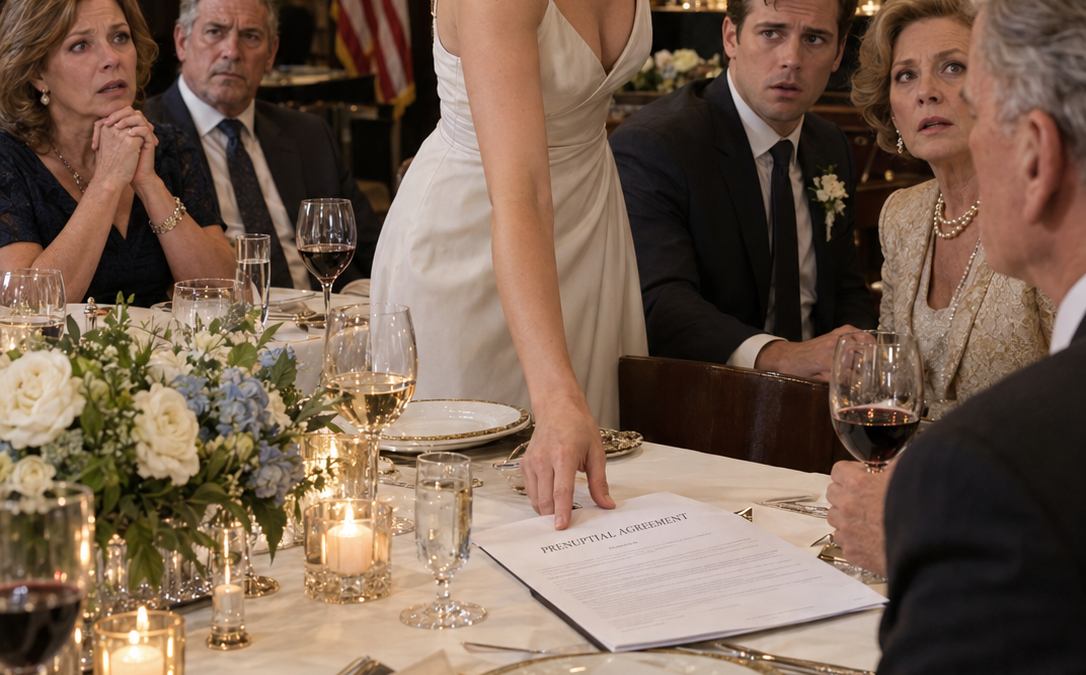
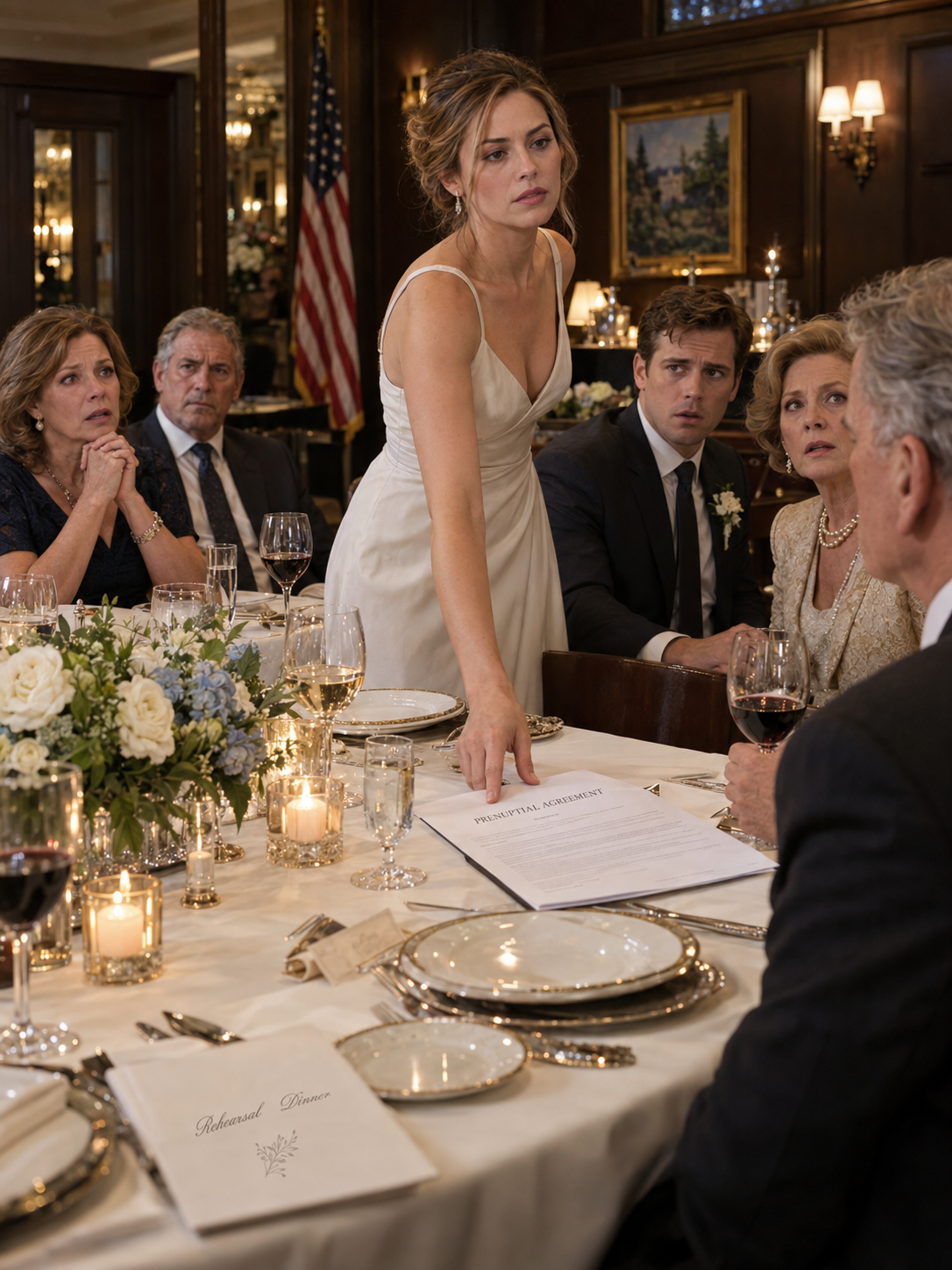
If you’re going to talk about my family, at least have the courage to let them understand you.
I said it in French.
The fork in my hand was still suspended above my plate when every conversation at our table stopped.
My future mother-in-law stared at me as if I had suddenly become a stranger.
My fianceé went completely still.
His father lowered his wine glass without taking a sip.
For 3 hours, they had believed I understood nothing.
They had been wrong.
And what I had just heard about my parents was something I knew I could never unhear.
Three weeks earlier, I had been excited about that dinner.
My name is Emily Carter.
I was 29 years old, born and raised in a small town outside Philadelphia.
And I had been engaged to Julian Maro for 8 months.
Julian was 31, worked in finance in New York, and had the kind of polished confidence that made strangers assume he had grown up in Manhattan.
He hadn’t.
He had grown up between New York and Paris in a family with money, connections, and very strong opinions about what a successful life was supposed to look like.
My parents were different.
My dad, Robert, had been an electrician for almost 40 years.
He still kept his old work boots by the back door, even though he had retired.
My mom, Linda, had worked as a nurse for most of her adult life.
They had never owned a vacation home.
They had never spent a summer in Europe.
They drove ordinary cars, shopped carefully, and argued over whether a restaurant was worth $20 more per person.
But they had given me something I valued more than any of that.
They had taught me not to measure people by what they owned.
So when Julian told me his parents were flying from France to meet my family before the wedding, I was nervous but hopeful.
“They’re going to love you,” he told me one evening while we were sitting on my parents’ back porch.
I laughed.
That’s not what worries me.
What does?
My parents.
He looked confused.
They’re wonderful.
I know, but your parents are used to a very different world.
Julian reached across the table and squeezed my hand.
They’re just formal.
Don’t overthink it.
I wanted to believe him.
The dinner was at a beautiful French restaurant in downtown Philadelphia.
Nothing about it was wildly extravagant, but it was the kind of place where the waiters spoke quietly and folded the napkins between courses.
My mother had spent almost an hour choosing her dress.
My father had asked me three times whether his navy blazer was too much.
When we arrived, Julian’s parents were already there.
Phipe Maro stood when he saw us.
He was tall, silver-haired, and impeccably dressed.
Isabelle was elegant in a way that seemed effortless.
She kissed my cheek and smiled.
“So finally,” she said.
“The woman who has stolen our son’s heart.
I smiled back.”
“I’ve heard so much about you.”
“That can be dangerous,” Philipe joked.
“For the first hour, everything went well.
We talked about the wedding.
My mother asked Isabelle about France.
My father and Phipe discovered they both enjoyed old cars.
Julian looked relieved.
I remember thinking, “Maybe this will actually work.”
Then dessert arrived and something changed.
Phipe leaned toward Isabelle and said something in French.
She laughed.
Julian answered him in French.
I smiled politely and continued cutting my cake.
That was when an Isabelle looked directly at me, then turned back to Filipe.
“She doesn’t understand us,” she said, my stomach tightened.
I kept my eyes on my plate.
I understood every word.
My grandmother had taught me French when I was a child.
Later, I spent a year in Montreal during college where I became comfortable speaking it.
I rarely mentioned it because it simply wasn’t important in my everyday life.
Julian knew, at least I thought he did.
The conversation continued.
Isabelle commented on my mother’s dress.
Phipe made a joke about my father’s job.
Then they started talking about my family as though none of us existed.
They called my parents provincial, ordinary, not their world.
I felt heat rise into my face.
My mother was sitting right beside me, smiling at Isabelle, completely unaware of what was being said.
My father was telling Phipe about a classic Chevrolet he had restored years ago.
Then Isabelle said something that made my hand stop.
She wondered whether my parents understood that after the wedding things would be different.
Philipe agreed.
He said they shouldn’t expect to have much influence over our lives.
Then Julian laughed softly.
Not nervously, not uncomfortably.
He laughed.
That hurt more than anything his parents had said.
I looked at him.
He wouldn’t meet my eyes.
Then Isabelle said the sentence that finally broke something inside me.
She said my parents should be grateful their daughter was marrying into a family that could give her a better life.
I slowly put down my fork.
The restaurant suddenly seemed very quiet.
I looked at my mother, then my father, then Julian, and finally I looked at Phipe and Isabelle.
I switched to French.
If you’re going to talk about my family, at least have the courage to let them understand you.
Nobody moved.
My mother’s smile disappeared.
My father looked at me confused.
I could see the question forming in his eyes.
What did they say?
I wasn’t ready to repeat it yet.
Not there.
Not with the waiter standing nearby and strangers at the next table pretending not to listen.
Some words become heavier when you translate them aloud.
I knew I would have to tell my parents the truth, but first I needed to understand why Julian had allowed it to happen.
Julian whispered my name.
Emily.
I didn’t look a look away from his parents.
Isabelle’s face had gone pale.
Phipe stared at me.
You speak French?
Yes, I said.
Then I looked at Julian.
And apparently I understand more than you thought I did.
That was the moment I realized this dinner was not about two families meeting.
It was the first warning.
And I had no idea yet how much that warning was going to change my life.
The moment we stepped outside the restaurant, Julian reached for my hand.
I pulled it away.
Not dramatically, not angrily.
I simply wasn’t ready to let him touch me.
The Philadelphia evening was cool, and the sidewalks were busy with people heading home from dinner, couples laughing outside, restaurants, taxis moving through the intersection.
Everything around me looked completely normal.
My life didn’t.
Emily, please, Julian said.
Can we just talk?
I turned toward him.
Did you know?
He hesitated.
That hesitation was enough.
Did you know what they were saying?
Yes.
The answer came quietly.
I stared at him.
How long?
What do you mean?
How long have you known they felt that way about my parents?
Julian rubbed the back of his neck.
They’ve always had concerns about our different backgrounds.
That wasn’t my question.
He looked away.
Emily, how long?
a while.
I laughed once, but there was no humor in it.
A while?
I didn’t think it was important.
I looked through the restaurant window.
My parents were still inside.
My mother was speaking with Isabelle, probably trying to smooth things over.
My father had ordered another coffee.
My parents were the kind of people who tried to make everyone comfortable, even when they were the ones being hurt.
“Not important,” I repeated.
They’re old-fashioned, Julian said.
They say things.
You know how families can be.
No, I know how your family can be.
He sighed.
They don’t mean everything literally.
They said my parents were beneath them.
I know.
They said I would have a better life with your family.
I know.
And you laughed.
His face changed.
I didn’t mean to.
You laughed.
I was uncomfortable.
You laughed.
He had no answer.
I crossed my arms.
Julian, you knew exactly what they were saying, and you sat there while my mother smiled at them.
I didn’t want to start a fight.
I stared at him for several seconds.
Then I said something I had never expected to say to the man I was supposed to marry.
You were willing to let my parents be humiliated so you could have a peaceful dinner.
His expression hardened.
That’s not fair, isn’t it?
No, I was trying to keep things under control.
You weren’t controlling anything.
I stepped closer.
You were protecting your parents from an uncomfortable conversation.
He looked down.
That that was when I realized the problem was bigger than one dinner.
Julian had been trained to avoid conflict with his parents.
I could understand that.
Every family has its patterns.
But understanding something didn’t mean accepting it.
We stood there in silence until he finally said, “They’re just worried about what?”
About me from marrying me.
They think our backgrounds are very different.
Our backgrounds are different.
Yes.
My parents worked for everything they have.
Yours inherited most of what they have.
His jaw tightened.
That’s not fair to them.
Neither was tonight.
He had nothing to say.
When we went back inside, my mother immediately looked at me.
Honey.
I forced a smile.
I’m okay.
She knew I wasn’t.
My father looked from me to Julian.
What happened?
Nothing, I said.
Julian started to speak.
I stopped him.
Not here.
We finished the dinner in uncomfortable silence.
On the drive home, my mother sat in the passenger seat beside dad while Julian drove.
I sat in the back.
Nobody said much.
When we reached my parents house, mom touched my arm before getting out.
You don’t have to tell me tonight, she whispered.
But don’t pretend you’re okay just because you don’t want to upset us.
I I looked at her.
That was my mother always making room for everyone else’s feelings.
I almost told her everything, but I wasn’t ready.
After my parents went inside, Julian turned toward me.
Please don’t tell them what was said.
I looked at him in disbelief.
Why?
Because it’ll only hurt them.
They have a right to know.
Emily, please, can we handle this privately?
I stared at him.
You mean you want me to protect your parents from the consequences of their own words?
No.
Yes.
He closed his eyes.
I’ll talk to them.
When?
Tomorrow.
I nodded.
Okay.
He looked relieved, but I wasn’t agreeing to forgive him.
I was agreeing to wait.
The next morning, Julian came to my apartment.
He looked exhausted.
My parents apologized, he said.
For what?
For being insensitive.
I waited.
And they said they never intended to insult your parents.
Did they say that to my parents?
No.
Then the apology doesn’t mean much.
He sat down.
They’re willing to make an effort.
What does that mean?
They’ll be more careful.
I studied his face.
Julian, I don’t need them to pretend to like my parents.
I know.
I need them to respect them.
They will.
Will you?
He looked hurt.
Of course.
Then prove it.
He reached for my hand.
This time, I let him hold it.
I wanted to believe him.
I really did because underneath the anger was something else.
Fear.
I had already imagined my wedding, my father walking me down the aisle, my mother fixing my veil, Julian waiting for me at the front of the church.
I didn’t want to throw that away because of one terrible dinner.
But that afternoon, something happened that made it impossible for me to dismiss the situation as one bad evening.
I was checking my email when a message appeared from Isabelle.
The subject line read re the agreement.
I almost deleted it.
Then I noticed the first sentence.
As we discussed, Julian must understand that this needs to be finalized before the wedding.
I read it again, then again.
My heart began beating faster.
There was an attachment, a PDF.
I opened it.
It was a draft of a prenuptual agreement.
I knew Julian’s family had mentioned a prenup before.
That wasn’t unusual, especially considering their finances.
But this wasn’t what frightened me.
It was the fact that the document had been circulating among his parents and their attorney for weeks, and I had never seen it.
I kept scrolling.
There were pages about separate property, investments, inheritance, business interests, and financial responsibilities.
Then I reached a section that made my stomach drop.
It discussed the possibility of financial claims involving extended family influence.
My parents, they hadn’t just been talking about my family.
They had been planning around us.
I closed the laptop.
For several minutes, I sat completely still.
Then I opened it again and read the document from the beginning.
This time, I wasn’t reading it as a future bride.
I was reading it as a woman who needed to protect herself.
And for the first time, I wondered whether the dinner had been a warning they never intended me to understand.
The next morning, I did something I never imagined I would do before my wedding.
I called a lawyer, not because I had decided to leave Julian.
Not yet.
I called because I had finally understood that love did not make me immune to consequences.
I had spent the entire night reading the prenup his parents had prepared.
The language was formal and complicated, but I didn’t need a law degree to understand the basic message.
Protect Julian.
Protect the Maro family assets.
Protect the family business.
Protect future inheritances.
And in several places, make sure Emily Carter had as little financial influence as possible.
I printed the document and put it into a folder.
Then I drove to a small law office outside Philadelphia.
The attorney I met was a woman named Karen Mitchell.
She was in her 50s. direct without being cold and had the kind of calm expression that immediately made me feel less foolish for asking questions.
I handed her the folder.
I’m getting married in 6 weeks, I said.
She looked at the document.
And you just received this?
No, I received it by accident.
She looked up.
That’s important.
I told her about the dinner.
I told her about the French conversation.
I told her what Julian had admitted.
Karen listened without interrupting.
When I finished, she said, “Emily, a prenup isn’t automatically a red flag.”
I know.
In fact, for couples with significant differences in assets, it can be a very sensible thing.
I know, but a prenup should be negotiated openly.
You should have enough time to review it, ask questions, and get independent legal advice.”
I nodded.
“And you should never sign one because you’re afraid your fiance will leave you if you don’t.”
I looked down at my hands.
That hasn’t happened.
Good.
She turned another page.
But this clause is unusual enough that I would want clarification.
My heart sank.
Because of my parents.
Yes, I swallowed.
What does it mean?
It appears to limit certain claims or financial involvement connected to family members.
I would want to know why they included it.
I stared at the page.
My parents don’t want their money.
Karen gave me a small smile.
Then that makes it even more important to understand why they’re mentioned.
I left her office with instructions to take my time.
No pressure, no signature, no emotional decisions.
For the first time in days, I felt like I had some control.
That evening, I met Julian at a coffee shop near my apartment.
He looked nervous before I even sat down.
I know about the prenup, I said.
His face fell.
How?
It was emailed to me.
He closed his eyes.
I was going to tell you when before we signed it.
That’s not an answer.
He looked around.
Emily, my parents wanted to protect certain family assets.
And what did you want?
I wanted us to get married.
That still isn’t an answer.
He rubbed his forehead.
I didn’t think it was a big deal.
I placed a copy of the document on the table.
This section mentions my parents.
I know.
Why?
Because my parents are concerned about financial boundaries.
My parents have never asked you for a dime.
I know.
Then why are they in the agreement?
He was silent.
I leaned back.
Did your parents ask you to put that in there?
Yes.
And you agreed?
I didn’t think about it the way you are.
How did you think about it?
He looked at me as something my family does.
I nodded slowly.
That sentence stayed with me.
Something my family does.
It was the same excuse he had used for the dinner.
His parents said things because that’s what they did.
His family prepared legal documents without telling me because that’s what they did.
His family made decisions for him because that’s what they did.
At some point, I had to ask myself whether I was marrying Julian or marrying a system he had never learned to challenge.
I need time, I said.
His expression changed.
Time for what?
To think about us.
Yes, Emily.
I love you.
He looked relieved for half a second.
But love isn’t enough if you can’t stand up to your family.
His eyes filled with frustration.
You don’t understand what they’re like.
I understand exactly what they’re like.
No, you don’t.
Then help me understand.
He couldn’t.
That was the problem.
Over the next few days, I started noticing things I had previously ignored.
The wedding invitations had been changed without asking me.
Julian’s mother had opinions about my dress.
His father wanted to move the rehearsal dinner to a private club.
And when my mother suggested having a small family brunch the morning after the wedding, Isabelle politely told her that the schedule was already quite full.
I began seeing the pattern.
No single thing was enormous.
Together, they told a story.
They expected me to adjust.
They expected my parents to step aside, and they expected Julian to make sure it happened quietly.
One afternoon, I asked him a question.
If we get married, where do you think we’ll spend Thanksgiving?
He laughed.
At my parents’ house, probably.
And Christmas.
My parents usually host.
And my parents.
We can see them another day.
I stared at him.
Another day.
Emily, we’re going to have two families.
No, you’re talking about having one family and visiting the other.
He went quiet.
That evening, I called my parents.
Dad answered, “Hey, kiddo.”
His voice almost broke me.
I wanted to tell him everything.
Instead, I asked, “Dad, if someone treated you like you weren’t good enough for me, what would you do?”
There was a long pause.
Then he said, “I’d probably be hurt.”
“What else?”
“I’d hope you wouldn’t let them make you ashamed of where you came from.”
I closed my eyes.
“That’s all?”
“No,” he sighed.
“I’d tell you not to marry somebody hoping they’ll change.”
Those words hit me harder than I expected, but I wasn’t ready to walk away.
Not yet.
Instead, I decided to give Julian one final opportunity to choose me publicly.
The rehearsal dinner was already scheduled.
His parents had invited nearly 30 people.
I I knew they expected everything to go their way.
I knew they thought I would eventually surrender.
And I knew something they didn’t.
I had stopped trying to keep the peace.
I had started preparing to tell the truth.
So I made a decision.
I would not scream.
I would not insult them.
I would not humiliate them.
I would simply let them speak.
And then I would show them exactly how much I had heard.
By the time the rehearsal dinner arrived, I had stopped feeling nervous.
I felt calm.
That was almost worse.
For weeks, I had been trying to convince myself that Julian and I could build a life that belonged to us rather than to our families.
But after reading the prenup and hearing what his parents had said in French, I finally understood something.
This wasn’t a misunderstanding.
It was a test, and everyone at that table was about to find out whether I was willing to pass it.
The rehearsal dinner was held at a private dining room in an old Philadelphia restaurant.
The room had dark wood walls, brass light fixtures, and a long table covered in white linen.
Through the windows, I could see the lights of center city beginning to glow as evening settled over the streets.
Julian arrived with his parents.
My parents came a few minutes later.
Mom was wearing the same navy dress she’d worn to our first dinner with the Maro.
Dad wore his favorite blazer.
When he saw me, he smiled.
You look beautiful, kiddo.
Thanks, Dad.
He kissed my forehead.
For one second, I almost told him everything.
Instead, I smiled.
I’m glad you’re here.
He looked at me carefully.
So am I.
He knew something was wrong.
My father had always been good at reading me.
The guests began arriving.
Julian’s aunt and uncle came from New Jersey.
A few of his family friends had flown in from Europe.
There were also people I barely knew from his professional life.
Everyone was dressed beautifully.
Everyone was polite and everyone seemed to assume the wedding was already settled.
Then Philipe stood at the end of the table and tapped his wine glass.
I’d like to say a few words.
The room quieted.
He smiled.
First, we’re delighted that our families are coming together.
My mother smiled.
My father nodded.
Phipe continued.
There are naturally some differences between our families, but Julian and Emily are young.
They will learn to navigate those differences.
I felt my shoulders tighten.
Then Isabelle spoke.
We’ve also taken the liberty of making a few adjustments to the wedding arrangements.
I looked at Julian.
He would he wouldn’t look at me.
What adjustments?
I asked.
Isabelle smiled as though I had asked about the weather.
Oh, nothing dramatic, she began explaining.
The seating arrangement had changed.
My parents would no longer be seated at the head table.
The rehearsal speeches had been reduced.
My father’s planned toast had been removed because the evening schedule was quite tight.
My mother had been moved to a different table because the Marose wanted their immediate family seated together.
I looked at my parents.
Mom’s face was pale.
Dad’s expression was unreadable.
I turned back to Isabelle.
You changed all of that without asking us?
We thought it would be easier.
For whom?
Nobody answered.
Phipe cleared his throat.
Emily, these decisions aren’t meant to offend anyone.
Then why weren’t we consulted?
He smiled tightly.
Because someone has to make decisions.
I felt something inside me become very still.
I looked at Julian.
Did you know about this?
He hesitated.
Yes.
My mother lowered her eyes.
I could feel her embarrassment.
That was the moment I stood.
Not because I was angry, because I finally understood that staying seated would mean accepting everything they had been doing.
I placed both hands on the table.
I think there’s something we need to discuss.
Isabelle frowned.
Emily, this isn’t the appropriate time.
I disagree.
I looked directly at her.
Actually, I think it’s exactly the right time.
Then I switched to French.
The effect was immediate.
Philip’s face changed.
Isabelle stopped breathing for a moment.
Julian whispered, “Emily,” I continued.
“I understood you at our first dinner.
Nobody moved.
I understood when you called my parents provincial.”
My mother looked at me.
I continued, “I understood when you laughed about my father’s work.”
Dad stared at Phipe.
“I understood when you said my mother wasn’t from your world.”
Isabelle looked down and I understood when you said my parents should be grateful that I was marrying into your family.
Silence filled the room.
I could hear the faint clinking of dishes from the restaurant outside.
Phipe finally spoke.
You misunderstood?
No.
I shook my head.
I didn’t.
I pulled a folder from my bag and placed it on the table.
Then I slid it toward Phipe.
The prenup.
Julian’s eyes widened.
His father picked up the folder.
You weren’t supposed to receive this.
I know.
He looked at Julian.
You gave this to her?
No, I answered for him.
It was sent to me.
Isabelle’s face flushed.
I looked around the table.
I want to make something very clear.
I am not angry because your family has money.
I’m not jealous.
I’m not embarrassed by my parents.
I looked at Dad.
My father worked 40 years with his hands.
Then mom.
My mother spent most of her life taking care of other people’s families while raising her own.
I turned back toward Phipe.
They may not have your money.
They may not speak perfect.
They may not know which fork belongs with which course.
My voice remained steady.
But they built the woman sitting at this table.
No one spoke.
Then Filipe’s expression hardened.
You are humiliating my family.
I looked at him.
No.
I paused.
I’m giving you the dignity of hearing the truth in a language you understand.
My mother reached for my hand and I squeezed hers.
Then I turned to Julian.
This isn’t about your parents anymore.
His eyes were wet.
It is about you.
He swallowed.
I continued.
You knew what they were saying.
You knew what was in the prenup.
You knew they were changing our wedding plans.
He he stood slowly.
Emily, I was wrong.
I shook my head.
Don’t say it because you’re afraid I’m leaving.
I’m not.
Then say it because you finally understand.
He looked at me for a long moment.
Then he turned toward his parents.
I should have stopped this.
Phipe stared at him.
Julian.
No, Dad.
His voice shook, but he didn’t stop.
You wanted me to marry someone who would fit into this family without challenging anything.
He looked at me.
But Emily isn’t the problem.
Then he said the sentence I would remember for the rest of my life.
If Emily walks away tonight, it won’t be because she wasn’t good enough for our family.
He took a breath.
It’ll be because I wasn’t good enough for her.
Nobody moved.
For the first time since I had met Julian, he wasn’t asking me to keep the peace.
He was finally choosing to stand beside me.
But I had already made my decision.
I reached into my purse and placed his engagement ring on the table.
For a few seconds, nobody seemed to understand what I had done.
The engagement ring sat in the middle of the white tablecloth, catching the warm light from the chandelier above us.
Julian stared at it.
Then he looked at me.
Emily.
I shook my head.
I’m sorry.
His face crumpled.
Please don’t do this.
I have to.
Felipe leaned back in his chair, his expression hardening.
This is exactly what I was afraid of.
I looked at him.
What were you afraid of?
That you would make emotional decisions?
I almost smiled.
An emotional decision would have been screaming at you tonight.
I picked up my purse.
Walking away is the calmst decision I’ve made in weeks.
My mother stood beside me.
Dad followed.
Neither of them asked questions.
They didn’t need to.
They knew I had reached my limit.
Julian came after us into the hallway.
Emily, please.
I turned around.
Don’t follow me.
I love you.
I love you, too.
His eyes filled with tears.
But love isn’t enough.
He stopped.
I continued quietly.
I need to know that when someone disrespects me, you won’t stand there wondering whether it’s more convenient to stay quiet.
I understand now.
Maybe you do.
I looked at him.
But I can’t marry you tonight and hope that understanding lasts.
He nodded slowly.
Then what do I do?
I took a breath.
Nothing.
He looked confused.
Nothing.
Don’t chase me.
Don’t send flowers.
Don’t ask your parents to call me.
Go home and decide what kind of husband you want to be.
I walked away.
That night, I slept at my parents’ house.
My old bedroom hadn’t changed much.
The same bookshelf stood against the wall.
The same faded photograph from high school sat on the dresser.
I lay awake for hours.
Part of me wondered whether I had overreacted.
Maybe the wedding could have been saved.
Maybe Julian really had been caught between two worlds.
Maybe I should have given him another chance.
Then I remembered my mother’s face when I told her what had been said.
She hadn’t cried.
That somehow hurt more.
Dad sat beside her at the kitchen table while I explained everything.
When I finished, he was quiet.
Then he said, “You know what bothers me most?”
I looked at him that they thought you would be ashamed of us.
My throat tightened.
I’m not.
I know.
He reached across the table and squeezed my hand.
You don’t have to prove it by destroying anything.
Just don’t betray yourself.
Those words stayed with me.
The next morning, Julian called.
I didn’t answer.
He called again that afternoon.
Then he sent a message.
I’m not asking you to come back.
I just want you to know I’m going to fix what I should have fixed a long time ago.
I read it several times.
I didn’t respond.
Over the next two weeks, Julian stopped trying to convince me with words.
Instead, he started making changes.
He met with a lawyer of his own.
He told his parents that the prenup would be renegotiated only with independent legal counsel for both of us.
He told them the wedding plans were no longer theirs to control.
And most importantly, he told them, “My parents were not negotiable.”
Filipe was furious.
Isabelle accused him of choosing Emily over his family.
Julian finally answered, “I’m choosing my future wife without abandoning my family.
Those aren’t the same thing.”
When I heard that, I still didn’t call him.
But something inside me softened.
A few days later, Isabelle called my mother.
Mom almost didn’t answer.
Eventually, she did.
I wasn’t in the room when the call started, but Mom told me about it later.
Isabelle apologized.
Not perfectly, not gracefully.
She still explained that she had been worried about Julian’s future.
She still talked about differences in culture and expectations.
But then her voice apparently broke.
She told my mother that she had been raised to believe that financial security and social standing were the same thing as safety.
Mom listened.
Then she said something very simple.
You don’t have to love everything about us.
There was a pause.
But please don’t teach your son to be ashamed of where he came from.
Isabelle cried.
So did my mother.
When mom told me about the conversation, I sat quietly.
I wasn’t ready to forgive Isabelle, but I was beginning to understand her.
Understanding, I learned, was not the same as excusing.
It simply meant I no longer needed to carry all that anger.
A week later, Julian came to see me.
He didn’t bring flowers.
He didn’t bring another ring.
He stood on my parents’ porch with his hands in his coat pockets.
“Can I sit down?”
I nodded.
He sat beside me.
For for several minutes, neither of us spoke.
Finally, he said, “I failed you.”
I looked at him.
“Yes.”
I kept telling myself I was protecting everyone from conflict.
“You were protecting yourself.”
“Yes.”
He looked down.
“I thought if I could keep my parents happy, everything else would eventually work itself out.”
“And did it?”
“No.”
He gave a sad smile.
It almost cost me the woman I love.
I looked out at my parents’ backyard.
I’m not asking you to choose between me and your parents.
I know.
I’m asking you to become an adult who can love his parents and still tell them no.
He nodded.
I want to.
Wanting isn’t enough.
I know.
He paused.
Then let me show you.
I looked at him.
What about the wedding?
We don’t have to have one.
That surprised me.
He continued.
If we ever get married, I want it to be because we both choose it.
Not because deposits have been paid, not because our families expect it, not because we’re afraid of disappointing anyone.
For the first time in weeks, I smiled.
That’s the first thing you’ve said that sounds like a husband.
He laughed softly.
That’s progress.
I I laughed, too.
It wasn’t forgiveness.
Not yet.
But it was the beginning of something.
Three months later, Julian and I were still together.
The prenup was completely rewritten after both of us had independent legal advice.
We discussed every section ourselves.
There were no secret documents and no family members making decisions behind our backs.
Phipe and Isabelle still struggled sometimes.
So did my parents.
Two families don’t become one overnight simply because two people fall in love.
But the rules had changed and this time everyone knew them.
Then Isabelle called me one Saturday morning.
Emily?
Yes.
I’d like to come to your parents’ house.
I was quiet.
For what?
She laughed nervously.
I think I owe your father an apology.
I smiled.
You probably do.
She laughed.
And for the first time, it sounded genuine.
3 months later, I found myself standing in my parents’ backyard, watching my future in-laws argue over how to light a charcoal grill.
It was almost funny.
Phipe Maro, the man who had once told his wife that my family was too ordinary for theirs, was holding a pair of tongs like they were a surgical instrument.
My father stood beside him laughing.
“You’re overthinking it,” Dad said.
“Just give it another minute.”
Phipe looked at the grill.
I don’t trust it.
Dad laughed.
You don’t have to trust it.
You just have to cook the burgers.
I stood on the porch with my mother and watched them.
Mom leaned toward me.
Who would have thought?
I smiled.
Not me.
That afternoon wasn’t supposed to be symbolic.
It was just a barbecue.
No expensive restaurant, no private dining room, no formal clothes, no speeches, just hamburgers, corn on the cob, paper plates, iced tea, and four adults trying to figure out how to become a family.
And somehow that ordinary afternoon meant more to me than the wedding we had almost had.
After the rehearsal dinner, Julian and I had spent months rebuilding our relationship slowly.
There were no dramatic declarations, no overnight transformation.
He had to learn that setting boundaries wasn’t the same as rejecting his parents.
He had to learn that saying no didn’t make him disloyal.
And I had to learn something, too.
I had spent so much time thinking about what his parents had done to my family that I had started measuring every interaction by the old wound.
Every awkward comment felt like another insult.
Every disagreement felt like proof that nothing had changed.
Julian helped me understand that rebuilding trust required both of us to stop living entirely in the past.
That didn’t mean forgetting.
It meant refusing to let one terrible night control every day that came after it.
His parents changed, too.
Not completely.
People rarely do.
Philipe still cared too much about appearances.
Isabelle still had strong opinions about almost everything.
But they began asking questions instead of making decisions.
That was a big difference.
They asked my mother where she wanted to sit.
They asked my father what he thought about the wedding menu.
And when they visited my parents’ home, they didn’t spend the afternoon comparing it with their house in France.
They simply sat down.
They listened.
They ate.
They laughed.
One afternoon, Isabelle found me alone in the kitchen.
Emily.
I turned around.
Yes.
She looked nervous.
I owe you an apology.
You’ve already apologized.
I know.
She took a breath, but I don’t think I understood what I was apologizing for.
I waited.
She looked toward the window.
“When I first met your parents, I saw what they didn’t have,” she swallowed.
“I didn’t see what they had given you.”
“I didn’t know what to say,” she continued.
“I thought wealth was proof of good parenting.
I was wrong.”
I looked at her.
“That must have been difficult to admit.”
She smiled sadly.
Very.
Then she said something I hadn’t expected.
I was afraid you would take my son away from me.
I never wanted to.
I know that now.
She reached for my hand.
I don’t expect you to forget what happened.
I squeezed her hand.
I won’t.
She nodded.
Good.
Then she smiled.
Maybe remembering will help us do better.
That sentence stayed with me.
Forgiveness doesn’t require amnesia.
Sometimes forgiveness simply means deciding that the worst thing someone did to you will not be the most important thing about them forever.
A few months after that conversation, Julian proposed again.
Not at a fancy restaurant, not in Paris, not surrounded by his parents’ friends.
He took me to the little park where we had gone on our third date.
There was nothing particularly romantic about the weather.
It was cold, windy, and gray.
He held out the ring.
I know you’ve already had one proposal.
I laughed.
This one better be good.
He smiled.
I don’t have a speech.
Good.
I just want to ask you something.
He took my hand.
Will you build a life with me?
I looked at him.
Not my family.
Not your family.
He nodded.
Us?
I smiled.
Yes.
Our wedding took place 6 months later at a small venue outside Philadelphia.
Nothing extravagant.
My father walked me down the aisle.
My mother cried before I even reached the front.
Phipe gave a short speech.
He he spoke in English.
Then he looked at my parents and said, “I once believed that people were defined by what they had.
Your family taught me otherwise.”
Dad raised his glass to learning late.
Everyone laughed.
Even Phipe.
Julian’s speech was simple.
He didn’t talk about money or family history.
He talked about the night I put down my fork.
He said that was the night he realized love without courage wasn’t enough.
I didn’t need revenge that night.
I didn’t need an apology from every person who had ever underestimated my family.
I simply needed the truth to be spoken.
And once it was, everyone had a choice.
They could defend their pride or they could grow.
Thankfully, we chose the second.
Looking back now, I understand why that dinner still stays with me.
It wasn’t really about the French language.
It was about the assumption that someone couldn’t understand you and therefore didn’t deserve your respect.
But there is another lesson I learned.
Sometimes we become so focused on proving that someone was wrong about us that we forget to ask what kind of person we want to become afterward.
I could have spent years resenting Julian’s parents.
Instead, I chose boundaries first, forgiveness later, and trust only after it was earned.
And I learned that a healthy marriage isn’t created when two families agree on everything.
It’s created when two people can say, “I love you, but this isn’t okay.”
And still remain committed to treating each other with dignity.
If you’re listening to this and you’ve ever been made to feel that your family wasn’t good enough, remember this.
Your parents income doesn’t determine their worth.
Their neighborhood doesn’t determine their character. their education, accent, job, or bank account doesn’t determine the value of what they gave you.
And if you’re preparing to marry, don’t just ask whether the person you love is kind when everything is easy.
Watch what they do when someone they love is being disrespected.
That’s where character becomes visible.
And if you’ve ever had to choose between keeping the peace and protecting your dignity, I’d love to know what you chose.
Maybe your story will help someone else who is facing that same decision.
If this story meant something to you, share it with someone who might need to hear it.
And if you enjoy stories about family, forgiveness, boundaries, and second chances, consider subscribing.
Because sometimes the most powerful revenge isn’t making someone regret hurting you.
It’s refusing to let their judgment define you.
It’s building a life where respect is expected, love is mutual, and family doesn’t have to look alike to belong together.
That night, I thought I was putting down my fork because I was angry.
Years later, I realized I was putting down something much bigger.
The need to swallow disrespect just to keep the peace.
And I’m grateful I finally learned to set it down.








